Organic CBD is made from hemp grown without synthetic pesticides and soluble mineral fertilisers, while non-organic CBD comes from conventionally farmed hemp. The difference is real, but in the UK the word “organic” only means something verifiable when a certification body stands behind it. Below, we explain what that covers, what “organically grown” and “non-GMO” do and don’t tell you, and which checks protect you whichever bottle you pick.
TL;DR
- Certified organic means an approved body, such as the Soil Association, has audited the farming and processing. “Organically grown” or “natural” on a label is a description, not proof.
- Hemp readily draws up what is in the soil, so growing conditions matter for CBD. Organic farming limits synthetic inputs, but it does not replace testing of the finished product.
- A batch-specific certificate of analysis (COA) from an independent lab tells you more about the bottle in your hand than any single label word.
- In the UK, no CBD food product is currently authorised. The Food Standards Agency (FSA) advises adults to stay at or below 10 mg of CBD a day.
- Talk to your GP or pharmacist before starting CBD if you take regular medication.
Table of Contents
- What “organic” actually means for CBD
- Why growing conditions matter more for hemp
- Organic CBD benefits: what is claimed and what is evidenced
- Non-GMO CBD explained
- The UK rules that sit above the organic question
- Organic or not: the checks that matter more than the label
- Perspective: how we think about organic at SMOKO CBD
- Safety points to keep in mind
- Choosing between our formats
- FAQ
- Sources
What “organic” actually means for CBD
Organic is a farming and processing standard, not a flavour or a strength. For hemp, it concerns how the crop is grown: the soil, the fertilisers, the pest control and the way the plant is handled afterwards.
The Soil Association’s organic standards for Great Britain set out the principles behind certification. They include excluding soluble mineral fertilisers, minimising pollution and waste, protecting biodiversity and sensitive habitats, and using preventative and precautionary measures with risk assessment. A certified producer is inspected against these rules, and the certification body is independent of the brand selling the product.
That last point is what separates the two kinds of claim you will meet on shelves and websites:
| Label wording | What it usually means | Independently verified? |
|---|---|---|
| Certified organic (with a certifier’s name or logo) | Farming and processing audited against organic standards | Yes, by the certification body |
| Organically grown | The grower says it avoided synthetic inputs | Only if a certificate or audit is shown |
| Natural | Marketing term with no fixed meaning | No |
| Non-GMO | The plant was not genetically modified | Depends on the evidence supplied |
| Non-organic / conventional | Standard farming, which may or may not use synthetic inputs | Not applicable |
The practical rule: if a brand says organic, look for the certifier’s name and, ideally, a certificate number you can check. If there is none, treat the claim as a description of intent.
Why growing conditions matter more for hemp
Hemp is a hardy, fast-growing crop with deep roots, and it takes up a lot from the ground it stands in. That is useful for soil clean-up and less useful if the plant is later concentrated into an extract. Whatever sits in the plant can end up in the oil, because extraction concentrates plant material.
That is the reasoning behind the organic argument. Researchers at the University of Florida’s tropical research centre, in a piece on why hemp is worth growing organically, note that most growers still choose conventional methods, often because they are wary of organic certification hassles. So organic hemp is the minority choice, and farmers who choose it are taking on extra paperwork.
What organic farming can do is reduce the chance that synthetic pesticide and fertiliser residues come along for the ride. What it cannot do on its own is guarantee a clean finished product. Heavy metals can occur naturally in soil, solvents can be left behind by poor extraction, and a bottle can be mislabelled for strength. Those are the reasons testing matters even for certified organic products.

Organic CBD benefits: what is claimed and what is evidenced
Readers often ask about the benefits of organic hemp and organic CBD. It helps to separate three different things.
1. Benefits of the cannabinoid. CBD’s effects are the same molecule whether the plant was grown organically or conventionally. Harvard Health’s review describes moderate evidence that CBD may help with sleep problems, pain linked to chronic conditions and anxiety symptoms, often with a good safety profile at low doses (typically under 150 mg a day), while stressing that research is still evolving. Organic farming is not shown to make CBD itself work better.
2. Benefits of lower residue risk. This is where organic really competes. Fewer synthetic inputs in the field means fewer synthetic residues to worry about in the plant. That is a reasonable, precautionary advantage rather than a proven health outcome.
3. Benefits of the carrier. Many tinctures are blended with hemp seed oil. Cold-pressed hemp seed oil contains omega-3 and omega-6 fatty acids, and a paper on hemp seed nutrition links these to heart and skin health. The Cleveland Clinic’s overview of hemp seeds adds that hemp seeds come from a different variety of Cannabis sativa than marijuana, so you won’t get high from them. A good carrier adds nutritional value, but it is a bonus, not a substitute for the dose of CBD.
We would rather say this plainly than oversell it: organic is a sensible preference, not a magic ingredient.
Non-GMO CBD explained
“Non-GMO” says the hemp plant was not genetically engineered. It is a separate question from organic. A conventionally grown crop can be non-GMO, and a product can be non-GMO while still being grown with synthetic sprays. Organic standards generally rule out GM ingredients too, so certified organic implies non-GMO, but the reverse is not true.

When you see “non-GMO” on a CBD label, read it as one small piece of information. It tells you about the seed, not about the soil, the extraction method or the purity of what is in the bottle.
The UK rules that sit above the organic question
Whether a product is organic or not, a few UK facts apply to every CBD food or supplement.
- CBD is not controlled as a drug but is classed as a novel food. According to the FSA’s June 2026 fact check, there are currently no authorised CBD food products on the UK market. Products on sale are linked to novel food applications that are still being assessed for safety.
- The FSA recommends checking its published list of applications to see whether a product has a credible submission in progress. You can see that list of CBD products linked to novel food applications for England and Wales. The FSA advises that products not on the list should be removed from sale.
- The FSA has set a provisional acceptable daily intake of 10 mg of CBD a day for a healthy adult, and the same post gives 0.07 mg a day as the figure for THC.
Notice what this means for the organic debate. An organic label does not make a product authorised, and a non-organic product is not automatically unlawful. The legal status of a CBD product depends on the novel food process, not the farming method. If you want more detail, our guides to UK CBD law and UK CBD regulations in 2026 go further.
Organic or not: the checks that matter more than the label
If you only have two minutes before buying, spend them here rather than on the word “organic”.
- Find the COA. It should come from an independent, third-party lab, name the batch, and be linked to the batch number printed on your product. A generic PDF for the “range” is weaker.
- Read beyond the cannabinoids. A thorough report covers contaminants such as pesticides, heavy metals and residual solvents, not only CBD and THC content.
- Check the strength against the label. The COA should match what the bottle says it contains.
- Look for the certifier, not the adjective. “Certified organic” with a named body beats “organically grown” with nothing behind it.
- Check the novel food list. See whether the brand has a credible application in progress with the FSA.
- Know the spectrum. Broad-spectrum products contain a range of cannabinoids with the THC removed or reduced to non-detectable levels. Our terminology guide explains the label words.
The NHS stance reflects why this matters. Because the market is still developing and not yet fully regulated with authorised products, quality and purity can vary, which is why independent lab results are the best tool you have. The same logic is behind our own article on CBD quality standards and choosing safe products in the UK.
A quick worked example
Imagine two bottles. Bottle A says “organic hemp” in large letters, with no certifier and no COA on the site. Bottle B makes no organic claim, but publishes a batch-matched third-party report showing no detectable THC, a strength matching its label and clean contaminant results.
Most careful buyers would choose Bottle B. Now add a third: Bottle C is certified organic and also publishes a batch-matched COA. That one wins on both counts. Organic is a good tiebreaker once the testing is in place. It is a poor substitute for it.
Perspective: how we think about organic at SMOKO CBD
We describe our hemp as organically grown and sourced from the USA. Our broad-spectrum products are made in the UK using a proprietary extraction process, and we use independent third-party lab testing to verify zero THC.
We are careful with the wording because we think readers deserve it. “Organically grown” describes how the hemp is grown. We are not telling you our products carry a particular organic certification, and you should not assume that from a farming description on any brand’s site, ours included. If a certification matters to you, ask the brand which body issued it.
What we do put first is the evidence you can check yourself: lab results, clear strengths, and a format you will actually use, whether that is a tincture, a gummy or a soft gel. We would also say that even a result of zero THC is not a promise of zero risk. The FSA notes that THC-free labels can still sit alongside trace amounts, and if you face workplace drug testing, our guide to zero-THC products and drug tests explains how to reduce the risk and why checking COAs matters.
Our view, in short: choose tested over untested first, certified over claimed second, and organic over conventional when everything else is equal.
— Mike
Safety points to keep in mind
CBD is generally well tolerated at low doses, but it is not risk-free. It acts on liver enzymes (the cytochrome P450 family) that process many prescription medicines, and Harvard Health compares the interaction to the way grapefruit juice can affect some drugs. If you take regular medication, speak to your GP or pharmacist before starting a daily routine.
Dorset’s NHS medicines management guidance on over-the-counter cannabis oil products, published in March 2021, says the formulary does not support the use of CBD oil and does not recommend that patients self-administer it. That is one local NHS body’s position, but it shows how cautiously health services treat these products.
Also worth knowing: standard UK drug tests do not look for CBD but do screen for THC. The FSA notes there is no absolute guarantee that a CBD product will not trigger a positive result, particularly with mislabelled products or doses above the recommended daily intake. And our explainer on the 18+ age limit and 10 mg ADI covers why CBD is for adults only.
Choosing between our formats
Once you have decided what matters to you on sourcing and testing, the format is a personal call.
- Tinctures (drops) let you adjust the amount in small steps and sit under the tongue before swallowing.
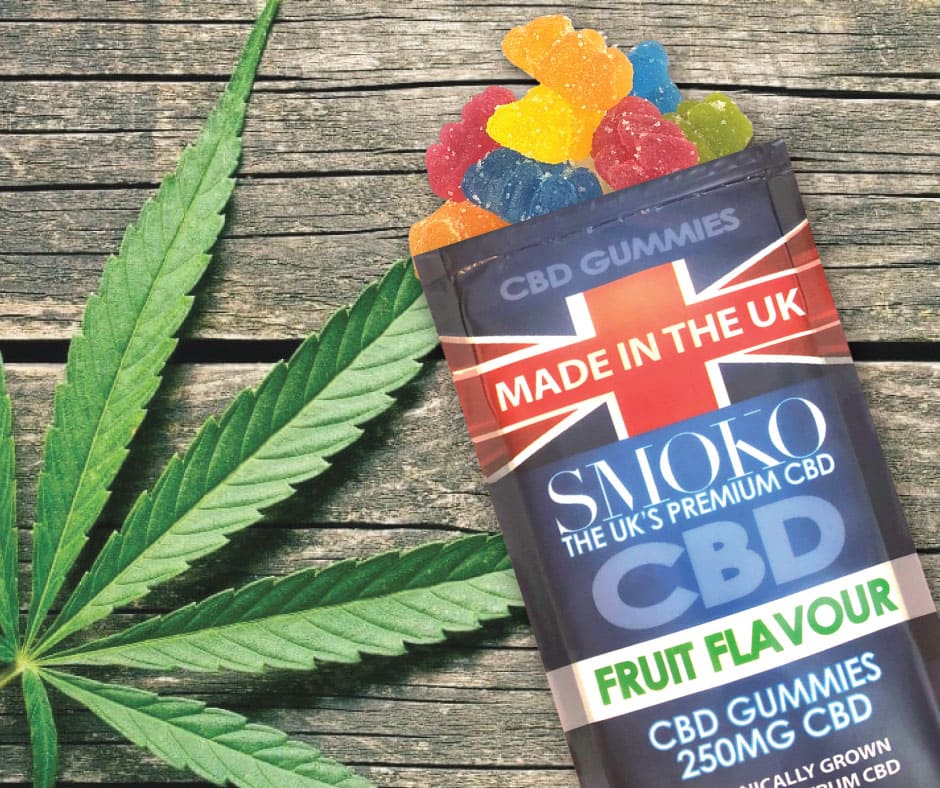
- Gummy bears are the easy, flavoured option for a fixed amount, handy for a daily routine.
- Soft gels are tasteless and pre-measured, which suits people who dislike the flavour of oils.
We sell all three, made in the UK from broad-spectrum extract. You can see the full range on our CBD tinctures, gummy bears and soft gels page, or start with our 250 mg broad-spectrum CBD gummies. Orders over £30 ship free in the UK. Whatever you choose, keep to the FSA’s 10 mg a day guidance unless a doctor advises otherwise.
FAQ
Is organic CBD better than non-organic CBD?
Organic CBD can carry a lower risk of synthetic pesticide and fertiliser residues, because certified organic farming restricts those inputs. The CBD molecule itself works the same either way. A batch-matched third-party lab report is still the best way to judge quality, whether the product is organic or not.
How do I know if a CBD product is genuinely organic?
Look for the name of an approved certification body, such as the Soil Association in the UK, and ask for the certificate if it is not shown. Words like “organically grown” or “natural” are descriptions and have not necessarily been audited. If a brand cannot say who certified it, treat the claim with caution.
Does it matter if hemp seeds are organic?
It can matter for the same reason as any crop: fewer synthetic inputs in the field. Hemp seed oil used as a carrier also brings omega-3 and omega-6 fatty acids, whatever the farming method. As with the extract, a lab report on the finished product tells you more than the farming label alone.
Does non-GMO mean the same as organic?
No. Non-GMO only says the plant was not genetically engineered. Organic covers the whole growing and processing system, and certified organic generally implies non-GMO, but a non-GMO product can still be grown conventionally.
Can CBD show up on a drug test?
Standard UK drug tests screen for THC, not CBD. However, products can be mislabelled or contain trace THC, so the FSA says no CBD product can be guaranteed not to trigger a positive result. If you are tested for work, check the COA and seek advice from your employer’s policy or an occupational health professional.
Sources
- Organic Standards for Great Britain, Soil Association
- A Conservationist’s Insight to Hemp: Why Grow Hemp Organically, UF/IFAS
- CBD products are everywhere. But do they work? Harvard Health
- Hemp seed oil nutrition, PubMed Central
- 5 Health Benefits of Hemp Seeds, Cleveland Clinic
- Food Fact Check: CBD safety and health claims, Food Standards Agency
- CBD products linked to novel food applications, Food Standards Agency
- Cannabis oil containing products (unlicensed) guidance, NHS Dorset