TL;DR:
- Organic CBD drops are hemp-derived tinctures made from organically farmed plants verified by independent lab testing. Ensuring products meet certification standards, accurate lab analysis, and batch-specific testing safeguards consumers from mislabeling and contamination.
Organic CBD drops are defined as hemp-derived cannabidiol tinctures produced from plants grown without synthetic pesticides or fertilisers, and verified through independent laboratory testing against recognised contaminant limits. The standards governing these products span sourcing, extraction, and certification, and they matter because only around 31.3% of CBD products on the market comply with labelling accuracy thresholds of ±10%. That figure means most bottles you pick up contain more or less CBD than the label states. Understanding organic CBD drops standards is the clearest way to protect yourself and get genuine value from every purchase.
1. What are the top organic certification standards for CBD drops?
Organic certification for CBD drops begins in the field, not the laboratory. Hemp must be grown under recognised schemes such as EU Organic or USDA Organic equivalents, which prohibit synthetic pesticides, herbicides, and chemical fertilisers. These schemes require third-party audits of farming practices, so the certification carries real accountability.
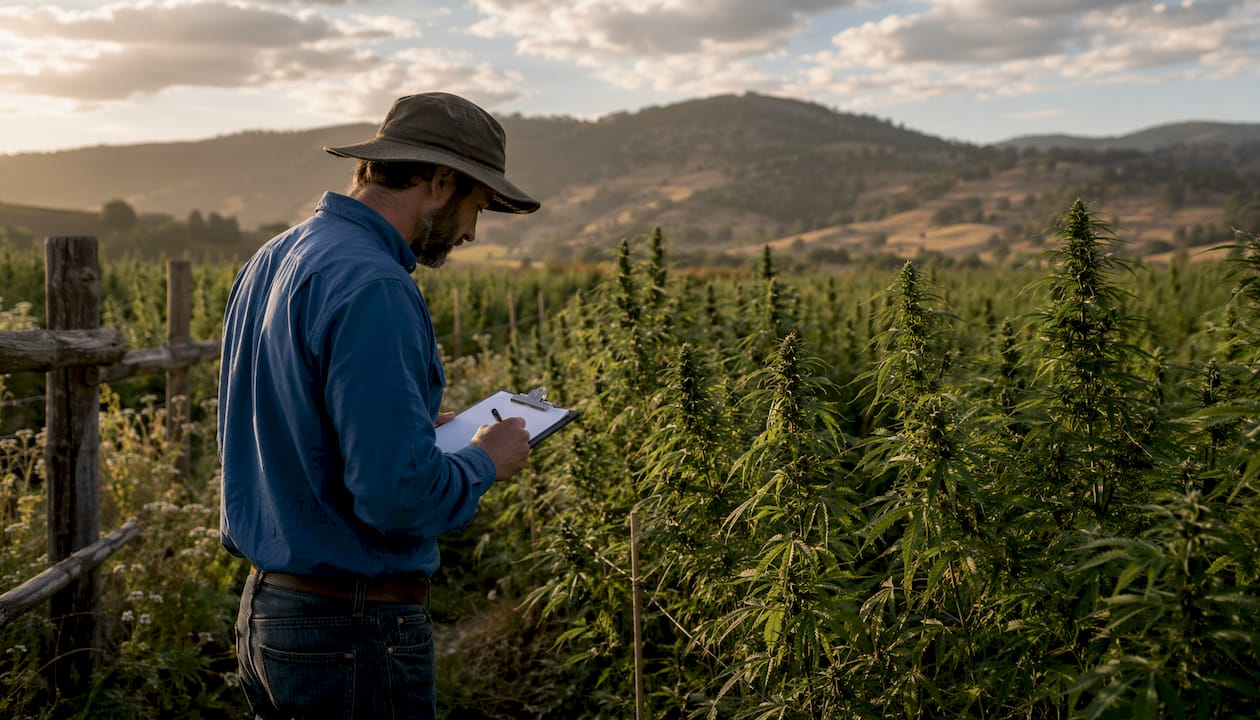
Good Agricultural and Collection Practices (GACP) sit alongside organic certification as the industry benchmark for hemp cultivation. GACP guidelines cover soil health, irrigation, harvesting timing, and post-harvest handling. They reduce the risk of microbial contamination and ensure the plant material entering extraction is clean from the start.
Non-GMO status is a separate but related requirement. Certified organic hemp must also be non-genetically modified, which rules out varieties engineered for traits that have not been assessed for long-term safety. Traceability from farm to bottle ties all of this together. A credible brand can tell you which farm grew the hemp, which batch it came from, and which laboratory tested it. The UK organic CBD certification guide from Smokocbd explains how these schemes apply specifically to UK consumers.
Key sourcing criteria to look for:
- EU Organic or equivalent certification from the farming operation
- GACP compliance documentation
- Non-GMO declaration from the grower
- Full traceability records linking batch numbers to specific farms
- Confirmation that no synthetic pesticides were used at any growth stage
2. How to interpret a Certificate of Analysis for organic CBD drops
A Certificate of Analysis (COA) is the single most important document you can request from a CBD brand. A legitimate COA must include the lab’s letterhead, a unique sample ID, the testing date, the analytical methods used, the batch number, and confirmation of the lab’s ISO/IEC 17025 accreditation. Any COA missing these elements cannot be considered reliable.
Reading a COA is straightforward once you know what each section means. The cannabinoid profile lists CBD, CBG, CBN, and THC concentrations. The total THC figure is calculated by adding Δ9-THC to THCA multiplied by 0.877, which accounts for the conversion that occurs when THCA is heated. This calculation matters because some labs only report Δ9-THC, which can understate the true THC content.
Beyond cannabinoids, a thorough COA covers five contaminant panels:
- Heavy metals (lead, arsenic, cadmium, mercury) tested against European Pharmacopoeia limits
- Pesticide residues screened against EU Maximum Residue Levels (MRLs)
- Residual solvents assessed per ICH Q3C guidelines
- Microbial contaminants including total aerobic count and yeast or mould
- Mycotoxins such as aflatoxins, which can accumulate in hemp stored in damp conditions
The preferred analytical method for cannabinoid potency is HPLC-UV/DAD (High Performance Liquid Chromatography with UV or Diode Array Detection). This method separates individual cannabinoids accurately and is widely accepted by European regulators. COA requirements per EU regulation specify that validated methods like HPLC-UV/DAD must be referenced on the document itself.
Red flags on a COA include: a missing batch number, a testing date that predates the product’s manufacture, no reference to the analytical method, or a lab name that does not appear on any national accreditation register.
Pro Tip: Cross-reference the batch number on the COA with the batch number printed on your product’s packaging. If they do not match, the certificate does not apply to what you have purchased.
3. Why ISO/IEC 17025 lab accreditation is the backbone of CBD testing
ISO/IEC 17025 accreditation confirms that a laboratory meets stringent technical and quality requirements for producing valid test results. ISO/IEC 17025 accreditation covers equipment calibration, staff competence, method validation, and quality management systems. A lab holding this accreditation has been independently audited and found capable of producing results that are both accurate and reproducible.
The accreditation scope is the detail most consumers overlook. A lab may hold ISO/IEC 17025 accreditation for water testing or food microbiology, but that does not validate its cannabinoid results. Cannabinoid testing must be specifically listed in the lab’s accreditation scope for the COA to carry genuine weight. You can verify this by searching the lab’s name on the UKAS (United Kingdom Accreditation Service) register or the equivalent national body in the lab’s country.
The consequences of using an unaccredited lab are significant. Results from unaccredited facilities cannot be used to demonstrate regulatory compliance, and they carry no independent assurance of accuracy. Heterogeneous analytical methodologies across the CBD market make COA comparison difficult, which is precisely why accreditation and method transparency are the two criteria that cut through the noise.
Key questions to ask about any lab report:
- Is the lab’s ISO/IEC 17025 accreditation number listed on the COA?
- Does the accreditation scope include cannabinoid testing specifically?
- Are the analytical methods named and validated?
- Is the lab registered with UKAS or an equivalent national body?
Understanding how lab testing works gives you the context to ask these questions with confidence.
4. Common contaminant limits and safety thresholds in organic CBD drops
Contaminant limits define the boundary between a safe product and a harmful one. EU Commission Regulation 2023/915 sets the EU-wide THC threshold at 0.3% total THC, calculated as Δ9-THC plus THCA multiplied by 0.877. Some EU member states apply stricter rules, with Sweden enforcing zero tolerance. In the UK, the legal limit for THC in CBD products is also 1mg per container, which in practice aligns with the 0.3% threshold for most tincture volumes.
Heavy metals are regulated under the European Pharmacopoeia, which specifies maximum daily exposure limits for lead, cadmium, mercury, and arsenic. Hemp is a bioaccumulator, meaning it draws metals from the soil efficiently. Organic farming reduces this risk by prohibiting the use of metal-containing synthetic fertilisers, but soil testing at the farm level remains the definitive safeguard.
Pesticide residues are assessed against EU Maximum Residue Levels. Setting contaminant limits for pesticides, solvents, and microbials is recognised as essential to protecting consumer health and maintaining product integrity. Residual solvents from extraction processes are governed by ICH Q3C guidelines, which classify solvents by toxicity and assign specific limits accordingly. Class 1 solvents such as benzene are prohibited entirely; Class 2 solvents such as ethanol carry defined acceptable daily intake limits.
Microbial contamination limits cover total aerobic plate count, total yeast and mould count, and specific pathogens such as E. coli and Salmonella. Mycotoxin screening, particularly for aflatoxins B1, B2, G1, and G2, is required under EU food safety regulations. A COA that omits any of these panels is incomplete by current European standards.
For a broader look at how CBD oil extraction methods affect residual solvent risk, the choice of CO2 versus ethanol extraction has direct implications for which solvents appear in testing.
5. How batch-specific testing upholds ongoing quality assurance
A single COA covering an entire product range is not sufficient. Batch-specific Certificates of Analysis ensure that each production lot is independently tested for potency and contaminants. Hemp crops vary by season, soil, and growing conditions, so a COA from one batch tells you nothing definitive about the next.
Stability testing adds another layer of assurance. CBD degrades over time when exposed to light, heat, or oxygen. A brand that conducts stability testing can confirm that the CBD concentration on the label remains accurate throughout the product’s stated shelf life, not just at the point of manufacture.
Record retention is a regulatory expectation in the EU and UK. Quality management systems typically require brands to keep batch records, COAs, and supplier documentation for a minimum of five years. This creates an audit trail that regulators and consumers can request.
Practical steps for verifying batch identity when purchasing:
- Check that the batch number on the product matches the batch number on the COA
- Confirm the COA testing date falls within the product’s production window
- Ask the brand directly if the COA on their website is batch-specific or generic
- Look for stability data or shelf-life testing references in the brand’s quality documentation
Pro Tip: When buying online, screenshot or save the COA linked to your specific order. If a quality issue arises later, you will have the exact document that applied to your batch.
Reading a COA for cannabinoid products follows the same principles across product formats, whether you are buying tinctures, capsules, or beverages. The batch number and accreditation check remain the two non-negotiable steps.
Key takeaways
Organic CBD drops standards require ISO/IEC 17025-accredited batch-specific testing, verified organic sourcing, and full contaminant screening against EU and UK regulatory limits to guarantee safety and potency.
| Point | Details |
|---|---|
| Organic sourcing matters | Hemp must be certified under EU Organic or equivalent schemes, with GACP compliance and full farm-to-bottle traceability. |
| COA completeness is non-negotiable | A valid COA includes batch number, ISO/IEC 17025 accreditation, testing date, and all five contaminant panels. |
| Lab scope must cover cannabinoids | ISO/IEC 17025 accreditation is only valid for CBD testing if cannabinoid analysis is listed in the lab’s specific scope. |
| THC limits vary by jurisdiction | The EU threshold is 0.3% total THC; the UK applies a 1mg per container limit, and some countries enforce stricter rules. |
| Batch-specific testing is the standard | One COA per product range is inadequate. Each production lot requires independent testing to confirm consistency. |
My honest view on navigating CBD certification
The CBD market rewards confident-sounding labels far more than it rewards actual quality. I have seen products carrying the word “organic” on the front while the COA on the back page references a lab with no cannabinoid testing in its accreditation scope. That is not a technicality. It is a fundamental failure of transparency.
The most common mistake I see is consumers treating “organic” and “natural” as interchangeable with “tested” and “safe.” They are not. A plant grown organically can still be contaminated with mycotoxins if it is stored badly. A COA from an unaccredited lab is worth less than no COA at all, because it creates false confidence.
My advice is straightforward. Ask for the batch-specific COA before you buy. Check the lab name against the UKAS register. If the brand cannot or will not provide that information, move on. The CBD quality standards guide from Smokocbd covers exactly what to look for in plain language. Consumer education is the only reliable check on a market that regulators are still catching up with.
— Mike
Smokocbd: broad-spectrum CBD drops tested to the highest standard
Smokocbd’s broad-spectrum CBD tinctures are produced from organically grown hemp sourced from the USA, with every batch independently tested by ISO/IEC 17025-accredited laboratories. The batch-specific COAs are published openly, covering the full cannabinoid profile, heavy metals, pesticides, residual solvents, and microbial contaminants in line with EU and UK regulatory requirements.
For consumers who want potency they can verify, the Smokocbd 1000MG Broad Spectrum CBD Mint Tincture delivers confirmed CBD content with zero detectable THC, backed by transparent certification. Every bottle carries a batch number that matches a publicly available COA, so you can check exactly what you are taking before you take it.
FAQ
What are organic CBD drops?
Organic CBD drops are cannabidiol tinctures made from hemp grown without synthetic pesticides or fertilisers, certified under recognised organic farming schemes such as EU Organic or USDA Organic equivalents.
What should a CBD drops COA include?
A valid COA must include the lab’s ISO/IEC 17025 accreditation number, the product batch number, testing date, analytical methods used, and results for cannabinoid profile, heavy metals, pesticides, residual solvents, microbials, and mycotoxins.
What is the legal THC limit in CBD drops in the UK?
The UK applies a limit of 1mg of THC per container. In practice, this aligns with the EU threshold of 0.3% total THC, calculated as Δ9-THC plus THCA multiplied by 0.877.
Why does ISO/IEC 17025 accreditation matter for CBD testing?
ISO/IEC 17025 accreditation confirms a laboratory meets validated technical standards for producing accurate, reproducible results. The accreditation scope must specifically include cannabinoid testing, not just general chemistry or food analysis, for the COA to be considered reliable.
How do I know if a CBD label is accurate?
Only around 31.3% of CBD products meet labelling accuracy thresholds of ±10%. Requesting a batch-specific COA from an ISO/IEC 17025-accredited lab is the only reliable way to verify that the CBD content matches what is stated on the label.