TL;DR:
- CBD in the UK must be derived from approved hemp with less than 0.2% THC and contain no more than 1mg THC per product.
- Ingestible CBD products require valid FSA novel food approval and third-party lab testing for legality and safety.
- The FSA provisional daily limit is 10mg of CBD for healthy adults, with safety and proper dosing guidelines emphasized.
Many people assume that because CBD is widely sold in UK shops and online, it must be straightforward to buy and use legally. That assumption can be costly. CBD products are legal in the UK in 2026 only when derived from industrial hemp with less than 0.2% THC in the plant, and finished products must contain no more than 1mg THC per container. Get that wrong, and you could end up with something unregulated, ineffective, or even unlawful. This guide unpacks exactly what makes CBD compliant in 2026, what the Food Standards Agency (FSA) requires, how much is safe to take daily, and how to choose products you can genuinely trust for your health and wellness goals.
Table of Contents
- What makes CBD legal or illegal in the UK in 2026
- Understanding the FSA ‘novel food’ rule and its impact
- UK government safety advice: Doses, benefits, and who should avoid CBD
- How to spot a compliant, high-quality CBD product in 2026
- The uncomfortable truth about CBD regulation in the UK: Risks and lessons for consumers
- Choose compliant UK CBD for peace of mind and results
- Frequently asked questions
Key Takeaways
| Point | Details |
|---|---|
| Legal CBD criteria | UK-legal products must contain under 0.2% THC in the plant and no more than 1mg THC in the final product. |
| Novel food registration | All ingestible CBD requires FSA novel food authorisation or a pending application for legal sale. |
| Safe dosage advice | The FSA recommends no more than 10mg CBD per day for healthy adults and advises some groups avoid CBD. |
| Product compliance checklist | Always check for FSA registration, clear THC content, and compliant labelling before buying. |
| Regulatory changes | UK CBD law continues to evolve, so verify products for compliance to ensure both safety and legality. |
What makes CBD legal or illegal in the UK in 2026
Understanding CBD law is not as complicated as it first appears, but the details really do matter. In the UK, CBD itself is not a controlled substance, provided it comes from an approved industrial hemp strain. Industrial hemp refers to cannabis plants grown specifically for low THC content, typically used in food, textiles, and wellness products.
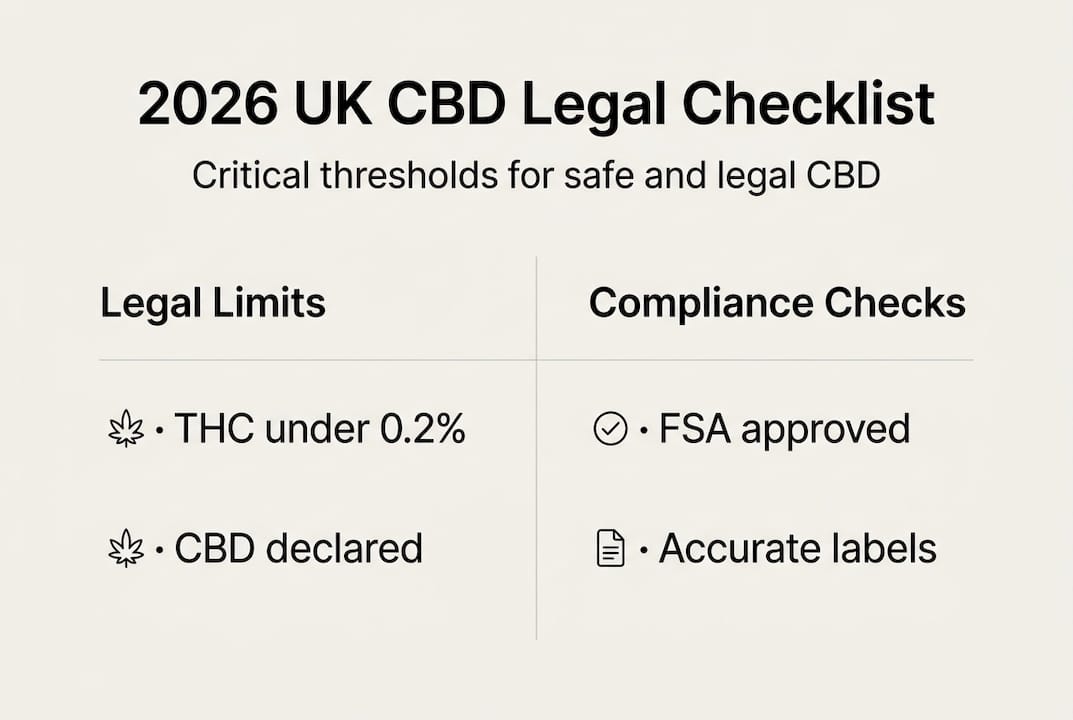
The two critical thresholds to understand are these. First, the raw hemp plant used to produce CBD must contain less than 0.2% THC. Second, the finished product you actually buy must contain no more than 1mg of THC per container, regardless of how large that container is. These are not guidelines. They are legal requirements.
| Criterion | Legal | Illegal |
|---|---|---|
| THC in hemp plant | Less than 0.2% | 0.2% or above |
| THC in finished product | No more than 1mg per container | More than 1mg per container |
| Hemp source | Approved EU/UK strains | Unapproved or cannabis strains |
| Medical claims on label | None permitted | Any therapeutic claim |
| Novel food status | FSA validated application | No application or rejected |
Products that fail any of these criteria can be seized, and sellers face serious penalties including prosecution. For you as a consumer, buying a non-compliant product means you have no guarantee of what is actually inside it.
Here is a quick legal check you can run on any CBD product before you buy:
- Source: Is the CBD derived from approved industrial hemp?
- THC content: Does the label confirm less than 1mg THC per container?
- FSA status: Is there a valid novel food application reference?
- Claims: Does the label avoid medical or therapeutic claims?
- Lab testing: Is a third-party certificate of analysis (COA) available?
“CBD products are legal in the UK in 2026 if derived from industrial hemp with less than 0.2% THC in the plant, and finished products contain no more than 1mg THC per container.”
If a product cannot satisfy all five checks above, walk away. The market is large enough that you should never have to compromise on compliance.
Understanding the FSA ‘novel food’ rule and its impact
Even if a CBD product clears the THC threshold, it still needs to meet another critical requirement: FSA novel food authorisation. This is where many consumers, and even some sellers, get caught out.
A ‘novel food’ is any food or supplement that was not widely consumed in the UK before May 1997. Because CBD was not a mainstream food ingredient before that date, ingestible CBD products are classified as novel foods by the FSA, requiring authorisation under assimilated Regulation (EU) 2015/2283. This applies to oils, capsules, gummies, and any other product you swallow.
What does that mean in practice? Any company selling ingestible CBD in the UK must have a valid application on the FSA’s register, or their product is not legally permitted on the market. The FSA can order removal of non-compliant products at any time, which is why products you have bought before can suddenly disappear from shelves.
Here is what the novel food rule means for your CBD wellness choices:
- Only buy ingestible CBD from brands with a validated FSA novel food application
- Check the FSA CBD register directly to confirm a product’s status
- Understand that a product being on sale does not mean it is authorised
- Brands without a valid application risk having their products pulled without warning
- Authorisation requires safety data, which means validated products are genuinely safer
The process of getting novel food authorisation is rigorous. Companies must submit toxicology data, manufacturing details, and evidence of safe use. This is actually good news for consumers, because it means authorised products have been scrutinised far more carefully than unregulated alternatives.
Pro Tip: When buying any CBD oil, capsule, or gummy, look for a direct reference to the brand’s FSA novel food application on the product packaging or website. If you cannot find it, check the FSA register yourself before purchasing. Your CBD wellness checklist should always include this step.
UK government safety advice: Doses, benefits, and who should avoid CBD
Knowing a product is legal is one thing. Knowing how to use it safely is another. The FSA has issued clear guidance on daily intake, and it is worth taking seriously.
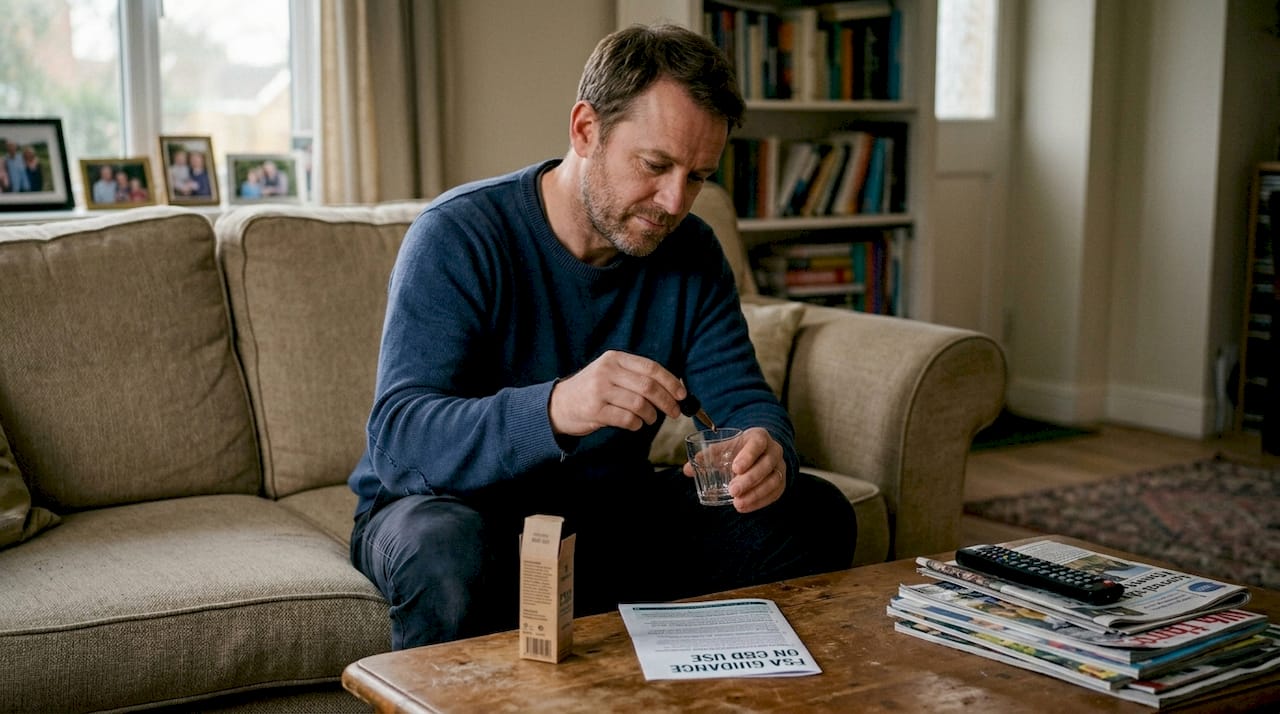
The FSA provisional daily limit for CBD is 10mg per day for healthy adults. This is not a suggested starting point for experienced users. It is the amount the FSA considers safe based on current evidence. Some brands market much higher doses, but until further safety data is available, the FSA’s position remains at 10mg.
| Population group | Daily CBD use | Notes |
|---|---|---|
| Healthy adults | Up to 10mg per day | FSA provisional safe limit |
| Pregnant women | Not recommended | Insufficient safety data |
| Breastfeeding women | Not recommended | Risk of transfer to infant |
| Children | Not recommended | No established safe dose |
| People on medication | Seek medical advice first | CBD can interact with some drugs |
For those who can safely use CBD, the potential wellness benefits are genuinely encouraging. Many users report improvements in sleep quality, reduced feelings of anxiety, and better management of everyday discomfort and inflammation. These effects are linked to CBD’s interaction with the body’s endocannabinoid system, which helps regulate mood, pain perception, and sleep cycles.
Here is how to dose safely and sensibly:
- Start with a low dose, around 5mg per day, and observe how your body responds over one to two weeks
- Increase gradually if needed, staying within the FSA’s 10mg daily limit
- Take CBD at the same time each day to build a consistent routine
- Keep a simple log of how you feel, noting any changes in sleep, mood, or discomfort levels
- Consult your GP before starting CBD if you take any prescription medication
Pro Tip: More CBD is not always more effective. The endocannabinoid system responds to consistent, moderate stimulation. Flooding it with high doses can actually reduce the benefit. Follow the CBD dosage guide and resist the temptation to rush results. A step-by-step approach to CBD dosing will almost always serve you better than jumping straight to higher amounts.
How to spot a compliant, high-quality CBD product in 2026
With hundreds of CBD products available in the UK, knowing how to separate the genuinely compliant from the questionable is an essential skill. Fortunately, the signs are fairly easy to read once you know what to look for.
Start with the label. A compliant product will clearly state the total CBD content in milligrams, the THC content per container (confirmed at 1mg or less), and a batch number that links to a third-party lab report. That lab report, often called a certificate of analysis, should be accessible via a QR code or web address on the packaging.
| Feature | Compliant product | Non-compliant product |
|---|---|---|
| FSA novel food reference | Present and verifiable | Absent or vague |
| THC content stated | 1mg or less per container | Not stated or above 1mg |
| Third-party lab testing | Batch-specific COA available | Generic or missing COA |
| Label claims | Wellness-focused only | Medical or cure claims |
| Hemp source | Approved industrial hemp | Unknown or unspecified |
You can also verify any product directly on the FSA CBD register. Non-compliant products, those without a novel food link, with more than 1mg THC, or making medical claims, face removal from sale. Checking the register takes less than two minutes and could save you from buying something unsafe.
When exploring CBD product types, also consider whether you want full-spectrum, broad-spectrum, or isolate. Broad-spectrum CBD is a particularly popular choice for those wanting the benefits of multiple cannabinoids without any detectable THC.
Red flags to watch out for:
- No batch number or COA on the product or website
- Claims that CBD will treat, cure, or prevent a specific medical condition
- No mention of FSA novel food status anywhere on the product or brand website
- THC content not disclosed on the label
- Prices that seem unusually low compared to reputable brands
Trust your instincts. If a brand is not transparent about its compliance credentials, that lack of transparency is itself a warning sign.
The uncomfortable truth about CBD regulation in the UK: Risks and lessons for consumers
Here is something most CBD guides will not tell you plainly: the UK regulatory framework, while well-intentioned, has significant gaps that still leave consumers exposed in 2026.
The FSA novel food approval process is slow. Many brands have applications pending for years, and some products remain on sale in a legal grey area while awaiting a decision. Industry pressure for faster approvals is real, and some applications are failing specifically due to gaps in toxicology and reproductive safety data. That means products you might assume are safe are still unproven by the standards regulators actually require.
The lesson here is not to panic, but to be genuinely discerning. Do not simply trust that a product is compliant because it is sold in a reputable-looking shop or has polished packaging. Demand proof. Check the FSA register. Ask for the COA. Understanding CBD versus hemp oil also matters, because some sellers blur the line between the two to sidestep regulation. As the market continues to evolve, staying informed is your most reliable protection.
Choose compliant UK CBD for peace of mind and results
Now that you understand the regulatory landscape, you can make choices that genuinely support your wellbeing without the worry of non-compliance. SMOKO CBD is built around exactly the standards this guide describes: broad-spectrum formulations with zero detectable THC, organically grown hemp, and third-party lab testing on every batch.
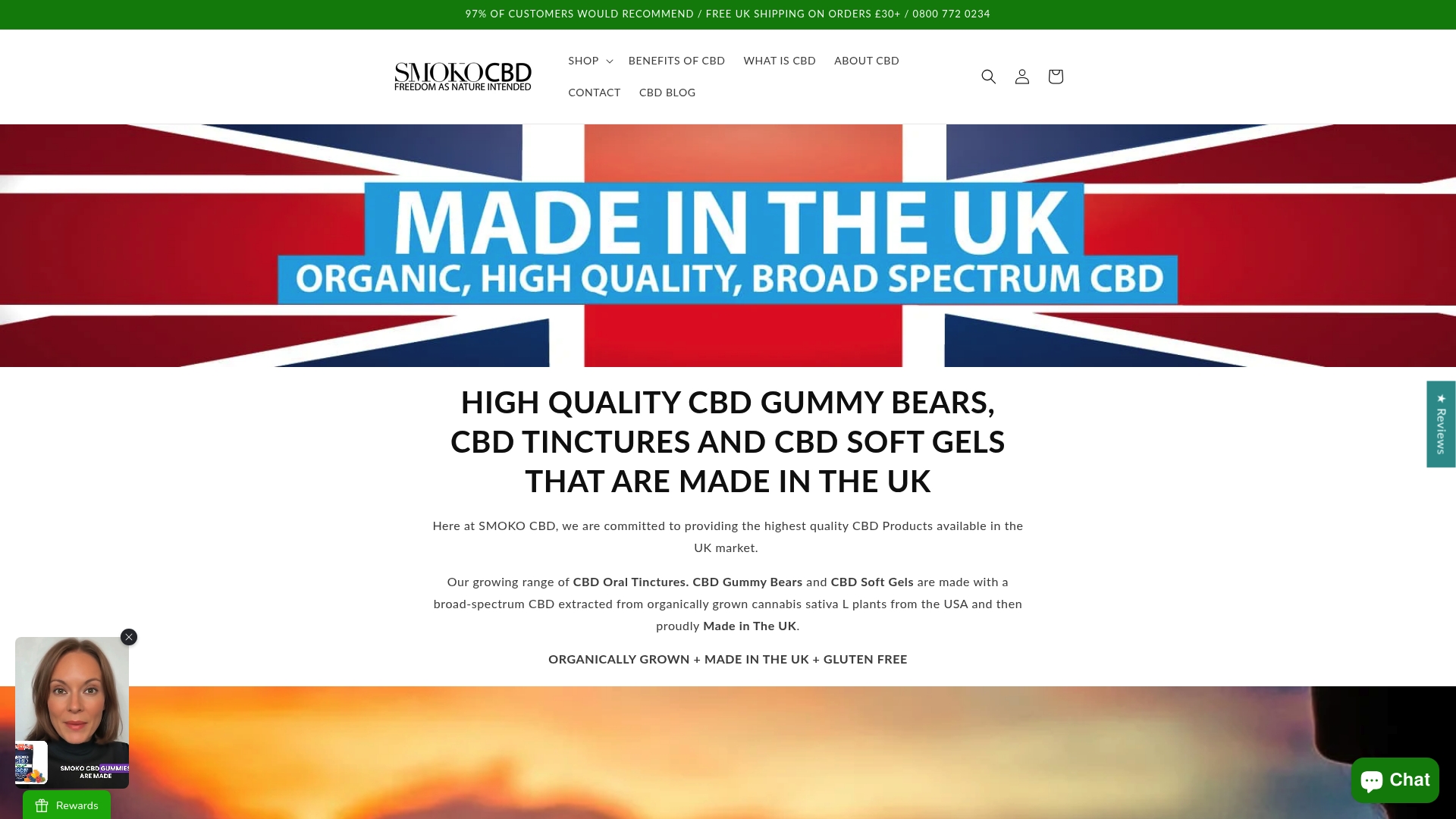
Whether you prefer the flexibility of a mint 1000mg CBD tincture for precise daily dosing, or the convenience of CBD soft gels and gummies for on-the-go wellness, SMOKO CBD offers clearly labelled, UK-compliant options you can trust. Explore the full range and put your knowledge into practice with products that meet every standard covered in this guide.
Frequently asked questions
What is the legal THC limit for CBD products in the UK in 2026?
CBD products must contain no more than 1mg THC per container, regardless of the product’s size or total CBD content. This applies to all finished CBD products sold in the UK.
Do all CBD edibles and oils need FSA authorisation?
Yes. Ingestible CBD products require a valid FSA novel food application or approval to be legally sold in the UK. Topical products such as creams are treated differently, but anything you swallow falls under this rule.
How much CBD can I safely take daily under UK guidance?
The FSA recommends no more than 10mg of CBD per day for healthy adults. This is a provisional figure based on current safety evidence and may be updated as more data becomes available.
Who should avoid CBD products entirely?
Pregnant women, children, and those taking prescription medications should not use CBD without first consulting a GP, as safety data for these groups is either insufficient or indicates potential risk.
Recommended
- CBD Benefits and Uses for Wellness in 2026: UK Guide – SMOKO CBD
- CBD Dosage Guide UK 2026: Safe Relief in 70mg Limits – SMOKO CBD
- What is Broad-Spectrum CBD? A 2026 Guide for Natural Health – SMOKO CBD
- UK CBD Law: Your Complete Guide to Regulations & Compliance – SMOKO CBD
- Legal Status of Hemp Edibles – What Changes in 2026 | Edwin’s Edibles & Elixirs