CBD’s reputation as a wellness tool continues to grow across the UK, yet many adults remain unsure which benefits are backed by science and which claims are overstated. Recent clinical studies from 2026 reveal that CBMPs with over 25mg CBD daily significantly improve pain, anxiety and sleep in fibromyalgia patients, whilst full-spectrum CBD oils improved migraine disability and well-being over 12 weeks. This guide clarifies current benefits, safety guidelines, and practical use for UK adults seeking natural health solutions.
Table of Contents
- Key takeaways
- Understanding CBD’s wellness benefits
- How CBD works: science behind the benefits
- Navigating CBD safety, dosage and UK regulations
- Choosing and using CBD products effectively
- Find quality CBD products at SMOKO CBD
- Frequently asked questions
Key Takeaways
| Point | Details |
|---|---|
| Dose threshold of 25 mg | Daily CBD doses above 25 mg significantly improve pain anxiety and sleep in fibromyalgia patients when used under proper supervision. |
| Full spectrum migraine benefits | Over 12 weeks full spectrum CBD oils reduced migraine related disability and boosted overall wellbeing. |
| Multi target action | CBD acts through several pathways including cyclooxygenase 2 inhibition PPAR gamma activation and TRP channel modulation, yielding analgesic anti inflammatory and sleep related benefits. |
| Product type matters | Full spectrum formulations may offer greater migraine relief than single compound products, underlining the importance of product type for therapeutic effects. |
Understanding CBD’s wellness benefits
CBD demonstrates genuine potential for improving pain, anxiety, and sleep quality when used at appropriate doses. The UK Medical Cannabis Registry fibromyalgia study found that patients using cannabis-based medicinal products containing more than 25mg CBD daily experienced significant improvements across all three areas. These weren’t marginal gains. Participants reported meaningful reductions in pain intensity and anxiety levels alongside better sleep patterns.
Migraine sufferers have also seen encouraging results. An observational study on CBD and migraine tracked patients using full-spectrum CBD oils over 12 weeks, documenting improvements in migraine-related disability and overall well-being. The full-spectrum formulation appeared particularly effective, likely due to the synergistic action of multiple hemp compounds working together.
CBD’s polypharmacology explains its broad wellness applications. Unlike pharmaceuticals designed to hit a single target, CBD interacts with multiple biological systems simultaneously. This multi-target approach supports its use for diverse conditions, from chronic pain to sleep disturbances. For specific applications, explore our guides on CBD oil for fibromyalgia and CBD oil for migraines.
Key benefits supported by current research include:
- Reduced pain intensity in fibromyalgia and chronic pain conditions
- Lower anxiety levels through modulation of stress response pathways
- Improved sleep quality and duration in patients with pain-related sleep disturbances
- Decreased migraine frequency and severity with consistent use
- Enhanced overall well-being and quality of life measures
“CBD’s therapeutic potential lies in its ability to address multiple wellness concerns simultaneously, making it particularly valuable for individuals with overlapping symptoms like pain, anxiety, and poor sleep.”
The evidence base continues to strengthen as more UK clinical studies emerge. Doses below 25mg daily may still offer benefits for some individuals, but the most robust improvements appear at higher therapeutic doses administered under proper supervision.
How CBD works: science behind the benefits
CBD produces its therapeutic effects through several distinct biological mechanisms. Understanding these pathways helps explain why CBD works for some conditions and guides safer, more effective use. CBD exerts analgesic and anti-inflammatory effects via COX-2 inhibition, PPARγ activation, and TRP channel modulation, targeting the same pain and inflammation pathways as conventional medications but through natural receptor interactions.

The COX-2 enzyme drives inflammation and pain signalling throughout the body. CBD inhibits this enzyme similarly to anti-inflammatory drugs, reducing inflammatory responses without the gastric side effects associated with traditional NSAIDs. This mechanism explains CBD’s effectiveness for inflammatory conditions like arthritis and fibromyalgia.
PPARγ receptors sit inside cell nuclei and regulate genes controlling inflammation, metabolism, and cell growth. When CBD activates these nuclear receptors, it triggers anti-inflammatory cascades that persist longer than surface receptor effects. This deep cellular action contributes to CBD’s sustained benefits with regular use.
TRP ion channels detect pain, temperature, and inflammatory signals. CBD modulates these channels to reduce pain transmission and inflammatory responses. This action complements its COX-2 and PPARγ effects, creating multiple pathways for pain relief. Our broad-spectrum CBD guide explains how different CBD formulations leverage these mechanisms.
Key mechanisms include:
- COX-2 enzyme inhibition reducing inflammatory prostaglandin production
- PPARγ nuclear receptor activation triggering anti-inflammatory gene expression
- TRP channel modulation decreasing pain signal transmission
- Serotonin receptor interaction supporting anxiety reduction
- Adenosine receptor enhancement promoting sleep and reducing inflammation
Safety considerations matter at higher doses. Research shows that high CBD doses can worsen psychosis-related symptoms when combined with THC, particularly in individuals prone to schizophrenia. This highlights the importance of using THC-free broad-spectrum products for most wellness applications and consulting healthcare providers about potential interactions.
Pro tip: CBD’s multi-target action means it may take 2-4 weeks of consistent use to experience full benefits as cellular pathways adjust. Track your response using a simple daily log noting pain levels, sleep quality, and mood to identify optimal dosing.
Understanding these mechanisms helps you choose appropriate products and set realistic expectations. Check our guide on CBD drug interactions before starting CBD if you take other medications.
Navigating CBD safety, dosage and UK regulations
The UK Food Standards Agency sets clear safety limits for CBD use. The UK FSA provisional safe intake for CBD isolate is 10mg/day for healthy adults consuming CBD in foods and supplements. This conservative limit reflects uncertainty about long-term effects and protects consumers purchasing over-the-counter products without medical supervision.
Medicinal doses exceeding 25mg daily require healthcare oversight. Clinical studies demonstrating significant benefits typically use doses in the 25-100mg range, well above the FSA’s consumer safety threshold. These higher doses carry increased risk of adverse effects and drug interactions, making professional monitoring essential. Our CBD dosage UK guide provides detailed dosing frameworks.
Monitoring becomes crucial at therapeutic doses. Research indicates you should monitor liver and thyroid function with higher CBD doses due to potential risks, particularly if you have pre-existing conditions or take medications metabolised by liver enzymes. Elevated liver enzymes represent the most common laboratory abnormality in CBD clinical trials.
| Safety parameter | Recommendation | Monitoring frequency |
|---|---|---|
| Starting dose | 5-10mg daily | Daily symptom tracking |
| Dose increases | 5-10mg every 3-7 days | Weekly assessment |
| Maximum OTC dose | 10mg/day (FSA limit) | Monthly review |
| Therapeutic doses | 25-70mg/day | Medical supervision required |
| Liver function | Baseline + follow-up | Every 3-6 months at high doses |
UK law restricts over-the-counter CBD products to ensure consumer safety. Products must contain undetectable THC levels (below 0.01%), carry accurate labelling, and comply with novel food regulations. These restrictions protect consumers from intoxicating effects and ensure product quality. Our UK CBD regulations guide covers compliance requirements in detail.
Starting CBD safely follows a structured approach:
- Consult your GP if you take prescription medications or have liver, thyroid, or psychiatric conditions
- Begin with 5mg daily taken at the same time each day for consistent blood levels
- Track symptoms, sleep quality, and any side effects in a simple diary
- Increase by 5mg every 3-7 days if needed, staying within safe limits for your situation
- Maintain your effective dose once benefits plateau, avoiding unnecessary increases
- Review progress monthly and adjust based on response and any emerging side effects
Pro tip: Take CBD with a small amount of healthy fat like a spoonful of yoghurt or a few nuts to enhance absorption. CBD is fat-soluble, so consuming it with dietary fat can increase bioavailability by up to 300%.
Common side effects at higher doses include fatigue, diarrhoea, and changes in appetite. These typically resolve with dose reduction. Serious adverse effects remain rare but warrant immediate medical attention. Use our CBD wellness checklist to ensure safe, effective use.
Choosing and using CBD products effectively
CBD products fall into three main categories, each offering distinct advantages. CBD isolate contains pure cannabidiol with no other hemp compounds, providing predictable dosing and zero risk of THC exposure. Broad-spectrum CBD includes multiple beneficial cannabinoids and terpenes but removes all THC, offering enhanced effects without intoxication. Full-spectrum CBD contains the complete plant profile including trace THC (legal limit 0.01% in UK), potentially maximising benefits through the entourage effect.
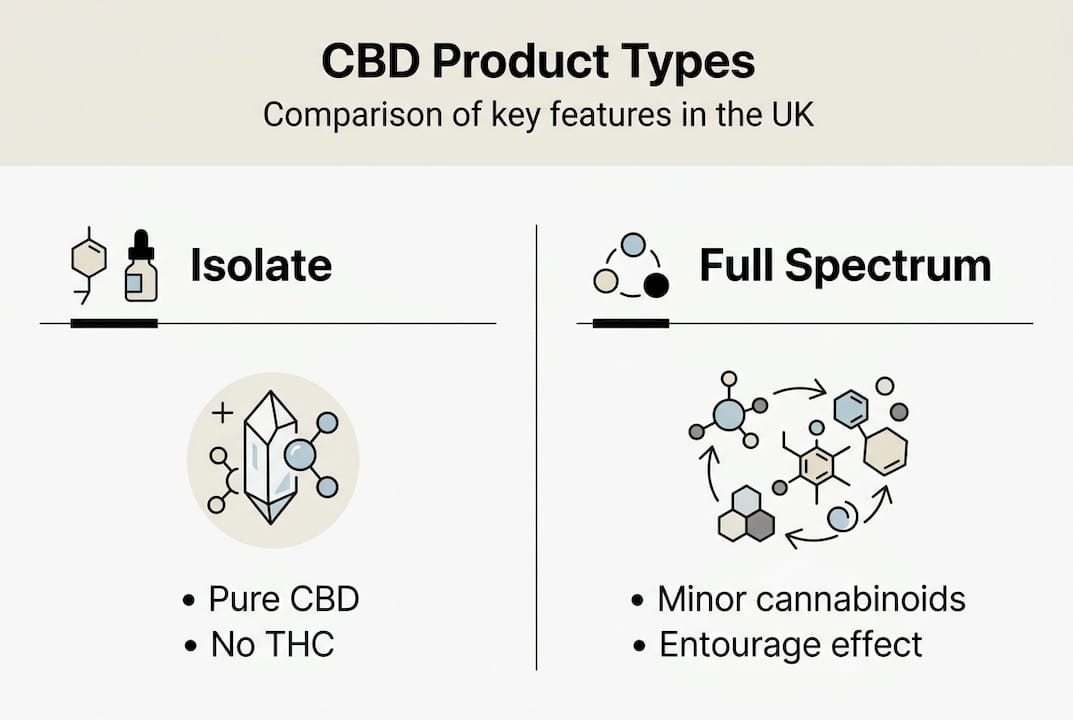
Full-spectrum CBD oils may offer enhanced benefits due to the entourage effect but have variable product quality, with some products containing inconsistent cannabinoid profiles or contaminants. This variability makes third-party testing certificates essential when choosing full-spectrum products. Broad-spectrum offers a reliable middle ground, delivering multiple beneficial compounds without THC-related concerns.
| Product type | THC content | Entourage effect | Best for |
|---|---|---|---|
| CBD isolate | 0% | None | Drug testing concerns, precise dosing |
| Broad-spectrum | 0% (undetectable) | Moderate | General wellness, anxiety, sleep |
| Full-spectrum | <0.01% (trace) | Maximum | Chronic pain, inflammation (with caution) |
Quality factors separate effective products from ineffective ones. Look for certificates of analysis from independent laboratories confirming cannabinoid content and absence of heavy metals, pesticides, and microbial contaminants. Organic hemp sourcing reduces pesticide exposure. Extraction method matters too, with CO2 extraction generally producing cleaner, more consistent products than solvent-based methods.
Dosing according to wellness goals requires matching intake to your specific needs:
- General wellness and prevention: 5-10mg daily of broad-spectrum CBD
- Mild anxiety or sleep issues: 10-25mg daily, split into morning and evening doses
- Moderate pain or anxiety: 25-50mg daily under healthcare supervision
- Chronic pain conditions: 50-70mg daily with medical oversight and monitoring
Our broad-spectrum vs full-spectrum CBD comparison helps you choose the right formulation for your situation.
Product labels should clearly state CBD content per serving, extraction method, and batch testing information. Avoid products making medical claims or lacking transparent sourcing information. Certifications from organisations like the Cannabis Trades Association UK indicate manufacturer commitment to quality standards.
Emerging cannabinoids like CBDA (cannabidiolic acid) show promise as non-intoxicating alternatives with potentially enhanced bioavailability. CBDA occurs naturally in raw hemp and converts to CBD through heating. Some research suggests CBDA may be more readily absorbed and offer distinct anti-inflammatory benefits, though evidence remains preliminary.
Pro tip: Store CBD oils in a cool, dark place away from direct sunlight to preserve cannabinoid potency. Refrigeration can extend shelf life but may cause temporary cloudiness that disappears at room temperature.
Consistency matters more than product type for most users. Choose a format you’ll use daily, whether tinctures for precise dosing, capsules for convenience, or gummies for palatability. Follow our step-by-step CBD dosing guide for detailed application instructions. Verify products comply with CBD legal status UK requirements before purchasing.
Find quality CBD products at SMOKO CBD
If you’re ready to experience CBD’s wellness benefits with products that meet 2026 UK regulatory standards, SMOKO CBD offers a carefully curated range of broad-spectrum options. Our SMOKO CBD mint 1000mg tincture delivers 33mg per serving for those seeking therapeutic doses under supervision, whilst our SMOKO CBD citrus 500mg tincture provides 16mg per serving for moderate wellness support.
For convenient daily use, our SMOKO CBD gummy bears 250mg offer 25mg per gummy in a tasty format that makes consistent dosing effortless. All products use organically grown USA hemp, undergo third-party testing to confirm zero THC, and comply with UK safety standards. Whether you’re addressing pain, anxiety, or sleep concerns, SMOKO CBD provides the quality and transparency you need for confident wellness use.
Frequently asked questions
What is the recommended daily CBD dose for wellness in the UK?
The UK Food Standards Agency advises 10mg/day as safe for over-the-counter CBD isolate products used by healthy adults. Medicinal doses ranging from 25-70mg daily may offer greater benefits for chronic conditions but require healthcare supervision due to increased risk of side effects and drug interactions. Start with 5-10mg daily and increase gradually based on your individual response, tracking symptoms to identify your optimal dose. Our CBD dosage UK guide provides detailed frameworks for safe titration.
Are broad-spectrum CBD products legal and safe in the UK?
Broad-spectrum CBD products are completely legal in the UK provided they contain undetectable THC levels (below 0.01%) and carry accurate labelling that complies with novel food regulations. These products offer multiple beneficial cannabinoids and terpenes without any risk of intoxication or legal concerns. Following UK regulations ensures consumer safety through mandatory testing and quality standards. Check our UK CBD law guide for comprehensive compliance information, and explore our broad-spectrum CBD guide to understand formulation benefits.
Can CBD worsen any health conditions or cause side effects?
CBD can cause fatigue, diarrhoea, and appetite changes, particularly at doses above 25mg daily. Research shows that high doses of CBD may exacerbate psychosis symptoms in cannabis users prone to schizophrenia when combined with THC, highlighting the importance of using THC-free broad-spectrum products. CBD also interacts with medications metabolised by liver enzymes, potentially altering their effectiveness or increasing side effects. Consult your healthcare provider before starting CBD if you have existing liver, thyroid, or psychiatric conditions, or take prescription medications. Our guide on CBD drug interactions covers specific medication concerns.
How can I track and measure the benefits of CBD use?
Use patient-reported outcome measures like GAD-7 for anxiety (seven-question assessment scoring worry and nervousness) and EQ-5D-5L for quality of life (evaluating mobility, self-care, activities, pain, and mood). These validated tools, employed in the UK Medical Cannabis Registry study, provide objective benchmarks for improvement. Complete assessments before starting CBD, then monthly during use to track changes. Maintain a simple daily log noting pain levels (0-10 scale), sleep quality, and mood to identify patterns and optimal dosing timing. Regular self-assessment helps you optimise dosage and product choice based on measurable outcomes rather than subjective impressions.