TL;DR:
- Customer reviews provide valuable insights into CBD product preferences and user experiences in the UK, especially for similar health concerns. However, they are not a substitute for verified lab testing, regulatory compliance, and professional medical advice. Informed shoppers use reviews to narrow options but rely on quality certificates and scientific evidence to make safe, effective choices.
Five-star ratings feel reassuring when you’re standing at the crossroads of a CBD purchase, unsure whether an oil, capsule, or gummy will actually help your back pain or quiet your anxious mind at 2am. But relying purely on glowing testimonials to guide your choice is a bit like asking a stranger at a bus stop for medical advice. Their experience is real, but it may have absolutely nothing to do with yours. This guide unpacks the true value of customer reviews in the UK CBD market, what they can genuinely tell you, where they fall short, and how to use them as one tool among many rather than the whole toolkit.
Table of Contents
- Why customer reviews matter for CBD in the UK
- How customer stories guide choices for pain, anxiety and sleep
- Pitfalls: Fake reviews, hype, and confusing anecdote with evidence
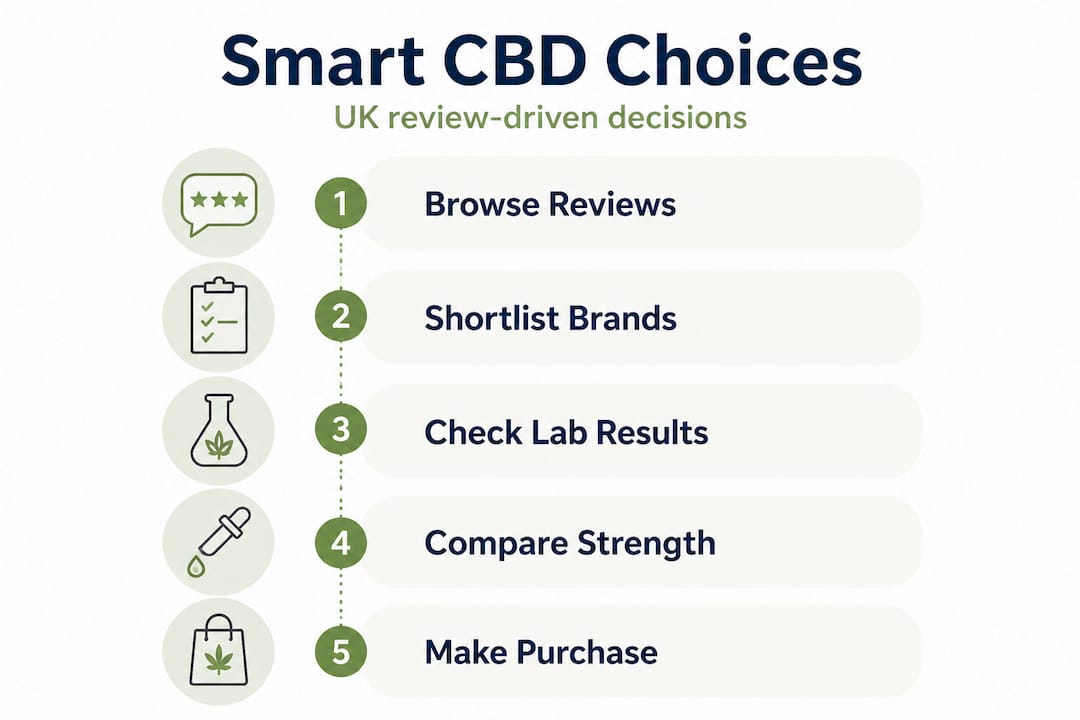
- How to use reviews wisely: A checklist for UK shoppers
- Our take: The double-edged sword of peer reviews in CBD
- Explore trusted CBD options
- Frequently asked questions
Key Takeaways
| Point | Details |
|---|---|
| Brand trust is key | UK shoppers value brand credibility and product quality over just customer opinions. |
| Reviews offer context | Customer stories help interpret how different CBD types work for pain, anxiety, or sleep. |
| Verify before trusting | Always cross-check reviews with lab reports or certificates and beware of fake testimonials. |
| Use reviews as a guide | Detailed, specific reviews assist in narrowing choices but should not be treated as medical advice. |
Why customer reviews matter for CBD in the UK
There’s a reason people scroll straight to the reviews section before buying anything online, and CBD products are no different. When you’re considering a natural remedy for something as personal as chronic pain, disrupted sleep, or daily anxiety, peer voices feel more trustworthy than product descriptions written by marketing teams. Reviews offer a kind of social proof, a sense that real people have already taken the plunge and lived to tell the tale.
But the psychology here is worth examining. Not all CBD shoppers are equally swayed by customer feedback. UK CBD purchasing is driven most strongly by trust in the retailer or brand, value for money, product strength, and price. Reviews play a more prominent role specifically for those who feel reliant on CBD, particularly individuals managing ongoing symptoms who are more sensitive to social and celebrity recommendations. If you fall into that group, you may be leaning on testimonials more than you realise.
| Decision factor | Importance to UK CBD shoppers |
|---|---|
| Trust in retailer/brand | Very high (cited by 91%) |
| Value for money | Very high |
| Product strength | Very high |
| Price | High |
| Customer reviews | Moderate to high (higher for reliant users) |
| Celebrity endorsement | Lower overall, higher for reliant users |
“When we trust a brand, we use reviews to confirm that trust. When we don’t, we use reviews as a substitute for trust. Neither approach is entirely safe in a market as unregulated as CBD.”
Reviews are still valuable, though. They function as decision short-cuts, helping you narrow down from fifty products to five without reading every technical data sheet. For natural CBD tips around pain, anxiety, and sleep, a well-written customer story can highlight things that product descriptions often miss, like how quickly relief set in, whether the oil had an unpleasant aftertaste, or whether the capsules were easy to swallow first thing in the morning.
The important shift to make is treating reviews as one data point, not the whole picture. Brand credibility, third-party lab testing, and product strength all carry more predictive weight than how many stars a product has earned online.
How customer stories guide choices for pain, anxiety and sleep
Once you understand the broader landscape, the practical question becomes: how are people actually using review content when they’re specifically shopping for help with pain, poor sleep, or anxiety? The answer is more strategic than you might expect.
Shoppers tend to use reviews to compare formats and dosing experiences across products. Someone dealing with joint pain might search reviews specifically for CBD oils versus soft gel capsules, looking for people whose situation mirrors their own. A person with insomnia might scan for comments about taking CBD at night and notice patterns around dose timing. Best CBD choices for pain and sleep often emerge through this kind of crowd-sourced filtering.
Reviews are also useful for filling in the gaps that official product pages leave out:
- Taste and texture: Does the mint oil actually taste pleasant, or is it overpoweringly herbal?
- Speed of effect: How long before users noticed a difference, in hours or weeks?
- Tolerability: Did anyone mention drowsiness, digestive discomfort, or other side effects?
- Consistency: Do repeat buyers mention that it works reliably, or were results mixed?
- Customer service: Were problems handled well when something went wrong?
These details genuinely help. They’re the kind of information that only comes from lived experience, and they make reviews legitimately useful in a way that manufacturer descriptions simply cannot replicate.
However, there’s a critical boundary to respect. Reviews act as decision shortcuts for pain, anxiety, and sleep relief, but they are not clinical evidence. What worked beautifully for one person managing anxiety may do very little for someone else whose anxiety has a different root cause, severity, or interaction with other health factors. CBD affects the endocannabinoid system (the body’s internal regulatory network), but how it does so varies considerably between individuals based on metabolism, body weight, existing health conditions, and more.
For CBD for sleep advice, for example, a customer saying “I slept through the night after taking 25mg” is encouraging. But it doesn’t confirm that the same dose will work for you, or that CBD is even the right solution for your particular sleep issue.
Comparison table: what reviews tell you vs. what they can’t
| What reviews can tell you | What reviews cannot tell you |
|---|---|
| Preferred formats and textures | Whether a product will work for your condition |
| Common dosing experiences | Correct therapeutic dose for your body |
| Speed and consistency of effect | Clinical safety for your health profile |
| Brand responsiveness | Long-term outcomes |
| Taste and ease of use | Interactions with your medications |
Pro Tip: When reading reviews for CBD, filter specifically for ones that mention your symptom, the product strength used, and the format. A review from someone using 500mg oil for sleep is far more useful than a generic five-star rating with no context.

Pitfalls: Fake reviews, hype, and confusing anecdote with evidence
Customer stories can be genuinely illuminating, but the CBD market has its share of problems that make blind trust in ratings a risky strategy. The first and most significant issue is fake or incentivised reviews.
Up to half of online reviews in some consumer sectors are suspicious or flagged as fake. CBD, being a high-growth and loosely regulated market in the UK, is not immune to this. Brands under pressure to build credibility quickly sometimes resort to review manipulation, whether by offering discounts in exchange for five-star ratings, using review farms, or simply filtering out negative feedback.
How do you spot the red flags? Here’s a numbered checklist:
- Look for generic language. Reviews that say “great product, really works!” without any specific detail about dose, symptom, or experience are often worthless at best and suspicious at worst.
- Check the review dates. A sudden cluster of five-star reviews posted within a few days of each other is a classic sign of manipulation.
- Note whether negative reviews exist. No product is perfect for everyone. A brand with 500 reviews and no rating below four stars should raise an eyebrow.
- Search for the product on independent platforms. If reviews only appear on the brand’s own website and nowhere else, tread carefully.
- Cross-check with quality certificates. A Certificate of Analysis (COA) from a verified third-party lab tells you far more about a product’s actual content than any star rating.
The second major pitfall is the blurring of personal story and medical advice. Review stories can sound like medical guidance but only reflect individual preferences, not clinical evidence. Phrases like “cured my arthritis” or “better than any prescription medication” are not just legally problematic for brands to allow, they’re genuinely misleading for shoppers. The hype in review sections often runs far ahead of what the science or current UK regulation can support.
Always verify the quality of a product through its CBD lab results and look for independently verified CBD testing explained before making a purchase. Lab reports confirm actual cannabinoid content, the absence of harmful contaminants, and crucially for UK shoppers, that THC levels are within legal limits. No review, however enthusiastic, can substitute for that.
Pro Tip: Before trusting any CBD brand’s reviews, visit their website and look for a dedicated lab testing page with accessible COAs. If you can’t find one easily, that’s a signal to look elsewhere.
How to use reviews wisely: A checklist for UK shoppers
Now that you understand both the value and the limits of customer reviews, here’s how to turn review reading into a genuinely useful part of your CBD shopping process. Think of this as your personal filter system.
- Prioritise reviews with specific details. Look for mentions of the exact product and strength, the symptom being addressed, the dose taken, how long the person used it, and whether results were consistent. Vague praise is noise. Specific experience is signal.
- Filter by your own situation. A review from someone with a similar health concern, lifestyle, or age bracket is more relevant to you than a general endorsement. Many review platforms now allow filtering by keyword, so use it.
- Balance positive and negative feedback. The one-star reviews are often the most informative. Look for patterns in complaints, perhaps the oil separates badly, the capsules are difficult to digest, or customer service is slow. One complaint is anecdote; five similar complaints are a pattern.
- Always cross-check with quality signals. As noted, a COA from a third-party lab is your most reliable quality indicator. Check it alongside any review content. You can find our CBD terminology guide if you’re unsure what to look for in those reports.
- Be alert to medical claims. If a review makes it sound like CBD replaced prescription treatment for a serious condition, take that with considerable caution. Consult a GP or pharmacist before using CBD for any diagnosed health condition, especially if you’re already on medication.
- Check the retailer’s credentials. Is the brand registered with the Food Standards Agency (FSA) novel food authorisation process? Do they publish transparent ingredient lists and source information? This context matters enormously alongside review content.
Reviews are most useful when they include specific details about dose, timing, and the product used, and when you cross-check them alongside other quality signals like lab certificates and brand credibility.
Pro Tip: Create a simple scoring system before you buy. Rate a product on three dimensions: review quality (specificity and credibility), product strength (matched to your needs), and lab verification (COA available and clear). A product that scores well on all three is worth trying.
Our take: The double-edged sword of peer reviews in CBD
Here’s something worth saying plainly, even if it cuts against the grain of how CBD is often marketed: the CBD industry sometimes leans on reviews in a way that overstates their usefulness. Brands publish testimonials as though they’re evidence. Shoppers read them as though they’re guarantees.
We think the healthiest framing is this. Reviews are excellent for narrowing your choices and building reasonable trust in a brand. They help you understand what a product feels like to use, how a company responds to problems, and which formats tend to suit which lifestyles. For those two purposes, they’re genuinely invaluable and worth reading carefully.
But clinical predictability is a completely different matter. Whether CBD will ease your specific type of pain, reduce your particular flavour of anxiety, or improve your sleep quality is something no testimonial can reliably predict. The endocannabinoid system is too individual, the variables too many.
What the more informed UK CBD shopper is doing is using a dual lens. They read reviews to shortlist products and build brand trust, then verify that shortlist through lab certificates, regulatory compliance, and product strength matching their needs. That combination is far more reliable than either approach alone. You can explore our CBD supplement list to see how different formats compare, especially if you’re still deciding between oils, gummies, or capsules.
Reviews will never stop mattering in a people-first market like wellness. But the smartest shoppers treat them as the beginning of due diligence, not the end of it.
Explore trusted CBD options
If you’re ready to move from reading about CBD to actually trying a quality product, SMOKO CBD makes that next step straightforward. Every product comes with accessible third-party lab certificates so you can verify exactly what you’re getting before you buy.
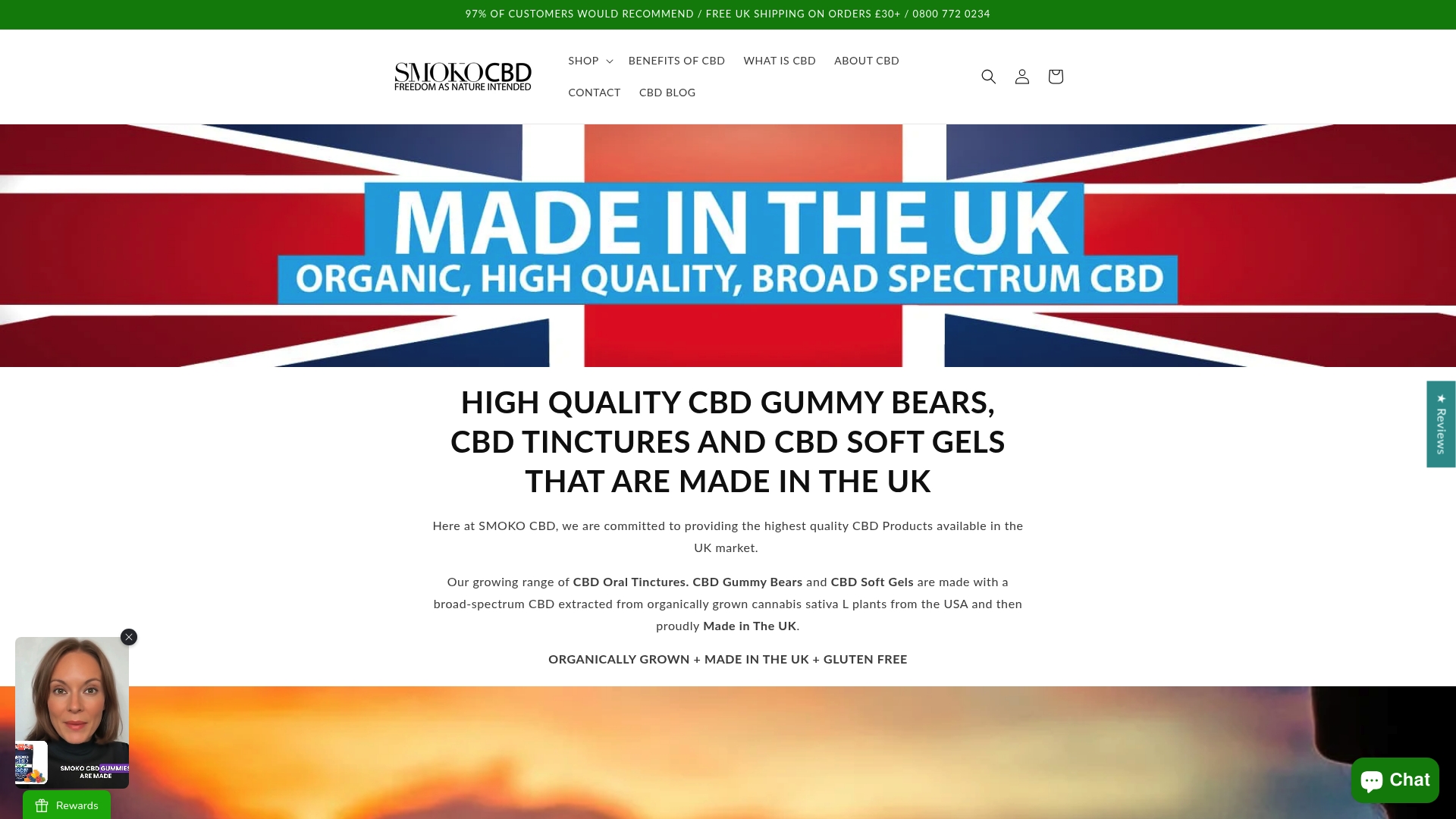
For those wanting a flexible, easy-to-dose option, the Mint 1000mg CBD oil is a popular choice among UK shoppers managing pain or anxiety, with a clean, pleasant flavour and clear dosing guidance. If convenience and consistency matter most, the 750mg CBD soft gels offer a precise, pre-measured dose in every capsule, ideal for building a reliable daily routine. All SMOKO CBD products use broad-spectrum hemp extract with zero THC, grown organically in the USA and tested by independent UK labs.
Frequently asked questions
Are online CBD reviews in the UK reliable?
Not always. While many reviews are genuine, up to half analysed in some sectors are flagged as suspicious, so you should always confirm product quality through independent lab reports rather than ratings alone.
What matters more: reviews or CBD product strength?
For most UK shoppers, product strength and brand trust outweigh reviews as purchase drivers. 91% of users rated trust in the retailer or brand, value for money, and product strength as highly important factors in their buying decision.
Do customer reviews count as medical advice?
No. Reviews reflect individual preferences and personal experiences, not clinical evidence, so they should never replace professional health guidance, especially for diagnosed conditions or when you’re taking medication.
How should I use customer reviews safely?
Look for reviews that specify dose, symptom, and product strength, then cross-reference with the brand’s Certificate of Analysis. Reviews are most useful when cross-checked with credible quality signals, and you should avoid trusting products that only carry vague or overwhelmingly positive feedback without any specific detail.
Recommended
- CBD Quality Standards: How to Choose Safe Products UK – SMOKO CBD
- Defining CBD Terminology: Your UK Guide to Confident Choices – SMOKO CBD
- CBD vs THC Explained: Choosing the Right Option for UK Wellness – SMOKO CBD
- CBD Supplements for Pain, Anxiety and Sleep: UK List 2026 – SMOKO CBD
- Sativa, Indica, or… Mood-Based? Rethinking How You Shop for Cannabis