TL;DR:
- UK CBD labels’ terminology indicates regulatory compliance and safety standards.
- Understanding terms like broad spectrum, isolate, and novel food helps buyers choose legal, well-regulated products.
- Regulations enforce clear labelling, dosage limits, and prevent false medical claims to protect consumers.
Walk into any UK health shop or browse online, and you will encounter CBD labels packed with terms like broad spectrum, isolate, novel food, and hemp extract. Most buyers gloss over them. That is a mistake. The UK Food Standards Agency classifies ingestible CBD as a novel food requiring specific authorisation, which means the terminology on a label is not just marketing language; it carries real legal and safety weight. Knowing what these words actually mean is the difference between choosing a well-regulated product and accidentally buying something that falls outside the law.
Table of Contents
- What is CBD? Key terms explained
- Medicinal vs wellness CBD: The regulatory distinction
- How UK regulations shape CBD terminology in 2026
- From terminology to safe choice: Practical tips for buyers
- A fresh perspective: Why terminology is more than just semantics
- Explore trusted CBD options for UK wellness
- Frequently asked questions
Key Takeaways
| Point | Details |
|---|---|
| CBD terminology matters | Knowing the right terms helps you make safer, legally compliant choices in the UK. |
| Regulatory definitions shape products | UK regulations clearly divide medicinal and wellness CBD categories, affecting what producers can claim. |
| Novel food authorisation is crucial | Only authorised CBD food supplements meet safety and legal standards for UK buyers. |
| 10mg daily intake limit | Authorities recommend no more than 10mg CBD a day for healthy adults, guiding your purchase decisions. |
| Apply terminology for safer choices | Check labelling, authorisation, and ingredients for confident UK CBD purchases. |
What is CBD? Key terms explained
Let’s start with the foundation. CBD stands for cannabidiol, a naturally occurring compound found in the cannabis plant. Unlike THC (tetrahydrocannabinol), CBD does not produce a psychoactive effect, which is a core reason it has become so popular in wellness circles. You can read more about those differences in this CBD vs THC comparison if you are curious about how the two compounds differ in practice.
Here are the key terms you will see on packaging and websites:
- Cannabidiol (CBD): The primary active compound extracted from hemp plants, non-intoxicating and commonly used in wellness supplements.
- Hemp extract: A broader term referring to the full extracted content of the hemp plant, which may include CBD alongside other cannabinoids, terpenes, and plant materials.
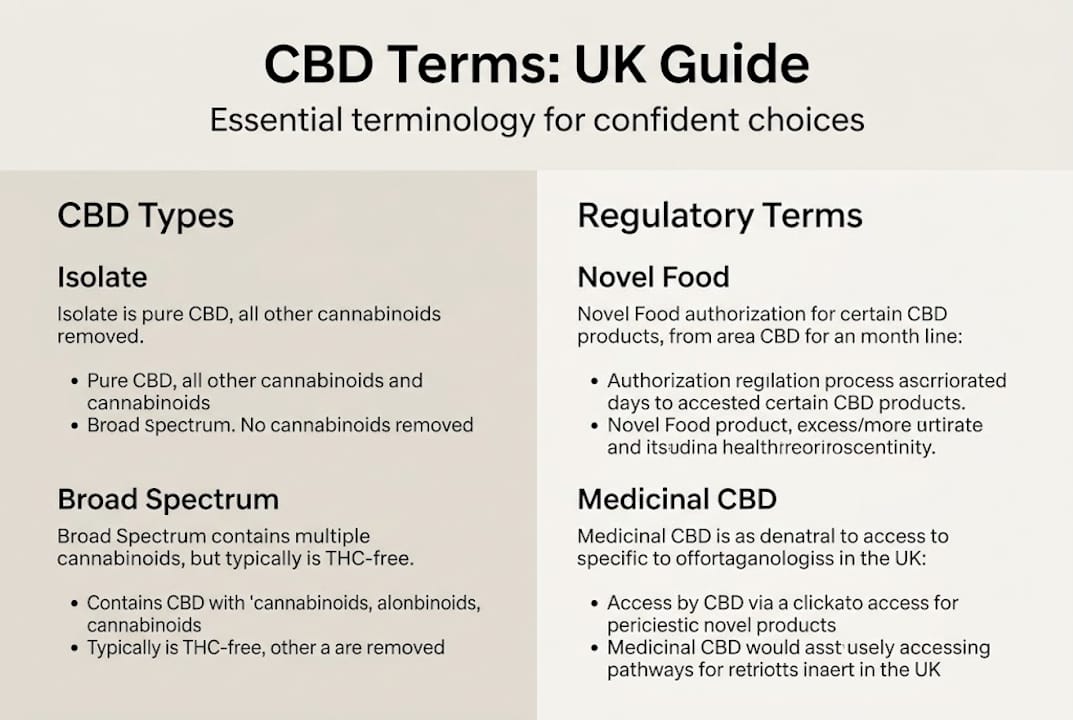
- Broad spectrum: A product containing multiple cannabinoids and plant compounds but with THC removed. This is the type SMOKO CBD uses.
- Full spectrum: Contains all cannabinoids including trace amounts of THC (up to 0.2% in the UK).
- Isolate: Pure CBD with everything else stripped away, including other cannabinoids and terpenes.
- Novel food: A legal classification in the UK and EU for foods or supplements not widely consumed before May 1997. Ingestible CBD is classified under this category by the FSA, meaning products must be formally authorised before sale.
Understanding these terms is your very first step towards safe, confident use. You will find a broader breakdown of what CBD can do for you in this CBD benefits guide.
Pro Tip: If a product label says hemp oil without specifying CBD content or milligram strength, it may simply be cold-pressed hemp seed oil with no significant cannabidiol at all. Always check the label for actual CBD concentration.
Medicinal vs wellness CBD: The regulatory distinction
With these basics set, let us look at the regulatory mix that distinguishes medicinal and wellness CBD. This is where terminology gets particularly important because the two categories are governed by completely different bodies and rules.
Medicinal CBD is a product that either makes medical claims or is intended to treat a diagnosed condition. In the UK, medicinal CBD requires a full marketing authorisation from the MHRA (Medicines and Healthcare products Regulatory Agency). The only licensed medicinal CBD currently available in the UK is Epidyolex, a prescription medicine for certain forms of epilepsy.

Wellness CBD, on the other hand, is sold as a food supplement. It is regulated by the FSA, not the MHRA. It cannot make any medical claims, such as stating it treats anxiety, reduces inflammation, or cures any condition. This distinction is critical, because a brand that makes medical claims for an unauthorised product is acting unlawfully.
| Feature | Medicinal CBD | Wellness CBD |
|---|---|---|
| Regulatory body | MHRA | FSA |
| Requires prescription | Yes (typically) | No |
| Medical claims permitted | Yes, if authorised | No |
| Available over the counter | No | Yes |
| Labelling requirement | Licensed medicine labelling | Food supplement labelling |
How do you identify a legal, wellness-focused CBD product? Here is a simple checklist:
- The product is labelled as a food supplement, not a medicine.
- No medical claims are made on the label or website.
- CBD content is clearly stated in milligrams.
- The product has a valid FSA novel food application or approval.
- Third-party lab results (COAs) are available and show zero or trace THC.
You can explore more about what separates legal products in our breakdown of CBD vs THC differences, and get a full overview of your rights as a UK consumer in our UK CBD law guide.
How UK regulations shape CBD terminology in 2026
These distinctions are shaped by evolving UK regulations. Let us examine their impact on how CBD terminology has shifted since the FSA stepped in.
The novel food framework became a turning point. From February 2020, the FSA required all CBD food supplement brands to submit novel food applications to remain on the market. This triggered a wave of changes in how products were described and marketed. Brands could no longer use vague language without backing it up with regulatory compliance.
| Year | Regulatory milestone | Impact on terminology |
|---|---|---|
| 2020 | FSA novel food deadline set | ‘Hemp extract’ required novel food status |
| 2021 | FSA published validated application list | Only listed products could remain on sale |
| 2023 | Safety assessments begin | Dosage language became more precise |
| 2026 | ADI confirmed at 10mg CBD per day | Labels must align with safe intake guidance |
That 10mg daily limit is one of the most consequential pieces of terminology guidance to emerge from the FSA process. It applies to healthy adults weighing around 70kg and is described as a provisional acceptable daily intake (ADI). Brands that suggest far higher doses on packaging without proper authorisation are working outside these guidelines.
You can also explore the broader picture of what is permitted in our guide to UK CBD regulations.
“The terminology on a CBD label is not just there to describe a product. It tells you whether a brand has done the work to keep you safe and stay within the law. Authorisation is not a formality; it is the evidence that due diligence has been done.”
For context on what the hemp extract daily limit means for your routine, it is worth understanding that most standard wellness tinctures are formulated with this guidance in mind.
From terminology to safe choice: Practical tips for buyers
Armed with this regulatory context, here is how to put your terminology knowledge to practical use. Reading a CBD label well is a skill, and it takes about 60 seconds once you know what to look for.
Decoding the label: Start with the ingredient list. Look for cannabidiol or hemp extract with a confirmed CBD milligram count. Note whether the product is broad spectrum, full spectrum, or isolate. Check that it is described as a food supplement and that no medical claims appear on the packaging or accompanying website.
Here is what to check before you buy:
- CBD strength: Stated clearly in mg, not just as a percentage.
- Spectrum type: Broad, full, or isolate, each with different implications.
- THC content: Should be at or near zero, confirmed by third-party lab results.
- Novel food status: Look for FSA-validated application confirmation.
- No medical claims: Any promise to treat or cure a condition is a red flag.
- Batch-specific COA: Certificate of Analysis from an accredited laboratory.
Some applications approved under the novel food framework in 2026 carry validated status, meaning they have been reviewed for safety at specific dosage levels. Choosing one of these products gives you much greater confidence.
Pro Tip: Do not be swayed by high-strength claims alone. A product offering 5000mg per bottle without FSA authorisation is not automatically better or safer than a regulated 1000mg option. Authorisation and third-party testing matter far more than raw strength numbers.
Our CBD safe dosage guide walks you through how to approach daily intake sensibly, and our CBD wellness checklist is a useful companion for building a safe routine.
A fresh perspective: Why terminology is more than just semantics
Most articles treat CBD terminology as a glossary exercise. We think that undersells the point considerably. Terminology is the lens through which brands, regulators, and buyers communicate trust, and when it is misused, real harm can follow.
Consider this: a brand that uses the word medicinal loosely, or implies its supplement can treat anxiety without MHRA authorisation, is not just bending the rules. It is misleading people who may be managing genuine health conditions. That is not a technicality; it is a welfare issue.
We have also seen how retailers use terms like full spectrum as a premium signal without properly disclosing THC content. For someone subject to workplace drug testing, that is not a minor oversight. Understanding the CBD legal status explained in the UK is as much about personal safety as it is about compliance.
Buyers who invest a few minutes in understanding terminology are not being overly cautious. They are making the smartest possible wellness decision.
Explore trusted CBD options for UK wellness
Now that you understand the terminology and the regulatory landscape, choosing a product becomes much more straightforward. You know what to look for on a label, what questions to ask, and what claims to be sceptical of.
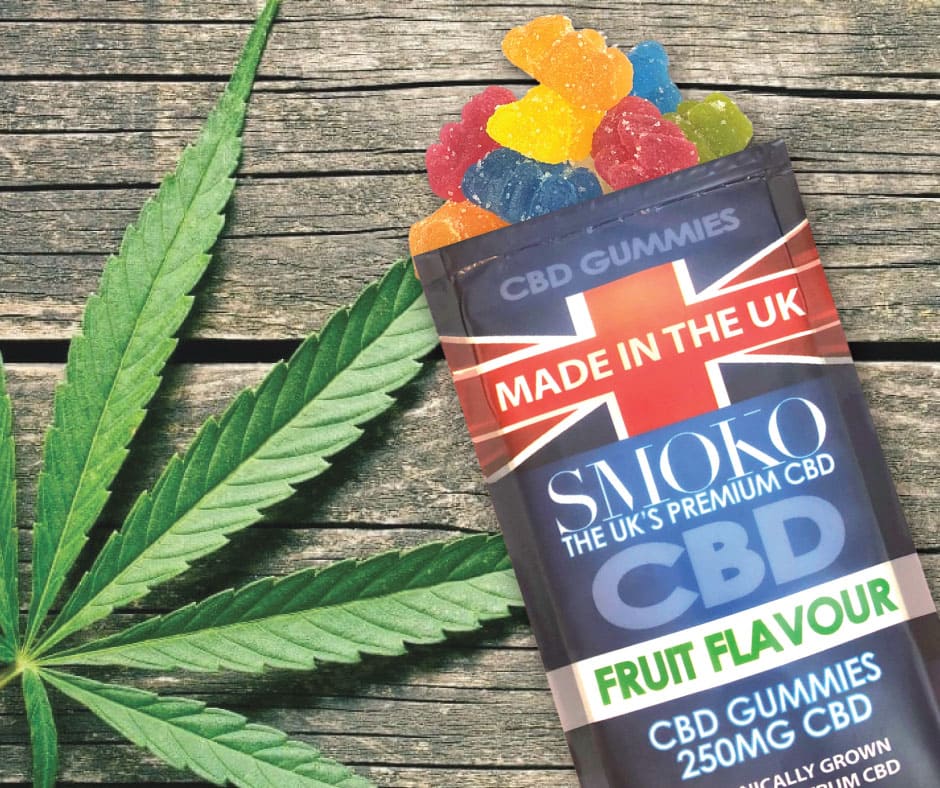
SMOKO CBD offers a range of broad-spectrum products designed with these standards in mind: no THC, third-party tested, and clearly labelled as food supplements. Whether you prefer the flexibility of a mint CBD tincture 1000mg, the convenience of CBD gummies 250mg, or the precision of CBD soft gels 750mg, each product reflects the kind of transparency and accountability that the terminology you have just learned should lead you to expect.
Frequently asked questions
What is the daily limit for CBD food supplements in the UK?
The UK FSA advises a provisional daily limit of 10mg CBD for healthy adults as of 2026, based on a 70kg body weight reference.
Can UK CBD products make medical claims?
No. Wellness CBD products sold as food supplements cannot make medical claims under UK law. Only MHRA-authorised medicinal CBD products are permitted to do so.
What does ‘novel food’ mean for CBD purchases?
‘Novel food’ is an FSA classification for foods not widely consumed before 1997. It means ingestible CBD requires formal FSA authorisation before it can be legally sold in the UK.
How can I tell if a CBD product is legally sold in the UK?
Look for FSA novel food compliance, clear labelling as a food supplement, no medical claims, and third-party lab results. Products meeting FSA novel food guidelines are your safest choice.
Recommended
- CBD vs THC Explained: Choosing the Right Option for UK Wellness – SMOKO CBD
- CBD Oil Terminology Explained: Make Informed Wellness Choices – SMOKO CBD
- What is CBD oil: a clear UK guide to benefits and quality – SMOKO CBD
- Cannabinoid Oil vs Hemp Oil - A UK Guide – SMOKO CBD
- Lab supply essentials for cannabis & botanical labs in 2026 – Viking Lab Supply