TL;DR:
- Hemp extract includes CBD and other plant compounds, offering an entourage effect for wellness.
- Full or broad-spectrum hemp extracts are supported by UK registry evidence for pain, anxiety, and sleep.
- Always verify third-party testing and legal compliance when choosing CBD products in the UK.
Walk into any health shop or scroll through wellness websites, and you’ll see ‘hemp oil,’ ‘CBD oil,’ and ‘hemp extract’ used almost interchangeably. For UK consumers seeking genuine relief from pain, anxiety, or poor sleep, this confusion is more than frustrating — it can lead you to buy the wrong product entirely. Not all hemp-derived products contain cannabinoids, and not all cannabinoids deliver the same results. This guide cuts through the noise, explaining exactly what hemp extract is, how it differs from CBD isolate and hemp seed oil, what the science actually says, and how to choose a product that genuinely supports your wellness goals.
Table of Contents
- What is hemp extract and how does it relate to CBD?
- The science-backed benefits of hemp extract in CBD products
- Is hemp extract safe? UK regulations and guidelines explained
- Choosing the right hemp extract CBD product for your wellness goals
- Why balance matters: Beyond marketing claims to real-world results
- Explore high-quality hemp extract CBD solutions for UK wellness
- Frequently asked questions
Key Takeaways
| Point | Details |
|---|---|
| Hemp extract delivers more than just CBD | It contains a spectrum of cannabinoids and plant compounds that may enhance wellness effects compared to isolate alone. |
| UK safety and legal limits matter | Stick to less than 10mg CBD per day from hemp extracts unless guided by a doctor, and always verify third-party lab results. |
| Choose wisely for your wellness goals | Full or broad-spectrum hemp extract products offer potential benefits for pain, anxiety, and sleep, but require careful label reading. |
| Not all ‘hemp oils’ are equal | Hemp seed oil does not provide CBD or wellness benefits for pain, anxiety, or sleep—watch for clear product labelling. |
What is hemp extract and how does it relate to CBD?
The terms floating around the CBD market can feel deliberately confusing. Let’s straighten them out.
Hemp extract is drawn from the flowers, leaves, and stalks of the hemp plant. It contains a broad range of naturally occurring compounds: CBD (cannabidiol), minor cannabinoids like CBG and CBN, terpenes, and flavonoids. It is, essentially, the whole plant in concentrated form.
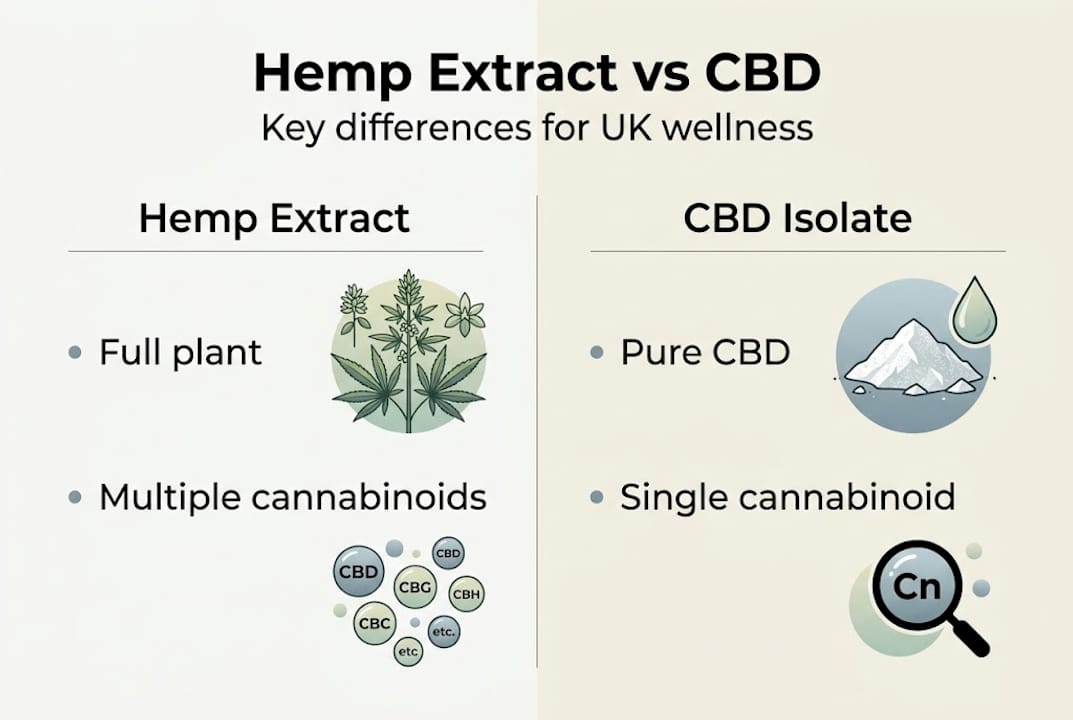
CBD isolate, by contrast, is pure cannabidiol stripped of everything else. It typically requires 98%+ purity to qualify as an isolate. No terpenes, no minor cannabinoids, just CBD on its own.
Hemp seed oil is something else entirely. Pressed from the seeds of the hemp plant, it is rich in omega-3 and omega-6 fatty acids and makes an excellent nutritional supplement. But as Forbes Health confirms, hemp seed oil lacks cannabinoids — hemp extract contains CBD and other plant compounds that hemp seed oil simply does not. Buying a product labelled ‘hemp oil’ without checking the cannabinoid content is a very common and costly mistake.
Here is a quick comparison to make the differences clear:
| Product | Source | Contains CBD? | Contains cannabinoids? | Best for |
|---|---|---|---|---|
| Hemp extract (full-spectrum) | Whole plant | Yes | Yes (many) | Wellness, entourage effect |
| Hemp extract (broad-spectrum) | Whole plant | Yes | Yes (THC removed) | Wellness, zero THC |
| CBD isolate | Extracted CBD | Yes (pure) | CBD only | Clinical use, purity |
| Hemp seed oil | Seeds only | No | No | Nutrition, skin |
The concept of the ‘entourage effect’ is central to understanding why hemp extract matters. When CBD works alongside minor cannabinoids and terpenes, the compounds may amplify each other’s effects. Think of it like a full orchestra versus a single instrument. You can get a tune from one violin, but the full sound is richer.
For practical guidance on how these terms map to real products, the CBD vs hemp oil explained guide and the cannabinoid oil vs hemp oil breakdown are worth reading before you spend a penny.
- Full-spectrum: contains trace THC (within legal limits)
- Broad-spectrum: cannabinoids present, THC removed
- Isolate: CBD only, no other plant compounds
- Hemp seed oil: zero cannabinoids, nutritional use only
The science-backed benefits of hemp extract in CBD products
Now that you know the differences, it is essential to explore how hemp extract actually delivers effects in the body.
The endocannabinoid system (ECS) is a network of receptors found throughout your brain and body. It helps regulate mood, pain perception, sleep cycles, and immune response. CBD and other cannabinoids interact with this system, essentially helping it to ‘tone down’ overactive signals or ‘ramp up’ underactive ones.
Real-world evidence from the UK is encouraging. UK registry studies show that CBD and hemp extract-based products improve pain, anxiety, and sleep disturbance across periods of one to eighteen months. These are not laboratory conditions — these are people using products in daily life.
Doses above 25mg per day were linked to more significant improvements, though it is important to note that higher doses should only be used under medical supervision.
| Wellness goal | Evidence level | Best extract type |
|---|---|---|
| Pain relief | Moderate (registry data) | Full/broad-spectrum |
| Anxiety management | Moderate (registry data) | Full/broad-spectrum |
| Sleep improvement | Moderate (registry data) | Full/broad-spectrum |
| Joint nutrition | Low (topical hemp oil) | Hemp seed oil |
CBD isolate is not without merit. It is well-studied, particularly in clinical settings, and is the basis for licensed medicines like Epidyolex for epilepsy. However, isolate may lack the entourage effect seen with real-world hemp extracts. For general wellness, the evidence leans towards full or broad-spectrum options.
For a deeper look at how specific products compare for CBD for pain and sleep, or to understand the broader picture of natural CBD benefits, both resources offer solid, evidence-informed guidance.
Pro Tip: Prioritise third-party tested, full or broad-spectrum hemp extracts for general wellness. Look for a certificate of analysis (COA) that confirms cannabinoid content and THC levels before purchasing.
Is hemp extract safe? UK regulations and guidelines explained
Knowing the benefits is great, but ensuring you are staying safe and legal is crucial for UK buyers.

The UK Food Standards Agency (FSA) regulates CBD and hemp extracts as novel foods. This means products must meet specific safety standards before they can be legally sold. The UK FSA’s safety assessment sets a provisional safe intake of 10mg CBD per day for healthy adults buying over-the-counter supplements. Higher amounts are only appropriate under medical guidance.
Key safety and legal points for UK buyers:
- Products must contain less than 1mg of THC per container (some guidance references 0.01mg per serving)
- CBD isolates must meet 98%+ purity standards
- Most CBD food supplements are not yet formally authorised — choose brands with transparent testing
- Pregnant or breastfeeding individuals should avoid CBD products entirely
- Those on medication should consult a GP, as CBD can interact with certain drugs
For a full overview of what is and is not permitted, the UK CBD regulations guide is an excellent starting point. If you want to understand the legal framework in plain terms, CBD legality in the UK explains the key rules clearly.
Statistic to note: 98%+ CBD purity is required for a product to qualify as a CBD isolate under UK standards. Anything below this threshold is technically a hemp extract, not a pure isolate.
For guidance on working out your personal starting dose, the CBD dosage advice resource walks through the process step by step.
Pro Tip: Always request or download the third-party lab report (COA) for any CBD product before buying. A reputable brand will make this easy to find. If it is hidden or unavailable, walk away.
Choosing the right hemp extract CBD product for your wellness goals
After understanding regulation and safety, here is how to apply this knowledge to select the right product for your wellness needs.
Choosing a CBD product does not need to be overwhelming. Follow these steps:
- Define your primary goal. Are you targeting chronic pain, daily anxiety, or disrupted sleep? Different goals may suit different formats — tinctures for fast absorption, capsules for convenience, gummies for ease of dosing.
- Select the right extract type. Look for full or broad-spectrum hemp extract, not hemp seed oil. Broad-spectrum is ideal if you want zero THC while still benefiting from multiple cannabinoids.
- Verify third-party testing. A certificate of analysis from an independent lab confirms CBD content, THC levels, and absence of contaminants. This is non-negotiable for quality assurance.
- Check UK legal compliance. Confirm the product meets Novel Food requirements and contains less than 1mg THC per container.
- Start low and go slow. Begin at or below the FSA’s 10mg daily guidance and adjust gradually based on how you feel.
“Most people overlook sublingual absorption entirely. Holding a tincture under your tongue for 60 to 90 seconds allows CBD to enter the bloodstream directly through the mucous membrane, bypassing the digestive system and improving bioavailability significantly compared to swallowing it straight away.”
For those interested in organic sourcing, the certified organic CBD guide covers what to look for. If gummies are your preferred format, the CBD gummies checklist helps you avoid common pitfalls.
Pro Tip: Beware of products labelled simply as ‘hemp oil.’ This phrase tells you nothing about CBD content. Always look for a clear milligram declaration of CBD on the label.
Why balance matters: Beyond marketing claims to real-world results
Here is something most CBD guides will not tell you plainly: the ‘entourage effect’ is promising, but it is not a magic bullet, and the marketing around it sometimes outpaces the evidence.
The strongest clinical evidence for CBD in isolation — meaning genuinely robust, randomised controlled trial data — comes from epilepsy research, specifically around Epidyolex. For that application, pure CBD isolate is the gold standard. The entourage effect, while biologically plausible and supported by real-world registry data, has not yet been proven definitively in large-scale randomised trials for pain or anxiety.
What does the UK real-world data actually show? It favours balanced hemp extracts for general wellness outcomes, with patients reporting meaningful improvements in pain, anxiety, and sleep. But the same guidance flags that high doses carry risks: potential liver strain, interactions with medications, and clear contraindications for pregnancy.
The honest takeaway is this — more is not always better, and ‘full-spectrum’ is not automatically superior for every person. Your choice should reflect your personal health situation, budget, and realistic expectations. A well-chosen broad-spectrum product at a sensible dose, verified by lab testing, will outperform an overpriced isolate or an under-dosed hemp seed oil every time. For a balanced view of how CBD and THC differ in the UK context, CBD vs THC in UK wellness is a helpful read.
Explore high-quality hemp extract CBD solutions for UK wellness
If you are ready to put this guide into practice, SMOKO CBD offers a clear starting point. Every product is made from organically grown, broad-spectrum hemp extract sourced from the USA, with zero THC confirmed through independent third-party lab testing.
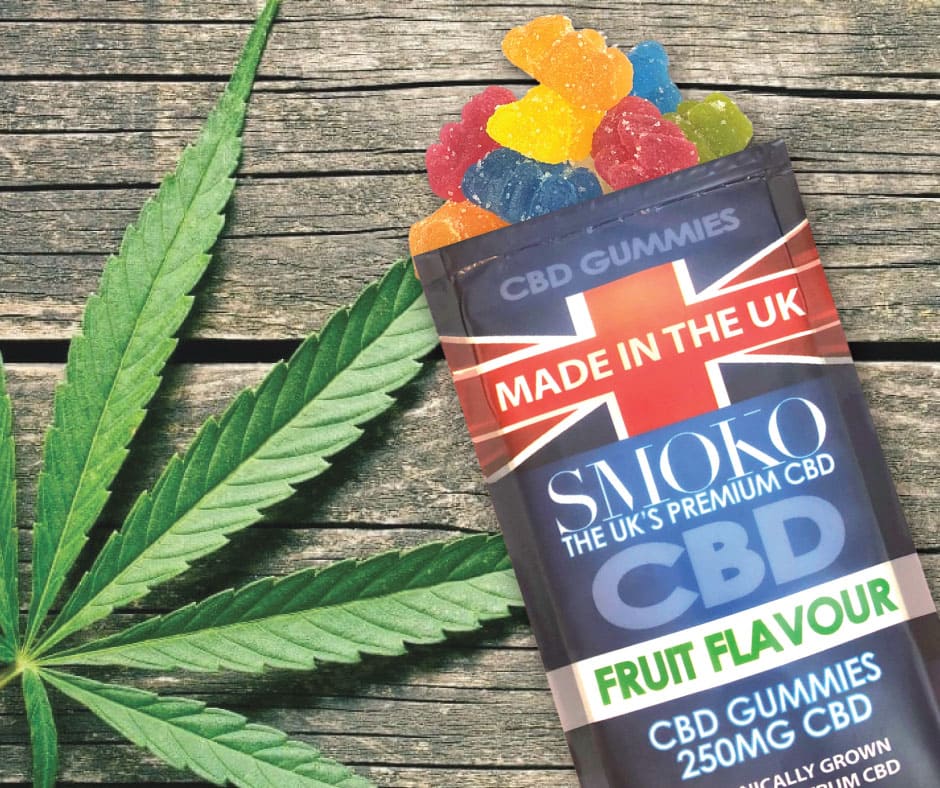
Whether you are exploring options for pain, anxiety, or sleep, the range includes a broad spectrum mint tincture for sublingual use, and broad spectrum CBD gummies for a convenient, pre-measured daily dose. Both are designed with transparency and quality at their core. Visit SMOKO CBD to browse the full range, access lab reports, and find the product that fits your wellness goals and daily routine.
Frequently asked questions
What is the difference between hemp extract and CBD oil?
Hemp extract is derived from the whole plant and naturally contains CBD alongside other cannabinoids and terpenes, while ‘CBD oil’ may refer to isolated CBD or a blend with carrier oils. As Forbes Health notes, hemp seed oil contains no cannabinoids at all, making it a very different product.
How much CBD from hemp extract is considered safe in the UK?
The UK FSA recommends no more than 10mg CBD per day from food supplements for healthy adults without medical supervision. Higher amounts require professional guidance.
Does hemp extract help with pain, anxiety, or sleep better than isolated CBD?
UK registry studies suggest full or broad-spectrum hemp extract products improve pain, anxiety, and sleep over one to eighteen months, possibly more effectively than pure CBD isolate for general wellness purposes.
Can you legally buy hemp extract CBD in the UK?
Yes, provided products contain less than 1mg THC per container, use approved ingredients, and comply with UK Novel Food requirements as set by the UK FSA.
How do I know if a hemp extract CBD product is high quality?
Choose products with independent third-party lab testing, a clear CBD milligram declaration, and transparent sourcing. As SMOKO CBD’s guidance advises, avoid vague ‘hemp oil’ labels that give no guarantee of actual CBD content.