TL;DR:
- Natural CBD is extracted from hemp using methods like supercritical CO2, ensuring purity and compliance.
- Full-spectrum, broad-spectrum, and isolate differ in cannabinoid content and potential effects.
- UK regulation requires CBD products to meet safety standards, contain less than 0.2% THC, and have proper testing.
Not all CBD is created equal, and if you’re searching for natural relief from anxiety, pain, or disrupted sleep, that distinction matters enormously. The term ‘natural CBD’ gets used loosely across the wellness industry, yet it carries real meaning in terms of sourcing, extraction, safety, and legal standing in the UK. Choosing the wrong product, or simply not knowing what to look for, could mean wasting money or, worse, using something that doesn’t meet UK regulatory standards. This article breaks down exactly what natural CBD is, how it’s made, which types suit different needs, what UK law says, and what the evidence actually shows about its benefits.
Table of Contents
- What is natural CBD and how is it made?
- Natural CBD types: full-spectrum, broad-spectrum and isolate
- Natural CBD in the UK: regulation, safety and legal guidance
- Potential benefits and real-world evidence for natural CBD
- Why ‘natural’ matters in CBD and what most guides miss
- Discover natural CBD options safely with SMOKO
- Frequently asked questions
Key Takeaways
| Point | Details |
|---|---|
| Natural CBD defined | Natural CBD is extracted from hemp plants, not synthesised in a lab, and relies on high-quality extraction methods like CO2 or ethanol. |
| CBD types and choice | Full-spectrum, broad-spectrum and isolate offer different benefits and users should match type with their health and safety needs. |
| UK safety and law | Natural CBD is legal if FSA-authorised and THC content is under 0.2 percent, with 10 mg per day as the recommended upper limit. |
| Potential health uses | Evidence supports possible benefits for anxiety, pain and sleep, but results vary and more robust studies are needed. |
| Purchase with care | Choose brands with lab reports and regulatory compliance to ensure true natural CBD and user safety. |
What is natural CBD and how is it made?
Natural CBD refers to cannabidiol extracted from hemp plants (Cannabis sativa) using established methods like supercritical CO2, ethanol, or cold compression, setting it apart from lab-synthesised alternatives. Synthetic CBD is created entirely in a laboratory without any plant material, and it behaves differently in both regulatory terms and potentially in the body. For UK consumers seeking a trustworthy, traceable product, plant-derived CBD is the benchmark.
Extraction method matters because it directly affects purity, potency, and the presence of other beneficial compounds. Here’s a quick overview of the three main approaches:
| Extraction method | How it works | Resulting quality |
|---|---|---|
| Supercritical CO2 | Uses pressurised CO2 to pull cannabinoids from hemp | Gold standard: clean, precise, preserves compounds |
| Ethanol extraction | Soaks plant material in food-grade alcohol | Efficient, good for broad-spectrum products |
| Cold compression | Presses plant material at low temperatures | Minimal processing, retains natural compounds |
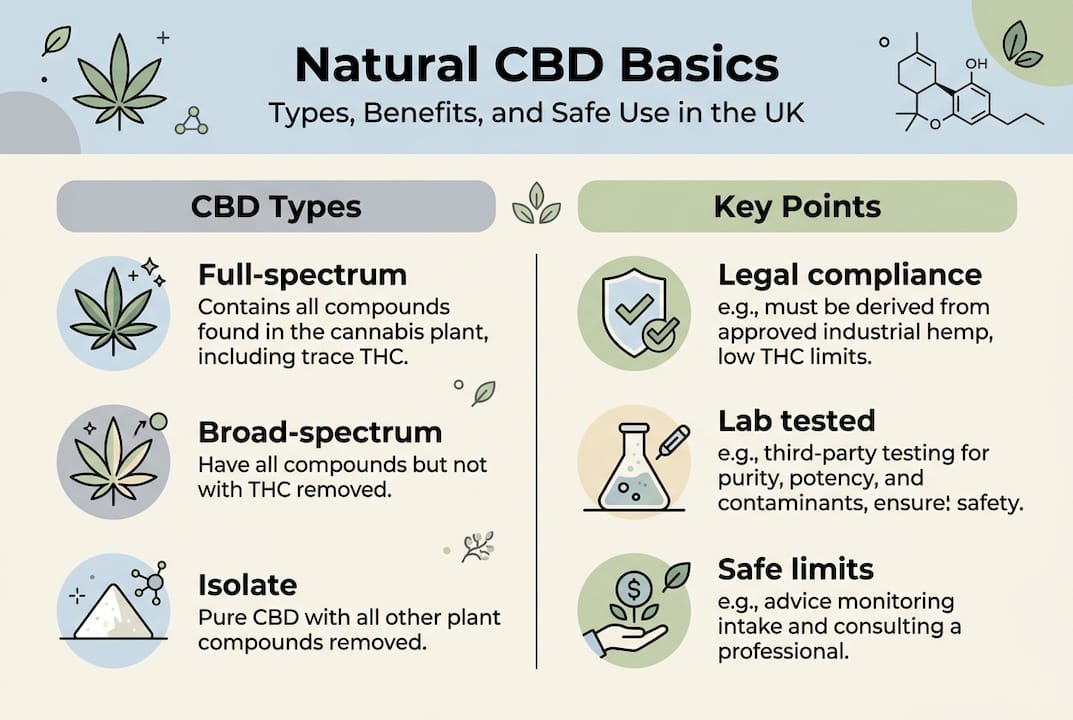
Once extracted, natural CBD typically comes in three main forms:
- Full-spectrum CBD: Contains all naturally occurring hemp compounds, including cannabinoids, terpenes, flavonoids, and trace amounts of THC (within legal limits). This type may benefit from what’s known as the CBD entourage effect, where compounds work together more effectively than any single one alone.
- Broad-spectrum CBD: Includes the full range of hemp compounds but with THC removed. A popular choice for those who want potential synergistic benefits without any THC exposure.
- CBD isolate: Pure cannabidiol, with all other compounds stripped away. Typically 99% or more pure CBD, with no terpenes, flavonoids, or other cannabinoids.
Proper extraction is not just about quality. It’s also about legal compliance. Products that are poorly processed may contain residual solvents or inaccurate cannabinoid levels, which could put them outside UK regulatory boundaries.
Pro Tip: Always ask for a Certificate of Analysis (COA) from any CBD brand you consider. This third-party lab report confirms the extraction method used, the cannabinoid profile, and whether the product is free from contaminants.
Natural CBD types: full-spectrum, broad-spectrum and isolate
Now that we’ve covered how natural CBD is made, it’s important to understand the range of product types you might encounter, because the differences between them have real implications for your experience and safety.
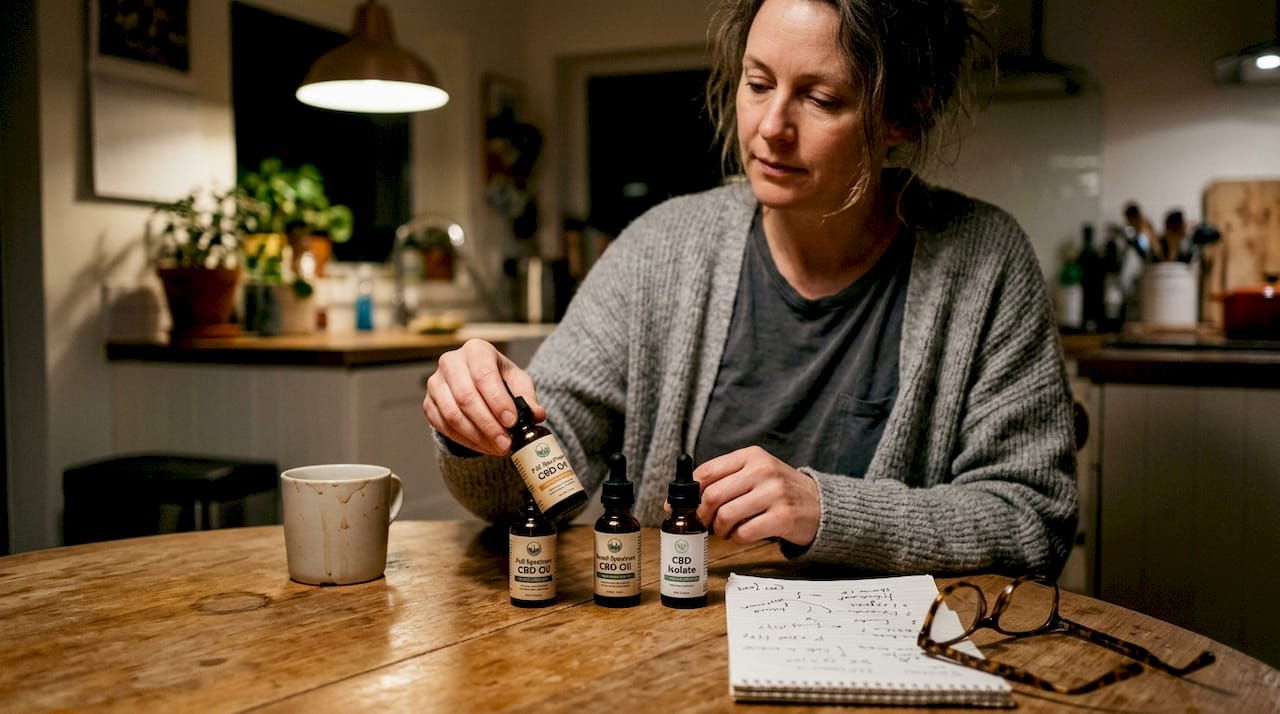
Full-spectrum, broad-spectrum, and isolate each have distinct profiles. Full-spectrum retains all hemp compounds including trace THC (below the UK legal limit of 0.2%), broad-spectrum removes THC entirely, and isolate is 99% or more pure CBD with nothing else present.
| Type | THC present | Other cannabinoids | Terpenes | Entourage effect |
|---|---|---|---|---|
| Full-spectrum | Yes (less than 0.2%) | Yes | Yes | Likely strongest |
| Broad-spectrum | No | Yes | Yes | Moderate |
| Isolate | No | No | No | None |
The entourage effect is the theory that cannabinoids, terpenes, and other hemp compounds amplify each other’s benefits when taken together. Think of it like an orchestra: each instrument contributes, but the full ensemble produces something richer. The entourage effect is one reason many users prefer full or broad-spectrum products over isolate.
So, which type suits you?
- Full-spectrum suits those with no occupational drug testing requirements and who want the broadest range of plant compounds.
- Broad-spectrum is ideal for those who want potential synergistic benefits but must avoid THC entirely, whether for personal, professional, or sensitivity reasons.
- Isolate works well for people who are highly sensitive to other cannabinoids or who require a precisely measured CBD dose with no variables.
One important note: even though full-spectrum CBD contains less than 0.2% THC (the UK legal threshold), regular use could theoretically cause trace accumulation. If you’re subject to workplace drug testing, broad-spectrum or isolate is the safer choice.
Key statistic: Scoping reviews suggest that approximately 45% of studies on CBD report positive outcomes for both anxiety and sleep, with full and broad-spectrum formulations frequently used in those trials.
Natural CBD in the UK: regulation, safety and legal guidance
Choosing a type is only the beginning. Knowing UK law and safe use guidance is crucial before adding CBD to your routine, and this is where many consumers make avoidable mistakes.
In the UK, natural CBD products are regulated as novel foods by the Food Standards Agency (FSA), meaning they require authorisation before they can legally be sold. The FSA’s provisional Acceptable Daily Intake (ADI) is set at 10 mg per day for a healthy 70 kg adult, based on CBD purity of 98% or above. This is a meaningful figure: it’s not a suggestion, it’s the safety benchmark regulators have set based on current evidence.
For practical guidance on UK CBD law and compliance, it’s worth understanding that not every product on the market has received FSA authorisation. Some brands operate under transitional arrangements, but consumers should always verify a product’s status.
Here’s how to check a product’s credentials before buying:
- Look for the brand’s FSA novel food application status on the FSA’s published list.
- Request or download the product’s Certificate of Analysis (COA) from a third-party lab.
- Confirm the THC content is below 0.2% as required by UK law.
- Check the CBD concentration matches what’s stated on the label.
- Review the ingredient list for any unlisted additives or allergens.
For personalised CBD dosage guidance, starting low and increasing gradually is always the sensible approach.
“CBD products intended for human consumption are regulated as novel foods in Great Britain and require authorisation from the FSA before they can be placed on the market.” — FSA, 2026
Certain groups should avoid CBD altogether or seek medical advice before use. According to MHRA guidance, this includes pregnant or breastfeeding women, children, and anyone taking prescription medications, as CBD interactions and safety concerns are particularly relevant at doses above 10 mg per day.
Potential benefits and real-world evidence for natural CBD
Having set out how to buy CBD safely, let’s explore what research and lived experience say about how natural CBD could help you.
The evidence base for natural CBD is growing, though it’s important to hold realistic expectations. Scoping reviews report approximately 45% of studies showing positive outcomes for anxiety and sleep, with pain relief also featuring prominently in user-reported data. These are encouraging figures, but it’s worth noting that many studies are observational rather than randomised controlled trials (RCTs), which are considered the gold standard for proving causality.
UK patient registry data offers some of the most compelling real-world insight. Data from UK patient registries shows sustained improvements in sleep quality among CBD users, with some cohorts reporting a 30% reduction in reliance on sleep medication over time. That’s a meaningful shift for anyone who has struggled with long-term sleep disruption.
Here’s a summary of the benefits most commonly reported by users and supported by research:
- Anxiety relief: Reduced feelings of tension and worry, particularly in social or situational anxiety contexts.
- Improved sleep: Faster onset of sleep and fewer night-time disturbances, especially with consistent use.
- Pain management: Reduced perception of chronic and inflammatory pain, often used alongside other therapies.
- General mood support: A calmer, more balanced emotional state reported by regular users.
For a closer look at CBD and sleep, the evidence is particularly interesting. And if you want to understand the broader health benefits of CBD, including its role in inflammation and mood, the picture becomes even more compelling.
That said, some studies show mixed results when it comes to CBD’s interaction with other cannabinoids, and more RCTs are needed before definitive claims can be made. For those dealing with sleep and insomnia, natural CBD remains one of the more promising natural options available.
Pro Tip: If you’re not subject to workplace drug testing, opt for full or broad-spectrum CBD rather than isolate. The additional plant compounds may enhance the overall effect, giving you better value from each dose.
Why ‘natural’ matters in CBD and what most guides miss
Here’s something most CBD guides won’t tell you plainly: the word ‘natural’ on a CBD label is not automatically meaningful. It only carries weight when backed by verifiable sourcing, proper extraction, third-party testing, and regulatory compliance. Without those, it’s just marketing language.
Many consumers assume that buying ‘CBD’ is enough to guarantee both safety and effect. It isn’t. Synthetic CBD exists, is not covered by UK food authorisations, and behaves differently from plant-derived extracts. The distinction matters both legally and practically, yet it rarely gets the attention it deserves.
What ‘natural’ genuinely signals, when properly evidenced, is traceability. You can follow the product from hemp plant to bottle, verify the extraction method, and confirm the cannabinoid profile through a COA. That traceability is what builds real confidence. It’s also what separates a regulated UK product from an unverified import.
Most guides also underplay the importance of batch-level testing. A brand might pass one lab test and then change its supplier. Batch traceability means every single product run is verified, not just a one-off sample. When you’re using CBD for something as personal as anxiety or sleep, that consistency is not a luxury. It’s a necessity. For a clearer picture of how CBD differs from hemp oil, understanding sourcing and labelling is the first step toward making genuinely informed choices.
Discover natural CBD options safely with SMOKO
If you’re ready to experience natural CBD with confidence, our curated options make the next step easy and safe.
At SMOKO CBD, every product is naturally derived, broad-spectrum, and developed to meet FSA compliance standards, with zero THC confirmed through rigorous third-party lab testing. Whether you’re exploring CBD for the first time or looking to switch to a more trustworthy source, our Mint 1000mg CBD tincture offers a clean, precise starting point. For those who prefer a no-fuss daily routine, our CBD soft gel capsules deliver consistent dosing in an easy-to-swallow format. All lab reports are available on request, so you can verify exactly what you’re putting into your body before you commit.
Frequently asked questions
Is natural CBD legal in the UK?
Natural CBD is legal in the UK provided it meets FSA and MHRA guidelines, contains less than 0.2% THC, and the product holds novel food authorisation. Always verify a brand’s regulatory status before purchasing.
What is the recommended daily dose of natural CBD?
The UK’s provisional safe intake is 10 mg per day for a healthy 70 kg adult. If you take prescription medication or have an underlying health condition, consult your GP before starting.
Can natural CBD help with sleep or anxiety?
Research is promising: approximately 45% of studies report positive effects on both sleep and anxiety. More large-scale RCTs are needed, but real-world evidence from UK users is increasingly supportive.
Who should avoid natural CBD products?
Pregnant or breastfeeding women, children, and anyone on prescription medication should avoid CBD without first seeking professional medical advice, as interactions and safety risks increase above 10 mg per day.
Recommended
- What is CBD oil: a clear UK guide to benefits and quality – SMOKO CBD
- CBD vs Hemp Oil Explained: Natural Wellness Guide 2026 – SMOKO CBD
- CBD Benefits and Uses for Wellness in 2026: UK Guide – SMOKO CBD
- CBD Dosage Guide UK 2026: Safe Relief in 70mg Limits – SMOKO CBD
- Benefits of Hemp-Derived CBD for Wellness | Edwin’s Edibles & Elixirs