TL;DR:
- CBD is legal, non-intoxicating, and widely used as a wellness supplement in the UK.
- THC causes psychoactive effects and is only available through medical prescriptions for specific conditions.
- Choosing reputable, lab-tested CBD products ensures safety and compliance with UK regulations.
CBD is legal, widely available, and used by millions across the UK for pain, anxiety, and sleep. Yet most people still confuse it with THC, assuming that anything derived from cannabis must get you high or land you in trouble with the law. That assumption is wrong, and it’s worth clearing up. Non-psychoactive CBD does not produce a ‘high’, while THC binds directly to CB1 receptors and causes intoxication. These are two very different compounds with very different outcomes. This guide explains how each one works, what the evidence says about their wellness benefits, and how to make a safe, legal choice in the UK.
Table of Contents
- CBD and THC in the body: How they work
- Wellness benefits and clinical uses
- Risks, side effects, and safety
- UK law and access: What’s legal, and how to get it
- Our experience: What most people get wrong about CBD vs THC
- Finding quality CBD products in the UK
- Frequently asked questions
Key Takeaways
| Point | Details |
|---|---|
| Different actions in the body | CBD and THC interact with the endocannabinoid system in different ways, leading to distinct effects and experiences. |
| Legal and practical differences | CBD is legal and suitable for everyday wellness in the UK, while THC is controlled and available only via prescription. |
| Evidence-based wellness uses | Both compounds show promise for pain, anxiety, and sleep, but CBD is best for daily concerns and THC for severe cases. |
| Safety first | CBD is very well-tolerated but start low; THC carries more risks and should only be used under medical supervision. |
| Smart shopping in the UK | Always buy legal, tested CBD products from trusted brands that comply with UK regulations. |
CBD and THC in the body: How they work
Both CBD (cannabidiol) and THC (tetrahydrocannabinol) are cannabinoids, naturally occurring compounds found in the cannabis plant. They share the same molecular formula, yet their effects on the body are strikingly different. The reason comes down to how each one interacts with your endocannabinoid system (ECS).
The ECS is a regulatory network running throughout your body, influencing mood, pain perception, sleep, immune response, and more. Think of it as a dimmer switch for many of your body’s core functions, capable of ramping up or toning down activity depending on what’s needed. Both CBD and THC interact with this system, but in fundamentally different ways.
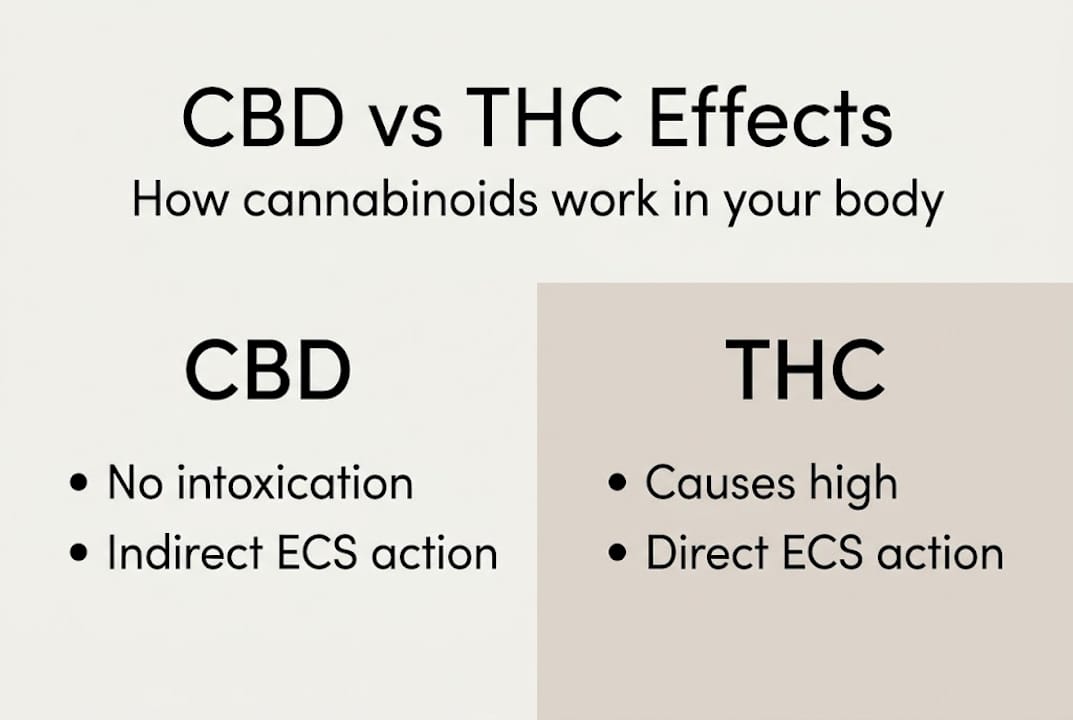
THC activates CB1 and CB2 receptors directly, fitting into them like a key into a lock. CB1 receptors are concentrated in the brain, which is why THC produces psychoactive effects: altered perception, euphoria, and sometimes anxiety or paranoia. CBD, by contrast, does not bind directly to these receptors. Instead, it modulates the ECS indirectly, influencing how other cannabinoids and neurotransmitters behave. This is why CBD supports wellness without causing intoxication.
Here’s a quick comparison of the two compounds:
| Feature | CBD | THC |
|---|---|---|
| Psychoactive | No | Yes |
| Receptor binding | Indirect modulation | Direct CB1/CB2 activation |
| Legal in UK | Yes (as food supplement) | Controlled substance |
| Risk of dependence | Very low | Moderate to high |
| Common uses | Anxiety, pain, sleep | Severe pain, MS, nausea |
Key differences worth remembering:
- CBD is non-intoxicating and supports everyday wellness
- THC causes psychoactive effects and carries greater risks
- CBD may influence serotonin receptors and reduce inflammation
- THC’s direct receptor binding explains both its therapeutic power and its risks
For a fuller picture of how CBD works in the body, the natural CBD benefits article covers the science in plain language.
Pro Tip: If you’re new to cannabinoids, start with CBD. Its indirect action on the ECS means you get meaningful support without the unpredictability of psychoactive effects.
Wellness benefits and clinical uses
Understanding their mechanisms leads naturally to their impact on day-to-day wellness. Both CBD and THC have genuine therapeutic potential, but they suit different situations and different people.
Pain relief
THC is effective for severe pain, particularly neuropathic pain, and CBD offers moderate analgesic and anti-inflammatory effects. When used together, some trials have shown synergistic results, meaning the combination works better than either compound alone. That said, clinical evidence remains mixed, and combining them requires careful medical oversight.

Anxiety
CBD acts on the 5-HT1A serotonin receptor, which is associated with anxiety regulation. This is why many people report feeling calmer after taking CBD. THC, however, can actually increase anxiety at higher doses, particularly in those who are sensitive or inexperienced. For anxiety management, CBD is generally the safer and more predictable choice.
Sleep
THC tends to sedate, which can seem helpful for sleep at first. But cannabis and sleep research shows mixed results over the longer term, with some users reporting disrupted REM sleep. CBD’s effects on sleep appear dose-dependent: lower doses may be mildly alerting, while higher doses can support relaxation and sleep onset.
Here’s a summary of clinical evidence by condition:
| Condition | CBD evidence | THC evidence |
|---|---|---|
| Chronic pain | Moderate | Strong (severe/neuropathic) |
| Anxiety | Good (5-HT1A pathway) | Negative at high doses |
| Sleep | Dose-dependent, mixed | Sedating but disrupts REM |
| Epilepsy | Strong (Epidyolex approved) | Limited |
| MS spasticity | Moderate | Moderate (Sativex) |
For a practical breakdown of CBD supplements for pain and anxiety, including what to look for in a quality product, that resource is well worth reading.
Pro Tip: For anxiety and sleep, try CBD first at a consistent daily dose for at least four weeks before drawing conclusions. Results often build gradually rather than appearing overnight.
Risks, side effects, and safety
After considering benefits, it’s equally important to know the risks and how to use these compounds safely. The safety profiles of CBD and THC are quite different, and understanding them helps you make a genuinely informed choice.
CBD is well-tolerated by most people, with mild side effects that typically include drowsiness, dry mouth, and occasional changes in appetite. These are generally dose-dependent and resolve when you reduce your intake. Importantly, CBD does not impair cognitive function or carry a meaningful risk of dependence.
THC carries a more significant risk profile. At higher doses or with regular use, it is associated with:
- Psychosis risk, particularly in those with a family history of mental health conditions
- Cognitive impairment, especially with long-term use starting in adolescence
- Dependence, with around 9% of users developing cannabis use disorder
- Anxiety and paranoia, particularly at higher doses
- Impaired driving ability, which is illegal and dangerous
One important nuance: CBD may counter some of THC’s side effects, including anxiety and cognitive disruption. This is one reason why full-spectrum or broad-spectrum products, which contain multiple cannabinoids, are sometimes considered more balanced than pure THC.
For everyday wellness in the UK, the risk-benefit calculation strongly favours CBD. It supports your goals without the unpredictability that comes with THC.
For more detail on what’s permitted and how to stay within safe limits, the CBD regulations and safety guide is a useful reference. If you’re just starting out, the safe CBD use resource covers practical steps clearly.
Pro Tip: Always check third-party lab reports before buying any CBD product. These confirm actual cannabinoid content and ensure you’re not inadvertently consuming more THC than the legal limit allows.
UK law and access: What’s legal, and how to get it
With benefits and risks in mind, knowing the law and access routes ensures you make safe, legal choices. The UK has a clear but sometimes misunderstood legal framework for both CBD and THC.
Legal CBD products must be hemp-derived, contain less than 0.2% THC, and comply with FSA Novel Food regulations. THC, by contrast, is a controlled substance under the Misuse of Drugs Act 1971 and is only available through specialist prescription for specific medical conditions.
Here’s how to source CBD safely and legally in the UK:
- Choose FSA-validated products from brands that appear on the FSA’s public list of Novel Food applications
- Check THC content on the label and via third-party lab certificates of analysis
- Buy from reputable UK retailers who can provide full ingredient transparency
- Avoid unregulated imports that may not meet UK legal standards
- Consult your GP before starting CBD if you take any prescription medication
For THC access in the UK:
- Only available by specialist prescription via a licensed clinician
- Approved for conditions including MS spasticity, chemotherapy-induced nausea, and treatment-resistant epilepsy
- Not available over the counter or via standard GP referral in most cases
“CBD is legal as a food supplement in the UK provided it is hemp-derived, contains less than 0.2% THC, and meets FSA Novel Food compliance. THC remains a controlled substance and is only accessible through specialist medical prescription.”
For a full breakdown of the rules, the CBD legal status article and the CBD law guide are both excellent starting points. You can also check CBD legality in UK for a concise summary.
Our experience: What most people get wrong about CBD vs THC
Here’s something we’ve noticed repeatedly when speaking with UK customers: the biggest barrier to using CBD isn’t the science or the law. It’s stigma. People hear ‘cannabis-derived’ and immediately picture something illicit, intoxicating, or risky. That conflation does real harm, because it stops people from trying something that might genuinely help them.
The truth is, CBD and THC are not interchangeable. Treating them as the same compound is like saying paracetamol and morphine are the same because both relieve pain. They’re not, and the context matters enormously.
Our honest advice: for everyday wellness, CBD is the sensible starting point. It’s legal, accessible, non-intoxicating, and supported by a growing body of evidence. THC has its place, but that place is in a clinical setting, under medical supervision, for conditions where CBD alone isn’t sufficient.
If you’re unsure where to begin, the CBD wellness checklist is a practical tool that helps you assess your goals and choose the right approach.
Finding quality CBD products in the UK
If you’re ready to explore CBD yourself, here’s how to find trustworthy UK options.
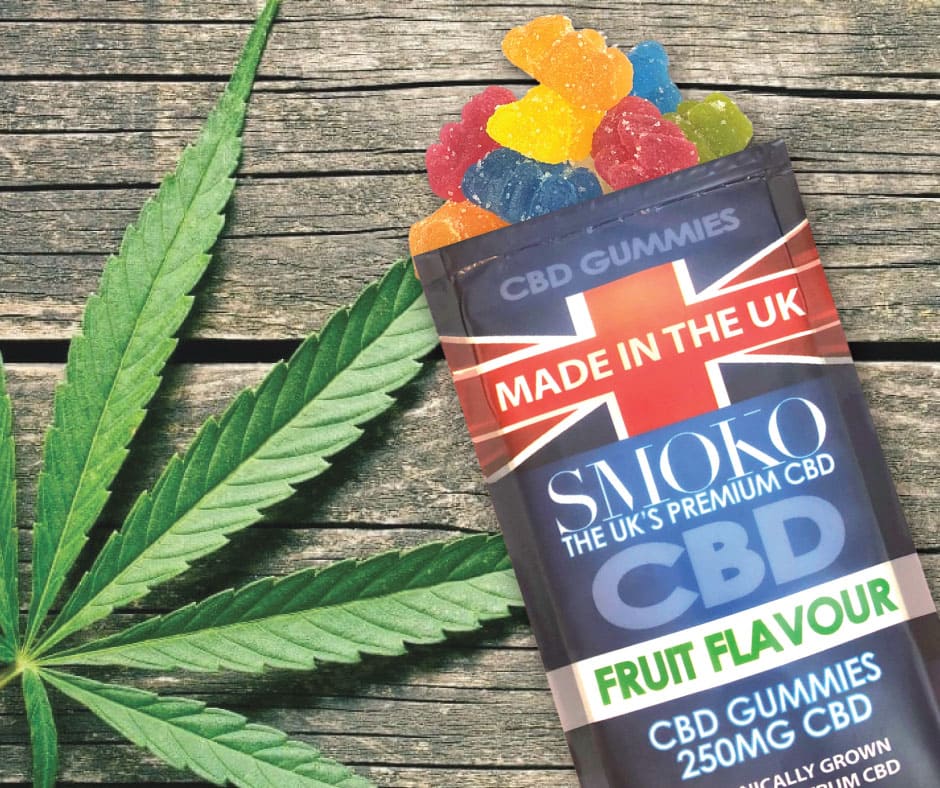
At SMOKO CBD, all products are broad-spectrum, made from organically grown hemp, and independently lab-tested to confirm zero THC. That means you get the synergistic benefit of multiple cannabinoids working together, without any psychoactive risk. Whether you’re managing daily stress, struggling with sleep, or looking for natural support for discomfort, there’s a format to suit you. The mint CBD tincture is a popular starting point, the citrus CBD tincture offers a lighter option, and for those needing stronger support, the high-strength mint CBD delivers 2000mg per bottle.
Frequently asked questions
Is CBD legal in the UK, and can I buy it without a prescription?
Yes, CBD is legal as a food supplement in the UK provided it contains less than 0.2% THC and meets FSA Novel Food compliance. No prescription is required.
What are the main wellness benefits of CBD compared to THC?
CBD is preferred for daily wellness including pain, anxiety, and sleep, while THC is more effective for severe pain but carries greater risks including psychosis and dependence and is only available by prescription.
Does CBD cause intoxication or show up on drug tests?
CBD is non-psychoactive and does not produce a ‘high’. Pure CBD should not trigger a positive drug test, though trace THC in some products may do so, which is why third-party lab testing matters.
Can I use CBD and THC together for pain or sleep?
Combinations may offer greater relief for some conditions, but synergy in trials has shown mixed clinical results. Any combined use should be discussed with a medical professional, especially given THC’s legal and safety considerations in the UK.
Recommended
- CBD vs Hemp Oil Explained: Natural Wellness Guide 2026 – SMOKO CBD
- CBD Benefits and Uses for Wellness in 2026: UK Guide – SMOKO CBD
- CBD vs THC: KEY DIFFERENCES YOU NEED TO KNOW IN 2025 – SMOKO CBD
- What is THC-free CBD? A Wellness Guide to Pure CBD – SMOKO CBD
- Why Choose CBD Products for Wellness Today ~ Green Society Blog