TL;DR:
- Many UK CBD products are mislabeled or contaminated without third-party testing.
- Independent lab analysis verifies CBD potency, THC levels, and safety from contaminants.
- Consumers should always check for certified, batch-specific COAs to ensure product quality and compliance.
If you’ve ever picked up a CBD product from a health shop or website and assumed it was safe because it was legally on sale in the UK, you’re not alone. Most people make exactly that assumption. But a recent analysis of 148 UK CBD edibles found that 9% contained CBD below detectable limits, 66% of those with CBD showed detectable controlled cannabinoids including Δ9-THC, and two samples marketed as CBD-free still contained controlled substances. The reality is that mislabelling and contamination are far more common than the industry likes to admit, and without third-party testing, you have no reliable way of knowing what’s actually in your product.
Table of Contents
- What is third-party CBD testing and why is it essential?
- What risks does third-party testing help prevent?
- How does third-party testing ensure compliance in the UK?
- How can you verify if a CBD product has been third-party tested?
- The uncomfortable truth about CBD safety in the UK
- Discover SMOKO CBD’s independently tested products
- Frequently asked questions
Key Takeaways
| Point | Details |
|---|---|
| Independent testing protects consumers | Unbiased, third-party lab results reveal hidden risks like contamination and support honest labelling. |
| UK CBD law requires robust evidence | Only products meeting strict FSA safety and content rules can be legally sold. |
| Check certificates before purchase | Always look for up-to-date lab test results to ensure CBD safety and quality. |
| Mislabelled products are common | Recent studies found many UK CBD products misstate their contents or contain controlled cannabinoids. |
| Choose brands that publish lab results | Trustworthy sources make third-party certificates easy to find and understand. |
What is third-party CBD testing and why is it essential?
Now that we’ve seen how common unsafe or poor-quality CBD can be, it’s important to understand what third-party testing actually involves and why it’s your best line of defence.
Third-party testing means an independent laboratory, one with no financial relationship to the brand whose product it is testing, analyses a sample and produces an unbiased report. This report is known as a Certificate of Analysis, or COA. Because the lab has nothing to gain from flattering the results, its findings are far more trustworthy than anything a manufacturer tests in-house.
The CBD testing process covers a wide range of potential concerns, not just cannabinoid levels. Reputable ISO-accredited labs use a suite of validated analytical methods to examine every possible source of risk. According to published research, these methods include HPLC, GC-MS, LC-MS/MS, and ICP-MS, testing for cannabinoids (CBD and THC), heavy metals (for example lead below 0.005 mg/kg and arsenic below 0.02 mg/kg), pesticides (below 0.01 mg/kg), residual solvents (below 6 mg/kg), and microbial contamination. Each one of those categories represents a genuine risk that cannot be detected by sight, smell, or taste.
A legitimate COA will include:
- Cannabinoid profile: Confirms how much CBD and THC is actually present versus what the label claims
- Heavy metals panel: Tests for lead, arsenic, cadmium, and mercury, all of which hemp plants can absorb from contaminated soil
- Pesticide screen: Checks for traces of agricultural chemicals used during cultivation
- Residual solvents: Identifies any leftover extraction chemicals, such as ethanol or butane, from the manufacturing process
- Microbial testing: Screens for harmful bacteria and moulds that can develop during storage
“A COA is only as trustworthy as the lab that produced it. Always check that the issuing laboratory holds ISO/IEC 17025 accreditation, which is the international benchmark for testing competence.”
Pro Tip: When reviewing a COA, look for the lab’s accreditation number and cross-reference it on the UK Accreditation Service (UKAS) website. If you cannot find the lab there, treat the results with real caution.
Understanding organic CBD certification alongside third-party lab results gives you an even more complete picture, particularly regarding pesticide exposure at the source.
What risks does third-party testing help prevent?
Understanding the testing process is just the first step. Let’s look at the specific risks these tests are designed to prevent.
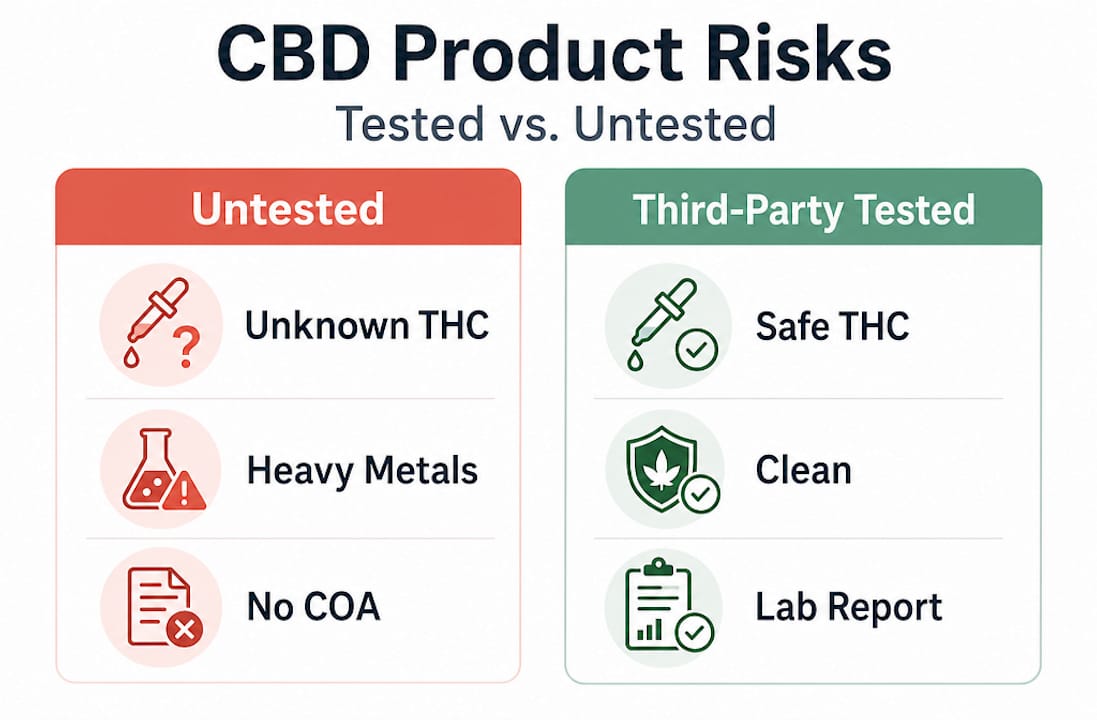
The most immediate concern for many UK consumers is THC exposure. THC (tetrahydrocannabinol) is the psychoactive compound in cannabis and is a controlled substance in the UK. Recent UK research found that 66% of tested edible CBD products with detectable CBD also contained controlled cannabinoids, creating both a health risk and a potential legal problem for the unsuspecting buyer.
Beyond THC, the risks fall broadly into three categories:
- Mislabelled potency: A product claiming 1,000mg of CBD may contain significantly less, meaning you’re not getting the wellness support you paid for. In some cases, concentrations are far higher than stated, raising safety concerns.
- Toxic contamination: Hemp is a bioaccumulator, meaning the plant absorbs whatever is in its growing environment. Soil contaminated with heavy metals or treated with pesticides can produce hemp that carries those substances right through to finished products.
- Extraction residues: Lower-quality manufacturers sometimes leave traces of industrial solvents in the final product, particularly when extraction processes aren’t tightly controlled.
Here’s a straightforward comparison of what can happen with tested versus untested products:
| Risk factor | Untested CBD product | Third-party tested product |
|---|---|---|
| THC content | Unknown, potentially over legal limit | Verified, confirmed below legal limit |
| CBD potency | May not match label claim | Confirmed accurate to label claim |
| Heavy metals | No data, potentially harmful levels | Tested, results on COA |
| Pesticides | No data, risk from poor cultivation | Screened and confirmed compliant |
| Microbial safety | No verification | Tested to food-grade standards |
The legal dimension deserves particular attention. If a product you purchase contains THC above permitted limits and you’re subject to a workplace drugs test, for example, you could face serious consequences that have nothing to do with your intended use. Checking CBD regulations in the UK helps you understand exactly where the boundaries sit and why they matter. For a broader explanation of how the law works, reading up on legal CBD guidance UK provides useful context.
The finding that two out of thirteen CBD-free products still contained controlled cannabinoids is particularly alarming. It suggests contamination can occur even where brands make explicit claims about the absence of THC, reinforcing why independent verification is so important rather than simply taking a label at face value.
How does third-party testing ensure compliance in the UK?
Given the very real risks highlighted by recent data, it’s clear that testing doesn’t just protect consumers. It’s also the key to staying on the right side of UK law.
The Food Standards Agency (FSA) regulates CBD food supplements in the UK under novel food legislation. Brands selling CBD products must submit an application supported by rigorous analytical data. The FSA’s assessment process requires evidence that contaminants sit below EU limits (covering heavy metals, pesticides, and mycotoxins) and that THC levels remain within safe parameters, with an acceptable daily intake reference of 1 µg/kg body weight per day. Notably, some novel food applications have already been rejected because the submitted analytical data lacked sufficient integrity or detail.
The FSA has also set a provisional 10mg/day acceptable daily intake for CBD, alongside strict THC limits, providing a framework that third-party testing is uniquely positioned to verify. Without independent lab results attached to specific product batches, there is simply no credible way for a business to demonstrate it meets these thresholds.
Pro Tip: Ask any CBD brand for a batch-specific COA rather than a generic one. A COA tied to the actual batch number on your product is the only document that truly reflects what’s inside that particular bottle or packet.
What does compliant testing actually look like in practice?
- Results must come from a laboratory with recognised accreditation (ISO/IEC 17025 as the standard)
- The COA must show cannabinoid results (CBD, THC, and the full profile) with quantified values
- Heavy metal results must fall beneath prescribed thresholds for lead, arsenic, cadmium, and mercury
- Pesticide residues must be at or below 0.01 mg/kg per compound, often reported as “not detected”
- Results should be dated and traceable to a specific batch or lot number
Reading up on CBD law in the UK in more depth helps clarify how novel food requirements interact with trading standards and what it means if a brand you’re considering doesn’t appear on the FSA’s validated products list.
How can you verify if a CBD product has been third-party tested?
So, as more brands appear on shelves and online, how can you be sure your chosen product has been independently verified for safety and quality?
The most reliable starting point is the Certificate of Analysis itself. A genuine, useful COA is not a vague one-page document with a logo and a pass/fail tick. FSA benchmarks confirm that heavy metals must consistently fall below specific limits (for example, lead below 0.005 mg/kg) and pesticides should return as not detected, validated by LC-MS/MS methodology for trace THC in food products.
Here is a step-by-step approach for evaluating a CBD product before you buy:
- Visit the brand’s website and locate their COA section. Reputable brands publish these prominently. If you have to hunt for them or they aren’t available at all, that’s a significant red flag.
- Check the issuing lab. Search the lab name on the UKAS directory to confirm it holds ISO/IEC 17025 accreditation. An unaccredited lab’s results carry far less weight.
- Match the batch number. The COA should correspond to the specific product batch. Check that the number on the document matches what’s printed on your packaging.
- Review the cannabinoid panel. Look for CBD potency (confirm it matches the label claim within reasonable tolerances) and THC levels (should be confirmed as below the legal threshold, ideally non-detectable for broad-spectrum products).
- Scan the contaminant results. Ensure heavy metals, pesticides, and residual solvents all have numerical results, not simply “pass.” Actual figures allow you to assess compliance yourself.
- Check the test date. COAs more than a year old may not reflect the current batch and should be queried with the brand.
A useful practical resource is the CBD gummies safety checklist, which walks through many of these points specifically for edible products, where contamination risk can be especially pronounced given additional ingredients and processing steps.
What simple visual checks will not tell you is whether THC content is within legal limits, whether heavy metal levels are safe, or whether the CBD concentration is accurate. Labels can be printed cheaply and changed easily. A legitimate COA from an independent, accredited lab cannot be faked without significant effort.
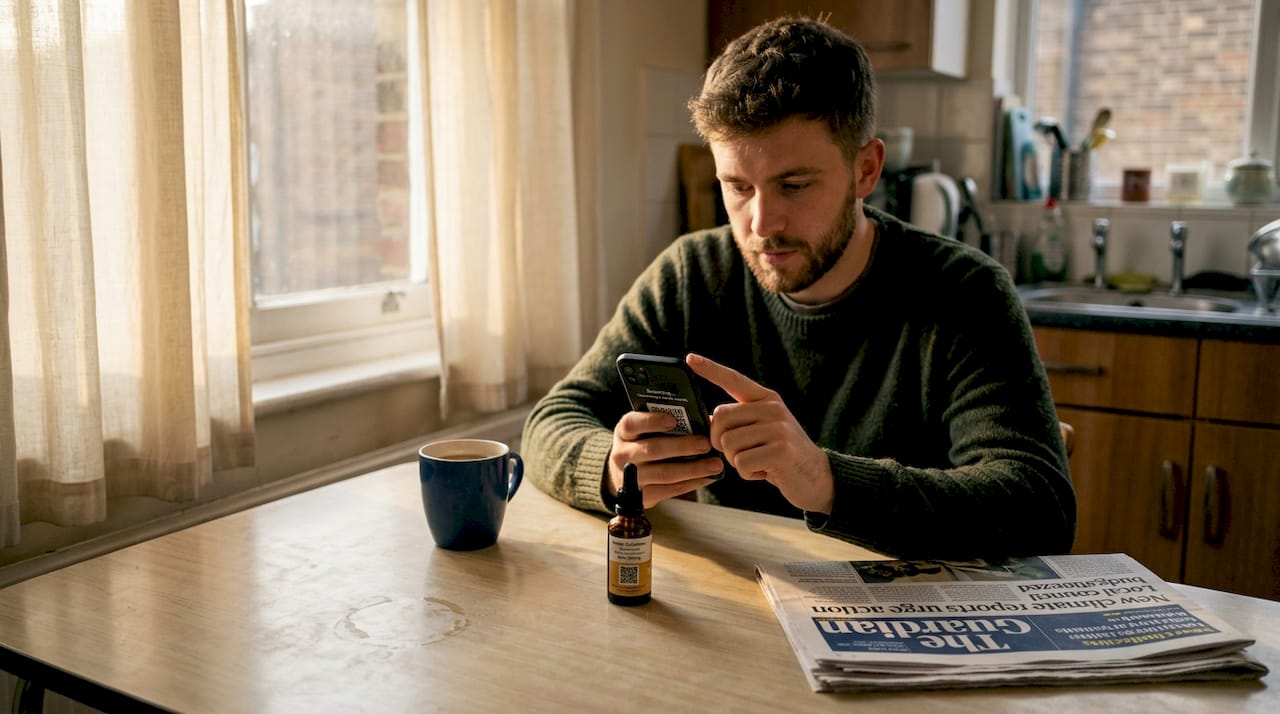
Pro Tip: Many reputable brands now include a QR code on packaging that links directly to the COA for that specific batch. If a brand offers this, use it. It’s one of the most convenient and transparent verification tools available.
The uncomfortable truth about CBD safety in the UK
Bringing all this together, it’s worth stepping back to consider what the facts really mean for UK consumers right now.
There is a widespread and understandable assumption that if a product is sold legally in a UK shop or on a reputable website, it must be safe and accurately labelled. The reality, as the research clearly shows, is that this assumption can be dangerously wrong. The CBD market has grown enormously and quickly, and regulatory enforcement has not always kept pace with that growth. Some brands are genuinely doing the right thing. Others are cutting corners, whether deliberately or through ignorance, and consumers bear the consequences.
What separates savvy CBD buyers from those who are simply hoping for the best is one consistent habit: they always check the COA before purchasing, not after. They look beyond the attractive packaging, the wellness claims, and the celebrity endorsements. They want to see the actual numbers from an independent lab, tied to the actual batch they’re buying.
There’s also a subtler point worth making here. Some people worry that CBD and drug test outcomes could be influenced by trace THC in their products. If a brand cannot provide a current, batch-specific COA showing THC at non-detectable levels, that concern is entirely valid. This isn’t about being overly cautious. It’s about having access to the evidence you need to make an informed choice.
The uncomfortable truth is that the burden of verification currently falls on you, the consumer. Until regulatory enforcement becomes more robust and consistent across the entire UK market, third-party testing is the best tool you have. Use it.
Discover SMOKO CBD’s independently tested products
Ready to put this knowledge into action? Here’s how you can choose with confidence.
At SMOKO CBD, every product in our range is independently tested by an accredited third-party laboratory, with batch-specific Certificates of Analysis published directly on our website. You can review the results before you spend a penny, so there are no surprises and no blind trust required.
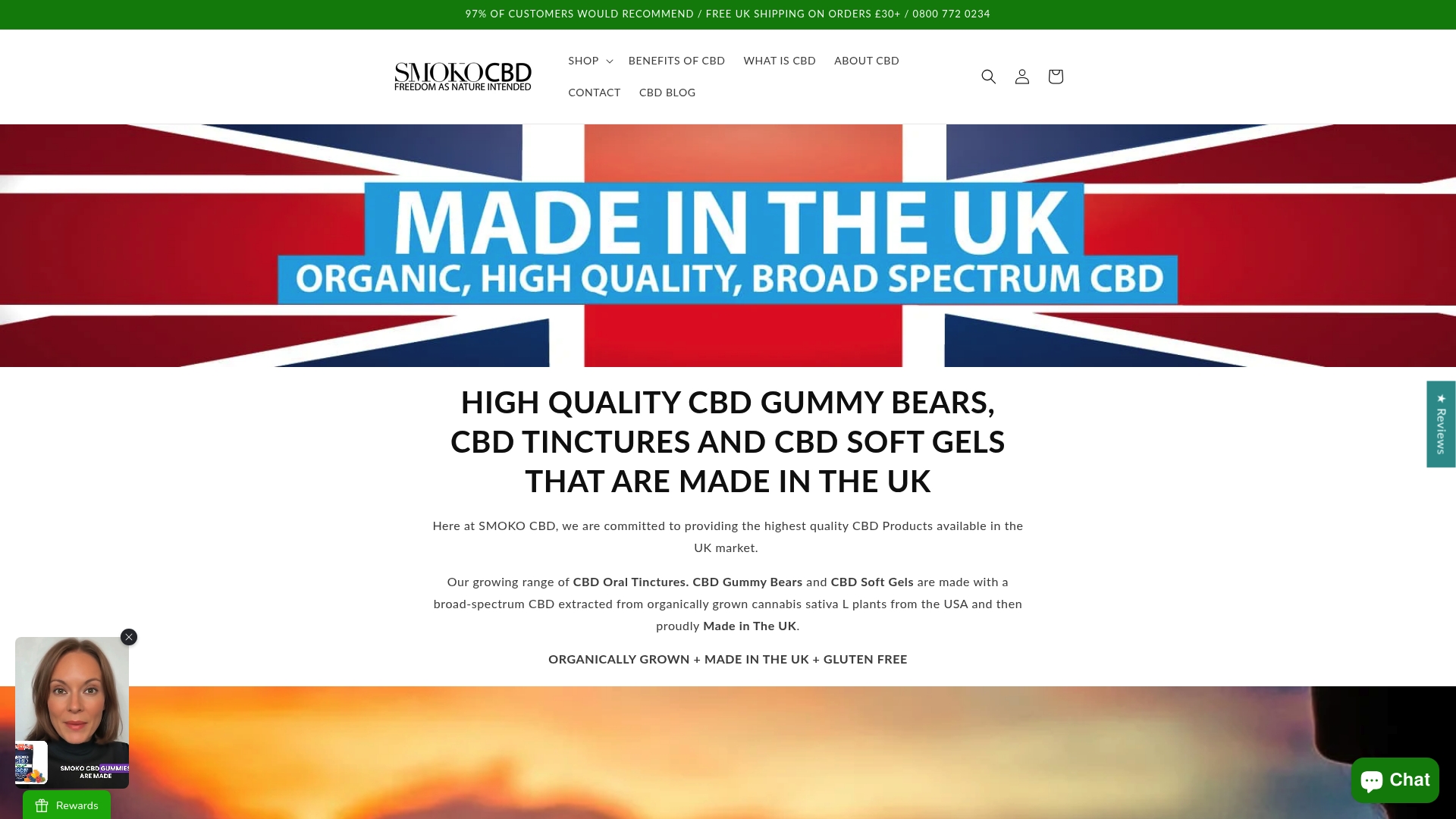
Whether you’re exploring our SMOKO Mint 1000mg CBD tincture or looking at our CBD soft gels and gummies, every product is made from organically grown USA hemp, formulated to broad-spectrum standards with zero detectable THC. Our commitment to transparency means you get the full picture: accurate potency, confirmed absence of harmful contaminants, and verified compliance with UK regulations. Real wellness starts with real evidence.
Frequently asked questions
What does a third-party CBD test check for?
It checks cannabinoid levels (like CBD and THC), heavy metals, pesticides, residual solvents, and microbial contamination to ensure product safety, verified using methods such as HPLC, GC-MS, LC-MS/MS, and ICP-MS by ISO-accredited laboratories.
How can I tell if my CBD has been independently tested?
Look for a Certificate of Analysis from an ISO-accredited lab with clear numerical results published on the brand’s website or accessible via a QR code on the product packaging.
Is third-party testing required by law in the UK?
FSA novel food assessments require robust analytical data demonstrating contaminants below EU limits and low THC, making independent lab testing effectively essential for any brand legally selling CBD in the UK.
What are the UK limits for THC and contaminants in CBD?
CBD products in the UK must meet THC limits adjusted to below an acceptable reference dose of 1 µg/kg body weight per day, alongside strict thresholds for heavy metals, pesticides, and other contaminants set by EU standards.
Does third-party tested CBD cost more?
Products that carry the cost of independent testing may be priced slightly higher, but the assurance of safety, legal compliance, and accurate labelling makes that premium a genuinely worthwhile investment for your health and peace of mind.