Yes, food changes how much CBD reaches your bloodstream, and the effect is substantial. A high-fat meal can increase peak CBD levels several-fold compared with taking CBD on an empty stomach. The single most important thing you can do is standardise your intake: always take CBD with food or always take it fasted, and stick to that routine every day.
- Fat content drives the biggest change. A high-fat meal raised CBD peak concentration (Cmax) and total exposure (AUC) significantly versus fasting in a controlled phase 1 trial.
- Low-fat meals and whole milk still help, producing smaller but measurable increases in absorption.
- Alcohol causes a modest rise in CBD exposure.
- The practical rule: pick one approach (with or without food) and keep it consistent every day to make your effects predictable.
- If you take prescription medicines, speak to your GP or pharmacist before starting CBD. Food-driven spikes in CBD levels can amplify interactions with drugs metabolised by the CYP450 enzyme system.
Key takeaways
Standardising your CBD intake state (always with food or always fasted) is the single most effective step for predictable effects, because food, particularly fat, can increase peak CBD levels several-fold.
| Point | Details |
|---|---|
| Fat drives absorption | A high-fat meal raised CBD Cmax — and AUC 4-fold versus fasting in a phase 1 trial. |
| Consistency over maximisation | Pick one intake state and keep it daily; varying meals causes unpredictable blood levels. |
| Drug interactions are real | CBD inhibits CYP3A4 and CYP2C19; check with your pharmacist if you take prescription medicines. |
| Monitor if on interacting drugs | Ask your GP for a baseline liver function test if you take narrow-therapeutic-index medicines. |
| Smokocbd for verified products | Smokocbd’s MCT-based tinctures carry third-party COAs, making clinician consultations straightforward. |
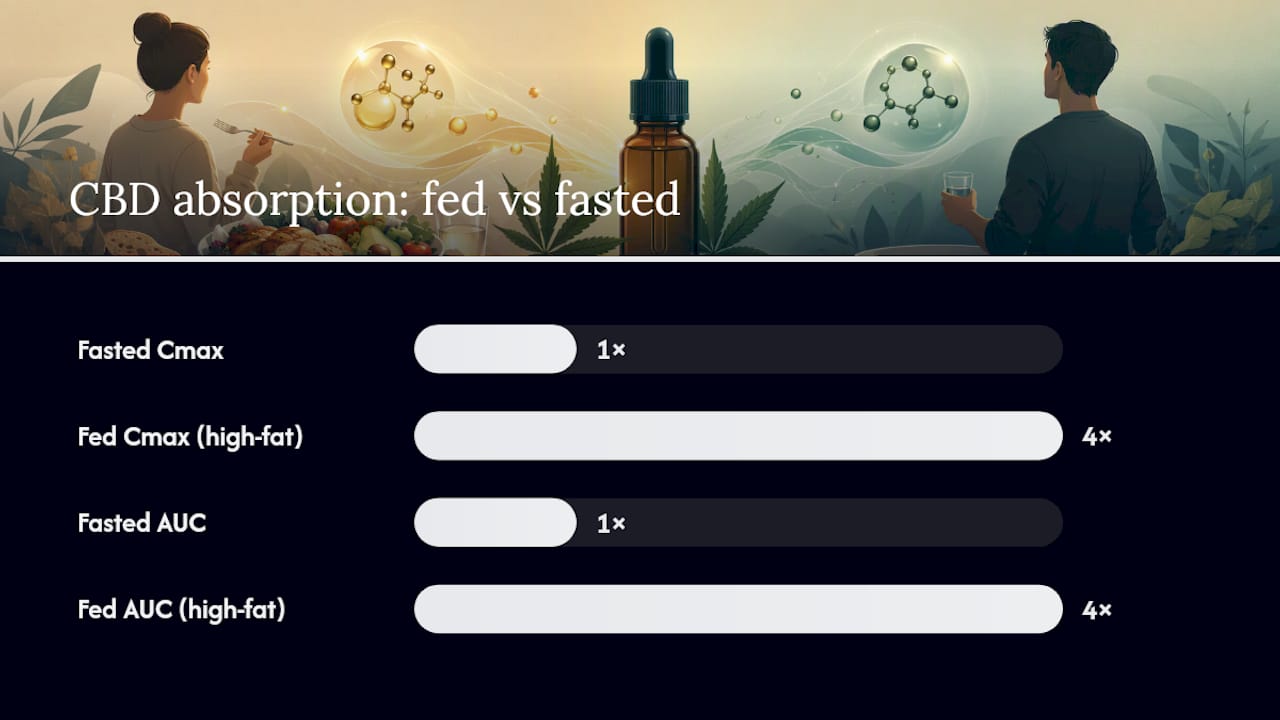
Table of Contents
- How eating changes CBD absorption: digestion, fat, and your gut
- What human studies show about fed versus fasted CBD levels
- Which foods and drinks increase or reduce CBD absorption
- Drug interactions: how CBD can alter your prescription medicines
- Safety, side effects, and what UK users should monitor
- Practical dosing and timing: building a predictable CBD routine
- What to tell your GP or pharmacist about CBD and food
- Research snapshot: key numbers and what they mean for you
- How proteins, carbohydrates, and fibre interact with CBD
- How the timing of your CBD dose relative to meals affects outcomes
- Why your response to CBD and food differs from everyone else’s
- A perspective on balancing absorption and long-term health
- Smokocbd’s lab-tested CBD tinctures: quality you can verify
- Sources
How eating changes CBD absorption: digestion, fat, and your gut
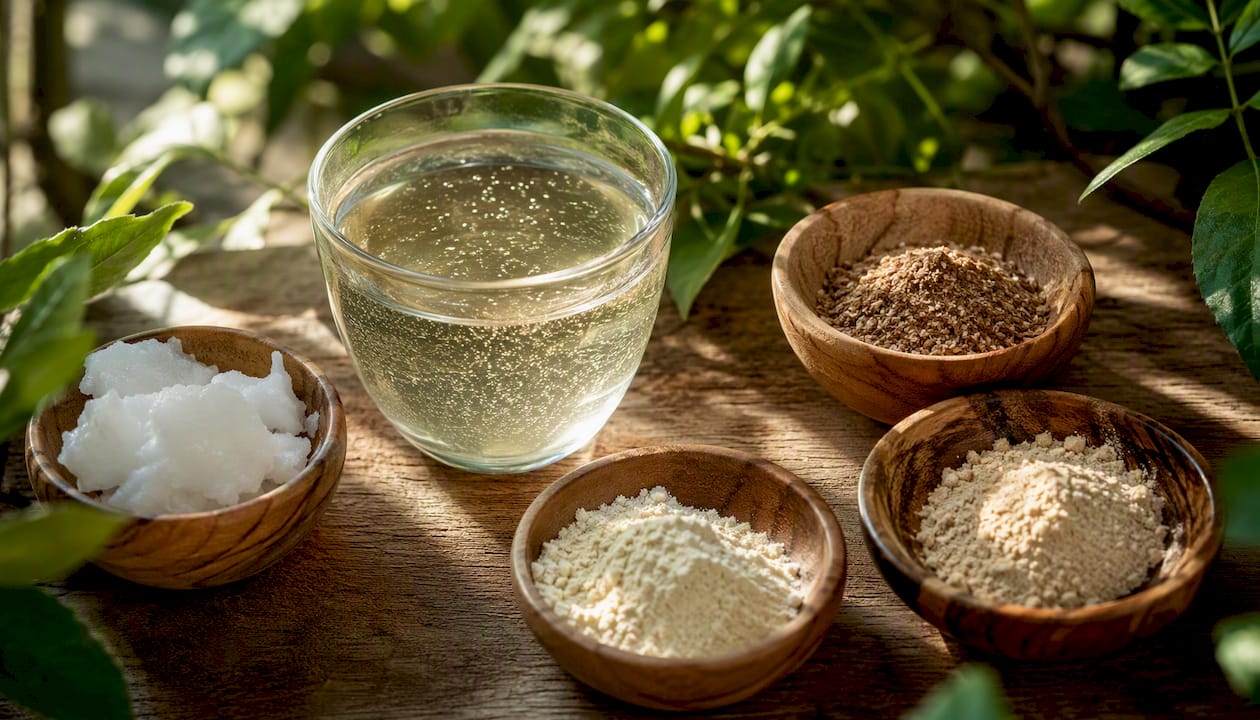
CBD is lipophilic, meaning it dissolves in fat rather than water. That single property explains almost everything about how food affects it.
When you swallow CBD oil, capsules, or gummies on an empty stomach, very little of the compound can dissolve into the watery environment of your gut. Most of it passes through without being absorbed. Introduce dietary fat, and the picture changes dramatically. Fat triggers the release of bile salts from your gallbladder and activates lipase enzymes in the small intestine. Together, they break dietary fat into tiny droplets and wrap them in structures called micelles, which act as molecular ferries. CBD, being fat-loving, slots into these micelles and hitches a ride across the gut wall.
Once inside the intestinal cells, CBD is packaged into chylomicrons, large lipid particles that bypass the liver entirely and travel through the lymphatic system before entering the bloodstream. This lymphatic route is significant: it sidesteps first-pass liver metabolism, meaning more CBD survives intact. In vitro digestion research confirms this mechanism directly, showing fed-state micellarisation efficiency of 22.67% compared with just 0.14% in fasted conditions for the same CBD dose.
The lymphatic pathway also explains a curious pattern seen in clinical trials: a double plasma peak. The first peak comes from direct intestinal absorption; the second, hours later, reflects CBD re-entering circulation via enterohepatic recirculation, where bile carries some CBD back into the gut for a second pass. This biphasic curve prolongs exposure and makes timing less predictable when meal composition varies.
Key mechanisms at a glance:
- Bile salts emulsify fat and create the micellar environment CBD needs.
- Lipase breaks triglycerides into free fatty acids that form micelles.
- Chylomicrons package CBD for lymphatic transport, bypassing first-pass metabolism.
- Enterohepatic recirculation can produce a second plasma peak hours after dosing.
- Fasted state leaves CBD poorly solubilised and largely unabsorbed.
Statistic to note: Research published in Scientific Reports found a geometric mean ratio (GMR) for Cmax of 17.4 and for AUC of 9.7 when participants took a 70 mg CBD extract with a high-fat meal versus fasting, illustrating just how large the food effect can be.
What human studies show about fed versus fasted CBD levels
The evidence from human pharmacokinetic (PK) trials is consistent: food, particularly fat, substantially increases CBD bioavailability. The magnitude varies by formulation and individual, but the direction of the effect does not.
A crossover trial published in PMC confirmed that a standardised high-fat meal produced significantly higher Cmax and AUC compared with fasting, with Tmax (time to peak) shifting from roughly 5 hours to around 10 hours in some participants, reflecting the slower but more complete lymphatic absorption route.
A phase 1 randomised trial using a 750 mg pharmaceutical CBD formulation quantified the differences by meal type:
In a clinical population, the effect was even more pronounced. Patients with refractory epilepsy given oral CBD capsules showed an average Cmax approximately 14-fold higher and AUC approximately 4-fold higher when dosed with a high-fat meal versus fasting. The larger Cmax increase in that study likely reflects the specific capsule formulation and the patient population’s metabolic characteristics.
Important limits to keep in mind:
- Most trials use small samples (often fewer than 20 participants), so individual variation is high.
- Formulations differ: oil drops, capsules, and gummies behave differently in the gut.
- Pharmaceutical-grade CBD (used in most trials) may not behave identically to broad-spectrum extracts.
- Inter-subject variability in gut microbiome, gallbladder function, and CYP enzyme activity means two people taking the same dose with the same meal can have meaningfully different blood levels.
The practical takeaway from this body of evidence is not to chase maximum absorption, but to keep your intake state consistent. Standardising how you take CBD reduces intra-subject variability and makes your effects more predictable day to day.
Which foods and drinks increase or reduce CBD absorption
Fat content, not calorie count, is the primary driver. A randomised crossover study confirmed that a high-fat meal (70% fat) produced higher total CBD AUC than an isoenergetic high-carbohydrate meal (70% carbohydrate), even though both meals contained the same number of calories.
Foods and drinks that increase CBD absorption:
- High-fat meals (avocado on toast with eggs, full-fat yoghurt with nuts, salmon with olive oil): the strongest effect.
- MCT oil (medium-chain triglycerides): rapidly absorbed fats that form micelles efficiently; often added to CBD tinctures for this reason.
- Whole milk: produces a moderate increase, likely due to its fat content.
- Alcohol: causes a modest rise in CBD exposure; not recommended as a strategy given the additional risks.
Foods that produce little or no meaningful increase:
- High-carbohydrate, low-fat meals (plain porridge, white toast with jam, rice cakes): minimal effect on CBD absorption.
- High-fibre, low-fat meals (salad without dressing, steamed vegetables): similarly low impact.
- Water only (fasted state): the lowest absorption scenario.
Practical meal examples:
- Morning dose with higher absorption: two scrambled eggs with smoked salmon and a drizzle of olive oil (approximately 25–35 g fat).
- Moderate absorption snack: a small handful of mixed nuts and a glass of whole milk.
- Evening dose for steadier, lower exposure: a light vegetable soup with a small piece of wholegrain bread.
Pro Tip: If you use a CBD tincture that already contains MCT oil as its carrier, you are already benefiting from some fat co-administration even when taken between meals. Check your product’s ingredient list.
Drug interactions: how CBD can alter your prescription medicines
CBD does not just interact with food. It also interacts with the enzymes your liver uses to process many common medicines, and a food-driven spike in CBD levels can amplify those interactions.
The key mechanism involves the CYP450 enzyme family, particularly CYP3A4 and CYP2C19, which metabolise a large proportion of prescription drugs. CBD can inhibit these enzymes, slowing the breakdown of other medicines and causing their blood levels to rise higher than intended. CBD also interacts with UGT (UDP-glucuronosyltransferase) enzymes involved in drug conjugation. A comprehensive review of cannabinoid drug interactions summarises the clinical and preclinical evidence for these CYP and UGT pathways.
When you take CBD with a high-fat meal and absorption spikes, the inhibitory effect on these enzymes is proportionally greater. That is why meal composition matters not just for CBD’s own effects, but for the medicines you take alongside it.
Medicine classes UK users should discuss with their GP or pharmacist:
- Anticoagulants (e.g., warfarin): CYP2C9 involvement; altered CBD levels can shift INR.
- Antiepileptics (e.g., clobazam, valproate): CYP2C19 and UGT pathways; interactions are well-documented in clinical epilepsy populations.
- Antidepressants and anxiolytics (e.g., SSRIs, tricyclics): CYP2D6 and CYP3A4 involvement.
- Statins (e.g., atorvastatin): CYP3A4-metabolised; raised CBD exposure could increase statin blood levels.
- Calcium channel blockers (e.g., amlodipine): CYP3A4 substrate; similar concern.
- Immunosuppressants (e.g., ciclosporin, tacrolimus): narrow therapeutic index; small changes in metabolism matter.
Action steps:
- Tell your GP or pharmacist you are taking CBD, the dose, and whether you take it with food.
- Share your product’s Certificate of Analysis (COA) so the clinician knows the exact CBD strength and that THC is absent.
- For narrow-therapeutic-index drugs (warfarin, antiepileptics), ask about monitoring blood levels or INR more frequently when starting or changing CBD.
- NHS clinical resources on cannabidiol and Harvard Health guidance both advise clinician consultation before combining CBD with prescription medicines.
Safety, side effects, and what UK users should monitor
The main safety concerns for regular CBD users are liver enzyme changes, drowsiness, and gastrointestinal upset (nausea, diarrhoea, reduced appetite). Food modifies all three: higher absorption after a fatty meal means a higher peak CBD concentration, which increases the likelihood of dose-related side effects.
Simple monitoring steps for regular users:
- If you take interacting prescription drugs or use high doses (above 150 mg/day), ask your GP for a baseline liver function test (LFT) before starting CBD and a follow-up after 4–6 weeks.
- Keep a brief daily log: dose, meal type, timing, and any new symptoms. A change in your meal routine is one of the most common reasons for unexpected side effects.
- Note any new drowsiness, nausea, or changes in how your other medicines feel. These can signal altered drug levels.
- If you develop unexplained fatigue, jaundice, or abdominal pain, stop CBD and contact your GP promptly.
When to seek NHS support:
- NHS 111: for new or unexpected symptoms that concern you but are not an emergency.
- Your GP: for medication reviews, LFT requests, and ongoing monitoring.
- Community pharmacist: for quick checks on interactions with over-the-counter or prescription medicines; no appointment needed.
- MHRA Yellow Card scheme: report any suspected adverse reaction to CBD at Yellowcard. This is the UK’s official pharmacovigilance system, and your reports help build the national safety evidence base.
For users managing chronic conditions with CBD, structured monitoring is particularly worthwhile given the longer duration of use.
Practical dosing and timing: building a predictable CBD routine
The core recommendation is straightforward: pick one intake state and keep it. Always take CBD with food or always take it fasted. Varying your approach from day to day is the main reason people find CBD effects inconsistent.
Three example routines:
- Morning with breakfast (moderate-fat meal): Take your CBD oil or capsule with scrambled eggs and wholegrain toast. Consistent fat content, consistent absorption. Good for daytime wellness goals.
- Midday with lunch (light meal): A small handful of nuts or a drizzle of olive oil on a salad provides enough fat to meaningfully improve absorption without a heavy meal. Suits people who prefer not to eat a large breakfast.
- Evening with dinner (higher-fat meal): Taking CBD with a salmon or avocado-based dinner maximises absorption and suits those using CBD for sleep. Be aware that a high-fat evening meal will delay Tmax, so effects may arrive later.
Titration cheat sheet:
- Start low: 10–20 mg CBD per day for the first week.
- Increase gradually: add 5–10 mg every 7 days if needed.
- Pause and reassess if you notice new side effects or if your meal routine changes significantly.
- Do not increase dose and change meal routine at the same time: you will not know which variable caused any change in effect.
Route differences matter for food interaction:
- CBD oil drops (sublingual): some absorption occurs under the tongue before swallowing, partially bypassing the gut. The food effect is still present for the swallowed portion but may be slightly less pronounced.
- Soft gel capsules: entirely gut-dependent; the food effect is largest here. Oral capsule studies show the most dramatic fed-versus-fasted differences.
- Gummies (edibles): similar to capsules; the food effect applies fully. The sugar and gelatine matrix does not meaningfully alter fat-dependent absorption.
Keep a simple diary: date, dose, route, meal type, and a 1–5 rating for your target effect. Two weeks of data will tell you more about your personal response than any general guideline. For structured routine ideas, CBD wellness routine examples offer practical starting points.
Pro Tip: Use the same meal as your “CBD anchor” each day. Habit-stacking CBD onto a fixed meal (e.g., always with your morning coffee and eggs) is one of the most reliable ways to keep absorption consistent without thinking about it.
What to tell your GP or pharmacist about CBD and food
Clinicians cannot help you manage CBD interactions if they do not know you are taking it. Many people feel uncertain about how to raise the topic. Here is a concise checklist to bring to any appointment.
Information to have ready:
- Product name and brand (e.g., Smokocbd broad-spectrum tincture).
- CBD strength per dose (in mg) and the total daily dose.
- Whether you take it with food, and what type of meal.
- Frequency (once daily, twice daily, etc.).
- How long you have been taking it.
- Any effects you have noticed, positive or negative.
- Your product’s Certificate of Analysis (COA): this confirms CBD strength and zero THC, which clinicians need to assess interaction risk accurately.
Sample phrases for your appointment:
- “I have been taking [X] mg of broad-spectrum CBD oil once daily with breakfast for [Y] weeks. I wanted to check whether it could interact with my [medicine name].”
- “Could we run a liver function test as a baseline, given I am on [medicine] and starting CBD?”
Community pharmacist vs GP:
- Your community pharmacist can quickly screen for known drug interactions using your medication record. No appointment needed; this is often the fastest first step.
- Your GP is the right contact for requesting LFTs, adjusting prescription doses, or managing more complex interactions.
For a broader safe-use framework, the CBD wellness checklist covers monitoring steps UK users can follow alongside clinician guidance.
Pro Tip: Print or screenshot your product’s COA and bring it to your appointment. A clinician who can see the exact CBD concentration and confirm zero THC is far better placed to advise you than one working from a vague product description.
Research snapshot: key numbers and what they mean for you
The headline finding across human PK trials is consistent: a high-fat meal produces a large, clinically meaningful increase in CBD exposure compared with fasting. The magnitude varies by formulation and population, but the direction is reliable.
Key trial summaries:
The variation between studies reflects differences in formulation (extract vs pharmaceutical solution vs capsule), dose, and population. The epilepsy capsule study’s 14-fold Cmax increase is striking, but that population included patients with altered gut motility and co-medications that may have amplified the effect.
What the evidence means in practice:
- Chasing maximum absorption by always eating a high-fat meal is not the right goal. The goal is consistency.
- A 17-fold Cmax difference between fasted and fed states means that if you sometimes take CBD fasted and sometimes with a full English breakfast, your blood levels could vary enormously from day to day.
- Small sample sizes (most trials had fewer than 20 participants) and differing formulations mean you cannot directly apply a trial’s exact fold-change to your own situation.
- CBD bioavailability in the oral route is inherently low and variable; food is the single most modifiable factor within your control.
How proteins, carbohydrates, and fibre interact with CBD
Most of the research attention goes to fat, and rightly so. But proteins, carbohydrates, and fibre each play a supporting role in how CBD behaves in the gut, even if their effects are smaller.
Proteins slow gastric emptying, which extends the time CBD spends in the upper small intestine where absorption occurs. A protein-rich meal (chicken, legumes, eggs) may modestly prolong the absorption window without dramatically increasing peak levels. The effect is secondary to fat content but worth noting for people who eat high-protein, lower-fat diets.
Carbohydrates on their own do not meaningfully improve CBD absorption. The Cambridge crossover study comparing isoenergetic high-fat and high-carbohydrate meals confirmed this directly: the high-carbohydrate condition produced lower CBD AUC despite identical calorie intake. Simple sugars and starches do not stimulate bile salt release or micelle formation in the way fats do.
Dietary fibre introduces a more nuanced picture. Soluble fibre (found in oats, apples, and pulses) can bind to bile salts in the gut, reducing their availability for micelle formation. In theory, a very high-fibre meal could slightly reduce CBD absorption by sequestering the bile salts CBD needs for micellarisation. The practical effect in a typical mixed meal is likely small, but it is a reason not to rely on a pure fibre-heavy meal as your “CBD anchor” if consistent absorption matters to you.
The practical upshot: fat remains the dominant variable. Protein and fibre are secondary modifiers. Carbohydrates alone do little. For guidance on cannabis serving size and how meal composition fits into dosing decisions, that framework translates well to CBD users thinking about portion and timing.
How the timing of your CBD dose relative to meals affects outcomes
Timing is not just about whether you eat, but when you eat relative to your dose, and what you eat in the hours before.
Taking CBD immediately before or during a meal places it in the gut at the same time as dietary fat, bile salts, and lipase activity are at their peak. This is the optimal window for fat-assisted absorption. Most clinical trials that show large fed-versus-fasted differences dose participants within 30 minutes of meal completion.
Taking CBD 30–60 minutes after finishing a meal still captures much of the benefit, because bile salt secretion and micelle formation continue for some time after eating. The absorption window is broader than many people assume.
Taking CBD more than 2 hours after a meal starts to resemble fasted conditions, particularly for lighter meals. Bile salt levels drop, micelle availability falls, and absorption efficiency decreases.
Pre-meal timing (30 minutes before eating) is less well-studied but likely produces intermediate absorption, as some bile is released in anticipation of food (the cephalic phase response) but full micellar conditions are not yet established.
The double-peak plasma profile seen after high-fat meals adds another timing dimension. The first peak typically arrives 2–4 hours post-dose; the second, reflecting enterohepatic recirculation, may appear 6–12 hours later. If you take CBD in the evening with a high-fat dinner, that second peak could arrive in the early hours of the morning, which is relevant for people monitoring sleep quality or taking medicines with narrow therapeutic windows.
For those building a daily CBD habit, anchoring the dose to a fixed point in the meal (e.g., immediately after the first few bites) is a practical way to standardise timing without needing a clock.
Why your response to CBD and food differs from everyone else’s
Two people can take the same CBD dose with the same meal and have meaningfully different blood levels. That is not a flaw in the research; it reflects genuine biological variation.
Genetic differences in CYP enzymes are one of the largest sources of variability. CYP3A4 and CYP2C19 are the primary enzymes that metabolise CBD. Genetic variants (polymorphisms) in these enzymes create “poor metabolisers” and “rapid metabolisers.” A poor metaboliser will accumulate more CBD in the bloodstream from the same dose; a rapid metaboliser will clear it faster. These differences are inherited and cannot be changed by diet or lifestyle.
Gallbladder function affects bile salt availability. People who have had their gallbladder removed (cholecystectomy) have continuous but lower-volume bile flow rather than the bolus release triggered by a fatty meal. Their micellar absorption of CBD may be less responsive to high-fat meals than the clinical trial data suggests.
Gut microbiome composition influences bile salt metabolism and the enterohepatic recirculation of CBD. Individuals with different microbial profiles may have different second-peak timing and magnitude.
Body composition matters because CBD distributes into adipose (fat) tissue. People with higher body fat percentages have a larger volume of distribution for CBD, which can lower peak plasma levels but extend the duration of exposure as CBD slowly releases from fat stores.
Age and sex also play a role. Older adults tend to have slower gastric emptying and reduced CYP enzyme activity, both of which can increase CBD exposure. Some PK studies have noted sex-based differences in Tmax and Cmax, though the evidence is not yet definitive.
The implication for you: do not benchmark your experience against someone else’s. Start low, titrate slowly, and use your own diary data to find the dose and meal combination that works for your biology.
A perspective on balancing absorption and long-term health
The science is clear that high-fat meals maximise CBD absorption. But there is a real risk of misreading that finding as a reason to eat a full English breakfast every morning purely to ramp up your CBD levels. That would be poor advice, and not just for obvious dietary reasons.
The goal of CBD use for most people is a steady, predictable effect over time, not a daily peak-and-trough rollercoaster. Chasing maximum Cmax by loading up on saturated fat creates variability in the opposite direction: your levels will be high on days you manage the high-fat meal and lower on days you do not. Consistency of intake state, not maximisation of absorption, is what the clinical PK literature actually recommends.
A moderate-fat meal, taken at the same time each day, achieves something more valuable than a high-fat spike: it gives you a reliable baseline from which to assess whether your dose is working. That is the kind of data that makes a conversation with your GP or pharmacist genuinely useful.
Smokocbd’s commitment to third-party lab testing and clear COAs is part of the same principle. Knowing exactly what is in your product, and taking it consistently, is what separates a thoughtful wellness routine from guesswork. Bring your COA to your clinician, standardise your intake, and adjust based on your own observed response. That approach will serve you better than any absorption-maximising hack.
Smokocbd’s lab-tested CBD tinctures: quality you can verify
If you are ready to put this knowledge into practice, the product you choose matters as much as the routine you build around it.
Smokocbd’s 2000 mg broad-spectrum CBD mint tincture is made in the UK from organically grown hemp and uses MCT oil as its carrier, which means fat co-administration is already built into the formulation. Every batch is third-party lab tested for CBD strength and zero THC, and the COA is available to share with your GP or pharmacist. For anyone who has just read this article and wants a product whose label they can actually trust, that transparency is the starting point. View the product page, check the COA, and take your first dose with a moderate-fat meal at a consistent time each day.
Sources
The sources below were selected for their direct relevance to CBD pharmacokinetics, food interactions, and UK-applicable safety guidance. Primary human trials are listed first, followed by mechanistic and regulatory resources.
- A high‑fat meal significantly impacts the bioavailability and biphasic absorption of cannabidiol (CBD) from a CBD‑rich extract in men and women | Scientific Reports
- Cannabidiol bioaccessibility increases with a lipid food matrix in an in‑vitro digestion model - PMC
This article provides general information only and is not a substitute for professional medical advice. If you take prescription medicines or have an underlying health condition, consult your GP or pharmacist before starting or changing your CBD routine.