Consistent daily CBD use gives you the best chance of steady, cumulative wellness effects. The reason is straightforward: CBD has a reported half-life of about a day or two, so taking it at the same time each day allows levels to build gradually in your system rather than spike and drop. That accumulation supports what researchers call endocannabinoid tone, the background activity of your endocannabinoid system (ECS), and that tone is what many of CBD’s longer-term effects appear to depend on. Product quality matters just as much as timing: a Certificate of Analysis (COA) from a third-party lab confirms what is actually in your product, and the UK Food Standards Agency (FSA) requires CBD products to meet novel food authorisation standards before they can be legally sold here.
Three things to remember before you read further:
- Fix a low starting dose at the same time every day for at least two to four weeks before deciding whether it is working.
- Keep a simple daily journal noting dose, timing, sleep quality, mood, and any side effects.
- Only buy products with batch-specific COAs so you know each bottle matches the label.
Table of Contents
- How CBD works with your endocannabinoid system
- Why daily CBD consistency improves your results
- How long before you notice results?
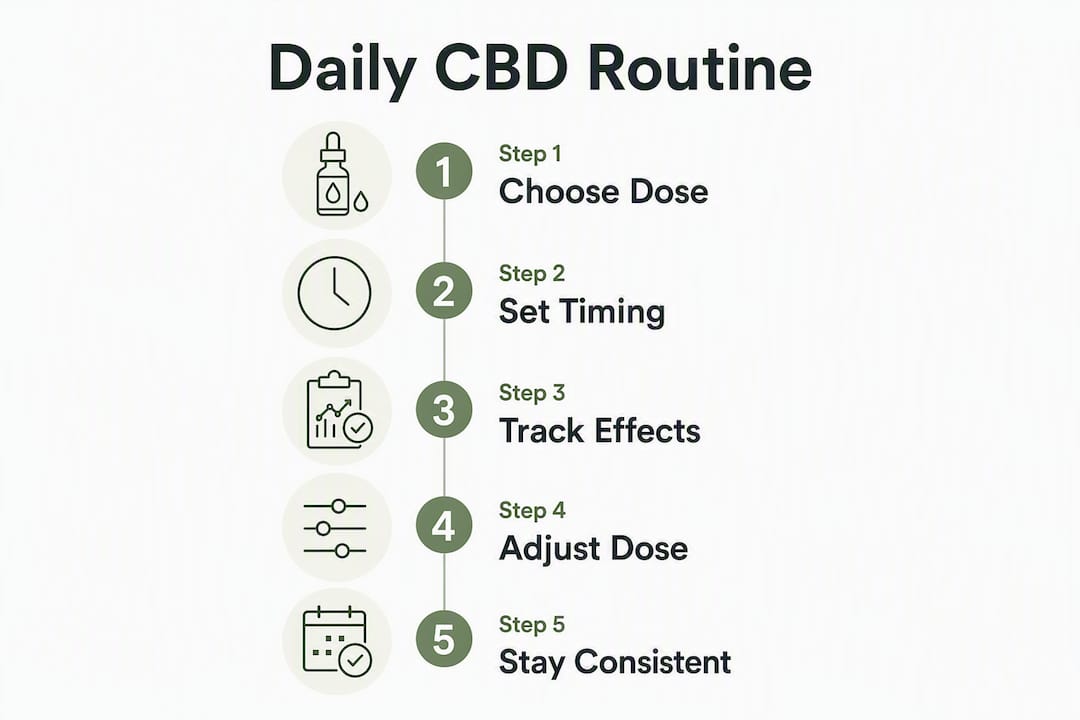
- How to build a daily CBD routine that actually sticks
- How to find your dose and track whether it is working
- Safety, side effects, and UK quality checks
- Three sample daily routines to get you started
- Why lab testing and COAs make your routine more reliable
- Key takeaways
- The case for patience over perfection
- Start your daily routine with Smokocbd’s MINT 2000MG tincture
- Useful sources and further reading
How CBD works with your endocannabinoid system
Your body runs a signalling network called the endocannabinoid system (ECS). It uses its own naturally produced cannabinoids, such as anandamide (sometimes linked to the bliss you feel after exercise or eating dark chocolate), to regulate mood, sleep, appetite, and pain perception. The ECS does this through two main receptor types, CB1 and CB2, distributed across the brain, nervous system, and immune tissue.
CBD does not slot directly into those receptors the way a key fits a lock. Instead, it modulates the system more subtly: it appears to slow the breakdown of anandamide, interact with enzymes, and influence receptor sensitivity. Think of it less as a switch and more as a dial that can gently ramp up or tone down activity over time. That gradual modulation is precisely why CBD’s effects often build across weeks rather than appearing in an hour.
The half-life concept is worth understanding at a basic level. A substance’s half-life is how long it takes your body to reduce its concentration by half. With CBD’s half-life sitting at roughly 1–2 days, daily dosing means each new dose arrives before the previous one has fully cleared. Over several days, this creates a steadier baseline concentration rather than the peaks and troughs you get from occasional use. That steadier state is what practitioners mean when they talk about supporting cumulative effects over time.
Why daily CBD consistency improves your results
Sporadic dosing is one of the most common reasons people conclude that CBD “doesn’t work.” The reasons daily consistency improves outcomes are concrete:
- Steadier tissue levels reduce the variability between doses, so your ECS receives a more predictable signal.
- A reliable baseline makes self-assessment meaningful. If your dose and timing shift every day, you cannot tell whether a change in sleep or mood is due to CBD or something else entirely.
- Predictable absorption matters because food, timing, and format all affect how much CBD reaches your bloodstream. Fixing these variables removes noise from your evaluation.
- Sensible titration only works when you hold one dose long enough to observe its effect before increasing. Jumping doses weekly makes that impossible.
- Batch consistency underpins all of the above. Harvard Health notes that many CBD products do not contain the amount of CBD stated on the label, meaning poor product quality can silently undermine an otherwise disciplined routine. A COA from a third-party lab is the only reliable way to check.
Treating consistency as a diagnostic method is a useful reframe. Keeping dose and timing fixed for several weeks gives you a genuine signal rather than noise.
Pro Tip: Attach your CBD dose to an existing daily habit, such as making your morning coffee or brushing your teeth before bed. Habit stacking dramatically improves adherence without requiring willpower.
How long before you notice results?
Setting realistic expectations prevents you from quitting too early. Many practitioners suggest a trial window of 2–6 weeks for most wellness goals, though some effects, particularly acute calm or falling asleep more easily, can appear sooner.
Typical timelines by goal:
- Sleep quality: Many people report improvement after a few weeks of consistent evening dosing.
- General anxiety support: A several-week trial is commonly recommended before drawing conclusions.
- Chronic discomfort: Longer trials over multiple weeks are often cited, with gradual rather than dramatic changes.
- Acute calm (situational): Some users notice an effect within the same session, though this varies widely.
Consumer health guides consistently note that those who see the clearest benefits are the ones who use CBD regularly over several weeks, not sporadically.
Once your trial period ends, a simple three-option decision helps:
- Continue at the same dose if you are noticing positive changes.
- Titrate upward in small increments if effects are mild and side effects are absent.
- Stop and reassess if there is no change after a full six-week trial at a consistent dose.
Change only one variable at a time. Adjusting dose, format, and timing simultaneously makes it impossible to know what caused any shift.
How to build a daily CBD routine that actually sticks
The format you choose shapes how easy consistency is to maintain. Here is how the three main formats compare for routine fit:
| Format | Onset time | Dose precision | Convenience | Food effect |
|---|---|---|---|---|
| Sublingual tincture | — | High (measured drops) | Moderate | Minimal if taken before food |
| Soft gel capsule | — | Very high (fixed dose) | High | Absorption improves with fatty food |
| Gummy / edible | — | Moderate | High | Slows onset; absorption varies |
Sublingual tinctures tend to act faster than edibles, making them a good choice if you want to observe effects more clearly during a titration phase. Capsules suit people who prefer a no-fuss, fixed daily dose. Gummies are convenient but their slower, more variable absorption makes precise titration harder.
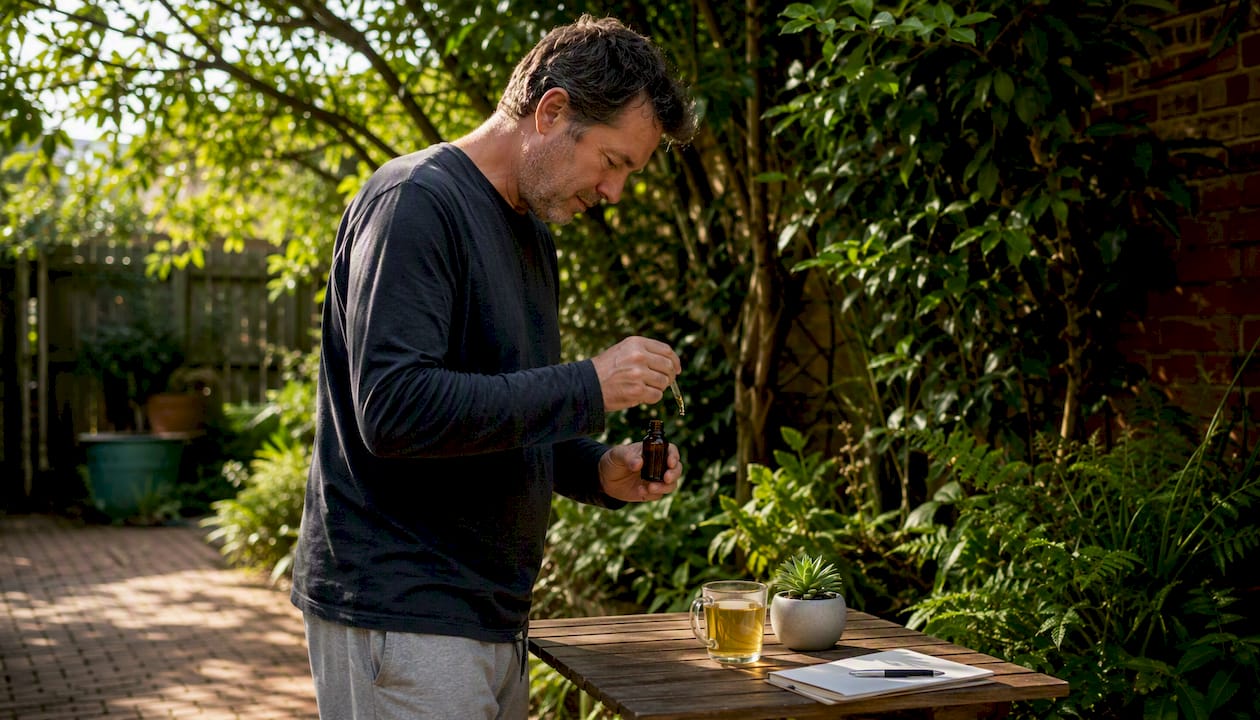
Practical habits that help:
- Morning dose suits people targeting daytime focus or general wellbeing; take with a meal containing healthy fats to support absorption.
- Evening dose suits sleep support; take 30–60 minutes before your intended bedtime.
- Set a phone alarm for the first two weeks until the habit is established.
- Store your product correctly: cool, dark, and sealed. Heat and light degrade cannabinoids, reducing potency over time. A kitchen cupboard away from the hob works well.
- Keep the bottle somewhere visible, such as next to your kettle or toothbrush, so it is part of your visual routine.
For detailed step-by-step examples, the CBD wellness routines guide on the Smokocbd site covers morning, evening, and split-dose options.
How to find your dose and track whether it is working
A stepwise approach protects you from overshooting and makes your results interpretable.
Week-by-week titration steps:
- Week 1–2: Start at a low dose for most adults and hold this dose for a couple of weeks without changing anything else.
- Week 3–4: If you notice no effects and no side effects, increase by a small increment and hold again.
- Week 5–6: Reassess. If effects are positive, stay at this dose. If still minimal, consider a further small increase or consult a clinician.
- Ongoing: Once you find a dose that works, maintain it consistently. If you suspect tolerance is developing, take a short break and restart at a lower dose.
If you are on any prescription medicines, speak to your GP or pharmacist before starting. Healthline’s dosing guidance emphasises starting small and increasing gradually, with format and timing tracked throughout.
Daily tracking fields to record:
- Date and time of dose
- Product name and batch number
- Dose in milligrams
- Format (tincture, capsule, gummy)
- Sleep quality (1–10)
- Mood and stress level (1–10)
- Any side effects noticed
- Brief notes (diet, exercise, unusual events)
A simple notes app or a pocket notebook works perfectly. The CBD daily effects tracking guide from Smokocbd offers a ready-made template if you prefer a structured format.
Pro Tip: Change only one variable at a time. If you switch format, dose, and timing simultaneously, you lose the ability to identify what actually caused any change in how you feel.

Safety, side effects, and UK quality checks
CBD is generally well tolerated, but it is not without considerations.
Common side effects to watch for:
- Dry mouth
- Mild drowsiness (particularly at higher doses)
- Digestive changes (loose stools or nausea, usually at high doses)
- Appetite changes
Stop use and consult a clinician if you experience persistent nausea, significant mood changes, or any unexpected reaction.
Drug interactions. CBD is metabolised via the CYP450 enzyme pathway in the liver, the same pathway used by many common prescription medicines including blood thinners, anticonvulsants, and some antidepressants. BBC Food’s guidance recommends consulting a clinician or pharmacist before daily CBD use if you take any prescription medication. This is not a minor precaution.
UK product quality checklist:
- Request or download the batch-specific COA for your product (not just a generic lab report).
- Check the COA covers: cannabinoid profile, pesticide residues, heavy metals, and residual solvents.
- Confirm THC content is within UK legal limits (0.2% or below in the finished product).
- Verify the brand has FSA novel food authorisation or is on the FSA’s validated products list.
- Avoid products making medical claims on the label — this is not permitted under UK law.
Storage: Keep CBD products in a cool, dark place, away from direct sunlight and heat. An airtight seal preserves potency. Refrigeration is not necessary but does no harm for tinctures.
Three sample daily routines to get you started
These are starting points. Adjust dose according to your titration plan and clinician guidance.
Routine 1: Sleep support (evening)
- 30–60 minutes before bed, take your chosen CBD dose sublingually or as a capsule.
- Dim lights and avoid screens for the same 30-minute window.
- Record sleep quality and time to fall asleep in your journal each morning.
- Hold this routine for at least two weeks before assessing.
- For a more detailed version, the CBD sleep routine guide walks through each step.
Routine 2: General daytime wellbeing (morning)
- Take your dose with breakfast, ideally a meal containing some healthy fat.
- Note energy and mood at midday on a scale of 1–10.
- Keep dose and timing identical each day for the first four weeks.
- Reassess at the end of week four using your journal data.
Routine 3: Anxiety support (split dose)
- Morning: take half your daily dose with breakfast.
- Evening: take the remaining half 30 minutes before your wind-down routine.
- Track stress levels at three fixed points: morning, midday, and evening.
- After four weeks, compare your average scores against week one.
Quick phone template to copy:
Date: / Dose: mg / Format: / Time: / Sleep (1–10): / Mood (1–10): / Notes:
Why lab testing and COAs make your routine more reliable
Third-party lab testing addresses a problem that is easy to overlook: batch variability. Even a well-intentioned manufacturer can produce batches that differ in cannabinoid concentration due to natural variation in hemp crops, extraction efficiency, or blending. If your 10 mg dose is actually delivering 6 mg one month and 14 mg the next, your routine is inconsistent regardless of how disciplined you are.
Harvard Health’s review highlights that product quality is a central consumer issue, with testing showing label inaccuracy in a meaningful proportion of products on the market.
How to read a COA in plain terms:
- Cannabinoid profile: Confirms CBD content matches the label and shows other cannabinoids present (CBG, CBN, etc.).
- THC content: Must be within UK legal limits; a zero-THC claim should be verified here, not just on the packaging.
- Pesticide screen: Confirms no agricultural chemicals above safe thresholds.
- Heavy metals: Checks for lead, mercury, arsenic, and cadmium.
- Residual solvents: Confirms extraction solvents have been removed to safe levels.
Smokocbd publishes batch-specific lab reports for its products, including its broad-spectrum tinctures. Checking the COA before you start a new bottle takes two minutes and removes a significant source of uncertainty from your routine.
Key takeaways
Daily CBD consistency matters because it maintains stable levels in your body, supports endocannabinoid tone, and creates the reliable baseline you need to judge whether CBD is genuinely helping.
| Point | Details |
|---|---|
| Give it a fair trial | Allow 2–6 weeks of consistent daily use before deciding whether CBD is working for you. |
| Start low and titrate | Begin at a low dose daily and increase in small increments only after holding each dose for a couple of weeks. |
| Track every dose | Record dose, timing, sleep, and mood daily so you have real data rather than impressions. |
| Verify product quality | Only use products with batch-specific COAs covering cannabinoids, pesticides, heavy metals, and THC content. |
| Smokocbd’s approach | Smokocbd’s MINT 2000MG Broad Spectrum CBD Tincture comes with third-party batch testing, making it a quality-verified starting point for a daily routine. |
The case for patience over perfection
There is a tendency in wellness culture to treat CBD as either a miracle or a disappointment, with very little room for the more honest middle ground: it is a supplement that may support certain wellness goals when used consistently, with realistic expectations, and with a quality product you can actually trust.
What most articles miss is that the biggest obstacle to getting results from CBD is not the product itself. It is the combination of inconsistent dosing, poor product quality, and no tracking method. Someone who takes a random amount at random times from a product without a COA and then concludes “CBD doesn’t work” has not really tested CBD at all. They have tested chaos.
The evidence points clearly toward routine, quality, and patience. A fixed low dose, a verified product, and a simple journal are not complicated requirements. They are the minimum conditions for a fair trial. If you approach CBD the same way you would any other evidence-informed wellness habit, you give yourself the best possible chance of knowing whether it genuinely helps you.
Start your daily routine with Smokocbd’s MINT 2000MG tincture
If you are ready to begin a consistent daily CBD routine, the SMOKO CBD MINT 2000MG Broad Spectrum CBD Tincture is a practical starting point. At 2,000 mg of broad-spectrum CBD in a 10 ml bottle, it gives you precise control over your dose using the included dropper, and the mint flavour makes sublingual use genuinely easy to stick to each day.
Smokocbd uses organically grown hemp and publishes third-party batch COAs, so you can verify exactly what is in each bottle before you start. The broad-spectrum formula contains zero THC, confirmed by lab testing, which matters if you have concerns about THC exposure.
Suggested starter regimen: Begin with a low dose (around 10 mg) once daily, taken sublingually at the same time each day. Hold that dose for two weeks, track your results using the journal fields above, and adjust only if needed. View the product COA on the product page before your first dose, and check the safe daily dosing guide for further titration guidance.
This article provides general wellness information, not medical advice. Consult your GP or pharmacist before starting CBD, particularly if you take prescription medicines or have an existing health condition.
Useful sources and further reading
- CBD products: do they work? — Harvard Health: A balanced review of clinical evidence and product quality concerns from Harvard Medical School.
- The endocannabinoid system — Harvard Health: Clear explanation of ECS function and why it matters for CBD research.
- CBD benefits and side effects — Healthline: Practical overview of dosing, formats, onset times, and safety considerations.
- Can you take CBD every day? — CannaInsider: Covers daily use, half-life, accumulation, and tolerance monitoring.
- Is CBD safe to eat? — BBC Food: UK-focused safety Q&A including drug interaction guidance.
- FSA novel food guidance — Food Standards Agency: Official UK regulatory position on CBD as a novel food and consumer advice.