TL;DR:
- Proper CBD storage involves keeping products in a cool, dark, airtight environment to prevent potency loss and spoilage. Light, heat, and air are the main enemies that degrade CBD, so original dark packaging, refrigeration for long-term storage, and airtight seals are essential. Following these habits preserves product quality, potency, and safety over time.
Store your CBD in a cool, dark, airtight place and follow the product-specific rules below. That single habit protects potency, aroma, and safety better than any specialist kit.
Quick-start checklist:
- Keep temperature in a cool range, away from heat sources
- Block all light exposure — use original dark or amber packaging
- Seal tightly after every use to prevent oxidation
- Store upright where possible (tinctures especially)
- Follow any product-specific label instructions first
Table of Contents
- Why does proper CBD storage affect potency and safety?
- The three main enemies of CBD quality
- How to store different CBD product types
- When should you keep original packaging, and when should you rehouse?
- What temperature is best for storing CBD?
- How long does CBD last, and how can you tell if it has gone off?
- Practical everyday tips for travel, safety, and good habits
- How does Smokocbd protect product quality before it reaches you?
- Key takeaways
- The storage habit most people overlook
- Well-packaged, tested CBD with clear storage guidance
- Useful sources for further reading
Why does proper CBD storage affect potency and safety?
Think of CBD oil the way Healthline frames it: treat it like a high-quality pantry oil. Olive oil left on a sunny windowsill goes stale and loses flavour within weeks. CBD oil behaves the same way, only the stakes are higher because you are relying on it for a wellness outcome.
The three culprits are photodegradation (UV light breaking down cannabinoid molecules), oxidation (air reacting with cannabinoids and terpenes), and thermal acceleration (heat speeding up every chemical reaction). Together, they can strip a product of measurable potency. One industry guide notes up to 20% cannabidiol loss within three months of opening under poor conditions. That is a meaningful drop if you are using CBD for sleep or pain relief.
Safety matters too, though differently. A degraded CBD oil will not make you ill in the way spoiled food does, but a rancid carrier oil — MCT oil is common — can cause digestive discomfort. Potency loss and unpleasant taste are the more likely outcomes of poor storage.
The three main enemies of CBD quality
Light, heat, and air drive almost all CBD degradation. Address each one and you have done most of the work.
Light triggers photodegradation, a process where UV and visible light break apart cannabinoid molecules. The fix is simple: amber or dark-tinted glass blocks the wavelengths that cause the most damage. Keep products in their original packaging for exactly this reason.
Heat accelerates oxidation and causes terpenes to evaporate, which is why a product stored near a radiator loses aroma and potency faster than one kept in a cool cupboard. Aim to keep CBD in a cool environment at all times.
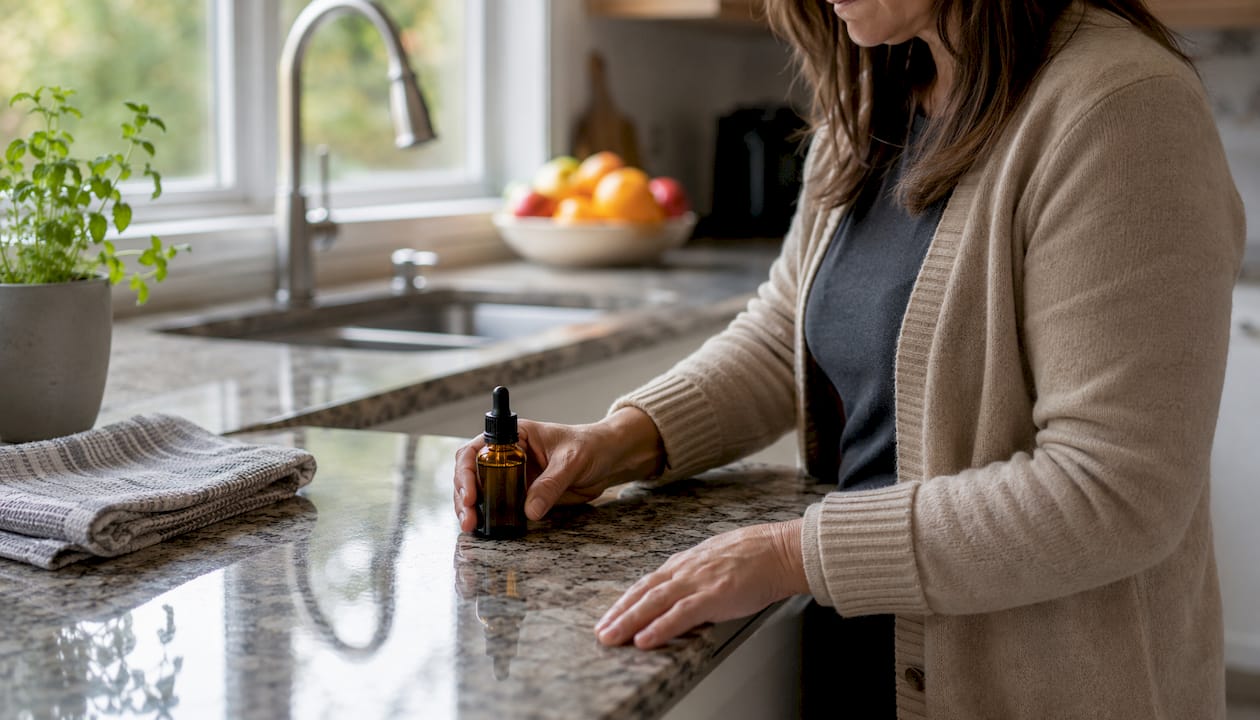
Air introduces oxygen, which reacts with cannabinoids in a process called oxidation. Every time you open a bottle, you let a little oxygen in. Seal tightly after each use and avoid decanting into containers with a poor seal.
Pro Tip: The three worst places to store CBD in a typical UK home are the bathroom cabinet (humidity and temperature swings), a kitchen windowsill (direct sunlight and heat from cooking), and the car glovebox (temperatures can spike well above 25°C in summer). A bedroom nightstand drawer can be a good spot for daily-use oils.
Common household mistakes to avoid:
- Leaving tinctures on a kitchen counter near the hob
- Storing gummies in a bag in a warm car
- Keeping capsules in a bathroom cabinet where steam builds up
- Using clear glass jars that offer no UV protection
How to store different CBD product types
Tinctures and oils
Keep your tincture in its original amber bottle, stored upright in a cool cupboard. Refrigeration works well for long-term storage of oils and extracts, but avoid freezing — repeated freeze-thaw cycles can alter the emulsion. If you do refrigerate, let the bottle warm to room temperature before use, or stand it briefly in a bowl of warm water to thin the oil back out.
Gummies and edibles
The original sealed packaging is your best friend here. Secondary pill organisers are rarely airtight, which exposes gummies to both air and light. Refrigerate only if the product label recommends it. For more on how gummies compare to other edible formats, the CBD gummies guide covers the key differences worth knowing.
Soft gel capsules
Store in the original bottle with the lid firmly closed, in a dry cupboard away from the bathroom. Capsules are relatively forgiving, but moisture is their main enemy — it can degrade the gel shell over time.
Topicals (creams, balms, salves)
A cool, dry place away from direct sunlight suits most topicals. Always use a clean spatula or tool rather than fingers to scoop product from a jar; introducing bacteria shortens shelf life noticeably.
Vape liquids
Store upright in a cool, dark location, well away from children and pets. Heat and sunlight degrade the carrier liquid and any added terpenes quickly. For a fuller picture of how vape products behave, the CBD vape guide is worth a read.
Flowers and concentrates
Flowers need humidity control: 55–62% relative humidity preserves terpene profile and prevents both mould and over-drying. Humidity packs such as Boveda or Integra Boost, placed inside an airtight tinted jar, maintain that range reliably. Concentrates (wax, shatter) do best wrapped in parchment paper and sealed inside an airtight glass or food-grade silicone container. For long-term storage, a fridge works; if freezing, thaw slowly at room temperature to avoid condensation damaging the product.
When should you keep original packaging, and when should you rehouse?
The default answer is: keep original packaging. Manufacturers design it to protect the product — amber glass, airtight seals, and opaque labels serve a protective role.
Rehouse only when the original packaging is damaged, leaking, or clearly inadequate (for example, a clear plastic bag for flowers). Approved alternatives include airtight tinted glass jars and food-grade silicone containers for short-term concentrate storage.
Do this:
- Keep tinctures in their original amber dropper bottles
- Store gummies in the original resealable pouch or pot
- Use airtight tinted glass jars if you need to rehouse flowers or concentrates
Not these:
- Clear plastic containers that offer no UV protection
- Non-airtight pill organisers for gummies or capsules
- Porous materials (paper bags, unsealed cloth pouches) for any CBD product
- Shared containers that mix product batches or types
What temperature is best for storing CBD?
The recommended temperature range for most CBD products is cool room temperature. A cool kitchen cupboard, a bedroom drawer, or a dedicated medicine cabinet all work well within that band.
Fridge: Suitable for oils and extracts you do not use daily. It extends shelf life but thickens oils, so allow time to warm before use. Refrigeration is recommended for long-term retention, not as a daily routine.
Freezer: Appropriate for concentrates stored long-term. Avoid freezing tinctures and gummies — the texture changes and repeated temperature swings degrade quality faster than stable room-temperature storage would.
One practical caution: avoid moving products between very cold and very warm environments repeatedly. A tincture that goes from fridge to warm handbag and back again every day will degrade faster than one kept consistently at room temperature.
How long does CBD last, and how can you tell if it has gone off?
Shelf life depends on product type, quality, and how well it has been stored. As a general guide, CBD oil shelf life typically spans 14–24 months after opening when stored correctly.
| Product | Unopened | After opening |
|---|---|---|
| CBD tincture / oil | Up to two years | several months after opening |
| Soft gel capsules | Up to two years | several months after opening |
| Gummies / edibles | about one year | a few months after opening |
| Topicals | about one to two years | several months after opening |
| Vape liquid | about one to two years | a few months after opening |
| Flowers | several months after opening | a short few months after opening |
Signs a CBD product has degraded:
- Rancid, musty, or “off” smell — particularly in carrier oils like MCT
- Noticeable colour change (darkening or cloudiness in oils)
- Visible mould on flowers
- Unusual or bitter taste beyond the product’s normal profile
- Separated carrier oil that does not re-blend after shaking
- Texture changes in gummies (hardening, excessive stickiness, crystallisation)
Practical everyday tips for travel, safety, and good habits
- Date your bottles. Write the opening date on the label with a permanent marker so you always know how long a product has been open.
- Buy for a few months after opening of use. Buying in bulk saves money, but only if you can store it correctly and use it before it degrades.
- Travel with a small decant. For trips, transfer a few days’ supply into a small, airtight amber bottle rather than carrying the full product. See how many drops per ml to pre-measure doses accurately.
- Reseal immediately. Do not leave caps off while you measure a dose. Oxygen exposure accumulates with every second the bottle is open.
- Check the COA and expiry date. Every reputable product comes with a Certificate of Analysis (COA) and a printed expiry date. Check both before use.
- Child and pet safety. Store all CBD products out of reach of children and pets. Use child-resistant caps, label containers clearly, and consider a locked box if young children are in the household.
- Avoid the car. UK summer temperatures inside a parked car can exceed 60°C, which will degrade any CBD product rapidly.
How does Smokocbd protect product quality before it reaches you?
Smokocbd uses third-party lab testing on every batch to verify cannabinoid content and confirm zero THC, so you know exactly what you are getting before you open the packaging. Tinctures come in amber glass bottles with airtight droppers, designed specifically to block light and minimise air exposure from the first use to the last.
Key quality assurances Smokocbd provides:
- Batch COAs available for all products, confirming cannabinoid levels and zero-THC status
- Amber glass packaging for tinctures, protecting against photodegradation from day one
- Clear storage instructions printed on product pages and labels
- Organically grown hemp sourced from the USA, with fewer added ingredients to extend natural shelf life
- Broad-spectrum formulation preserving the full terpene and cannabinoid profile
Product pages include specific storage guidance, and COAs are accessible so you can verify potency before and after purchase. For beginners getting to grips with all of this, the CBD checklist for beginners is a practical starting point.
Key takeaways
Proper CBD storage comes down to three consistent habits: block light, control temperature, and seal tightly after every use.
| Point | Details |
|---|---|
| Core storage rule | Keep CBD cool (15–25°C), dark, and airtight to prevent photodegradation and oxidation. |
| Potency loss is real | Poor storage can significantly reduce cannabidiol content within a few months of opening. |
| Product-specific rules matter | Flowers need 55–62% RH; tinctures suit the fridge for long-term storage; gummies stay in original packaging. |
| Shelf life guide | Opened tinctures and capsules typically last several months after opening; gummies a few months after opening when stored correctly. |
| Smokocbd packaging | Amber glass bottles, batch COAs, and clear label instructions protect potency from production to your shelf. |
The storage habit most people overlook
The most common mistake is not a dramatic one. It is leaving a tincture on the kitchen counter because it is convenient, or tossing gummies into a non-airtight bag for the commute. Neither feels like a big deal in the moment, but over weeks it adds up to a noticeably weaker product.
The olive oil analogy is genuinely useful here. Nobody stores a good extra-virgin olive oil next to the hob in a clear bottle. The same instinct that protects flavour in a quality oil protects potency in CBD. A nightstand drawer for your daily tincture, the original sealed pouch for gummies in your bag, and a quick check of the opening date every month: that is the whole system. No specialist equipment needed.
Where people go wrong is buying a quality product and then storing it carelessly, which is a shame when the fix is so straightforward. The single swap worth making today: move your tincture out of the bathroom or kitchen and into a cool, dark drawer. That one change makes a real difference over a product’s lifespan.
Well-packaged, tested CBD with clear storage guidance
If you want CBD that arrives in protective packaging with a COA you can actually read, Smokocbd’s tinctures and soft gels are a solid place to start. Every product comes in amber glass or sealed original packaging with storage instructions included, so you are not guessing how to keep it fresh.
The 1000mg broad-spectrum CBD tincture comes in an amber dropper bottle with a tight seal, ready to store correctly from the moment it arrives. If capsules suit your routine better, the 750mg soft gel capsules are packaged to stay fresh in a dry cupboard for months. Browse the full range at Smokocbd and check the product page for batch COA details and specific storage notes before you buy.
Useful sources for further reading
- Does CBD Oil Expire? How to Check and Whether It’s Safe — Healthline
- How to Store CBD Oil: Storage Guide for CBD Products — PromoCBD
- How to Store Your CBD Products? Complete Guide — Herbeevor
- How To Store CBD Oil The RIGHT Way — PureKana
- Can hemp oil go bad? Shelf life and storage guide — Smokocbd
- How to Store CBD Products — Smokocbd
Always check the COA and product-specific storage notes on your vendor’s product page before use. Manufacturer guidance takes precedence over general advice when the two differ.
This article is general information, not professional medical or legal advice. Check current UK regulations and consult a qualified professional for your specific situation.