TL;DR:
- The typical drop count in 1 ml of tincture is around 20 drops, but it can vary from 15 to 30 depending on dropper size and liquid viscosity. Accurate dosing relies on calibrating your dropper rather than counting drops, which can fluctuate due to multiple factors. Using a marked dropper or syringe provides the most precise measurement and ensures consistent intake across different bottles and tincture types.
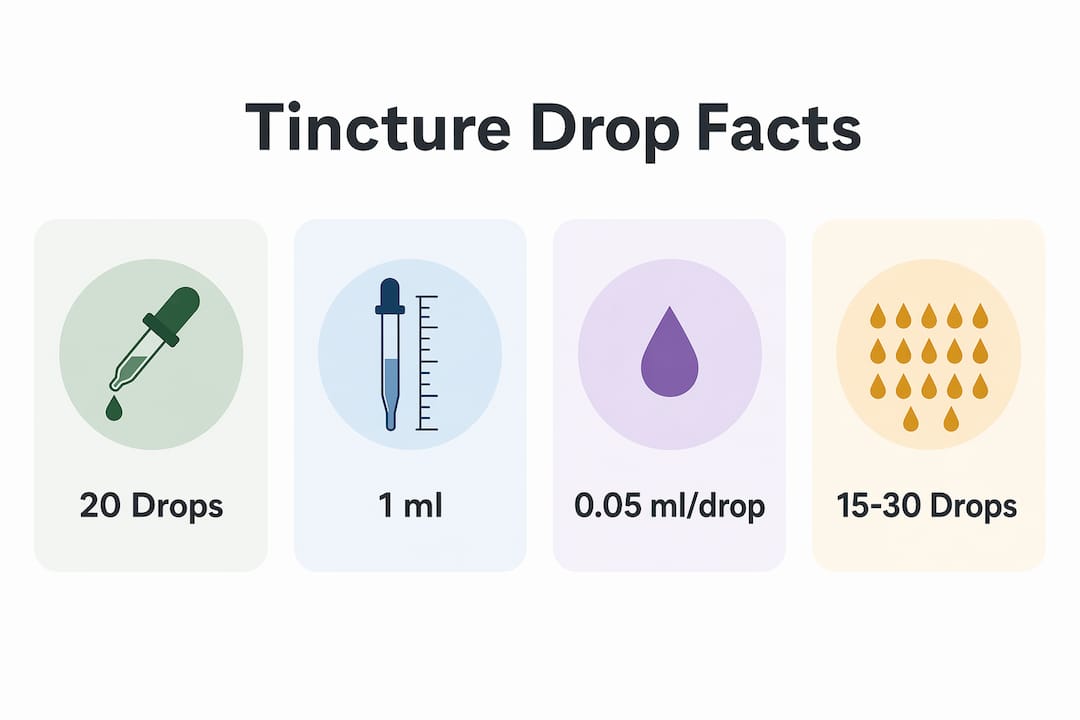
One millilitre of tincture contains approximately 20 drops, based on the widely used standard of 0.05 ml per drop. This figure is the starting point for tincture dosage measurement, but the actual drop count for your specific bottle can range from 15 to 30 depending on your dropper and the liquid inside it. If you are using a CBD tincture, a herbal extract, or any other liquid supplement, knowing how many drops in 1 ml of tincture you are actually getting makes the difference between a consistent dose and an unreliable one. This article explains why the number varies, how to measure it accurately, and how to convert between drops and millilitres with confidence.
What affects how many drops in 1 ml of tincture?
The 20-drops-per-ml figure is a useful rule of thumb, but it is not fixed. Drop counts vary from 15 to 30 per ml depending on two primary factors: the size of the dropper’s orifice and the viscosity of the liquid. Understanding both helps you dose more reliably.
Dropper orifice size is the single biggest variable. A dropper with a narrow tip produces smaller drops, pushing the count closer to 25 or 30 per ml. A wider tip releases larger drops, bringing the count down to 15 or 16. Some specialist droppers are designed specifically for microdosing and produce even smaller drops than standard pharmacy-style pipettes.
Liquid viscosity is the second major factor:
- Alcohol-based tinctures are thin and flow freely, producing smaller drops and a higher count per ml, typically 20 to 25.
- Glycerin-based tinctures are thicker and form larger drops, usually yielding 15 to 20 per ml.
- MCT oil, which is the carrier used in many CBD tinctures including those from Smokocbd, sits between the two in terms of viscosity and generally produces around 20 drops per ml.
- Essential oils and other specialty liquids can vary broadly and should always be calibrated individually.
Pro Tip: Never assume that a different bottle of the same tincture will produce the same drop count. Even switching between two bottles from the same brand can shift the count slightly if the dropper tips differ in diameter.
Counting drops alone is therefore an unreliable method for precise dosing. The drop is not a standardised unit of measurement in the way that a millilitre is. Treating it as one leads to cumulative dosing errors, particularly when you are trying to follow a specific milligram target for a supplement like CBD.
How to measure tincture dosage accurately
The most reliable approach to tincture dosage measurement is to use a dropper with clear millilitre markings rather than counting individual drops. Graduated droppers marked at 0.5 ml and 1 ml remove the guesswork entirely and are standard in quality tincture bottles. When your dropper has these markings, you simply fill to the line.
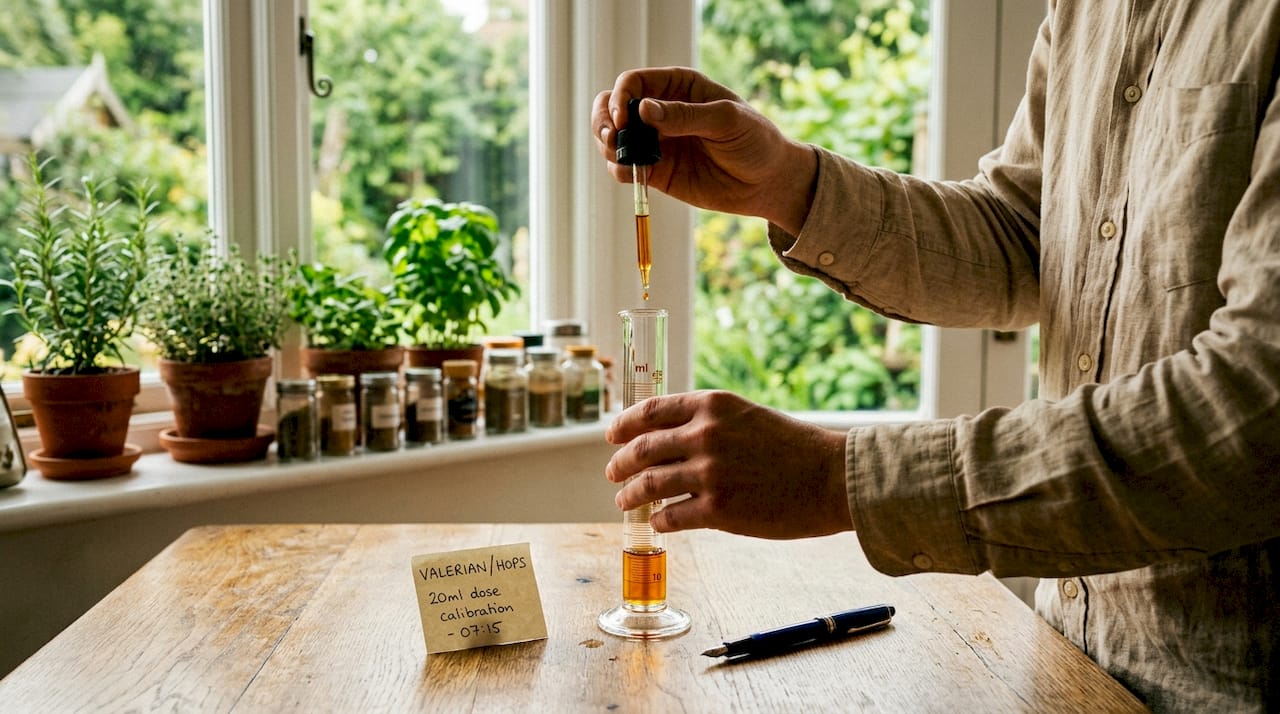
When your dropper does not have markings, or when you want to verify its accuracy, calibrating it yourself takes less than five minutes and gives you a personalised drops-per-ml figure. Here is how:
- Fill a small measuring syringe or graduated measuring cup with exactly 1 ml of water (or the tincture itself if you can spare a small amount).
- Draw the liquid into your dropper until it is full.
- Dispense the liquid drop by drop into a clean container, counting each drop carefully.
- Record the total number of drops. That figure is your personal drops-per-ml count for that dropper and liquid combination.
- Repeat the process twice more and average the three results to account for any inconsistency in your counting technique.
Calibrating your dropper this way accounts for the specific orifice size of your pipette and the viscosity of your tincture. It is the most accurate method available for home use and takes the standard 20-drops-per-ml assumption out of the equation entirely.
Pro Tip: Use room-temperature tincture when calibrating. Cold liquid is thicker and produces larger drops, which means your calibration figure will not hold once the bottle warms up.
Once you have your calibration number, write it on a sticky label and attach it to the bottle. This small step removes any need to recount every time you dose, and it is particularly useful if you are managing a specific milligram intake of CBD or another active compound. For a broader guide to finding the right amount for you, the CBD dosage chart from Smokocbd is a practical reference point.
Converting between drops and millilitres
The standard tincture drop conversion formula is straightforward. Based on the 20-drops-per-ml standard, 1 drop equals approximately 0.05 ml. To convert drops to millilitres, multiply the number of drops by 0.05. To convert millilitres to drops, divide the volume in ml by 0.05 (or multiply by 20).
The table below shows common conversions using this formula:
| Drops | Volume in ml | Notes |
|---|---|---|
| 10 drops | 0.5 ml | Half a standard dropper |
| 20 drops | 1.0 ml | One full standard dropper |
| 30 drops | 1.5 ml | One and a half droppers |
| 40 drops | 2.0 ml | Two full droppers |
| 60 drops | 3.0 ml | Three full droppers |
These figures assume the 20-drops-per-ml standard. If your calibration gives you a different number, adjust accordingly. For example, if your dropper produces 25 drops per ml, then 1 drop equals 0.04 ml and 60 drops equals 2.4 ml rather than 3 ml. That is a meaningful difference if you are tracking a specific CBD milligram dose.
The ml to drops tincture conversion is most useful when a product label gives a dose in millilitres but your dropper has no markings. Knowing that 1 ml equals 20 drops (or your calibrated figure) lets you count your way to the right volume. However, volume measurement always takes priority over drop counting when both options are available. A marked dropper or a measuring syringe is simply more accurate than any count.
Common mistakes when dosing tinctures by drops
Dosing errors with tinctures are more common than most people realise, and the majority stem from over-reliance on drop counting without any calibration. The following mistakes are worth knowing before they affect your routine.
- Inconsistent drop formation. If you squeeze the dropper bulb at different speeds, the drop size changes. A slow, steady release produces more uniform drops than a quick squeeze.
- Miscounting during dispensing. Drops that fall quickly or merge together are easy to miscount. Dispensing onto a spoon or small dish rather than directly into your mouth makes counting more accurate.
- Temperature-related changes. Drop size shifts with temperature, meaning a tincture stored in a cold cupboard will produce larger drops than the same tincture at room temperature. This is a minor effect compared to dropper design, but it adds up over time.
- Assuming all droppers are equal. Switching to a replacement dropper, even from the same manufacturer, can change your drop count by several drops per ml if the tip diameter differs slightly.
- Ignoring liquid composition changes. Some tinctures separate or change consistency over time. Shaking the bottle before dosing is good practice, but be aware that a well-shaken, aerated liquid may briefly produce smaller bubbles alongside drops, which can inflate your count.
The most consistent dosing method is to use a marked dropper or a measuring syringe and treat drop counting as a secondary check rather than the primary method.
For detailed guidance on applying these principles specifically to CBD oils, the CBD drops dosage guide from Smokocbd covers practical steps for safe and reliable use.
How drop counts compare across different tincture types
Not all tinctures behave the same way, and the liquid drop to ml ratio shifts noticeably depending on what the tincture is made from. Alcohol-based tinctures produce 20 to 25 drops per ml because ethanol is a thin, low-viscosity solvent. Glycerin-based tinctures, which are common in herbal and children’s formulations, are considerably thicker and typically yield only 15 to 20 drops per ml.
The comparison below shows how tincture type affects the drop count per millilitre:
| Tincture type | Drops per ml (approx.) | Relative drop size |
|---|---|---|
| Alcohol-based | 20 to 25 | Smaller |
| MCT oil-based (CBD) | 18 to 22 | Medium |
| Glycerin-based | 15 to 20 | Larger |
| Essential oils | 25 to 35 | Smallest |
Essential oils sit at the other extreme. Their low surface tension means they form very small drops, and some droppers deliver closer to 30 drops per ml with these liquids. This is why essential oil dosing instructions often specify drops rather than millilitres, as the drop size is relatively consistent within that category when a standard dropper is used.
The practical takeaway is simple. If you switch tincture types or change your carrier oil, recalibrate your dropper. Do not carry over a drop count from one product to another.
Key takeaways
Accurate tincture dosing depends on knowing your specific dropper’s drop count, not on assuming the standard 20-drops-per-ml figure applies to every bottle.
| Point | Details |
|---|---|
| Standard drop count | 1 ml of tincture equals approximately 20 drops, based on 0.05 ml per drop. |
| Variation range | Drop counts range from 15 to 30 per ml depending on dropper size and liquid viscosity. |
| Calibration is key | Count drops per 1 ml for your specific dropper and tincture to get a reliable personal figure. |
| Conversion formula | Multiply drops by 0.05 to get ml; divide ml by 0.05 to get drops. |
| Volume beats counting | A marked dropper or syringe is always more accurate than counting drops alone. |
Why I always calibrate before I trust a new tincture
I have used a lot of tinctures over the years, and the single most surprising thing I have learnt is how much variation exists between bottles that look identical. Two CBD tinctures from different batches, same brand, same dropper style, can produce drop counts that differ by four or five drops per ml. That sounds small until you realise it represents a 20 to 25 per cent difference in your actual dose.
My advice is to stop treating the 20-drops-per-ml standard as a fact and start treating it as a starting point. Spend three minutes calibrating your dropper the first time you open a new bottle. Write the number on the label. It takes almost no effort and it removes a genuine source of inconsistency from your routine.
I also think people underestimate how much the carrier oil matters. MCT oil, which Smokocbd uses in their tinctures, is noticeably thinner than glycerin and produces a more consistent drop size in my experience. If you have been using a glycerin-based product and switch to an MCT oil tincture, your drop count will change, and so will your effective dose if you keep counting the same number of drops.
The broader point is this: drops are a convenient shorthand, not a precise unit. Use them as a guide, calibrate them against millilitres, and always default to the volume markings on your dropper when they are available. That habit alone will make your dosing more consistent than anything else you can do.
— Mike
Simplify your dosing with Smokocbd tinctures
Getting your dose right starts with having the right equipment. Smokocbd tinctures come with clearly graduated droppers, making it straightforward to measure 0.5 ml or 1 ml doses without counting a single drop. The 1000mg broad-spectrum CBD tincture in mint flavour uses MCT oil as its carrier, which produces a consistent drop size and makes calibration simple. For those starting at a lower potency, the 500mg citrus tincture offers the same reliable dropper design. All Smokocbd products are third-party lab tested with zero THC, so you know exactly what you are taking with every measured dose.
FAQ
How many drops are in 1 ml of tincture?
One millilitre of tincture contains approximately 20 drops, based on the standard of 0.05 ml per drop. The actual count can range from 15 to 30 depending on the dropper orifice size and the viscosity of the liquid.
How do I convert drops to millilitres?
Multiply the number of drops by 0.05 to get the volume in millilitres. For example, 40 drops multiplied by 0.05 equals 2 ml.
Why does my drop count differ from 20 per ml?
Your dropper tip diameter and the thickness of your tincture both affect drop size. Glycerin-based tinctures produce larger drops and fewer per ml, while alcohol-based tinctures produce smaller drops and more per ml.
Is counting drops accurate enough for CBD dosing?
Counting drops gives a reasonable approximation but is less reliable than using a marked dropper. Calibrating your dropper by counting how many drops fill exactly 1 ml gives you a personalised figure that is far more consistent.
What is the most accurate way to measure a tincture dose?
Using a dropper graduated at 0.5 ml and 1 ml markings is the most accurate home method. If your dropper has no markings, a small measuring syringe provides the same level of precision.