Choosing the right CBD dosage in the UK feels like navigating a maze. The UK FSA sets 10mg per day as its provisional acceptable daily intake (ADI) for healthy adults, yet walk into any health shop and you will find retailers recommending anywhere from 20mg to 70mg daily. If you are using CBD drops for pain, anxiety, or sleep, that gap is genuinely confusing. This guide cuts through the noise with step-by-step, evidence-based guidance so you can use CBD drops safely and get the relief you are looking for.
Table of Contents
- Understanding UK CBD dosage recommendations
- CBD drops: What you need for dosing and safety
- How to calculate your ideal CBD drops dosage
- Taking CBD drops for optimal absorption and results
- Monitoring your results: How to assess CBD effectiveness
- Explore safe, quality CBD products for optimal results
- Frequently asked questions
Key Takeaways
| Point | Details |
|---|---|
| Official UK limit | Healthy adults should not exceed 10mg CBD per day, based on UK FSA advice. |
| Label and purity check | Always confirm CBD drop strength and purity on the product label before dosing. |
| Sublingual technique | Hold drops under the tongue for up to 90 seconds to maximise absorption. |
| Adjust for body weight | Use 0.15mg CBD per kilogram of bodyweight to determine tailored daily dose. |
| Monitor and record effects | Track your symptoms and results daily to ensure safe and effective use. |
Understanding UK CBD dosage recommendations
The UK Food Standards Agency (FSA) is the official body overseeing CBD as a novel food. Its provisional ADI of 10mg per day applies to healthy adults weighing around 70kg, and it specifically excludes vulnerable groups such as pregnant women, children, and people on certain medications. This is a cautious, conservative figure based on current safety data.
Retailers, on the other hand, often suggest much higher amounts. Many brands recommend starting at 20mg and working up to 70mg per day, citing anecdotal evidence and customer feedback. Neither approach is wrong in isolation, but understanding the difference matters enormously for your safety. You can read more about CBD daily intake in the UK to see how the FSA guidance has evolved.
Why the gap exists:
- The FSA bases its figure on high-purity CBD isolate (98% or above), not broad-spectrum products
- Retailer recommendations often reflect real-world user experience rather than clinical trials
- Individual factors like metabolism, body weight, and health status all influence effective dosage
- Regulatory frameworks for CBD are still catching up with consumer demand
| Source | Recommended daily dose | Basis |
|---|---|---|
| UK FSA (2026) | Up to 10mg | Safety data, novel food review |
| Typical retailers | 20mg to 70mg | User experience, product testing |
| Clinical research | Varies widely | Condition-specific studies |
For a broader look at how CBD dosage advice has developed in the UK, it helps to understand that the science is genuinely still evolving. The CBD wellness benefits being reported by users are real, but so is the need for caution.
Key takeaway: If you are healthy, not on medication, and new to CBD, starting at or below 10mg per day is the safest approach. If you have used CBD before without issues, retailer guidance up to 70mg may be relevant, but always proceed gradually.
CBD drops: What you need for dosing and safety
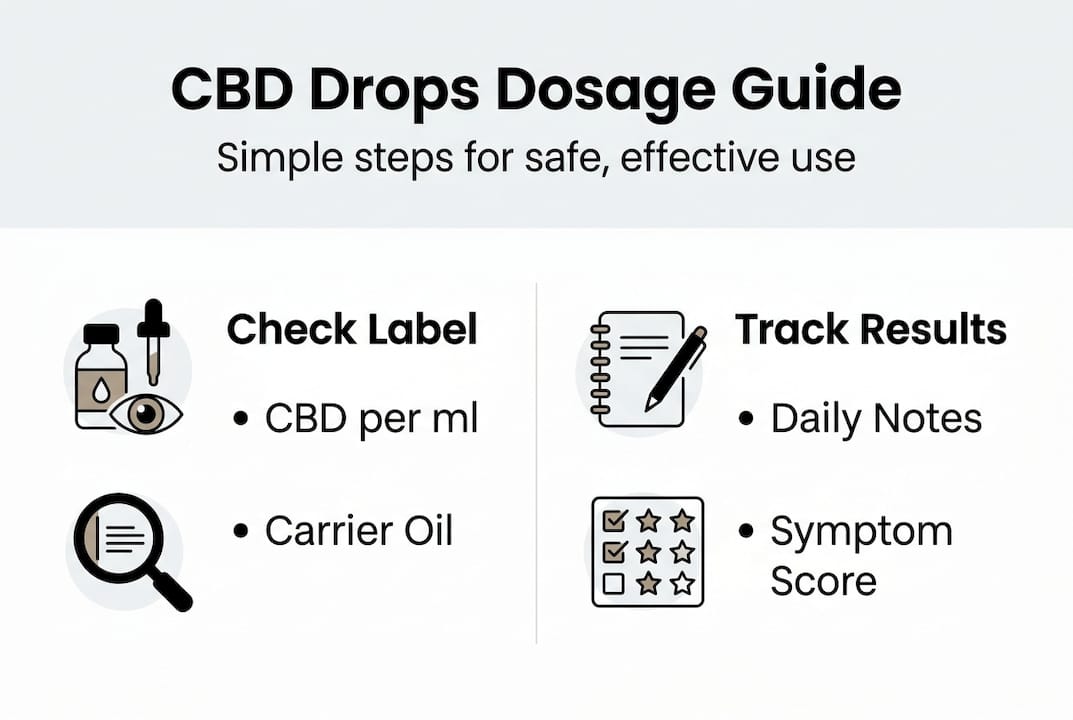
Before you measure a single drop, you need to understand what is actually in your bottle. CBD drops (also called tinctures) typically contain a CBD extract suspended in a carrier oil such as MCT (medium-chain triglyceride) oil or hemp seed oil. The label should clearly state the total CBD content in milligrams, the volume of the bottle, and the strength per millilitre or per drop.
FSA guidance is clear that CBD drops are not suitable for everyone. The following groups should avoid them without medical supervision:
- Pregnant or breastfeeding women
- Children and adolescents under 18
- People taking prescription medications (especially blood thinners or epilepsy drugs)
- Anyone with liver conditions or hormonal sensitivities
What to check on the label before buying:
| Label detail | Why it matters |
|---|---|
| Total CBD in mg | Lets you calculate dose per drop accurately |
| Carrier oil type | Affects absorption rate and taste |
| Broad-spectrum vs isolate | Determines cannabinoid profile |
| Third-party lab certificate | Confirms purity and zero THC |
| Batch number and expiry | Ensures product freshness and traceability |
For a clear breakdown of CBD oil dosage calculation, it helps to know your bottle’s mg-per-ml figure before you start. A CBD dosage chart can also simplify this process considerably. Always review CBD safety tips if you take any regular medication.
Pro Tip: Divide the total mg on the label by the bottle volume in ml to get your mg-per-ml figure. Then divide by 20 (the average number of drops per ml) to find the CBD per drop. This simple maths saves a lot of guesswork.
How to calculate your ideal CBD drops dosage
Now that you have your product details, here is how to work out a safe starting dose. The FSA’s provisional ADI is 0.15mg per kg of body weight per day, which works out to 10mg for a 70kg adult. That is your conservative baseline.
Step-by-step dosage calculation:
- Find your weight in kilograms. If you weigh 80kg, your FSA-aligned dose is 80 x 0.15 = 12mg per day.
- Check your product’s mg-per-drop figure. A 1000mg bottle in 10ml gives 100mg per ml, or roughly 5mg per drop.
- Calculate your drops. At 5mg per drop, a 12mg dose equals approximately 2 to 3 drops.
- Start low. Begin at half your calculated dose for the first week to assess tolerance.
- Increase gradually. Add one drop every 3 to 5 days if needed, staying within safe limits.
Statistic to remember: The FSA’s figure of 0.15mg per kg per day means a 60kg person should aim for no more than 9mg daily under official guidance, while a 90kg person could go up to 13.5mg.
| Body weight | FSA max (0.15mg/kg) | Retailer mid-range | Retailer upper limit |
|---|---|---|---|
| 60kg | 9mg | 20-40mg | 70mg |
| 70kg | 10mg | 20-40mg | 70mg |
| 80kg | 12mg | 20-50mg | 70mg |
| 90kg | 13.5mg | 25-50mg | 70mg |
For more on safe dosage patterns in the UK and a step-by-step UK dosing guide, SMOKO CBD’s blog covers these in detail. You can also revisit the dosage chart once you have your product’s mg-per-drop figure confirmed.
Pro Tip: Keep a simple notes app entry each day with your dose and how you felt. Even one week of data makes it much easier to spot patterns and adjust confidently.
Taking CBD drops for optimal absorption and results
Knowing your dose is only half the equation. How you take your CBD drops makes a significant difference to how much your body actually absorbs. The sublingual method (placing drops under the tongue) is the most effective approach for tinctures.
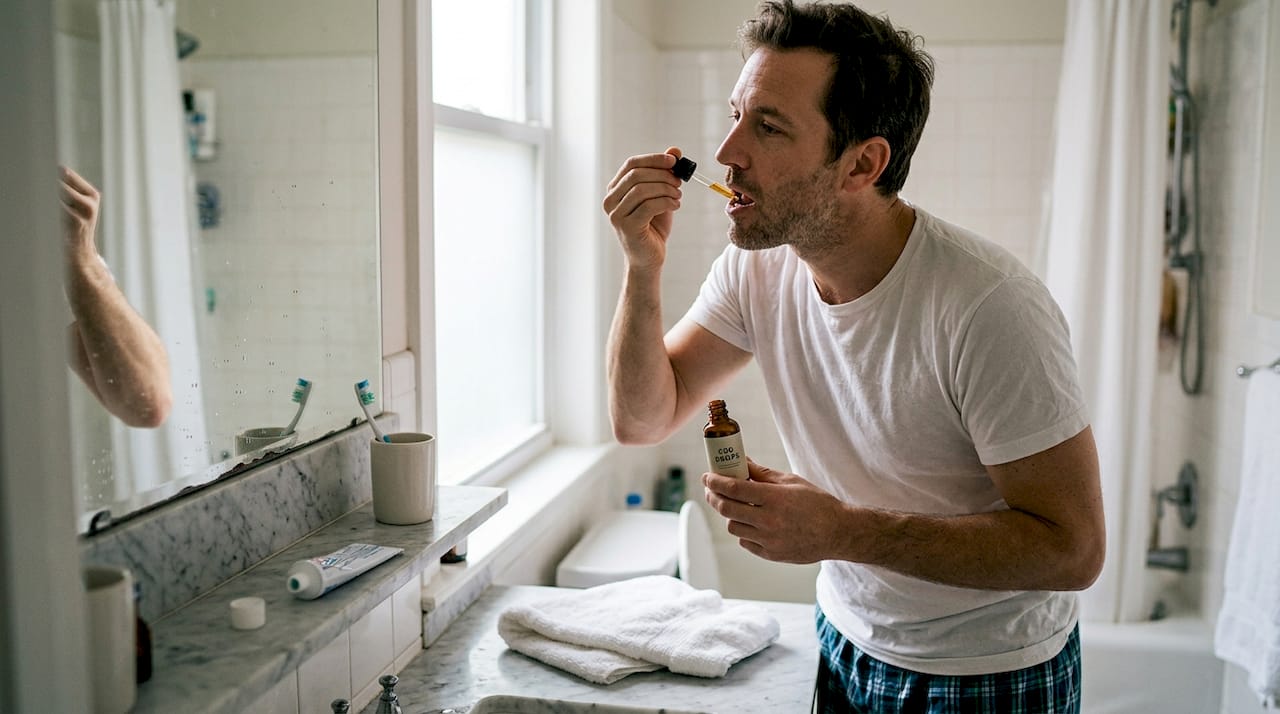
Sublingual absorption delivers 13 to 40% bioavailability, meaning your body uses a meaningful portion of what you take. Swallowing drops directly or adding them to food reduces this considerably, as the CBD passes through the digestive system first.
Best practice for taking CBD drops:
- Place your measured drops directly under the tongue, not on top of it
- Hold the drops in place for 60 to 90 seconds before swallowing
- Avoid eating or drinking for 15 minutes before and after dosing
- Take your dose at the same time each day to build consistent blood levels
- Morning dosing suits those targeting anxiety or daytime pain; evening suits sleep support
“Consistent timing is one of the most underrated factors in CBD effectiveness. Your endocannabinoid system responds better to regular, predictable input than to sporadic large doses.”
If the taste is an issue, a mint-flavoured tincture can make the routine far more pleasant without affecting absorption. Explore the CBD tincture benefits of different formulations to find what suits you. For those managing chronic discomfort, the CBD fibromyalgia relief guide offers additional context on timing and consistency.
Pro Tip: If you find the earthy taste of natural CBD oil off-putting, try holding the drops slightly further back under the tongue. The taste receptors are concentrated at the tip, so this small adjustment can make a real difference.
Monitoring your results: How to assess CBD effectiveness
Starting a CBD routine is the easy part. Knowing whether it is actually working, and adjusting safely when it is not, requires a bit of structure. Tracking your results does not need to be complicated.
Simple progress tracking table:
| Day | Dose (mg) | Symptom targeted | Result (1-10) | Notes |
|---|---|---|---|---|
| 1 | 5mg | Sleep quality | 4 | Took at 9pm, woke once |
| 7 | 7.5mg | Sleep quality | 6 | Fell asleep faster |
| 14 | 10mg | Sleep and anxiety | 7 | Noticeably calmer |
This kind of simple log helps you spot trends over two to four weeks, which is the minimum time needed to assess CBD’s effect on chronic symptoms. Monitoring and adjusting CBD drops should always be done cautiously, and with medical advice if effects are inconsistent or adverse.
Signs that something may need adjusting:
- No noticeable change after four weeks at a consistent dose
- Mild side effects such as drowsiness, dry mouth, or digestive discomfort
- Increased anxiety or disrupted sleep (rare but possible at higher doses)
- Any new symptoms that coincide with starting CBD
If you experience persistent side effects or your symptoms worsen, stop use and speak to your GP. CBD can interact with common medications, and professional guidance is always the safest route.
For a full overview of CBD drug interactions and what to watch for, SMOKO CBD’s safety guide is a useful reference. You can also explore CBD dosage benefits to understand how different doses relate to different outcomes.
Explore safe, quality CBD products for optimal results
If you are ready to put this guidance into practice, choosing a reputable, lab-tested product is the most important next step. SMOKO CBD offers a range of broad-spectrum tinctures designed specifically for UK adults seeking natural relief from pain, anxiety, and sleep difficulties.
All SMOKO CBD products are third-party lab tested to confirm zero THC and accurate CBD content, so the mg figure on the label is the mg figure in your bottle. Whether you are starting out with a mint CBD tincture at 1000mg or stepping up to a high-strength mint tincture at 2000mg, each product is formulated for consistent, reliable dosing. Visit SMOKO CBD to browse the full range and find the strength that fits your routine.
Frequently asked questions
How much CBD drop should I take per day according to UK guidelines?
The UK FSA recommends 10mg per day as the maximum for healthy adults. Always check your product label and speak to a healthcare professional if you are unsure.
Does weight or age affect CBD dosage in the UK?
Yes. The FSA recommends 0.15mg per kg of body weight per day, and CBD is not recommended for children, pregnant or breastfeeding women, or those on certain medications.
What is the best way to take CBD drops for maximum effect?
Hold your drops under the tongue for 60 to 90 seconds before swallowing. This sublingual method maximises absorption and delivers the highest bioavailability of any oral method.
Can CBD drops cause side effects or interact with medications?
CBD can interact with common medications and may cause mild side effects such as drowsiness or dry mouth. Always consult your GP before starting or changing your dose.
How long does it take to feel the effects of CBD drops?
Most users notice effects within 30 to 60 minutes of sublingual use. Consistent timing helps maintain steady CBD levels, which is especially important for managing chronic symptoms like pain or anxiety.