TL;DR:
- UK CBD must be FSA-approved and contain less than 0.2% THC for legal safety.
- Start with low doses (5-10mg daily) and increase gradually over four weeks for best results.
- Choose verified products with third-party lab reports and avoid unsubstantiated health claims.
Sorting fact from fiction when starting a CBD routine in the UK is genuinely tricky. You want relief from stress, poor sleep, or nagging pain, but the shelves are crowded with products making bold claims, and the rules around what is legal and safe are not always clear. The NHS notes that many over-the-counter CBD oils may contain THC, lack quality control, and offer uncertain benefits. That is a real concern worth taking seriously. This guide walks you through everything you need to know: the legal landscape, how to pick a trustworthy product, how to build a daily routine, and what to do when things do not go quite to plan.
Table of Contents
- Understanding CBD: What you need to know before starting
- Choosing the right CBD product: What to look for in 2026
- How to start your CBD routine: Step-by-step guide
- Monitoring your response and troubleshooting: What to expect
- A realistic perspective on CBD for UK wellness in 2026
- Start your CBD journey with trusted UK products
- Frequently asked questions
Key Takeaways
| Point | Details |
|---|---|
| Start safely, go slow | Begin with 5–10mg daily CBD, track your response, and increase only if needed. |
| Check product legality | Use only FSA-authorised products with third-party testing for best results. |
| Monitor and adjust | Give CBD 2–4 weeks, log symptoms, and stay alert to side effects for safe, effective use. |
| Consult the experts | Always check with a health professional if you have medical conditions or take other medicines. |
Understanding CBD: What you need to know before starting
To safely begin, it is vital to grasp the facts behind CBD products and the rules governing them in the UK.
CBD, short for cannabidiol, is a naturally occurring compound extracted from the cannabis plant. Unlike THC (tetrahydrocannabinol), it does not produce a high. Instead, it interacts with the body’s endocannabinoid system, a network of receptors that helps regulate mood, sleep, pain perception, and immune response. Think of it as a dimmer switch: CBD can help ramp up or tone down certain signals depending on what your body needs.
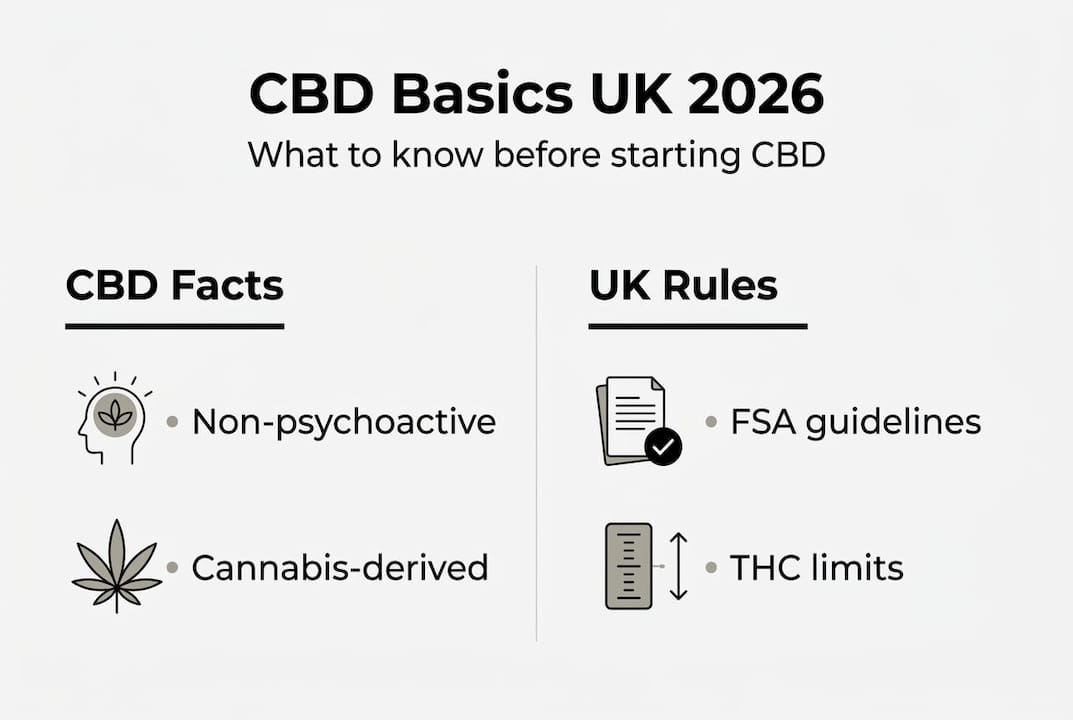
In the UK, CBD legality hinges on two things: the product must be authorised by the Food Standards Agency (FSA) and must contain less than 0.2% THC to be legal. Any product that does not meet both criteria is not compliant, regardless of how it is marketed. The FSA maintains a regulated products list, and checking it before you buy is one of the smartest moves you can make.
Here is a quick summary of what the UK rules mean in practice:
- FSA authorisation is mandatory for all CBD food supplements sold in the UK
- THC content must remain below 0.2% to be legally sold
- Third-party lab reports, also called Certificates of Analysis (COA), should confirm cannabinoid content and the absence of contaminants
- Pregnant women and those on certain medications are advised by the NHS to avoid CBD without GP guidance
- CBD regulations and compliance are stricter in the UK than in many other countries, which is actually a good thing for consumers
| Feature | Compliant UK product | Non-compliant product |
|---|---|---|
| FSA authorised | Yes | No |
| THC content | Below 0.2% | Often unlisted or higher |
| COA available | Yes, from third-party lab | Absent or unverifiable |
| Label accuracy | Legally required | Unreliable |
| Trusted organic CBD | Certified and traceable | Unknown origin |
“The FSA safety advice recommends that healthy adults consume no more than 10mg of CBD per day as a food supplement, and urges caution for vulnerable groups.”
The industry sometimes overstates what CBD can do. Stick to official guidance, choose verified products, and approach the whole thing with measured expectations.
Choosing the right CBD product: What to look for in 2026
Armed with the rules, you are ready to identify legitimate, safe CBD products.
The market in 2026 is more regulated than it was even two years ago, but that does not mean every product on the shelf is trustworthy. Label literacy is your first line of defence. A compliant product will clearly state the CBD content in milligrams, list all ingredients, provide batch numbers, and direct you to a COA from an independent laboratory. If any of those elements are missing, walk away.
In terms of product types, broad-spectrum CBD and CBD isolate are generally the safest choices. Broad-spectrum contains multiple cannabinoids and plant compounds but has THC removed, while isolate is pure CBD with nothing else. Full-spectrum products retain trace THC and, while often marketed as more effective due to the so-called “entourage effect,” they carry a slightly higher risk of exceeding the legal THC threshold. For most beginners, broad-spectrum is the sensible starting point.
Here is what to check before purchasing:
- FSA authorisation status confirmed on the regulated products list
- COA from a third-party laboratory, not just an in-house test
- CBD concentration clearly stated in mg per serving and per bottle
- THC content confirmed below 0.2% per the FSA regulated products list
- No unsubstantiated health claims on the label, which would breach UK advertising rules
- Reputable brand with transparent sourcing and customer support
| Product type | THC risk | Best for | COA needed |
|---|---|---|---|
| CBD isolate | None | Sensitive users | Yes |
| Broad-spectrum | Very low | Most beginners | Yes |
| Full-spectrum | Trace amounts | Experienced users | Yes |
The NHS warns that quality control in the CBD sector remains variable, so relying on a COA is non-negotiable. You can also browse a curated list of CBD supplements that meet UK standards to shortcut some of the research.
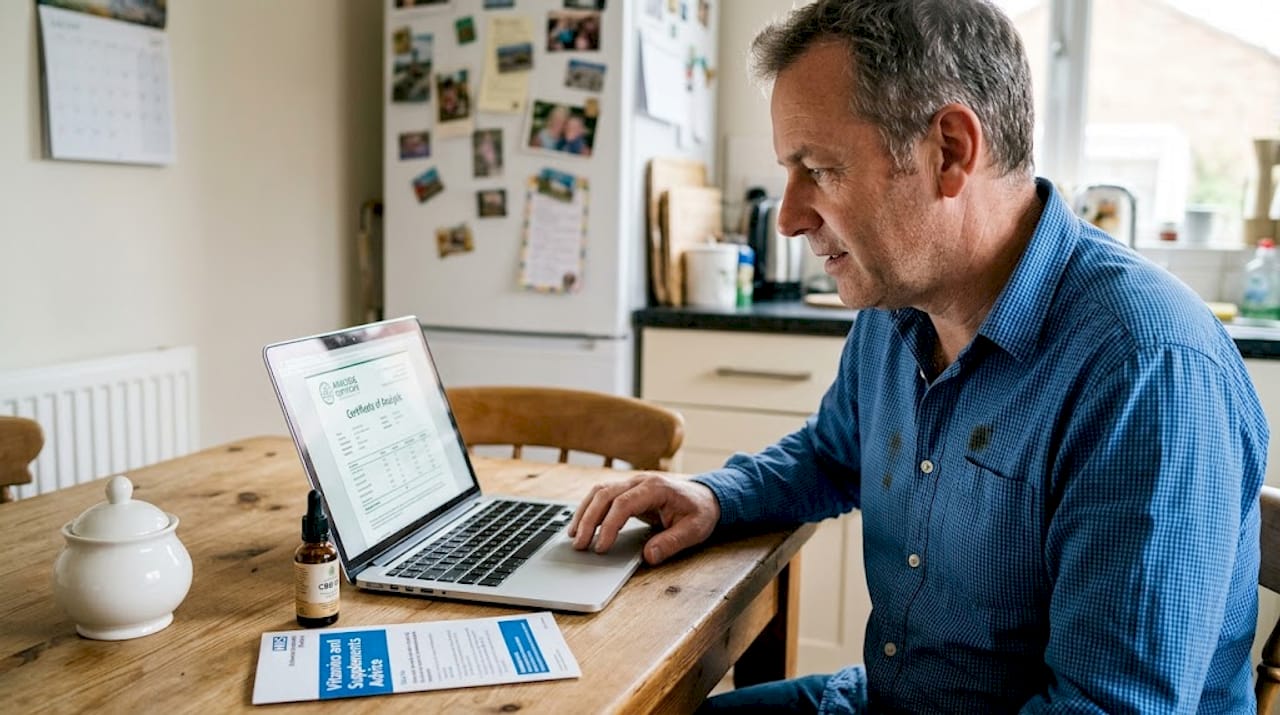
Pro Tip: Start with a lower-concentration oil (500mg to 1000mg per 10ml bottle) so you can control your dose more precisely in the early weeks.
How to start your CBD routine: Step-by-step guide
Once you have chosen your first bottle, here is how to actually begin your routine.
The single biggest mistake new users make is starting too high and expecting instant results. CBD does not work like paracetamol. It builds gradually in your system, and effects may take up to four weeks to fully assess. Patience is not optional here; it is part of the process.
Follow these steps to give yourself the best possible start:
- Begin at 5mg to 10mg per day. This aligns with the FSA 10mg guidance for healthy adults. Use your product’s dropper or capsule count to measure accurately.
- Take it sublingually if using an oil. Hold the oil under your tongue for 60 to 90 seconds before swallowing. This allows faster absorption through the mucous membranes.
- Take it with a fatty meal. CBD is fat-soluble, meaning it absorbs far better alongside foods like avocado, nuts, or full-fat yoghurt.
- Keep a simple journal. Note your dose, the time you took it, and any changes in sleep, mood, or discomfort. This data is invaluable for adjusting later.
- Start at 5-10mg daily, increasing by 5mg every three to five days while tracking your symptoms. Never jump doses dramatically.
- Review at the four-week mark. Assess your journal entries honestly. Are you sleeping better? Is stress more manageable? Adjust your dose based on evidence, not impatience.
For detailed guidance on adjusting amounts over time, the CBD dosage in the UK resource and a step-by-step dosing guide are both worth bookmarking.
Statistic to note: The FSA’s acceptable daily intake (ADI) for CBD is 10mg for healthy adults. Going significantly above this without medical supervision is not recommended in 2026.
Pro Tip: Take your CBD at the same time each day, ideally in the evening if sleep is your primary goal, to build a consistent habit your body can respond to.
Monitoring your response and troubleshooting: What to expect
Once you begin using CBD day to day, active monitoring is crucial.
Most users experience gradual, subtle changes rather than a dramatic overnight shift. You might notice you are falling asleep a little more easily, or that a stressful afternoon feels slightly more manageable. These are the kinds of quiet improvements worth recording in your journal. The CBD effects may take several weeks and vary considerably between individuals, so resist comparing your experience to someone else’s.
Common side effects, particularly if you increase your dose too quickly, include:
- Dry mouth: Drink more water and reduce your dose if persistent
- Mild fatigue: Often settles after the first week; try shifting your dose to the evening
- Changes in appetite: Usually temporary; monitor and reduce dose if bothersome
- Digestive discomfort: More common with oil-based products; try capsules instead
If side effects persist or worsen, reduce your dose immediately and consult your GP. This is especially important if you take blood thinners, antidepressants, or epilepsy medication, as CBD can affect how these drugs are metabolised.
“CBD works best as part of an overall lifestyle improvement plan alongside sleep hygiene and regular exercise, rather than as a standalone solution.”
This is a point worth sitting with. CBD is not a substitute for good sleep habits, a balanced diet, or regular movement. It is a potential addition to those foundations, not a replacement for them. Exploring the wellness benefits of CBD in context with lifestyle choices gives you a much clearer picture of realistic outcomes. For those dealing with persistent discomfort, the CBD for pain evidence is worth reviewing alongside your GP’s advice.
A realistic perspective on CBD for UK wellness in 2026
With practical steps outlined, it is worth considering the broader context of CBD use in 2026.
There is a genuine gap between what CBD marketing promises and what the evidence currently supports. Brands frequently promote higher doses and sweeping benefits, but the FSA and NHS maintain measured caution for good reason. The evidence remains promising but early, and the UK’s regulatory framework in 2026 is among the strictest in Europe. That strictness is not a barrier; it is a safeguard.
Our view at SMOKO CBD is straightforward: CBD is not a miracle cure, and we would never claim otherwise. What it can be, when used knowledgeably and consistently, is a genuinely useful addition to a wellness routine. The people who get the most from it are those who pair it with realistic expectations, quality-verified products, and healthy daily habits.
Choosing FSA-listed products, staying within recommended limits, and reading your body’s responses carefully puts you in the best possible position. The CBD wellness benefits are real for many people, but they reveal themselves gradually and modestly. That is not a flaw. That is simply how thoughtful, responsible wellness works.
Start your CBD journey with trusted UK products
Armed with facts and practical guidance, take your next steps with confidence.
At SMOKO CBD, every product is broad-spectrum, batch-tested by an independent laboratory, and fully compliant with FSA requirements. Whether you prefer the flexibility of a dropper or the simplicity of a capsule, there is an option to suit your routine. Our CBD mint oil is a great starting point for sublingual use, offering precise dosing in a clean, refreshing format. If you prefer something more discreet, our CBD soft gels make daily consistency effortless. Both are designed to slot naturally into the kind of gradual, evidence-backed routine this article describes.
Ready to explore the full range? Explore all SMOKO CBD products and find the right fit for your wellness goals.
Frequently asked questions
How much CBD should I start with in the UK in 2026?
Start with 5 to 10mg of CBD per day, staying within the 10mg daily ADI set by the FSA for healthy adults, and increase slowly only if needed.
How do I choose a safe CBD product?
Look for an FSA-authorised product with less than 0.2% THC and a third-party Certificate of Analysis confirming its purity and cannabinoid content.
How long does CBD take to work for stress or sleep?
Most users notice gradual improvements after two to four weeks of consistent daily use, though individual results vary depending on dose, lifestyle, and the issue being addressed. Effects may take longer for some people.
Can I safely take CBD with other medications?
Not without checking first. CBD can interact with several medications, and the NHS advises consulting your GP before use if you take blood thinners, antidepressants, or other prescribed drugs.