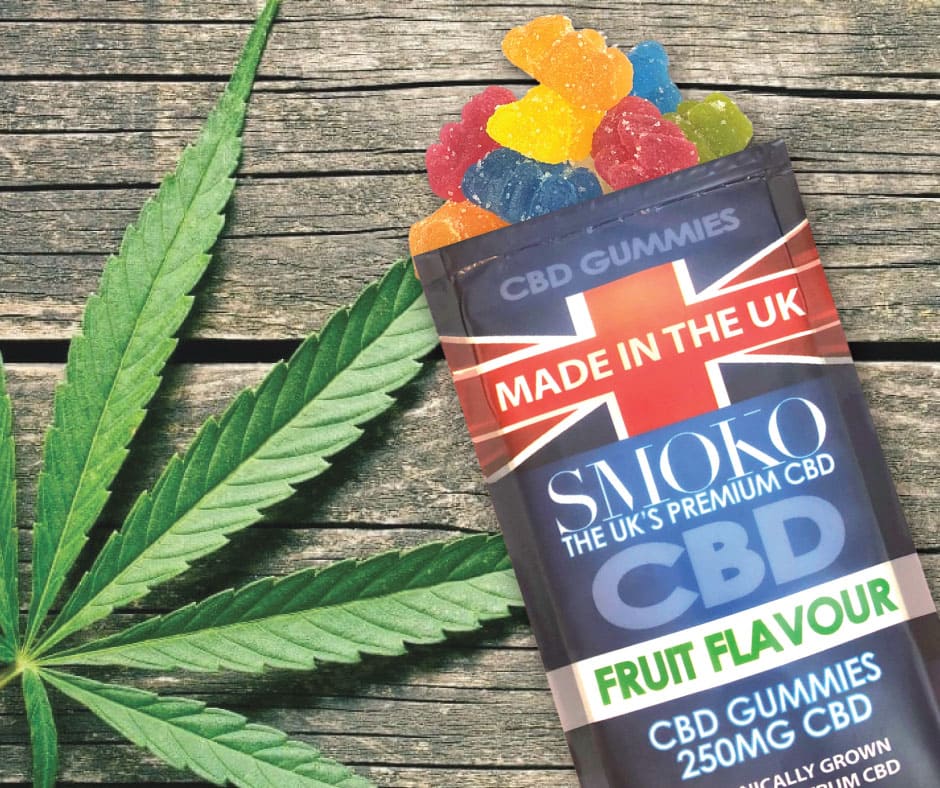
CBD is everywhere right now, from high street health shops to online wellness communities, and many UK adults living with chronic pain are genuinely curious about whether it can help. The trouble is, the evidence is often presented in contradictory ways: one headline promises a breakthrough, the next dismisses it entirely. UK registry data and recent trials suggest both real promise and modest, nuanced effects depending on the product and the person. This guide cuts through the noise to explain how CBD may work for pain, what the science actually shows, how to use it safely within UK law, and what to realistically expect.
Table of Contents
- How does CBD relieve pain? The science in plain English
- What does the evidence show? UK trials and real-world results
- CBD products for pain: oils, tinctures, and gummies compared
- How to use CBD safely for pain: dosage, side effects, and practical advice
- What the experts and the NHS recommend: limitations and next steps
- CBD products for pain relief: where to find high-quality options
- Frequently asked questions
Key Takeaways
| Point | Details |
|---|---|
| Modest pain relief | CBD may help reduce chronic pain slightly, with best results for certain conditions and product types. |
| UK legal framework | Only FSA-authorised, low-THC CBD products are legal for self-use in the UK, so always check the packaging. |
| Safe dosing matters | Begin at 20-25mg daily and increase slowly, never exceeding 70mg per day as per FSA guidance. |
| Choose suitable format | Pick CBD oils or tinctures for quicker effect, or gummies for convenience and consistent dosing. |
| Consult your doctor | If on other medication or unsure, always speak to your GP before starting CBD for pain. |
How does CBD relieve pain? The science in plain English
To understand why CBD might help with pain, you first need a quick look at the body’s endocannabinoid system. Think of it as a vast internal network of receptors and signalling molecules that helps regulate pain, mood, inflammation, and sleep. CBD (cannabidiol) interacts with this system, but not in the blunt, intoxicating way that THC does.
Research shows that CBD inhibits sensory neuron activation via multiple pain and inflammation pathways simultaneously. Rather than simply blocking one receptor, it appears to tone down the overall volume of pain signalling across several biological routes. That multi-target action is part of why researchers find it so interesting.
Crucially, CBD is non-psychoactive but interacts with opioid and serotonin systems, which are both deeply involved in how we perceive and emotionally respond to pain. This is very different from traditional painkillers, which tend to target a single pathway and carry significant addiction risk.
Here is a summary of the key ways CBD may act on pain:
- Reduces inflammation by modulating immune cell activity
- Calms overactive pain signals in peripheral and central nerves
- Interacts with serotonin receptors to influence pain perception and mood
- Modulates opioid receptors without causing dependency
- Acts as an immuno-modulator, helping to ramp down inflammatory responses
If you want a broader grounding in what CBD actually is before going further, the what is CBD oil guide is a useful starting point.
“CBD’s pharmacological profile is genuinely unusual. It does not fit neatly into existing drug categories, which makes it both scientifically fascinating and clinically challenging to evaluate.” — Pain research commentary, 2024
What does the evidence show? UK trials and real-world results
Understanding the science is key, but what do UK patients and clinical studies actually show regarding CBD’s impact on pain?
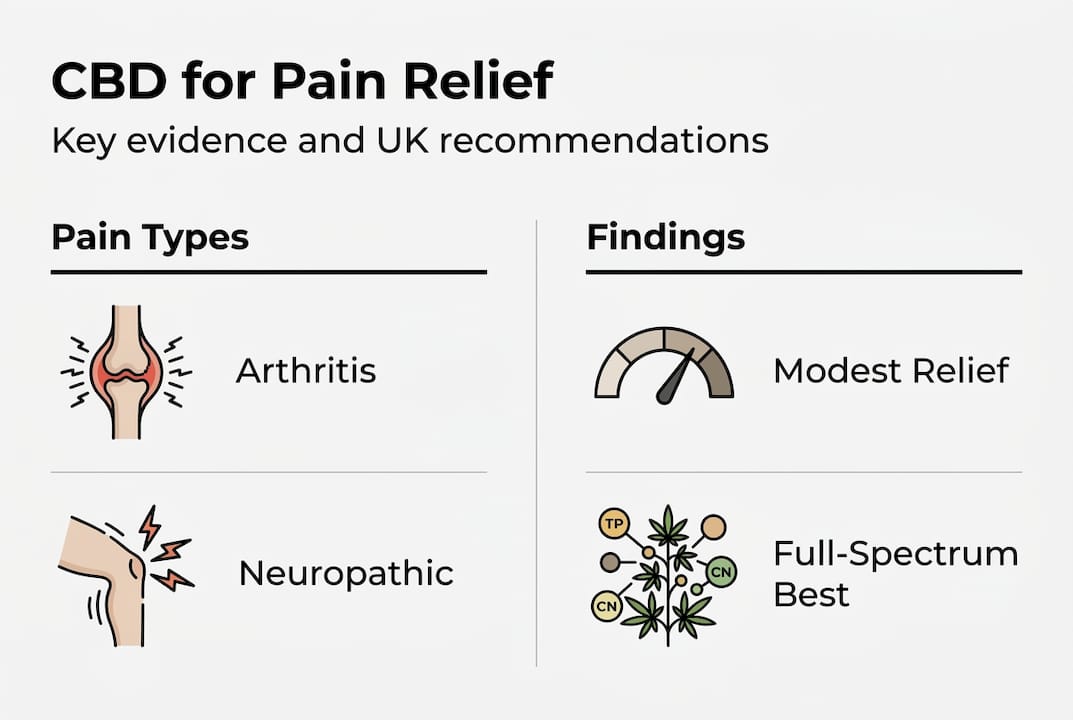
The honest answer is: it depends heavily on the product. Full-spectrum CBD extracts produced statistically significant pain relief in recent trials, while pure CBD isolate showed far weaker results. The presence of other cannabinoids, terpenes, and trace compounds appears to amplify the effect, something researchers call the “entourage effect.”

UK registry and survey data show modest improvement in chronic pain, particularly for neuropathic pain and arthritis, though not everyone responds. A systematic review of cannabinoids confirms that results are inconsistent across studies, partly because dosing, product quality, and pain types vary so widely.
Evidence overview by pain type:
| Pain type | Strength of evidence | Notes |
|---|---|---|
| Neuropathic pain | Moderate | Best results with full-spectrum formulas |
| Arthritis and joint pain | Moderate | Registry data shows meaningful improvement |
| Fibromyalgia | Limited | Some benefit reported; more trials needed |
| Lower back pain | Mixed | Inconsistent results across studies |
| Post-surgical pain | Weak | Not currently recommended as primary relief |
One key statistic worth noting: trials measuring pain on a numerical rating scale (NRS) found a reduction of approximately 0.6 points versus placebo. That is modest, but for someone living with daily chronic pain, even a small, consistent reduction can meaningfully improve quality of life.
Pro Tip: When reading CBD research, check whether the trial used a full-spectrum extract or a pure isolate. Pure CBD studies often show weaker results, which can make the overall evidence look less promising than it really is for real-world products.
For a deeper look at how CBD may support pain relief day to day, the CBD pain relief benefits article covers practical applications well. If you are considering edibles specifically, the CBD gummies for relief guide is worth reading alongside this one.
CBD products for pain: oils, tinctures, and gummies compared
With the evidence in mind, the next step is understanding what kinds of CBD products are available in the UK, and how to choose the best format for your needs.
The three most common formats are tinctures (oils taken under the tongue), gummies, and softgel capsules. Each has a different onset time, duration, and practical use case.
Format comparison:
| Format | Onset time | Duration | Convenience | Best for |
|---|---|---|---|---|
| Tincture/oil | 15 to 30 minutes | 4 to 6 hours | Moderate | Fast relief, flexible dosing |
| Gummies | 30 to 90 minutes | 6 to 8 hours | High | Consistent daily dosing |
| Softgel capsules | 30 to 60 minutes | 6 to 8 hours | High | Precise, tasteless dosing |
Tinctures are absorbed directly through the tissue under your tongue, which is why they work faster. Gummies and softgels pass through the digestive system, which slows absorption but tends to produce a longer-lasting effect. For chronic pain that needs sustained relief throughout the day, gummies or softgels often make more practical sense. You can read more about CBD gummies benefits and CBD softgels explained to compare them in more detail, or browse the CBD edibles overview for a broader picture.
UK law restricts all non-medical CBD products to less than 0.2% THC, and the FSA recommends a maximum daily intake of 10 to 70mg for healthy adults. Any product you buy should clearly state its CBD content per serving and carry evidence of third-party lab testing.
Here is a quick checklist for choosing a quality CBD product in the UK:
- Confirm the product is on the FSA’s novel food authorisation list
- Check for a certificate of analysis (COA) from an independent lab
- Verify THC content is below 0.2%
- Look for clearly labelled CBD content per dose (not just per bottle)
- Choose broad-spectrum or full-spectrum over isolate where possible
How to use CBD safely for pain: dosage, side effects, and practical advice
Once you have chosen your preferred CBD product, it is vital to understand how to use it safely and effectively in the UK.
The golden rule is: start low, go slow. Start with 20 to 25mg per day and titrate upward in 5 to 10mg steps if needed, but stay well under the FSA maximum of 70mg per day. Give each dose level at least one week before adjusting, as CBD can take time to build up a consistent effect. A detailed CBD dosage guide and step-by-step dosing resource are available if you want structured guidance.
Pro Tip: Keep a simple pain diary when you start CBD. Note your dose, timing, and pain score each day. After two to three weeks, patterns become clear and you can adjust with confidence rather than guesswork.
Side effects are generally mild but worth knowing. CBD can cause dizziness, nausea, and potential liver function changes at high doses, and it interacts with certain prescription drugs via the CYP450 enzyme pathway. This is the same pathway used by many common medications, including blood thinners and some antidepressants.
Watch out for these warning signs and stop use if you notice:
- Persistent nausea or stomach upset
- Unusual fatigue or dizziness
- Changes in mood or sleep that feel negative
- Any yellowing of the skin (a sign of liver stress)
- Unexpected changes in how your other medications feel
Always check the CBD legal status before purchasing, and consult your GP if you take any regular prescription medication. For broader CBD dosing advice, independent health sources can also help you calibrate your approach.
What the experts and the NHS recommend: limitations and next steps
Finally, to complete your understanding, let us examine what UK health authorities and pain experts currently recommend.
The NHS and NICE do not routinely recommend pure CBD for chronic pain. NICE and the NHS allow medical cannabis with THC only by specialist prescription, and only where other treatments have failed. Over-the-counter CBD sits in a different category: legal, accessible, but not formally endorsed for pain treatment.
That does not mean it is without value. UK real-world data from patient registries consistently shows that many people report meaningful improvements in pain and quality of life. The gap between clinical caution and patient experience is real, and worth acknowledging.
For those who want to try CBD as part of a broader holistic approach, it works best alongside other strategies:
- Regular gentle movement such as swimming or yoga
- Anti-inflammatory nutrition (Mediterranean-style diet)
- Mindfulness or breathing practices for pain perception
- Good sleep hygiene, which CBD may also support
- Physiotherapy or osteopathy where appropriate
Who should avoid CBD or seek medical advice first:
People who are pregnant or breastfeeding, those with liver conditions, anyone taking blood thinners or epilepsy medication, and individuals with a history of psychosis should speak to their GP before using any CBD product.
For guidance on dosage within NHS-aligned limits, the CBD dosage and NHS advice page offers a clear, practical breakdown.
CBD products for pain relief: where to find high-quality options
If you are ready to try CBD for yourself, it is crucial to choose products that meet UK safety and quality standards. Not all CBD is created equal, and the difference between a well-made, lab-tested product and a poorly labelled one can significantly affect your results.
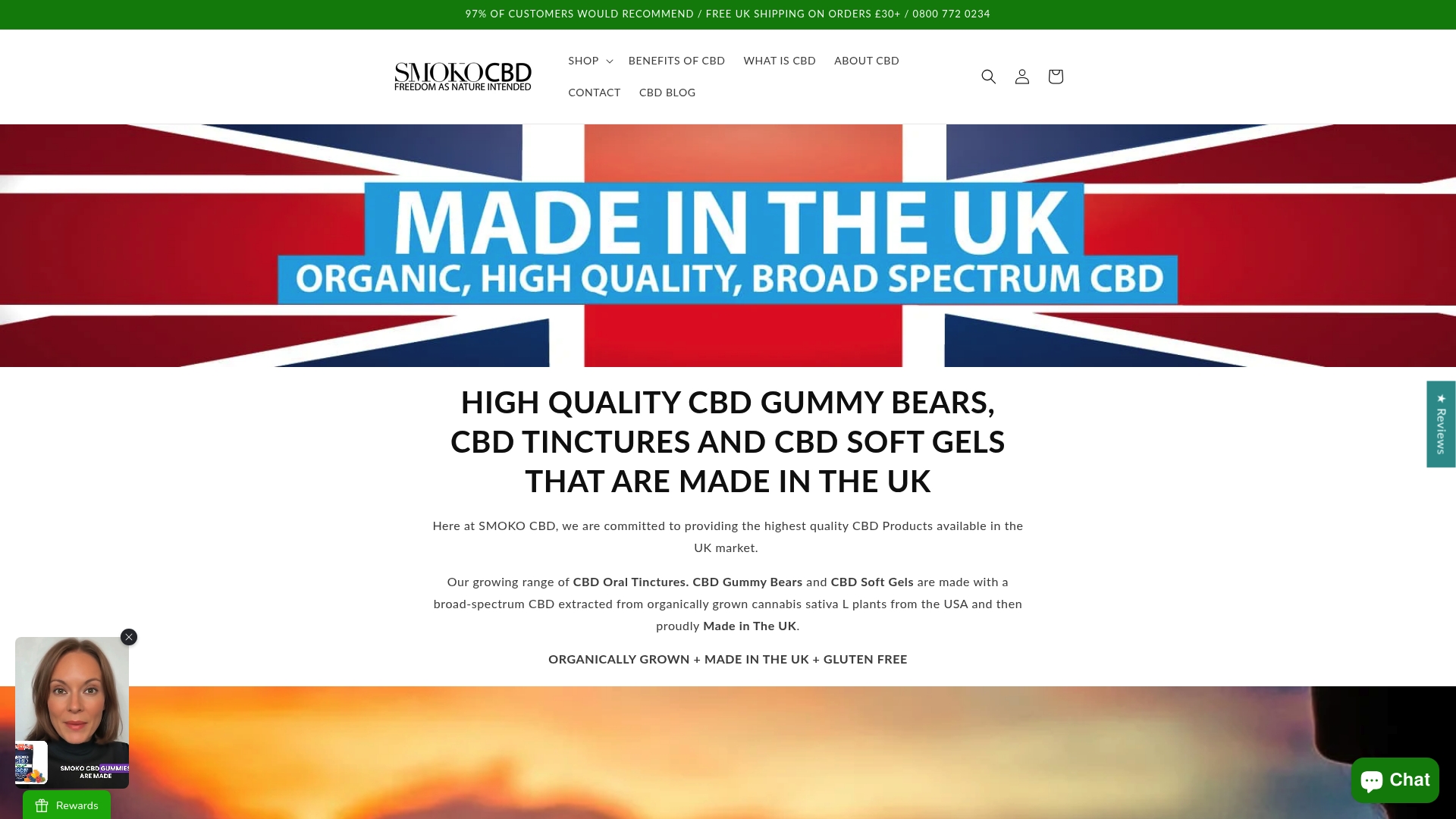
At SMOKO CBD, every product is made from organically grown, broad-spectrum hemp extract and independently tested to confirm zero THC and accurate CBD content. Whether you prefer the fast action of the mint 1000mg broad spectrum tincture, the convenience of the CBD tinctures and gummies pack, or the precise dosing of broad spectrum soft gels, there is a format to suit your lifestyle and pain management goals. All products comply with FSA guidelines and UK law, so you can focus on finding what works for you.
Frequently asked questions
Does CBD really help with chronic pain?
Research shows modest pain relief for some people, particularly with full-spectrum products. Results vary depending on the individual, the pain type, and the product quality.
What is the safest CBD dosage for UK adults?
Start at 20 to 25mg per day and do not exceed the FSA maximum of 70mg per day. Always follow product labelling and consult your GP if you take other medications.
Are gummies or tinctures better for pain?
Tinctures act faster (within 15 to 30 minutes), while gummies offer slower, longer-lasting relief over 6 to 8 hours. Both should be FSA-approved and contain less than 0.2% THC.
Is CBD legal for pain use in the UK?
Yes. CBD is legal within FSA and Home Office guidelines as long as the product contains less than 0.2% THC and makes no unauthorised medical claims on its packaging.
What are the main side effects and interactions of CBD?
Possible side effects include dizziness and nausea. CBD can affect liver enzymes and interact with CYP450-metabolised drugs, so always check with your GP before starting if you take prescription medication.