TL;DR:
- Proper dosing and product safety are essential for effective and legal cannabis oil use in the UK. Consistent intake, accurate measurement, and medical consultation help maximize benefits while minimizing risks. Monitoring individual responses over time ensures that CBD supports your health safely and effectively.
If you’ve picked up a bottle of cannabis oil and felt immediately unsure about how much to take, you are not alone. Knowing how to take cannabis oil correctly is one of the most common questions among UK adults exploring natural relief for pain, anxiety, and poor sleep. The product labels can be confusing, the dosing advice online often contradicts itself, and the legal landscape adds another layer of uncertainty. This guide cuts through all of that. You’ll learn exactly what to prepare, how to dose safely, what mistakes to avoid, and how to tell whether it’s actually working for you.
Table of Contents
- What you need before taking cannabis oil
- How to prepare and dose cannabis oil correctly
- Common mistakes and safety precautions when taking cannabis oil
- How to know if cannabis oil is working for you
- Why cautious and informed use beats quick fixes with cannabis oil
- Explore quality cannabis oil products at SMOKO CBD
- Frequently asked questions
Key Takeaways
| Point | Details |
|---|---|
| Safe cbd dose | Keep your total daily intake of CBD below 10 mg to stay within UK safety guidelines. |
| Consistent dosing | Use an accurate measuring device and take CBD the same way each time to ensure reliable effects. |
| Legal products only | Choose CBD oils from reputable UK suppliers that comply with food supplement regulations. |
| Medical advice | Consult a healthcare professional before starting if you’re pregnant, breastfeeding, or on medication. |
| Monitor effects | Track symptoms and adjust use carefully while staying within safe dose limits. |
What you need before taking cannabis oil
Before you take a single drop, a little preparation goes a long way. Cannabis oil in the UK is sold as a food supplement, not a medicine, and that distinction matters. It means the product has passed UK CBD regulations that govern its sale but it does not carry the same clinical oversight as a prescribed drug. So the responsibility of safe use sits largely with you.
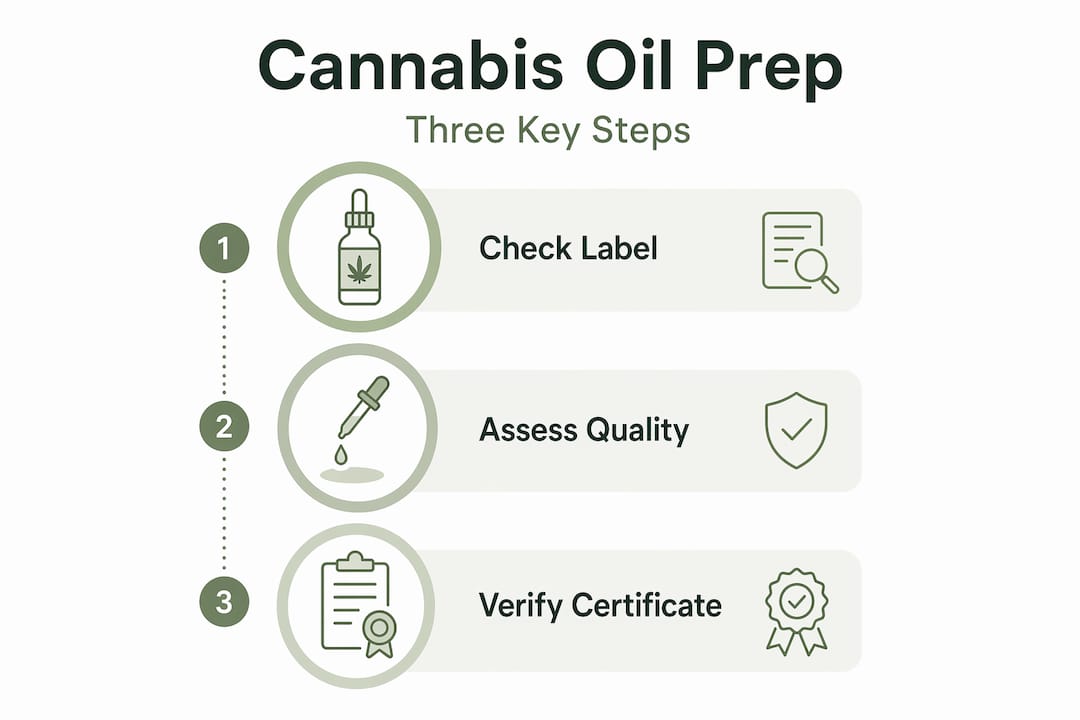
The first thing to check is the quality of the product you have chosen. Not all CBD oils are created equal. Some contain trace amounts of THC (the psychoactive compound in cannabis), others are poorly labelled, and a small number make health claims that fall outside what is legally permitted for a food supplement. Choosing safe, third-party tested CBD products is one of the most important steps you can take before anything else.
Next, understand the daily limit. The Food Standards Agency has set a provisional daily intake of 10 mg CBD per day for adults, and this applies across all sources combined. So if you are already taking CBD gummies and then add a tincture on top, you need to count both. The provisional acceptable daily intake of 10 mg/day is set for a 70 kg adult, and exceeding your total intake across all products is something to actively avoid.
Certain groups should not use cannabis oil without speaking to a doctor first. Pregnant and breastfeeding people should avoid CBD due to insufficient safety data, and the same caution applies to anyone on prescription medication due to potential interactions.
Here is a quick summary of what to have in place before you start:
- A product from a reputable brand with visible third-party lab results showing zero THC
- A clear understanding of how much CBD is in each serving
- An accurate pipette or dropper (never a household teaspoon, which can vary by up to 20% in volume)
- Confirmation from your GP if you take any regular prescription medicines
- A note of the 10 mg daily limit so you don’t accidentally stack too much across different products
| Product form | Typical CBD per serving | Max recommended daily intake |
|---|---|---|
| CBD tincture (drops) | 5 to 10 mg per full pipette | 10 mg (1 to 2 servings) |
| CBD soft gel capsules | 10 to 25 mg per capsule | 1 capsule if high strength |
| CBD gummies | 5 to 10 mg per gummy | 1 to 2 gummies |
Pro Tip: Always look for a QR code or batch number on your CBD product that links to a Certificate of Analysis. This confirms the exact cannabinoid content and that the product is THC-free. If a product doesn’t have one, that’s a red flag worth taking seriously.
How to prepare and dose cannabis oil correctly
With the preparation complete, here are the key steps to correctly dose and take your cannabis oil. The science of CBD absorption and bioavailability (the proportion of CBD that actually reaches your bloodstream) shows that how you take it matters as much as how much you take.
Follow this process to get your dosing right from day one:
- Start at the lowest dose available, typically 5 mg per day. Your body needs time to respond to cannabinoids, and starting low reduces the risk of side effects like drowsiness or mild digestive discomfort.
- Use the pipette included with your tincture. Fill it to the marked line, not to the brim. Hold the oil under your tongue for 60 to 90 seconds before swallowing. This sublingual method allows faster absorption into the bloodstream than simply swallowing it.
- Read your product label carefully every time you open a new bottle. Strengths and formulations vary, and a detailed CBD dosage guide can help you interpret the numbers correctly.
- Keep conditions consistent. Taking CBD consistently with food or consistently without food matters. Using an accurate measuring device and keeping the same conditions each time ensures more uniform absorption. If you take it with a fatty meal one day and on an empty stomach the next, the amount reaching your system can change significantly.
- Stick to a schedule. Take your CBD at the same time each day. Morning use suits those managing anxiety or pain throughout the day. Evening use is generally better for sleep support.
- If you miss a dose, skip it. Do not double dose if you miss a dose. CBD products vary widely in potency, and taking twice the amount to compensate can push you over the recommended daily limit.
Common dosing mistakes to avoid:
- Measuring drops with a household spoon rather than the calibrated pipette
- Swallowing the oil immediately instead of holding it under the tongue
- Taking CBD with wildly varying meals, which disrupts consistent absorption
- Adding CBD to a hot drink, which can degrade the cannabinoids before they reach you
- Assuming more is always better and increasing the dose too quickly
Pro Tip: If you are using CBD oil for sleep, take your dose roughly an hour before bed rather than right at bedtime. This gives the cannabinoids time to be absorbed and begin working with your endocannabinoid system (the body’s own regulatory network) before you try to sleep.
Common mistakes and safety precautions when taking cannabis oil

Recognising these common errors helps you maintain safety and legality when using cannabis oil. The UK regulatory environment is clear, but it’s easy to fall into traps if you’re not paying attention.
The MHRA (Medicines and Healthcare products Regulatory Agency) is explicit: CBD products that make medical claims are regulated as medicines and require proper authorisation. If a product you are considering promises to treat or cure a condition, that is a warning sign. Food supplements, which is the legal category for most CBD oils sold in health stores, can describe general wellbeing support but cannot claim to treat disease.
The NHS also cautions that CBD oils sold in high street health stores vary considerably in quality and may contain THC. Medical cannabis, which is a separate category, is only legally prescribed by specialist doctors for specific conditions.
Watch out for these critical safety points:
- Do not exceed 10 mg of CBD per day from all products combined, in line with FSA guidance
- Avoid CBD if you are pregnant, breastfeeding, or immunosuppressed without clear medical advice
- Do not use CBD alongside prescription medicines (particularly blood thinners, epilepsy drugs, or antidepressants) without consulting your GP first, as CBD affects liver enzymes that process many medications
- Avoid any product containing THC above the legal trace limit of 0.2% in the UK, as this can affect your ability to drive and may appear in drug screening tests
- Ignore unverified health claims. The UK CBD legal compliance framework means legitimate sellers are careful about the language they use. Over-promising products are often under-regulated
“If you are taking regular prescription medicines and are considering using cannabis oil, speak to your doctor before you start. Drug interactions are a real concern, and your GP is the right person to assess your individual circumstances before you make any changes to your wellness routine.”
For further advice on CBD and prescription medicines, particularly around general wellness and safe use, independent guidance is available to help you navigate your choices carefully.
How to know if cannabis oil is working for you
Once you’ve begun dosing safely, monitoring how cannabis oil affects you is just as important as the dosing itself. CBD does not work like a painkiller or a sedative. It does not hit fast and hard. Instead, it tends to influence the body’s endocannabinoid system gradually, nudging it toward balance rather than overriding it.
Many people expect to feel something dramatic within an hour. The reality is more nuanced. Benefits of CBD for pain, anxiety, and sleep are not sharply defined, and effects vary by individual, body weight, and the nature of the condition being addressed. Some people notice improvements within days; others take two to four weeks of consistent use before they feel any difference.
Here is a realistic picture of expected timeframes, depending on why you are using CBD:
| Condition | When effects may begin | What to look for |
|---|---|---|
| Chronic pain | 1 to 4 weeks | Reduced intensity, improved mobility |
| Anxiety | 3 to 7 days | Calmer baseline, less reactivity to stress |
| Sleep difficulties | 1 to 2 weeks | Easier to fall asleep, fewer night wakings |
| General wellbeing | 2 to 4 weeks | Improved mood, steadier energy |
To evaluate whether cannabis oil is working for you, keep a consistent record. A simple daily note of your symptoms, mood, sleep quality, and any side effects gives you genuinely useful data over time. Gut feelings are unreliable over short periods. Written records are not.
Some practical tips for monitoring your progress:
- Rate your main symptom (pain level, anxiety level, sleep quality) on a 1 to 10 scale each morning
- Note what time you took CBD, what you ate beforehand, and your overall mood
- Review your notes weekly and look for patterns rather than day-to-day changes
- If symptoms worsen or new side effects appear, stop use and speak to a healthcare professional
- If there is no noticeable change after six weeks at the recommended dose, consult your GP and consider whether CBD is the right approach for your situation
For a broader look at how CBD supports pain, anxiety, and sleep within a UK wellness context, there is detailed guidance available to help you make informed decisions.
Pro Tip: Keep a small notebook or a notes app entry dedicated to your CBD journal. Date each entry and include a one-line summary of how you felt. After four weeks, reading back through those entries often reveals gradual improvements that felt invisible day to day.
Why cautious and informed use beats quick fixes with cannabis oil
Here’s what the wellness market rarely tells you: CBD is not a shortcut. It is a tool, and like any tool, its value depends entirely on how thoughtfully you use it.
The current landscape of CBD products in the UK is genuinely exciting in some respects. There are well-made, properly tested products available that offer real support for everyday challenges like disrupted sleep, persistent low-level pain, and anxiety that doesn’t quite meet the threshold for prescription treatment. Those are meaningful benefits for a lot of people. But the market also contains products making exaggerated claims, operating in regulatory grey areas, and sold by brands that have no interest in your long-term health.
The MHRA is clear that patient safety and medical supervision are non-negotiable when a product makes medical claims. And the FSA’s provisional daily limit and guidance for vulnerable groups exist because real risks have been identified, not because regulators are being overcautious.
“Choosing a product because the label looks impressive or the marketing copy is persuasive is the most common mistake new CBD users make. The brands worth trusting are the ones who publish their lab results openly, stay within legal marketing boundaries, and tell you clearly what their product can and cannot do.”
What separates someone who benefits from cannabis oil from someone who doesn’t is almost never the product. It is the approach. Consistent dosing, honest tracking, medical oversight for those who need it, and a willingness to stay within safe limits rather than chasing faster results by taking more — that is the formula that actually works.
Spend some time understanding how to read CBD labels and UK rules before committing to any product. The few minutes you invest there will save you a lot of frustration and wasted money down the line.
Explore quality cannabis oil products at SMOKO CBD
If you are ready to start your CBD journey with a product you can genuinely trust, SMOKO CBD offers a range of broad-spectrum tinctures, capsules, and more, all third-party tested to confirm zero THC and made to UK compliance standards.
For those who prefer a refreshing flavour and precise dosing, the SMOKO CBD mint flavour 1000mg tincture is a popular starting point. If you are new to CBD and want a lower-strength option, the SMOKO CBD citrus flavour 500mg tincture makes it easy to stay within the recommended daily intake. And for those who prefer a no-fuss, pre-measured dose, the SMOKO CBD 750mg soft gels remove the guesswork entirely. Every product is designed so you can start with confidence and stay safe from day one.
Frequently asked questions
What is the safe daily CBD dose recommended in the UK?
The Food Standards Agency advises a limit of 10 mg CBD per day from all sources combined for most adults, based on its provisional acceptable daily intake assessment.
Can pregnant or breastfeeding people take cannabis oil safely?
No. Pregnant and breastfeeding individuals should avoid CBD due to insufficient safety evidence, as confirmed by the FSA’s safety assessment.
Are all CBD oils legal and safe to buy in UK health stores?
Not necessarily. The NHS notes that many CBD oils in health stores vary in quality and may contain THC, so checking for third-party lab results before purchasing is essential.
Should I consult a doctor before starting cannabis oil?
Yes, particularly if you take prescription medicines. The FSA advises that regular medication users seek medical advice before using CBD to avoid potential drug interactions.