TL;DR:
- UK guidance recommends a maximum of 10mg CBD daily for safety based on recent assessments.
- Responsible use involves starting at low doses, consulting healthcare professionals, and monitoring effects.
- Individual responses vary; gradual dose adjustments and adherence to safety advice are essential.
Working out how much CBD to take can feel genuinely puzzling. Many UK adults start with high hopes, then find themselves second-guessing every drop or capsule, especially when official guidance keeps shifting. The Food Standards Agency (FSA) reduced its recommended daily limit significantly in recent years, leaving many people unsure whether their current routine is safe or even effective. This guide cuts through the confusion by walking you through the latest UK guidelines, how to prepare for safe use, a practical step-by-step dosage approach for pain, anxiety, and sleep, and how to troubleshoot when things don’t go to plan.
Table of Contents
- Understanding UK CBD dosage guidelines
- Preparing to find your optimal CBD dosage
- Step-by-step: how much CBD to take for pain, anxiety, and sleep
- Troubleshooting, safety checks and common mistakes
- Our perspective: why UK CBD dosage advice isn’t black and white
- Discover trusted CBD products for your wellness journey
- Frequently asked questions
Key Takeaways
| Point | Details |
|---|---|
| UK safe limit is 10mg | The FSA recommends adults stick to 10mg CBD per day for general wellness. |
| Dosage varies by need | Effective amounts differ for pain, anxiety, or sleep—start low and go slow. |
| Consult if on medication | Always talk to your GP before using CBD with prescription medicines or if you have health conditions. |
| Track effects daily | Keeping a record of CBD use helps you find the right level for your body. |
Understanding UK CBD dosage guidelines
The first thing to understand is that UK guidance on CBD has changed considerably. The FSA now sets a provisional safe daily limit of 10mg CBD per day for healthy adults weighing around 70kg, based on liver and thyroid safety data from novel food assessments. This is a significant drop from the previous 70mg advisory figure.
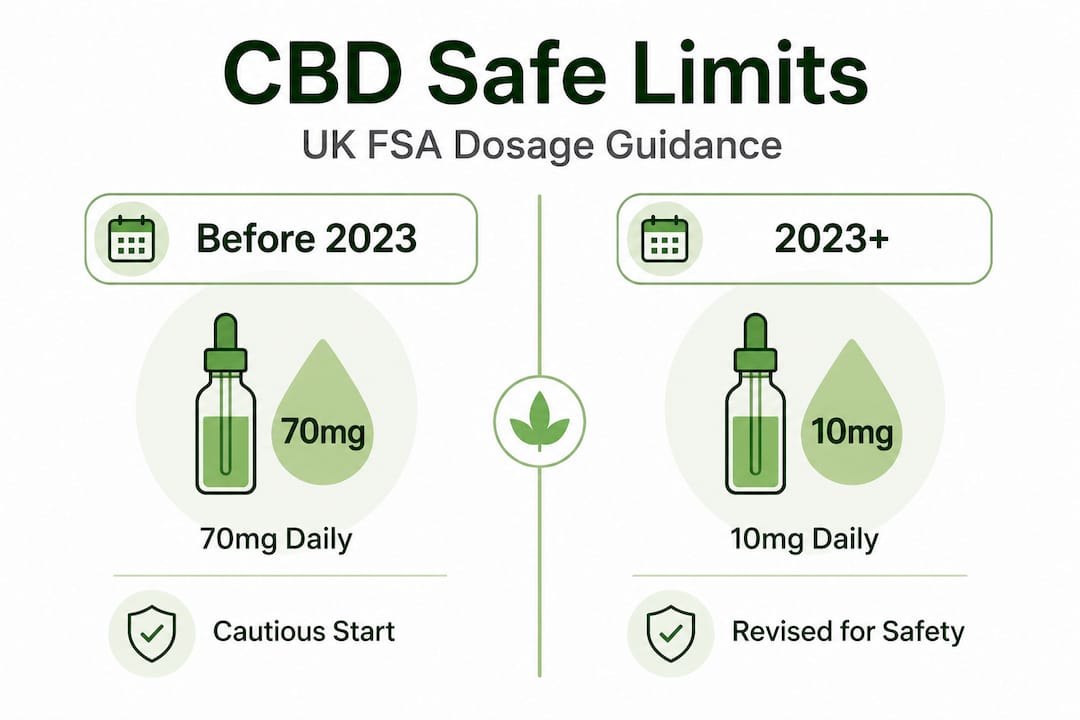
The reduction happened because emerging safety concerns around long-term exposure prompted the FSA to revise its position in 2023, with that revised guidance continuing into 2026. It is also worth understanding the current CBD regulations in 2026 more broadly, as the regulatory landscape affects which products are legally sold and how they are labelled.
Previous vs current FSA advisory limits
| Year | FSA advisory daily limit | Key reason for change |
|---|---|---|
| Before 2023 | 70mg/day | Conservative starting estimate |
| 2023 onwards | 10mg/day | Liver and thyroid safety data |
| 2026 (current) | 10mg/day | Novel food approval guidance |
This table illustrates just how dramatically official thinking has shifted. For context, many popular CBD oils and gummies on the market are formulated with 10mg to 25mg per serving, so understanding the difference between a single serving and total daily intake from all sources is essential.
For more detail on the reasoning behind the revision, the provisional CBD intake guidance explains the FSA’s methodology in plain terms.
Who does the 10mg limit apply to?
- Healthy adults aged 18 and over
- People with no known liver or thyroid conditions
- Those not taking any other medications that may interact
- Individuals not using multiple CBD products simultaneously
“The FSA’s 10mg limit is not legally binding but strongly recommended for general public safety.”
This distinction matters. The 10mg figure guides novel food product approvals and is designed to protect the broadest possible population. It is not a legal maximum, but it is the benchmark that responsible UK brands use when formulating their products.
Preparing to find your optimal CBD dosage
Now that you know the UK safety baseline, the next step is making sure you are prepared to use CBD responsibly. Before you take your first dose, there are some genuinely important questions to work through.
According to MHRA guidance, certain groups should avoid CBD entirely or only use it with explicit medical approval. These include pregnant or breastfeeding women, children, immunosuppressed individuals, and anyone currently taking prescription or over-the-counter medicines. Potential interactions between CBD and certain medications are real, and overlooking them is one of the most common mistakes new users make. For a thorough overview of CBD interactions and safety, it is worth reviewing the specific drug classes most likely to be affected.
Steps to take before starting CBD
- Speak to your GP — particularly if you take any regular medication, have a liver condition, or are managing a chronic health issue.
- Review your current medicines — check for known interactions, especially with blood thinners, anti-epileptics, or antidepressants.
- Set clear wellness goals — are you targeting sleep quality, anxiety management, or chronic discomfort? Your goal will influence the product type and dosage you start with.
- Check product labels carefully — look for third-party lab certificates (CoAs), exact CBD content per serving, and confirmation of zero THC.
- Choose a reputable brand — in 2026, only brands with novel food applications or approvals in progress should be trusted for UK sale.
- Start at the lowest possible dose — this is not the time to be bold. Begin with the smallest suggested serving and build from there.
Who should and shouldn’t use CBD
| Population group | Recommendation |
|---|---|
| Healthy adults (18+) | Generally suitable; start at 10mg/day |
| Older adults (65+) | Use with caution; consult GP first |
| People on medication | GP approval essential before use |
| Pregnant or breastfeeding | Avoid entirely |
| Children under 18 | Not advised without medical supervision |
| Immunosuppressed individuals | Avoid without medical sign-off |
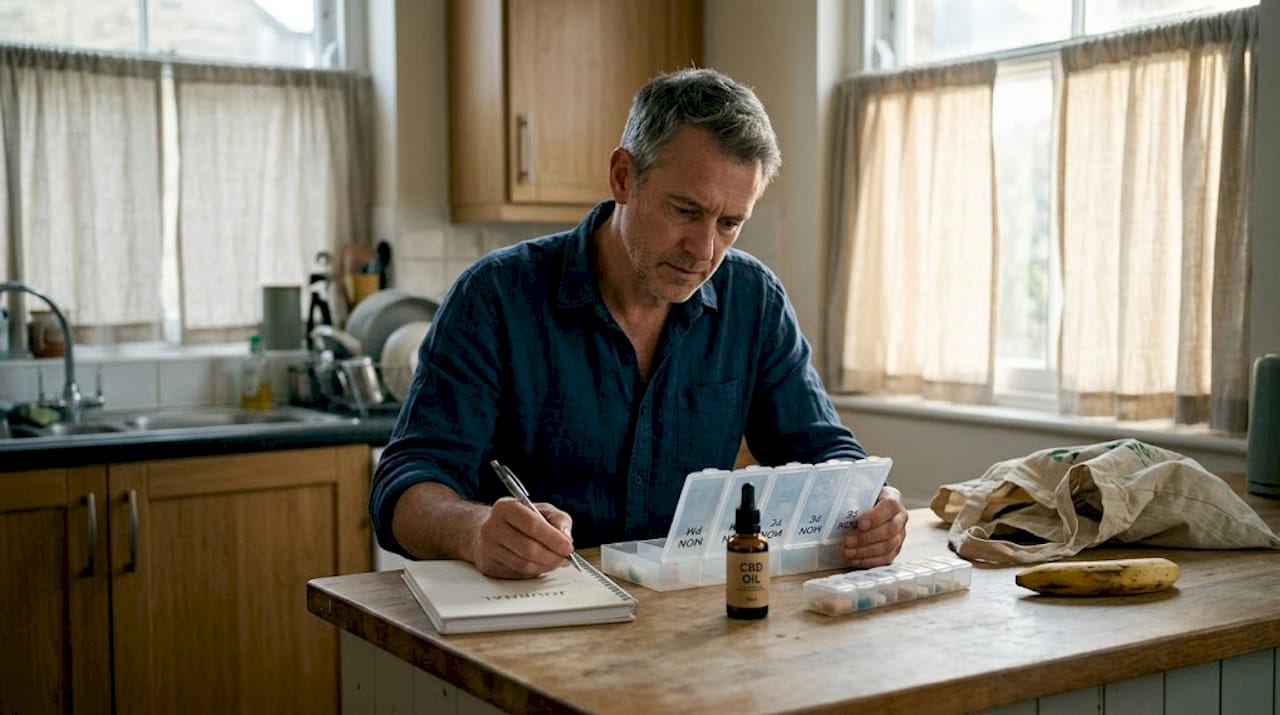
Pro Tip: Keep a daily journal of your CBD use and effects. Note the time, product, dose, and how you felt before and after. This simple habit makes it far easier to fine-tune your optimal dose over time, rather than relying on guesswork.
Step-by-step: how much CBD to take for pain, anxiety, and sleep
Having prepared safely, you’re ready to find your optimal CBD dose based on your wellness goals. The principle here is simple but important: start low, go slow.
CBD works by interacting with the body’s endocannabinoid system, which regulates a wide range of functions including pain perception, mood, and sleep patterns, via CB1 and CB2 receptors throughout the brain and body. Because individual response varies so significantly based on body weight, metabolism, and the nature of the condition being addressed, there is no single universal dose that works for everyone.
Clinical research tells an interesting story. Studies have shown effective doses ranging from as little as 5mg per day all the way up to 900mg per day in highly specific clinical settings, such as trials for epilepsy or severe anxiety disorders. However, commercial products sold over the counter in the UK sit well below those therapeutic trial doses, and there are no official dosing guidelines for non-prescription use outside of the licensed medicine Epidiolex.
Statistic callout: Clinical CBD trials have used doses between 5mg and 900mg daily, yet most UK over-the-counter products contain between 5mg and 25mg per serving. This gap underlines why self-dosing requires patience and careful monitoring.
A practical step-by-step approach
- Week one: Start at or below the FSA’s 10mg daily advisory. A single 10mg gummy or a measured drop of oil is a sensible starting point.
- Week two: If you notice no adverse effects and feel the results are minimal, consider a small increase of 5mg. Do this gradually, not all at once.
- Week three onwards: Continue to assess your response, adjusting slowly upward if needed, while staying within a range your GP is comfortable with.
- Monitor consistently: Use your journal (see the section above) to track changes in sleep quality, anxiety levels, or discomfort scores.
- Plateau or side effects: If you hit a point where more CBD doesn’t seem to help, or mild side effects appear, return to the previous dose.
For those using CBD specifically for sleep, the CBD for sleep guide offers targeted advice on timing and product choice. Equally, if anxiety is your primary concern, understanding CBD for anxiety and how CBD may modulate stress responses can help you make smarter dosage decisions. Our broader CBD dosage guide 2026 and CBD supplements for wellness overview are also worth bookmarking.
Pro Tip: Consistency is key. Taking CBD at the same time each day, whether morning or evening, helps maintain stable levels and makes it easier to judge whether it is genuinely working for you.
The reason two people can need very different amounts comes down to factors like liver enzyme activity (which affects how quickly CBD is metabolised), body weight, the severity of symptoms, and whether they are using oil, capsules, or gummies (which have different absorption rates). Oil held under the tongue absorbs faster than a capsule digested in the stomach, for example.
Troubleshooting, safety checks and common mistakes
After beginning your CBD journey, you may face practical challenges, so here is how to troubleshoot safely.
One of the most frequent pitfalls is impatience. People take a low dose for two or three days, feel nothing dramatic, and immediately double or triple their intake. This makes it almost impossible to identify your true effective dose and increases the risk of unwanted effects. The body’s endocannabinoid system often takes consistent exposure over one to two weeks before noticeable changes emerge.
Another common mistake is mixing multiple CBD products without adding up the total milligrams consumed. A morning capsule, an afternoon gummy, and an evening oil can quickly push your daily intake well beyond the FSA’s 10mg advisory if you aren’t tracking carefully. Always check the types of CBD products you are using and their precise CBD content per serving.
Our CBD dosage chart can be a helpful visual reference for keeping track.
Potential side effects to watch for
- Drowsiness — particularly if taken in larger amounts or combined with other calming supplements
- Dry mouth — a common and mild effect; staying well hydrated helps
- Mild digestive discomfort — especially with oil taken on an empty stomach
- Dizziness or lightheadedness — often a sign the dose is too high for you personally
- Changes in appetite — some users notice a modest increase or decrease
If any of these symptoms appear, reduce your dose immediately and allow a few days at the lower amount before reassessing. If symptoms persist or feel concerning, stop use and speak with your GP without delay.
“Never exceed recommended doses without consulting a healthcare professional.”
Ignoring ingredient labels is another surprisingly common error. Some CBD products contain additional botanicals or supplements (such as melatonin, valerian, or ashwagandha) that can interact with medications or cause their own side effects. Always read the full ingredients list, not just the CBD content.
Our perspective: why UK CBD dosage advice isn’t black and white
With the practical how-to complete, it is vital to step back and consider the bigger picture on CBD dosage advice. The honest truth is that the FSA’s 10mg daily recommendation, while genuinely well-intentioned, does not reflect the full complexity of how CBD works in the real world.
The FSA’s assessment is based on population-wide safety modelling, which by definition must cater to the most vulnerable members of the public. That is responsible policymaking. But it does mean the 10mg figure represents a floor for mass-market safety, not necessarily the ceiling for individual therapeutic benefit. The contrasting view between the FSA’s conservative 10mg safety limit and industry use of 20mg to 70mg, supported by short-term clinical data, highlights this tension clearly.
What we believe, based on the evidence and the conversations we have with our customers, is that effective CBD wellness is about informed experimentation within sensible safety bounds. Body weight, liver function, the specific condition being addressed, and even the time of day all influence how much CBD a person genuinely needs. A 90kg man managing chronic back discomfort may find 10mg barely touches the surface, while a 55kg woman using CBD for mild sleep disruption may find 5mg highly effective.
The understanding of flexible CBD limits is gradually improving as more clinical data emerges, and we encourage readers to stay engaged with evolving guidance rather than treating any single number as absolute.
What we’d caution strongly against is self-escalating to high doses without clinical oversight. If you genuinely believe you need more than 10mg to address a health condition, that conversation belongs with your GP or a specialist, particularly because higher doses used long-term carry risks that haven’t yet been fully quantified in the UK population.
The takeaway: treat official guidance as your safety anchor, not as a rigid cap that ignores your individual circumstances. Go slowly, stay informed, and work with healthcare professionals when the situation calls for it.
Discover trusted CBD products for your wellness journey
Armed with a clear understanding of safe dosage, you’re in a strong position to make confident, informed choices about which CBD products to try.
At SMOKO CBD, every product is third-party lab tested, with certificates of analysis available so you know exactly what you are taking. Our broad-spectrum CBD tinctures, gummies, and capsules are crafted from organically grown hemp and contain zero THC, making them a trustworthy option for UK adults looking for natural wellness support. Whether you’re exploring CBD for the first time at 10mg or refining a routine for sleep or anxiety, our product pages include clear dosage suggestions, detailed ingredient lists, and accessible customer support to help you find the right fit. Your wellness journey starts with the right information and the right product.
Frequently asked questions
What is the current safe daily dose of CBD in the UK?
The Food Standards Agency recommends a maximum of 10mg CBD per day for healthy adults from all sources combined, based on liver and thyroid safety data from novel food assessments.
How do I know if I’ve taken too much CBD?
Signs can include dizziness, dry mouth, mild digestive upset, or drowsiness, all of which reflect individual variation in how people metabolise CBD. Reduce your dose and speak to your GP if symptoms continue.
Can I combine CBD with other medications?
The MHRA advises against mixing CBD with other medicines unless your doctor has explicitly approved it, as interactions can occur with a range of common prescription drugs.
Does CBD dosage differ for pain, anxiety, or sleep?
Yes, effective amounts vary by condition and individual. Clinical studies show a wide range from 5mg to 900mg per day in trials, though commercial products sit much lower. Always begin at the minimum and increase slowly.
Who should avoid taking CBD altogether?
Children, pregnant or breastfeeding women, immunosuppressed individuals, and those on prescription medicines without medical approval should avoid CBD, as MHRA guidance makes clear.