TL;DR:
- Proper CBD dosing, timing, and product choice are essential for effective sleep improvement.
- UK guidelines recommend starting at 10mg daily, not exceeding 70mg without medical supervision.
- Consistent tracking and patience are key to achieving meaningful sleep benefits with CBD.
Lying awake at 2am, mind racing, counting the hours until your alarm goes off — persistent insomnia takes a serious toll on everything from your mood and concentration to your long-term health. It is no surprise that more and more people in the UK are turning to CBD as a natural alternative to sleeping tablets. But here is the thing: CBD is not a case of take-it-and-forget-it. Getting the dosage right, timing it properly, and choosing the correct product can mean the difference between genuinely restful nights and wasted money. This article walks you through the safety guidelines, preparation steps, a practical dosage workflow, and what to expect along the way.
Table of Contents
- Understanding CBD dosage and UK guidance
- Preparing to use CBD for insomnia: What you need
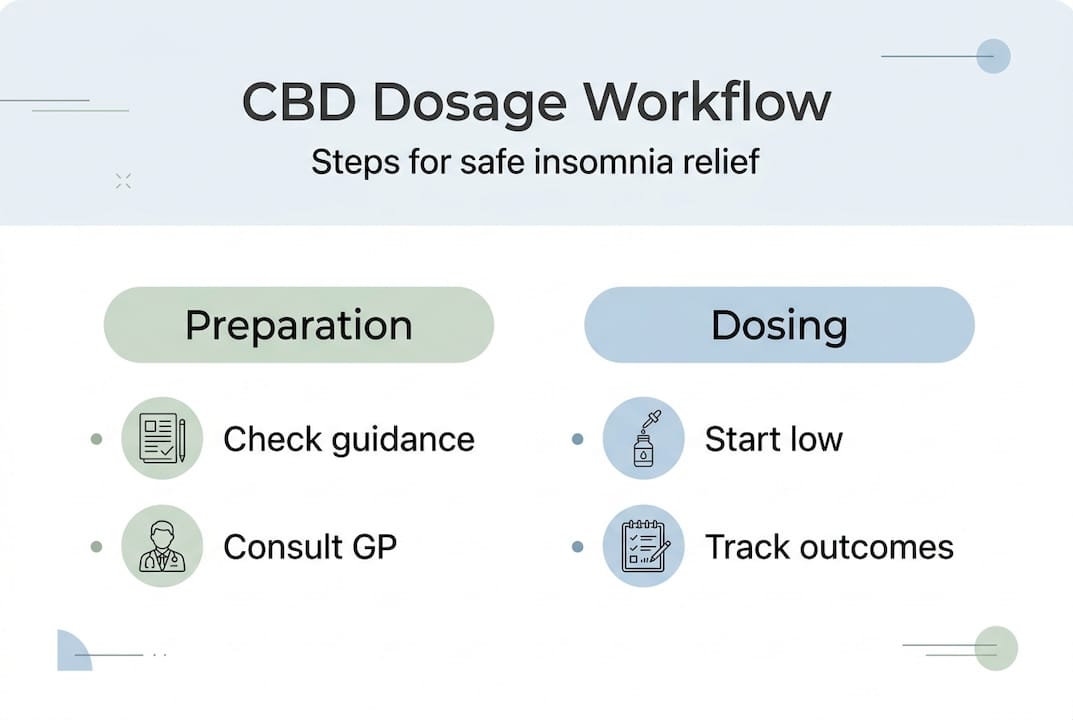
- Step-by-step CBD dosage workflow for better sleep
- What to expect: Results, troubleshooting, and when to seek help
- Why most CBD for insomnia advice misses the mark
- Find your next step: CBD products for better sleep
- Frequently asked questions
Key Takeaways
| Point | Details |
|---|---|
| Check UK CBD guidance | Review FSA and NHS recommendations before starting any CBD sleep routine. |
| Start low, adjust slowly | Begin with a small dose and monitor your response for several nights before changing anything. |
| Track your sleep | Keep a simple diary to measure sleep improvements and make scientific dosage changes. |
| Be aware of safety | Speak to a doctor if you have other conditions or take regular medications. |
Understanding CBD dosage and UK guidance
CBD, short for cannabidiol, is a naturally occurring compound extracted from the hemp plant. Unlike THC (tetrahydrocannabinol), CBD does not produce any psychoactive effects, meaning it will not make you feel “high.” Instead, it interacts with your body’s endocannabinoid system, a network of receptors that helps regulate mood, pain perception, inflammation, and crucially, sleep.
When it comes to insomnia, dosage precision matters enormously. Take too little and you are unlikely to notice meaningful change. Take too much without proper guidance and you risk unwanted side effects such as fatigue, digestive discomfort, or interference with other medications. This is why understanding the UK regulatory landscape is so important before you begin.
What UK guidance actually says
The Food Standards Agency (FSA) has set a provisional safe daily limit of 10mg CBD for healthy adults, though many practitioners and researchers suggest that 15–70mg may be more appropriate for therapeutic use under proper guidance. The FSA also makes clear that pregnant women, those on prescription medications, and other vulnerable groups should avoid CBD products entirely.
The NHS takes a notably cautious approach. The NHS does not recommend over-the-counter CBD for insomnia specifically. Medically prescribed cannabinoid products, such as Epidyolex, are only available through specialist referral for very specific conditions and are not routinely prescribed for sleep issues.
For practical, up-to-date guidance on safe amounts, our CBD dosage guidance resource breaks down the recommended ranges in plain language. You should also familiarise yourself with CBD regulations in the UK to ensure any product you purchase is compliant and properly labelled.
Key safety recommendations at a glance
| Group | Recommendation |
|---|---|
| Healthy adults | Start at 10mg per day; do not exceed 70mg without guidance |
| Pregnant women | Avoid CBD entirely |
| People on medications | Consult GP before use |
| Children and under-18s | Avoid OTC CBD products |
| People with liver conditions | Use with caution; seek medical advice |
It is also worth noting that CBD products sold in the UK must be registered as novel foods with the FSA and contain less than 1mg of THC per container. Always check the product’s certificate of analysis (COA) from a third-party laboratory to verify both potency and purity before purchasing.
Safety note: The FSA’s conservative 10mg guideline reflects a “do no harm” baseline, not necessarily an optimal therapeutic dose. Many clinical studies and real-world reports suggest higher doses, between 25mg and 50mg, are where meaningful sleep improvements tend to occur.
Preparing to use CBD for insomnia: What you need
Before you take your first dose, a little preparation goes a long way. Approaching CBD for sleep in an organised, informed way dramatically improves your chances of a positive outcome and keeps you safe in the process.
Start with a GP conversation
This is non-negotiable if you are currently taking any prescription medication. CBD is metabolised by the liver using the same enzyme pathways as many common drugs, including blood thinners, antidepressants, and anticonvulsants. Your GP can flag any potential interactions and may be able to suggest an appropriate starting point for your specific situation.
Also consider your own health profile. Do you have a diagnosed sleep disorder such as sleep apnoea? Is your insomnia linked to anxiety, chronic pain, or another underlying condition? CBD may address some of these contributing factors, but you should have a clear picture of what you are treating before you begin.
Choosing the right CBD product for sleep
Not all CBD products work the same way, and the form you choose affects how quickly it takes effect and how long it lasts in your body.
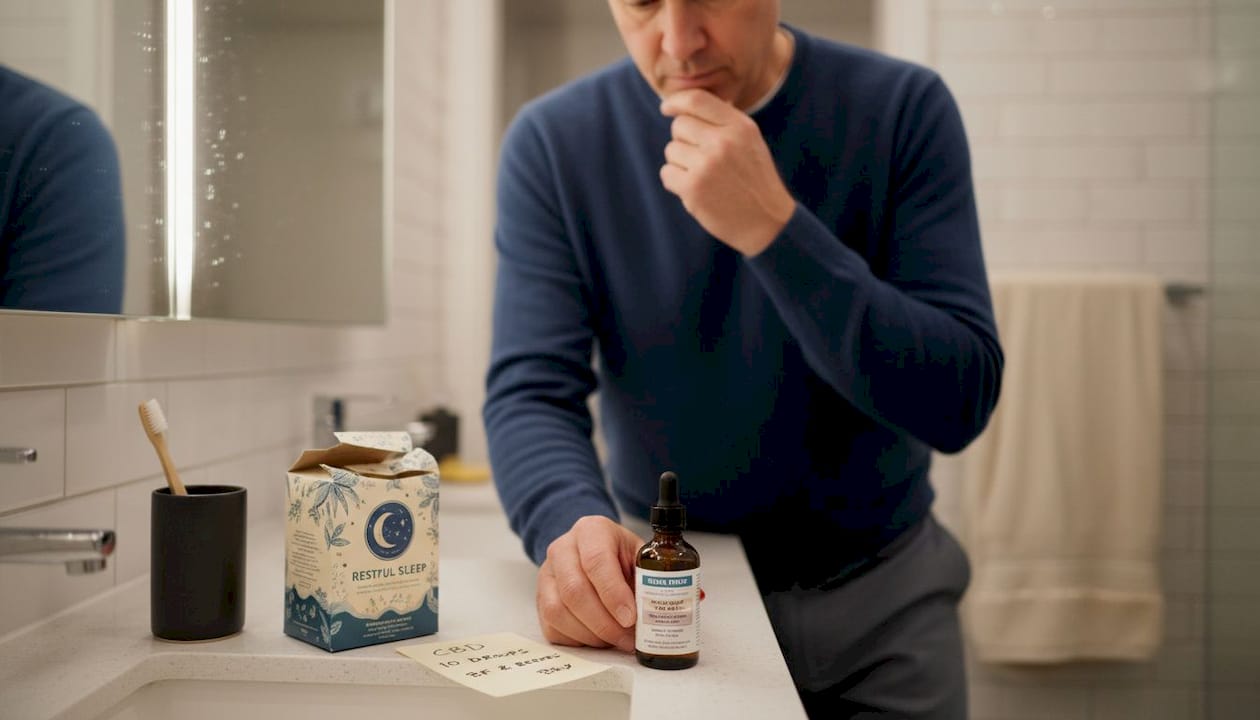
Research shows that CBD doses between 15mg and 50mg can improve sleep quality in adults with insomnia, with one study finding that 50mg daily for eight weeks significantly improved sleep in healthy participants. Medicinal cannabis containing both CBD and THC also reduced insomnia symptoms in approximately 60% of participants in certain trials.
| Product type | Onset time | Duration | Ease of dosing |
|---|---|---|---|
| CBD oil (sublingual) | 15–45 minutes | 4–6 hours | Precise, adjustable |
| CBD gummies | 45–90 minutes | 6–8 hours | Easy, consistent |
| CBD capsules | 45–90 minutes | 6–8 hours | Very consistent |
For sleep specifically, gummies and capsules are popular because their effects tend to last longer through the night, even if they take a little longer to kick in. If you need faster onset, a CBD oil held under the tongue for 60–90 seconds before swallowing is a better fit. Our detailed CBD gummy dosage guide and CBD drops dosage tips cover both options in detail.
Personal factors to consider
Your ideal dose is not the same as someone else’s. Body weight, metabolic rate, the severity of your insomnia, and whether you have taken CBD before all influence how you respond. Heavier individuals and those with more severe sleep difficulties may find they need a higher dose to notice any effect. Conversely, those who are CBD-naive (new to cannabidiol) often experience results at lower doses, at least initially.
Pro Tip: Begin with the lowest reasonable dose (around 10–15mg) and hold that dose steady for at least five to seven days before considering any increase. Jumping up too quickly makes it impossible to identify what is actually working.
Step-by-step CBD dosage workflow for better sleep
A structured workflow takes the guesswork out of using CBD and helps you build confidence over time. Follow these steps systematically rather than experimenting in an ad-hoc way.
-
Set your baseline dose. Start at 10–15mg of CBD per day, taken in the evening. Choose your product based on the comparison above (oil for faster onset, gummies or capsules for longer duration). Record the dose, product, and time in a sleep diary.
-
Time your dose correctly. For gummies and capsules, take them 60–90 minutes before your intended bedtime. For CBD oil, 30–45 minutes before bed is generally sufficient. Consistency matters, so try to take it at the same time each evening.
-
Administer carefully. If using oil, place drops under the tongue, hold for at least 60 seconds, then swallow. This sublingual method allows CBD to absorb directly into the bloodstream, bypassing the digestive system and speeding up onset.
-
Monitor your sleep. Rate your sleep quality each morning using a simple scale (for example, 1 to 10). Note how long it took you to fall asleep, whether you woke in the night, and how you felt on waking. Apps like Sleep Cycle can help automate some of this tracking.
-
Evaluate after one week. After seven days at your starting dose, review your diary. Is there any improvement, even subtle? If yes, stay at this dose for another week. If not, consider increasing by 5–10mg increments and document the change. Our step-by-step CBD dosing resource provides a detailed escalation plan. Also see our article on CBD oil for insomnia for additional guidance.
-
Adjust gradually. Increase by no more than 5–10mg per week. The FSA safety data cautions that while experts suggest up to 70mg may be well tolerated in some adults, the conservative 10mg figure remains the official daily limit for general use. The gap between these positions reflects ongoing debate, and low-dose OTC CBD may work for some while others genuinely need higher, more structured dosing.
-
Review at four weeks. By the end of week four, you should have a clear sense of whether CBD is contributing to better sleep. Reassess your product, timing, and dose holistically.
Important: Do not exceed 70mg of CBD per day without medical supervision. If you are pregnant, breastfeeding, or taking any prescription medication, stop and consult your GP before proceeding.
Pro Tip: Keep your sleep diary consistently for at least four weeks. Patterns take time to emerge, and a written record is far more reliable than memory when you are trying to make informed dosage decisions.
What to expect: Results, troubleshooting, and when to seek help
Realistic expectations are just as important as the right dose. CBD is not a sedative in the traditional sense. It does not knock you out the way a sleeping tablet might. Instead, most people notice more gradual improvements: taking less time to fall asleep, waking less frequently during the night, and feeling more rested in the morning.
Realistic benefits you might notice
Over several weeks of consistent use at an appropriate dose, many users report:
- Reduced time to fall asleep (often called “sleep latency”)
- Fewer night-time wakings
- A calmer mental state before bed
- Improved morning energy without grogginess
- Reduced anxiety, which is often a root cause of insomnia
Common obstacles and how to handle them
- Delayed effects: CBD can take two to four weeks to produce noticeable sleep improvements, particularly at lower doses. Patience is essential.
- Inconsistency: Missing doses or changing timing breaks the routine and skews your results. Treat your CBD dose like any other evening habit.
- Product quality variation: Not all CBD products contain what they claim. Always choose products with verified third-party lab testing.
- Drug interactions: If you are on any medication, interactions are a genuine risk. Do not dismiss this concern.
- Placebo confusion: It can be hard to separate the genuine pharmacological effect of CBD from the psychological comfort of “doing something” about your sleep. A sleep diary helps cut through this.
The real-world data is encouraging
Real-world evidence from the UK’s Project Twenty21 programme, which studied prescribed cannabinoids, found that patients with diagnosed insomnia experienced significant improvements in sleep quality, and around 30% were able to reduce their use of conventional sleep medications. While these results came from prescribed rather than OTC products, they offer a strong signal that cannabinoids can meaningfully support sleep health. We cover these findings in more depth in our CBD sleep safety tips article.
When to contact a doctor
If you experience any adverse reactions such as nausea, dizziness, or unusual fatigue, stop use and seek advice. If your sleep has not improved after four to six weeks of consistent, well-tracked use, it is time to speak to your GP. There may be an underlying condition driving your insomnia that CBD simply cannot address on its own.
Why most CBD for insomnia advice misses the mark
Most articles about CBD and sleep tell you to “start low and go slow.” That is sensible advice, and it is true. But it is only half the picture, and following it mechanically without understanding why often leads to disappointment.
The uncomfortable truth is that 10mg of CBD daily, the FSA’s official safe limit, is rarely enough to produce meaningful sleep changes for most adults with genuine insomnia. At such a low dose, any improvement you notice may be partly placebo. That does not mean the placebo effect is useless — it absolutely is not — but it does mean you should not assume your dosage is optimal simply because you feel slightly better.
The people who tend to see real, lasting results from CBD for sleep are those who approach it methodically. They track their sleep with discipline, they increase their dose patiently and within safe limits, and they give the process genuine time. They also choose quality products with verified CBD content rather than picking whatever is cheapest on the shelf.
Empowered self-experimentation — informed by safety guidelines, honest tracking, and quality products — is how most people bridge the gap between conservative regulatory advice and the therapeutic doses that studies suggest are effective. Reading up on CBD dosage benefits can help you set realistic expectations before you begin.
Find your next step: CBD products for better sleep
Knowing the workflow is one thing. Having the right products to follow it is another. The best results come from combining genuine knowledge, consistent habits, and CBD products you can actually trust.
At SMOKO CBD, all products are made from organically grown hemp extract sourced from the USA, third-party lab tested for zero THC, and fully compliant with UK novel food regulations. Whether you are just starting out or looking to refine an existing routine, our CBD gummies for sleep offer a consistent, pre-measured dose that is easy to incorporate into your evening wind-down. For those who prefer greater dosage flexibility, our CBD oil tinctures make it simple to dial in exactly the amount that works for you.
Frequently asked questions
What is the safest starting dose of CBD for insomnia in the UK?
Start with 10mg per day, following the FSA’s guidance, and consider increasing slowly only under professional advice if you see no improvement after one to two weeks.
How long before bed should I take CBD for sleep?
Most people benefit from taking CBD 30–60 minutes before bedtime for oil-based products, or 60–90 minutes before bed for gummies and capsules, to allow sufficient time for onset.
Can I use CBD for insomnia if I am on other medication?
Speak to your GP first, as CBD may interact with common medications including blood thinners and antidepressants, and it is not advised for pregnant women or other vulnerable groups.
What if CBD does not help my sleep after several weeks?
If sleep issues persist after four to six weeks, consult a healthcare provider to review your approach, as the NHS advises that OTC CBD is not a recommended treatment for insomnia and specialist referral may be more appropriate.
Is prescribed CBD better for insomnia than over-the-counter options?
Prescribed cannabinoids generally show stronger results in clinical settings, with UK data showing around 30% of patients reducing their sleep medications, though prescribed products are only available for specific diagnosed conditions via specialist referral.