If you're tired of tossing and turning, discovering the right acupressure point for sleeping can feel like a revelation. It’s a simple, ancient technique that uses firm pressure on specific spots—like the ‘Spirit Gate’ on your wrist—to gently quieten your mind and prep your body for a deep, restorative night's rest.
The Soothing Power of Acupressure for Restful Nights
Wrestling with sleeplessness is a familiar struggle for so many of us. It often feels like your mind and body are completely out of sync—one is racing with tomorrow's to-do list while the other is tense and aching. Acupressure offers a gentle way to bring them back into alignment, acting almost like a reset button for your internal sleep cycle.
The whole idea is beautifully simple: applying targeted pressure to key points along your body’s energy pathways helps to release tension and encourage a state of deep relaxation. This isn't some complex medical procedure; it's a practical self-care tool you can use tonight, right from the comfort of your own bed.
Why Are So Many People Turning to Natural Solutions?
The search for effective, gentle sleep aids has never been more urgent. Here in the UK, a staggering 1 in 3 adults struggles with chronic sleep problems. This is about more than just feeling a bit groggy; poor sleep has been linked to a lifetime financial burden of up to £4.2 million per person due to increased health risks and lost productivity.
It’s no wonder people are exploring alternatives to pharmaceuticals. Acupressure provides an accessible, empowering way to take back control of your nights without unwanted side effects.
Acupressure works by calming the nervous system. When you stimulate these specific points, you’re essentially sending signals to your brain to dial down stress hormones like cortisol. This makes it much easier for your body to transition into a peaceful, restful state.
This guide is designed to give you practical, actionable steps. We'll show you how this time-tested practice can improve your sleep, whether your restlessness is caused by:
- Daily stress and a mind that just won't switch off
- Physical discomfort or nagging chronic pain
- Hormonal changes that are messing with your sleep patterns
By learning how to locate and stimulate an acupressure point for sleeping, you're not just finding a quick fix. You're adopting a sustainable practice that supports your overall well-being and works beautifully alongside other natural sleep remedies for better rest.
Right, let's move from the 'what' to the 'how'. Learning to find and stimulate an acupressure point is a skill you can pick up in just a few minutes. I'm going to walk you through six of the most effective points I've come to rely on for calming the mind, releasing physical tension, and paving the way for a genuinely restorative night.
Think of these points as gentle switches. Each one helps to quieten a different kind of "noise" that might be keeping you awake, whether it's mental chatter, emotional stress, or just plain physical discomfort.
And let's be honest, the reality of poor sleep in the UK is pretty stark. A recent survey from the Mental Health Foundation found that the average Briton only gets a good night's sleep on three days a week. It also revealed that nearly half of UK adults (48%) felt more irritable, stressed, or anxious in the past month because of their sleep problems. You can dig into more of these findings about the state of sleep in the UK on mentalhealth.org.uk.
Spirit Gate (Shen Men or HT7)
The Spirit Gate is probably the most famous acupressure point for sleep, and for good reason. It’s known for its powerful calming effect on the mind and is particularly brilliant when your sleeplessness is being driven by anxiety or emotional upset.
To find it, look at the palm-side of your wrist. Trace a line down from your little finger until you hit the main crease at the base of your hand. The Spirit Gate is right there, in the small hollow on the inside of that crease, just next to the prominent tendon.
How to get it working:
- Use the thumb of your opposite hand to apply gentle but firm, steady pressure to this spot.
- Hold that pressure for 2-3 minutes, making sure to breathe deeply and slowly while you do it.
- You might feel a mild ache or a sense of energy releasing. That’s completely normal.
- Don't forget to switch wrists and repeat on the other side.
An Mian (Peaceful Sleep)
Just as the name suggests, the An Mian points are specifically for promoting peaceful sleep. I find they're especially effective if you're someone who carries tension in your neck and shoulders, or if you suffer from stress-related headaches that stop you from drifting off.
These points are on either side of your neck. To locate them, place a finger behind each earlobe and slide it back into the soft depression just behind the bony bit at the base of your skull.
How to get them working:
- Use your index or middle fingers to apply gentle, circular pressure to both points at the same time.
- Keep this motion going for 1-2 minutes, really focusing on releasing the tightness in your neck.
- The sensation should be soothing and relaxing, never painful.
This is a fantastic point to use at the end of a long day spent hunched over a desk. The gentle massage helps to signal to your body that it’s time to let go of the day’s physical stresses and get ready for rest.
Yin Tang (Third Eye Point)
When your mind is racing with an endless loop of thoughts, the Yin Tang point can be a real saviour. It’s located directly between your eyebrows and acts as a central hub for calming the spirit and quieting all that mental chatter. It’s the go-to point when your brain simply won't switch off.
How to get it working:
- Close your eyes and bring your index or middle finger to the spot right between your eyebrows.
- Apply some gentle, steady pressure, or you can massage the area in slow, circular motions.
- Continue for 1-3 minutes, trying to synchronise your deep breaths with the movement.
Many people find this point incredibly soothing. It can also help alleviate eye strain and sinus pressure, which are often overlooked culprits when it comes to restlessness at night.
Bubbling Spring (Kidney 1 or KD1)
Sometimes, it’s that "wired" or overstimulated feeling that keeps sleep away. The Bubbling Spring point is excellent for grounding your energy, drawing it away from an overactive mind and down towards your feet. It helps create a sense of stability and calm.
To find it, curl your toes inward. The Bubbling Spring is in the small depression that appears on the sole of your foot, about one-third of the way down from your toes.
How to get it working:
- Sit comfortably and bring one foot up to rest on your opposite knee.
- Use your thumb to press firmly into the point for about 2 minutes.
- A great tip is to use a tennis ball, rolling it under your foot to stimulate the area before bed.
- Repeat on the other foot for a balanced effect.
Inner Frontier Gate (Pericardium 6 or P6)
While it's commonly known for relieving nausea, the Inner Frontier Gate is also a powerful point for settling the stomach and calming the spirit—both crucial for good sleep. If physical discomfort or digestive issues are part of your insomnia picture, this is a really important one to include in your routine.
You can find this point on the inner side of your forearm. Measure about three finger-widths down from your main wrist crease. The point lies right in the centre, between the two large tendons.
How to get it working:
- Use your thumb to apply deep, firm pressure to this spot.
- Massage it in a circular motion for 2-3 minutes.
- Focus on slow, rhythmic breathing to amplify the calming sensation.
- Switch arms and do the same on the other side.
Great Rushing (Liver 3 or LV3)
Frustration, irritability, and restlessness are the sworn enemies of sleep. The Great Rushing point helps to smooth the flow of energy throughout your body, addressing that pent-up tension that often leads to tossing and turning.
This point is on the top of your foot. Find the spot in the fleshy webbing between your big toe and second toe, about two finger-widths up from where they meet.
How to get it working:
- With your thumb or index finger, press down firmly into this depression.
- Hold the pressure for 1-2 minutes, feeling for a slightly tender spot.
- Remember to repeat on the other foot.
Stimulating this point can help dissipate feelings of anger or agitation, making it much easier to settle into a peaceful state of mind that's ready for sleep.
To make things even easier when you're winding down, here’s a quick-reference table of the points we've just covered. You can bookmark this page or jot them down to have by your bedside.
| Your Quick Guide to Sleep-Inducing Acupressure Points | ||
|---|---|---|
| Point Name | Location | Primary Benefit for Sleep |
| Spirit Gate (Shen Men) | In the crease of the inner wrist, below the little finger. | Calms anxiety and emotional overstimulation. |
| An Mian (Peaceful Sleep) | Behind the earlobes, at the base of the skull. | Relieves neck tension and stress-related headaches. |
| Yin Tang (Third Eye) | Directly between the eyebrows. | Quiets a racing mind and mental chatter. |
| Bubbling Spring (KD1) | On the sole of the foot, in the depression below the ball. | Grounds energy and reduces feelings of being 'wired'. |
| Inner Frontier Gate (P6) | On the inner forearm, three finger-widths from the wrist. | Settles physical discomfort and soothes the spirit. |
| Great Rushing (LV3) | On top of the foot, between the big and second toes. | Eases irritability, frustration, and restlessness. |
Having this handy guide means you don't have to memorise everything at once. Just pick one or two that resonate with how you're feeling each night and make them part of your bedtime ritual.
Creating Your Personal Bedtime Acupressure Routine
Knowing which acupressure points to use for sleep is a great start, but real change comes from consistency. This is where building a simple, repeatable bedtime ritual comes in. The goal is to create a sequence that feels completely natural and soothing to you, signalling to your body and mind that it's time to switch off.
A smart way to approach this is by starting with a point that deals directly with a racing mind, like Yin Tang (Third Eye). Once your mental chatter has quietened down, you can move on to points that release physical tension, such as An Mian (Peaceful Sleep). This logical flow makes it much easier for your body to follow your mind's lead into a state of relaxation.
Setting The Stage For Sleep
Your environment plays a huge part in how well your routine works. Before you even think about pressing any points, take a few minutes to create a sleep-friendly atmosphere. Honestly, this step is non-negotiable if you're trying to calm a frazzled nervous system.
- Dim the Lights: Bright, overhead lights can mess with your melatonin production. Switch to a soft, warm lamp instead.
- Power Down Screens: We all know it by now—the blue light from phones and tablets is a known sleep disruptor. Put them away at least 30-60 minutes before bed.
- Find Comfort: Get into your pyjamas and settle into a comfortable position, whether you’re sitting up in bed or already lying down.
This simple infographic sums up the core technique for activating any acupressure point.
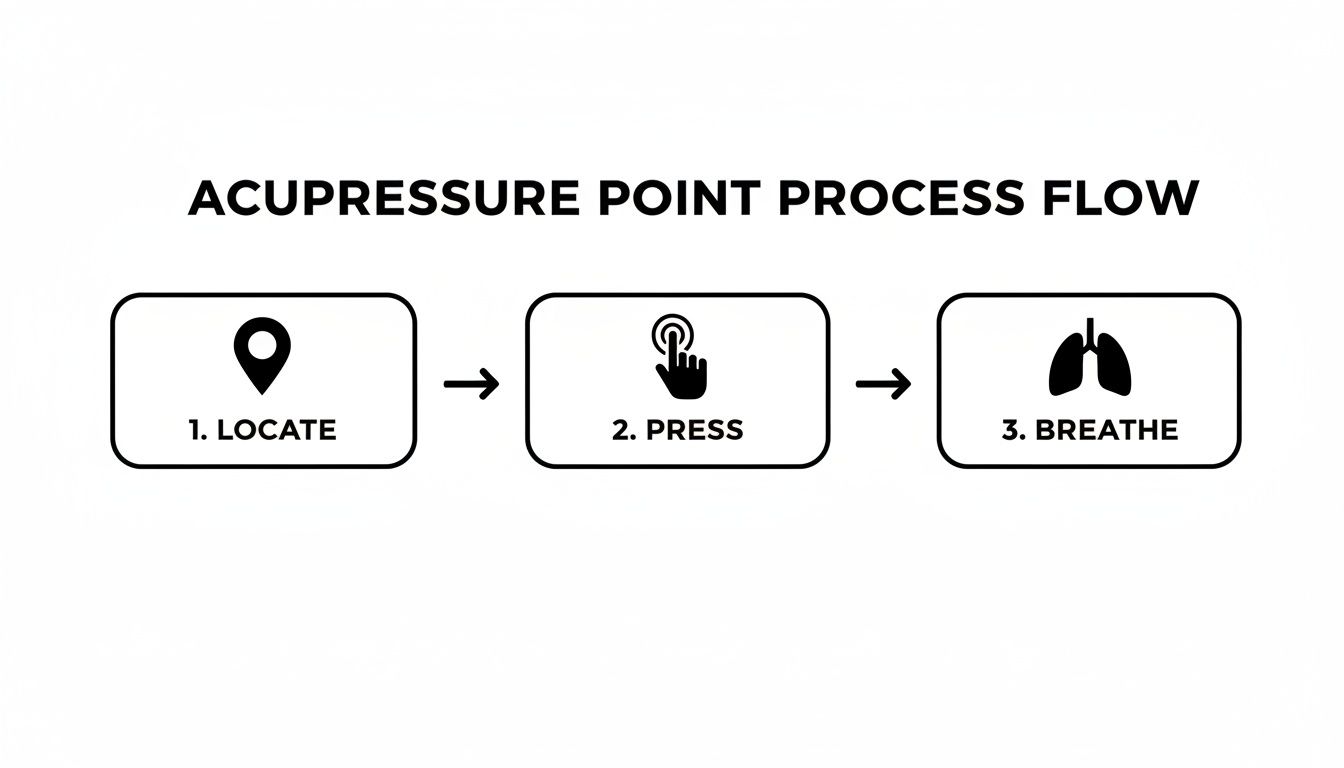
As you can see, it really just comes down to three key actions: finding the right spot, applying steady pressure, and syncing it all up with deep, mindful breathing to get the full calming effect.
A Real-World Routine Example
Let's imagine someone whose sleep is being disrupted by hormonal changes, a common issue during perimenopause. They might be feeling both anxious and physically restless. A personalised routine for them could look something like this:
- Begin with Spirit Gate (Shen Men): To tackle that anxious feeling head-on, they’d press this point on each wrist for two minutes, really focusing on slow, deep breaths. It’s a great first step for soothing the nervous system.
- Move to Great Rushing (LV3): Next, to ease the irritability and restlessness that often tag along with hormonal shifts, they'd stimulate this point on each foot for another minute.
- Finish with Bubbling Spring (KD1): To feel more grounded and counter any "wired" sensations, they'd finish by pressing this point on the soles of their feet.
By creating a sequence like this, acupressure stops being a random action and becomes a deliberate, calming ritual. It gives your day a structured end, helping you transition from the stress of being 'on' to the peace of winding down.
This proactive approach is so important, especially when you learn that nearly 1 in 5 UK adults aren't getting enough sleep. A consistent routine helps build resilience against the common stressors that keep us awake. If you'd like to learn more, you can explore the findings on sleep and mental health from Mental Health UK. To support your efforts further, it's also worth learning how to calm your nervous system through other complementary practices.
Enhancing Acupressure with CBD for Deeper Sleep
If you really want to elevate your nightly wind-down, think about pairing your acupressure practice with CBD. This combination is surprisingly effective, creating a synergy where each element boosts the other, helping you sink into that deep state of relaxation you need for sleep.
It's a two-pronged attack on sleeplessness. Acupressure gets to work on your body's energy pathways, releasing physical tension. At the same time, CBD interacts with your internal endocannabinoid system.
This system is a complex network of receptors that helps regulate things like your mood, stress levels, and sleep cycles. When you're frazzled or anxious, it can get knocked off kilter. CBD helps nudge it back towards a state of balance, or homeostasis, which makes the calming effects from your acupressure session feel even more powerful.
How to Combine CBD and Acupressure
Bringing CBD into your routine is pretty straightforward. The trick is getting the timing right so it works hand-in-hand with your acupressure, creating a seamless slide into sleep.
I like to think of it this way: CBD prepares the ground by calming your internal systems down. Then, acupressure comes in to work on the surface, releasing any stubborn physical and energetic knots. It's a holistic approach that tackles both the internal chatter and the external tension that can keep you staring at the ceiling.
By using CBD to gently soothe your nervous system first, you might find that the acupressure points feel more responsive and the sensations of release are much deeper. It’s a brilliant way to amplify your efforts for a more restorative night.
For a practical routine, try this simple sequence:
- Take your CBD: About an hour before you want to be asleep, take your preferred CBD product, whether that's an oil or some gummies. This gives it plenty of time to be absorbed and start weaving its magic.
- Start your wind-down: As you feel the CBD begin to take effect, start your usual bedtime ritual. Dim the lights, put your phone away, and get comfy.
- Begin your acupressure: Now, start your personalised acupressure sequence. With your body already in a calmer state from the CBD, you can really focus on the sensations at each pressure point.
This small addition can make a huge difference, especially on nights when you feel particularly wired or stressed out. If you're new to the idea, it’s worth learning more about using CBD oil for insomnia to help you pick the right product and dose. The goal here is to create a calming ritual that your mind and body look forward to each night.
Important Safety Advice and When to Seek Professional Help
While using acupressure for better sleep is generally a very safe self-care practice, it’s always wise to approach it with a little awareness. The golden rule is simple: listen to your body.
The pressure should feel firm and satisfying, maybe even a little achy, but never painful. If you feel any sharp pain, that’s your body’s signal to ease off immediately.
Some people should be more cautious. For instance, if you're pregnant, a few specific acupressure points are best avoided as they can potentially stimulate uterine contractions. It’s always best to have a chat with a qualified practitioner or your GP before starting if you’re expecting.
Knowing Your Limits
Acupressure is a fantastic tool for managing mild-to-moderate sleep issues, but it isn't a substitute for professional medical advice. It’s important to recognise when your sleep problems might be a sign of something more serious.
Think about seeking professional help if you find yourself in any of these situations:
- Your insomnia has been dragging on for several weeks with no real improvement.
- Your sleep problems are significantly impacting your daily life, mood, and mental health.
- You have other symptoms like gasping for air at night, which could point to a condition like sleep apnoea.
Acupressure empowers you to take an active role in your wellness, but it's one part of a bigger picture. A responsible approach means knowing when to combine self-care with professional guidance for the best possible outcome.
Finally, if you are taking any medications, it's a good idea to be mindful of potential interactions when adding new wellness supplements to your routine. For more details on this, you can read about CBD drug interactions to know in 2025 and safe use tips.
Common Questions About Using Acupressure for Sleep
Even when you're feeling confident with the techniques, it's only natural to have a few questions bubble up. Getting clear on what to expect can make your new routine feel more effective and less like a shot in the dark. Let’s walk through some of the most common things people ask when they start using acupressure for sleep.
How Long Does It Take to Work?
This is probably the number one question, and the honest answer is: it varies. Acupressure isn’t like flipping a switch; it’s more like gently dimming the lights in a room. Some people feel a wave of calm and drowsiness within a few minutes of their very first session, especially if they’re already in a relaxed state.
For others, the effects build up over time. You might not notice a huge difference on the first night, but after practising for a week, you may suddenly realise you're falling asleep faster and sleeping more soundly. The key here is patience and consistency.
Think of it like this: if your nervous system has been stuck on high alert for a long time, it needs a consistent signal to learn that it's safe to power down. Each acupressure session reinforces that message, gradually retraining your body's response to bedtime.
Can I Use It When I Wake Up at Night?
Absolutely. Waking up at 3 AM with your mind racing is incredibly frustrating, and this is a perfect time to turn to acupressure. It’s a quiet, gentle technique that won’t fully wake you (or your partner) up, unlike switching on a light or reaching for your phone.
If you find yourself wide awake, try stimulating a calming point without making a big deal of it.
- Spirit Gate (Shen Men): Gently press this point on your wrist for a minute or two while focusing on slow, steady breathing.
- Yin Tang (Third Eye): Lightly rest a finger between your eyebrows and just breathe deeply into the sensation.
The goal isn't to force yourself back to sleep but to soothe the anxiety that comes with being awake. This simple, quiet action can often break the cycle of stressful thoughts and allow you to drift back off naturally.
Is One Point Better Than Another?
There isn't a single "best" acupressure point for sleeping; the most effective one really depends on why you're awake in the first place. Learning to personalise your approach based on how you feel in the moment will give you the best results.
Think about these common scenarios:
- Feeling anxious or emotional? The Spirit Gate point is your best bet for calming that kind of inner turbulence.
- Mind racing with thoughts? Focus on the Yin Tang point to help quieten the mental chatter.
- Feeling restless or irritable? Stimulating the Great Rushing point on your foot can help ease that pent-up frustration.
Experiment with the different points we've covered in this guide. Pay close attention to the sensations each one creates. Over time, you’ll develop an instinct for which point your body needs on any given night, creating a truly personalised and effective sleep toolkit.
At SMOKO CBD, we believe in combining ancient wisdom with modern wellness to help you find your calm and achieve restful sleep. Our lab-tested, UK-made CBD products can be a wonderful complement to your new acupressure routine. Explore our range of CBD oils and gummies at https://smokocbd.com.