TL;DR:
- CBD soft gels are slow-absorbing, long-lasting options for managing chronic pain.
- Success requires a structured, patient approach with proper product selection and consistent use.
- Evidence shows safety and some benefit, but results vary, so tracking and realistic expectations are essential.
Finding effective, natural pain relief is something millions of UK adults wrestle with every day. Whether you’re managing persistent back pain, arthritic joints, or the kind of low-grade ache that just won’t quit, the search for a holistic solution can feel exhausting. CBD soft gels have emerged as one of the most talked-about options in this space, and for good reason. They’re discreet, easy to dose, and backed by a growing body of user reports. That said, getting results requires more than simply swallowing a capsule. This guide walks you through a structured, evidence-informed workflow so you can approach CBD soft gels with realistic expectations and a clear plan.
Table of Contents
- What you need to know before starting CBD soft gels
- Preparing your CBD soft gels pain relief workflow
- How to introduce and adjust your CBD soft gels routine
- Measuring your results and fine-tuning your workflow
- A realistic perspective on CBD soft gels for pain relief
- Find your CBD pain relief solution with SMOKO
- Frequently asked questions
Key Takeaways
| Point | Details |
|---|---|
| Start with expectation management | CBD soft gels provide modest pain relief for some, so patience and realistic goals are key. |
| Full-spectrum may be more effective | Products with multiple cannabinoids may give better results than CBD isolate for pain. |
| Track your experience | Logging your symptoms and changes helps you tailor and optimise your workflow. |
| Workflow matters more than hype | Consistent, well-documented routines deliver the best chance of improvement, not miracle promises. |
What you need to know before starting CBD soft gels
With the pain relief challenge in focus, let’s establish what makes CBD soft gels unique and what you should consider before beginning.
CBD soft gels are pre-measured capsules containing cannabidiol (CBD) oil in a soft gelatine shell. Unlike CBD tinctures, which you hold under your tongue, or gummies, which you chew, soft gels are swallowed whole and absorbed through the digestive system. This means the onset is slower (typically 45 to 90 minutes) but the effects tend to last longer, which many people find preferable for managing chronic pain throughout the day.
Understanding the CBD soft gel basics helps you set realistic goals from the outset. Here’s a quick comparison of the main CBD formats:
| Format | Onset time | Duration | Ease of dosing |
|---|---|---|---|
| Soft gels | 45–90 mins | 6–8 hours | Very easy |
| Tincture (oil) | 15–45 mins | 4–6 hours | Moderate |
| Gummies | 45–90 mins | 6–8 hours | Easy |
| Vape | 5–15 mins | 2–4 hours | Requires device |
On the evidence front, it’s important to be honest. Mixed evidence exists for pain reduction, with strong user reports but limited human trials. Around 68 to 72% of fibromyalgia and arthritis sufferers in user surveys report improvement, but randomised controlled trials (RCTs) tell a more cautious story. Animal studies show clear anti-inflammatory and analgesic effects, yet human data remains inconsistent.
What does the science agree on? Safety and tolerability are well-supported, and workflow success depends on patient titration and patience over two to four weeks. Side effects are generally mild and may include:
- Dry mouth
- Mild fatigue or drowsiness
- Digestive changes
- Temporary dizziness at higher doses
Manage your expectations before you begin. CBD is not a fast-acting painkiller. Think of it more like a slow-building support system for your body’s own pain-regulation pathways.
Pro Tip: Always look for products with third-party lab testing to confirm CBD content and zero THC levels. Start with the lowest available dose and build up gradually.
Preparing your CBD soft gels pain relief workflow
With core information understood, the next step is to ensure you’ve got everything in place to start your workflow safely and methodically.
Good preparation separates a frustrating, inconclusive experience from one that gives you genuinely useful data about your own body. Before you open that first pack of soft gels, gather the following:

| Item | Purpose |
|---|---|
| High-quality CBD soft gels | Your primary intervention |
| Symptom and pain diary | Track daily pain scores and changes |
| Baseline medication list | Identify potential interactions |
| Calendar or app | Schedule consistent dosing times |
| GP contact details | For professional advice if needed |
One of the most important decisions you’ll make is choosing between full-spectrum and isolate formulas. Full-spectrum may outperform isolate via the entourage effect, where multiple cannabinoids and terpenes work together synergistically. SMOKO CBD’s broad-spectrum products are designed with this principle in mind, delivering a rich cannabinoid profile without any THC.
Always check that your chosen product carries a Certificate of Analysis (COA) from an independent laboratory, is clearly labelled with CBD content per capsule, and complies with UK legal standards (under 0.2% THC). This isn’t just good practice; it’s essential for a reliable science-based pain relief workflow.
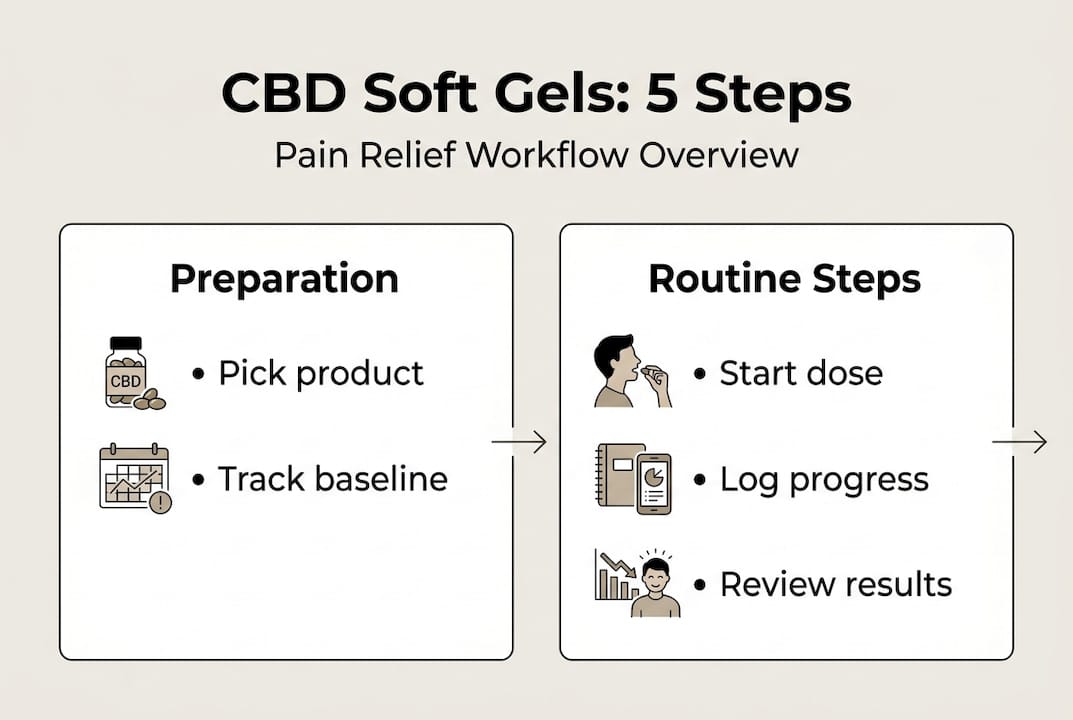
Before taking your first soft gel, complete these baseline steps:
- Record your current average daily pain score (use a 1 to 10 scale).
- Note the location, type, and frequency of your pain.
- List all current medications and supplements.
- Assess your average sleep quality and general mood.
- Set a review date four weeks from your start date.
Pro Tip: Document your daily pain levels for at least one week before starting. This baseline gives you a genuine comparison point and makes it far easier to spot real improvement versus normal day-to-day fluctuation.
How to introduce and adjust your CBD soft gels routine
With everything prepared, you’re ready to introduce CBD soft gels into your pain relief workflow with a methodical and safe approach.
Starting low and going slow is the golden rule. Titration over two to four weeks is critical for finding the right effect, and rushing this process is one of the most common mistakes people make. Follow this step-by-step approach:
- Week 1: Begin with the lowest available dose (typically 10 to 15mg CBD per soft gel), taken once daily with food.
- Week 2: If well tolerated and no significant side effects, maintain the same dose and continue tracking your pain diary.
- Week 3: If pain levels have not shifted noticeably, consider increasing to twice daily. Keep meal timing consistent.
- Week 4: Evaluate your overall progress against your baseline. Decide whether to maintain, increase, or pause.
- Ongoing: Fine-tune based on your personal response, aiming for the lowest effective dose.
Taking soft gels with food, particularly a meal containing healthy fats, improves absorption because CBD is fat-soluble. Consistency in timing also matters. Your body’s endocannabinoid system (the network of receptors that CBD interacts with) responds better to regular, predictable input.
If you notice mild side effects such as fatigue or digestive discomfort, reduce your dose and allow a few more days at the lower level before trying again. For guidance on building a CBD routine for chronic pain, it helps to understand how consistency compounds over time.
Important: CBD soft gels are a complementary option and should not replace prescribed medications without explicit guidance from your GP or a qualified healthcare professional. Always disclose CBD use to your doctor.
Pro Tip: Patience is genuinely key here. Many people give up after a week or two without realising that meaningful pain improvement may only become apparent after a full month of consistent use.
Measuring your results and fine-tuning your workflow
Once you’ve established your routine, the next step is systematically tracking and fine-tuning for optimal relief and realistic expectations.
Tracking your progress isn’t optional; it’s what turns a vague experiment into a meaningful personal health insight. Use your pain diary to record the following metrics each day:
- Pain score (1 to 10 scale, morning and evening)
- Sleep quality (hours slept, how rested you feel)
- Mood and energy levels
- Any side effects noted
- Daily activity level (did pain limit what you could do?)
- CBD dose taken and time of day
After four weeks, compare your tracked data against your pre-CBD baseline. Here’s how personal tracking stacks up against what clinical studies typically measure:
| Metric | Your personal tracking | Clinical study endpoints |
|---|---|---|
| Pain score | Daily 1–10 scale | Validated pain questionnaires |
| Sleep quality | Subjective diary entry | Standardised sleep indices |
| Function | Activity notes | Disability/function scales |
| Side effects | Personal observation | Adverse event reporting |
Be aware that RCTs often show no significant advantage over placebo, which makes personal tracking and expectation management absolutely essential. The placebo effect is real and powerful. If you feel better, that’s genuinely valuable, but your diary helps you distinguish consistent, lasting improvement from temporary fluctuation.
If after four weeks you notice no change whatsoever, consider adjusting your dose, switching to a full-spectrum formula, or integrating complementary approaches such as physiotherapy or dietary changes. Understanding the broader CBD and wellness benefits can also help you see where CBD fits within a wider health strategy.
If pain worsens or new symptoms appear, seek medical review promptly.
A realistic perspective on CBD soft gels for pain relief
Having learned how to implement and adjust a pain relief workflow, it’s worth stepping back and looking honestly at what the evidence and real-world practice actually tell us.
Public enthusiasm for CBD has, frankly, outrun the science. That’s not a reason to dismiss it, but it is a reason to be disciplined. Most robust human studies find modest or placebo-level improvement, which means CBD soft gels are best viewed as an adjunct method within a broader, well-managed health plan.
What we’ve seen, both in the research and from real user feedback, is that the people who benefit most are those who treat CBD as one tool among many, not a standalone cure. They track their results, they choose quality-tested products, and they’re honest with themselves about what’s changing. That kind of workflow discipline matters far more than the dose on the label.
For UK users, the takeaway is clear: demand transparency from your supplier (third-party lab results, clear labelling, UK-compliant sourcing), commit to a structured four-week trial, and integrate CBD into a holistic approach that includes movement, sleep hygiene, and professional medical input where needed. Explore the full picture of CBD pain relief benefits with that grounded mindset, and you’ll be far better positioned to judge whether it’s working for you.
Find your CBD pain relief solution with SMOKO
If you’re ready to try this workflow for yourself, here’s where you can find quality, trusted options.
SMOKO CBD’s products are made with organically grown hemp, independently lab-tested, and formulated specifically for the UK market. Whether you’re starting out or looking to optimise your current routine, our 750MG CBD soft gels are a reliable, clearly dosed option that fits neatly into any daily pain management plan.
For those who want variety and value, our CBD soft gel and gummies bundle combines two popular formats so you can explore what works best for your body. Every product comes with full lab documentation, so you can start your workflow with complete confidence in what you’re taking.
Frequently asked questions
How long does it take for CBD soft gels to work for pain relief?
Most users need to take CBD soft gels consistently for two to four weeks before noticing meaningful pain relief effects, though some people notice benefits sooner depending on their condition and dose.
Are CBD soft gels safe to use alongside other medications?
CBD soft gels are generally well-tolerated with no serious adverse effects reported in most studies, but you should always consult a healthcare professional before combining them with prescribed medicines.
Do CBD soft gels work for all types of pain?
CBD soft gels may help with some chronic pain conditions, particularly those involving inflammation, but evidence is mixed and some human trials show no significant difference from placebo, so results vary from person to person.
Is full-spectrum better than CBD isolate for pain?
Current evidence suggests full-spectrum may outperform isolate due to the entourage effect, where multiple cannabinoids work together, though more large-scale human research is still needed to confirm this conclusively.
Recommended
- Guide to CBD Edible Gummies for Natural Relief 2026 – SMOKO CBD
- What are CBD Softgels? UK Guide to Benefits and Use – SMOKO CBD
- Master the CBD for Anxiety Workflow: A Complete 2026 Guide – SMOKO CBD
- CBD FOR PAIN RELIEF: NATURAL, SCIENCE-BASED RELIEF – SMOKO CBD
- Master the CBD Gummies Consumption Workflow Easily