CBD may take the edge off tennis elbow pain for some people, but it will not repair the damaged tendon. The living systematic review on cannabinoids and pain found only small improvements, mostly with THC-containing products, while the Food Standards Agency sets clear safety limits for anyone using CBD alone. Providers sell lab-tested broad-spectrum products that fit into a cautious symptom-management plan, but the plan only works if CBD sits alongside, not instead of, proper rehabilitation.
TL;DR:
- Oral CBD, including tinctures and gummies, has shown no measurable pain reduction in clinical trials focused on tennis elbow.
- THC-containing or mixed CBD products offer small to moderate pain relief, but they are not legally available for consumer purchase in the UK.
- Topical CBD applicators represent a plausible option for tendon pain, and ongoing trials aim to clarify their effectiveness, but no definitive results exist yet.
- Preclinical studies suggest CBD has anti-inflammatory effects, but current human evidence remains limited and inconsistent, especially for tendon injuries.
- Safety guidelines recommend starting with topical products and following strict product label checks, while considering potential drug interactions with oral CBD.
Table of Contents
- What the research actually shows about CBD and tennis elbow
- How to try CBD for tennis elbow safely
- Safety, interactions and UK rules you must know
- How CBD fits alongside NHS-recommended tennis elbow treatment
- Smokocbd: quality checks and product types worth knowing
- A cautious four-week trial you can actually run
- Trying a UK-made CBD product for tennis elbow
- Sources
- FAQ
What the research actually shows about CBD and tennis elbow
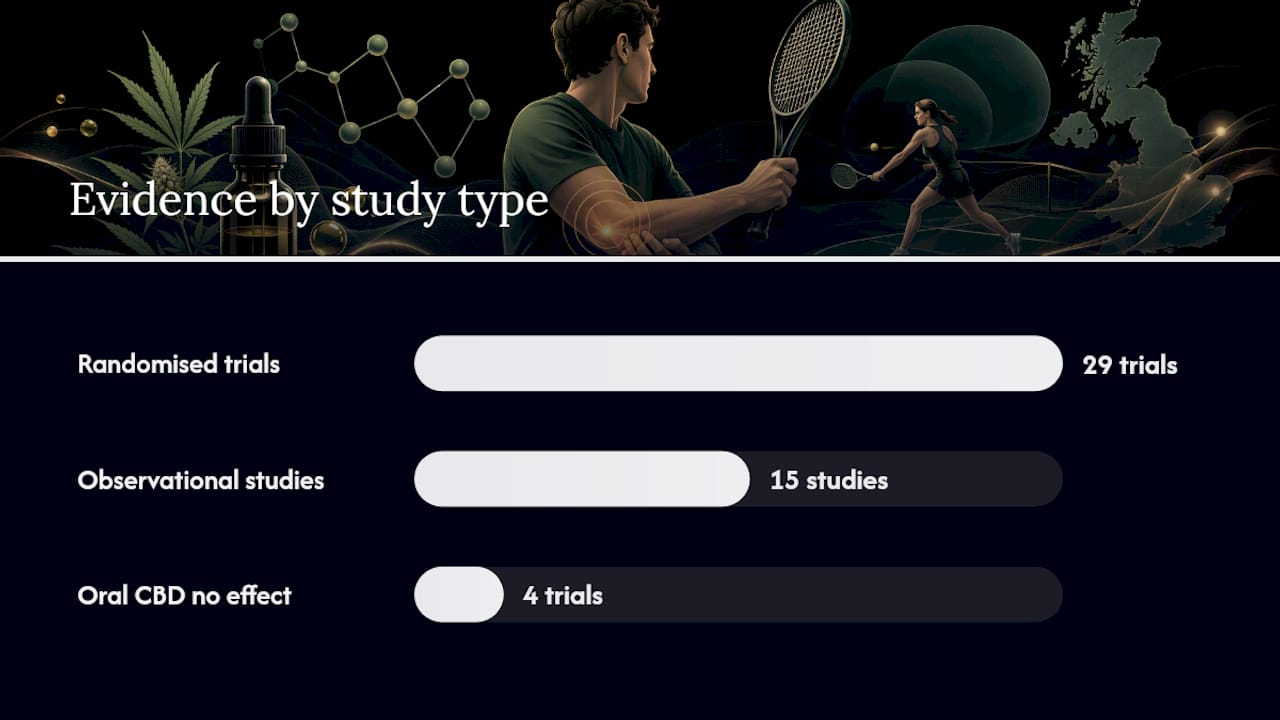
The evidence for cannabinoids and pain is real, but it is not the evidence most CBD adverts imply. A 2025 living systematic review pooled 29 randomised controlled trials and 15 observational studies on chronic pain. It found small pain improvements mainly for THC-containing cannabis, with small-to-moderate gains for mixed THC:CBD products. Isolated oral CBD, the kind most UK shoppers actually buy, showed no measurable drop in pain intensity compared with placebo across four trials involving 334 people.
That gap matters for tennis elbow specifically, because the trials behind those numbers mostly recruited people with chronic, largely neuropathic pain, such as nerve damage or fibromyalgia. Tennis elbow is a mechanical, overuse tendon injury. It shares some inflammatory pathways with those conditions, but it is not the same thing, so results from neuropathic pain studies transfer imperfectly to a strained forearm tendon.
A separate systematic review published on PMC looked specifically at CBD, rather than cannabis as a whole. It concluded that preclinical work, mostly animal and cell studies, shows genuine analgesic and anti-inflammatory activity. Clinical evidence in humans is a different story: the trials are small, the designs vary widely, and the review authors call for considerably more research before isolated CBD can be called an established pain treatment.
There is a reason for cautious optimism on the topical front, though. A registered trial on Clinicaltrials is testing a CBD cream against placebo for tendon pain in athletes, using a double-blind, week-on/week-off crossover design with daily pain scoring. That structure, where each participant acts as their own control, is one of the more rigorous ways to isolate a topical product’s real effect from expectation. It has not reported final results yet, but it confirms researchers are asking the tendon-specific question directly.
What the numbers add up to: small symptomatic benefit possible for some users, no proof of tendon healing, and a side-effect profile that changes depending on whether you apply CBD to skin or swallow it.
- Isolated oral CBD: not shown to reduce pain intensity versus placebo in the identified trials.
- THC-containing or mixed products: small to moderate pain relief, but not legally available as consumer CBD in the UK.
- Topical CBD for tendon pain: plausible mechanism, live trials underway, no definitive clinical verdict yet.
- Preclinical (lab and animal) evidence: consistently more promising than human clinical evidence.
How to try CBD for tennis elbow safely
Given that topical application has a more direct route to a sore tendon and a simpler safety profile, it makes sense to start there rather than with an oral product.
Choosing a topical CBD product
Look past the marketing copy and check four things before buying anything for elbow pain:
- Labelled CBD content per serving, in milligrams, not just “CBD oil” on the front of the tub.
- A current certificate of analysis (COA) from an independent lab confirming that content and confirming zero or near-zero THC.
- A short, recognisable ingredient list, since fewer additives means fewer things that can irritate skin.
- Clear application instructions, and an explicit warning against use on broken or irritated skin.
If you choose an oral product instead
Oral CBD, such as a tincture taken under the tongue, reaches the whole body rather than just the sore area, which changes the safety maths. Follow the FSA’s provisional advice of roughly 10 mg of CBD a day for a healthy adult, add up every CBD source you use (oil, gummies, capsules) rather than dosing each separately, and start at the low end. If you take regular prescription medicine, a quick medicine review with a pharmacist before starting is worth the ten minutes it takes.
A simple four-step trial
- Pick one product and stick with it for the whole trial. Do not stack a cream and a tincture and a gummy at once.
- Record a baseline before you start: a pain score out of 10 and one functional test, such as gripping a kettle or turning a door handle.
- Apply or take it as directed for two to four weeks, changing nothing else about your routine.
- Log pain and function weekly, plus any skin reaction or other side effect.
Pro Tip: Keep the log on your phone, not in your head. Memory rounds pain scores towards whatever you expect to find, which quietly wrecks the whole experiment.
If pain and grip strength improve, continue and reassess again after another month. If nothing shifts after four weeks, or symptoms worsen, stop and speak to a physiotherapist rather than trying a second or third product.
Safety, interactions and UK rules you must know
The FSA’s provisional acceptable daily intake works out to about 10 mg of CBD per day for a healthy 70 kg adult, a precautionary figure that applies to food-form products such as oils, gummies and capsules combined, not per product.
Some groups should avoid CBD altogether or get clinical advice first:
- Anyone pregnant, breastfeeding, or actively trying to conceive.
- Children and teenagers.
- People who are immunosuppressed or managing a serious chronic illness.
- Anyone on regular prescription medication, particularly drugs processed by the liver’s CYP450 enzyme system.
That CYP450 point deserves a beat of explanation. CBD can compete with certain medicines for the same liver enzymes, which can raise or lower the levels of those medicines in your blood. This is the same reason combining CBD with ibuprofen or antihistamines warrants a quick check with a pharmacist rather than a guess.
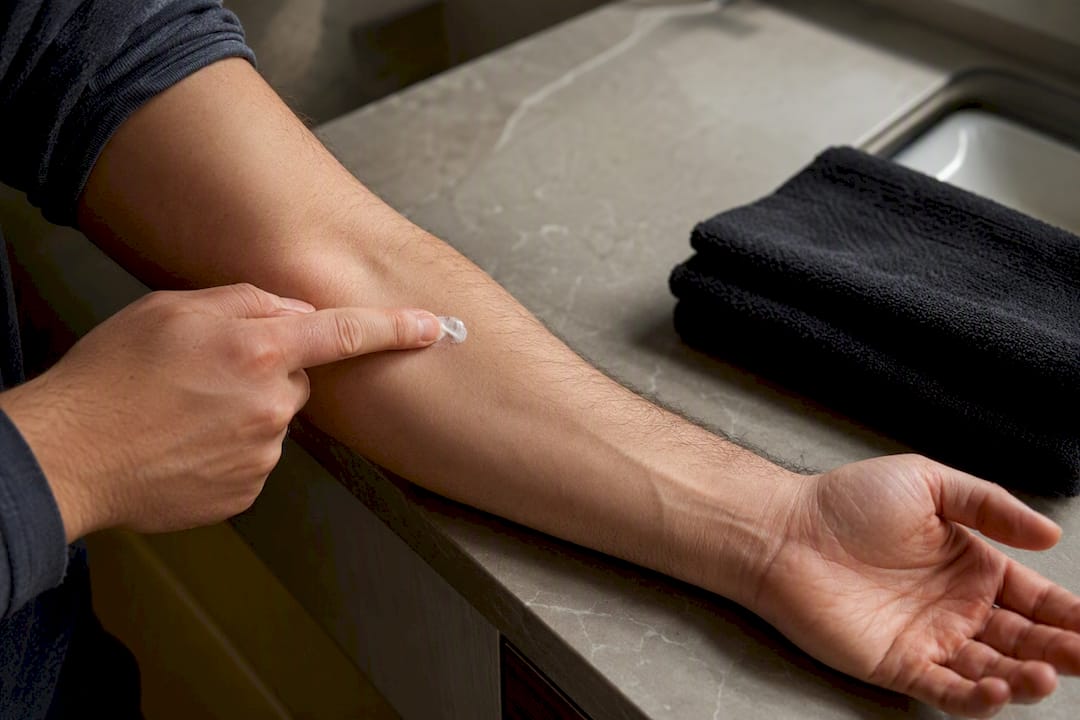
Topical products carry a different, smaller set of risks. Patch-test any new cream on a small area of skin first, avoid applying it to broken or grazed skin, and stop immediately if you notice redness or itching. Skin reactions are usually caused by the carrier oils or fragrance in a formula rather than the CBD itself, which is one more reason a short, plain ingredient list is worth insisting on.
How CBD fits alongside NHS-recommended tennis elbow treatment
NHS guidance for tennis elbow is built around four pillars: modifying the activity that caused the strain, graded exercise to rebuild tendon tolerance, topical NSAID gels for early flare-ups, and a physiotherapy referral if symptoms persist. CBD has no formal place in that pathway, and it should not replace any of the four steps.
Where it can genuinely help is in making the graded exercise part more bearable. If elbow pain is stopping you completing your prescribed stretches or eccentric strengthening work, a topical product applied beforehand might dull the discomfort enough to get through the set, which is a legitimate use of symptom relief.
What it must never do is mask pain so you keep doing the exact repetitive movement that caused the injury in the first place. That is not managing tennis elbow, it is delaying the diagnosis.
- Seek medical review if there is no improvement after the recommended course of rest and exercise.
- Seek medical review if pain worsens, or if you develop numbness, weakness, or night pain.
- A GP or physiotherapist can also check whether NSAID gels or, in persistent cases, a steroid injection are more appropriate than continuing self-management.
Smokocbd: quality checks and product types worth knowing
Smokocbd’s UK-made range includes CBD tinctures, gummy bears and soft gel capsules, each suited to the oral-dosing approach described above rather than direct topical application to the elbow. Every batch is verified through third-party lab testing to confirm zero THC, giving you a checkable COA rather than a marketing claim. Before buying anything, confirm the CBD content per serving, read the full ingredient list, and follow the stated dosing instructions exactly.
A cautious four-week trial you can actually run
Most people overcomplicate this. Pick one product, write down your pain score and one function test today, apply or take it twice daily, and check in weekly. Stop the moment a side effect appears or four weeks pass with no change.
The two mistakes worth naming: stacking two or three CBD products at once, which makes it impossible to know what worked, and using symptom relief as permission to keep doing the movement that injured the tendon. If you take regular medication, talk to a pharmacist before adding oral CBD, not after.
— Mike
Trying a UK-made CBD product for tennis elbow
If you decide a topical or oral CBD product is worth testing alongside your rehab, the product itself matters more than the marketing around it. Some products emphasize being made in the UK from organically grown hemp and verified THC-free by independent lab testing, providing a real COA rather than relying solely on a brand’s claim.
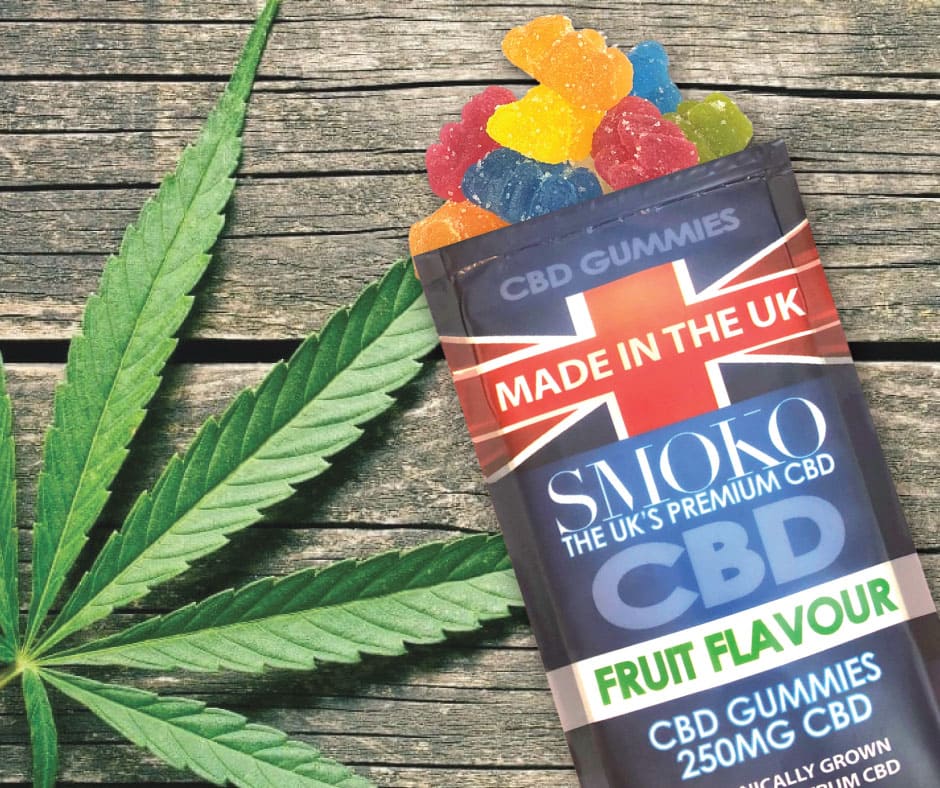
The full range of CBD tinctures, gummy bears and soft gels is worth browsing if you are weighing up formats for the trial protocol above. The SMOKO CBD Gummy Bears are a good example of how a labelled-dose oral product should look: clear milligrams per gummy, making it easy to stay inside the FSA’s 10 mg/day guidance and track your baseline against a known amount. Before you order, check the COA, confirm the CBD-per-serving figure matches the label, and if you are on any regular prescription medicine, have a quick word with a pharmacist first.
This article is general information, not a substitute for advice from a qualified doctor. Consult a qualified healthcare professional about your own circumstances before acting on anything here.
Sources
- Living systematic review on cannabis and other plant-based treatments for chronic pain: 2025 update - NCBI Bookshelf
- Cannabidiol (CBD): A systematic review of clinical and preclinical evidence in the treatment of pain - PMC
- Food Standards Agency provisional cannabidiol (CBD) acceptable daily intake (ADI) lay summary
- NHS: Tennis elbow
FAQ
Is CBD oil good for tendonitis?
CBD oil may ease general pain sensitivity for some people, but there is no strong clinical evidence it treats tendonitis specifically. The PMC systematic review found promising lab-based mechanisms but limited proof in human trials, so it works best as a supporting measure alongside standard tendon rehab.
What’s the best anti-inflammatory for tennis elbow?
NHS guidance points to topical NSAID gels as the standard first-line anti-inflammatory, alongside activity modification and graded exercise. CBD is not an NHS-recommended anti-inflammatory for tennis elbow, though some people use it as an additional, non-replacement option.
Does CBD oil fight inflammation?
Preclinical studies show CBD has anti-inflammatory activity in cell and animal models, but the systematic review notes this has not translated into strong clinical proof in human pain trials. Any anti-inflammatory effect in people is likely modest rather than dramatic.
Is CBD better than ibuprofen?
No trial directly shows CBD outperforming ibuprofen for tennis elbow, and isolated oral CBD did not reduce pain intensity versus placebo in the living systematic review’s pooled trials. Ibuprofen has a longer track record of evidence for acute tendon inflammation; check potential interactions before combining the two.
How much CBD should I take for elbow pain?
The FSA’s provisional advice suggests healthy adults stay around 10 mg of CBD per day from all combined sources. Start at the lower end, track your response over two to four weeks, and speak to a pharmacist if you take other medication.