Current evidence suggests CBD may ease tendon pain for some people, but it is not an established treatment for tendon healing. It works best, if it works at all, as a supplement to proper diagnosis and rehabilitation, not a replacement for rest, graded loading, and physiotherapy. What follows covers the research behind that verdict, how CBD might act on pain and inflammation, safe ways to use it, and how to choose a product that does what the label claims.
TL;DR:
- CBD may help reduce tendon pain and inflammation but has little evidence supporting it speeds up tendon healing or tissue repair.
- Topical CBD is recommended for localized pain, with effects typically seen within minutes to hours, but long-term benefits remain unproven.
- Proper diagnosis and physiotherapy are essential, as CBD acts mainly as a symptom management tool rather than a cure or regenerative treatment.
- Use products verified with third-party lab testing, broad-spectrum formulations, and appropriate dosing, avoiding products claiming to cure or with unclear labels.
- CBD should be used cautiously with other medications due to potential liver enzyme interactions, especially for those on prescription drugs.
Table of Contents
- What the research shows about CBD and tendon pain
- How CBD could reduce pain or inflammation
- Topicals, tinctures and patches: which form to use and how to apply it
- Safety, drug interactions and UK guidance
- Checklist: choosing a CBD product for tendon discomfort
- Publisher evidence: how Smokocbd demonstrates quality and responsible use
- Potential side effects specific to tendonitis patients
- How CBD compares with other tendonitis treatments
- Optimal dosing strategies and how long to trial CBD
- What people say about using CBD for tendonitis
- Tendonitis explained: causes, symptoms, and standard treatment
- A practical next step, not a promise
- Try Smokocbd for a lab-verified starting point
- Sources
What the research shows about CBD and tendon pain
The honest answer is that human evidence for CBD and tendon pain is thin but growing, while evidence for actual tendon healing barely exists.
Start with the animal data, because it sets realistic expectations. A tendon repair study using a rat Achilles model tested THC and CBD against standard surgical repair and found no improvement in biomechanical repair outcomes, with results described as mixed. That is not a promising sign for anyone hoping CBD speeds up collagen remodelling or tendon strength recovery. It does, however, tell you the mechanism worth focusing on is pain and inflammation control, not structural repair.
Human research tells a slightly different story, though still an early one. A randomised, double-blind crossover trial tested a topical CBD cream against placebo in triathletes, runners, cyclists, and swimmers with recurring chronic tendon pain, using validated pain scales and an overuse injury questionnaire to track symptoms. Separately, pilot work on topical CBD in people with a history of elite physical performance found the formulations were generally well tolerated and produced modest reductions in pain and improvements in function over several weeks.
Broader reviews of cannabinoids and pain describe plausible anti-inflammatory and analgesic mechanisms but consistently flag heterogeneity across studies as a limiting factor.
Three problems keep recurring across this evidence base:
- Sample sizes are small, often a few dozen participants at most.
- Products and dosing vary wildly between studies, making comparisons unreliable.
- Follow-up periods are short, usually weeks rather than months, so nobody knows what happens with longer use.
The evidence gap in plain terms: trials measure pain scales and short-term function, not tendon repair itself. That distinction matters because a product can score well on comfort while doing nothing to address the underlying tendinopathy.
The practical takeaway: symptom relief is plausible and worth trialling cautiously, but tendon healing is a rehab job, not a supplement job.
How CBD could reduce pain or inflammation
CBD interacts with the endocannabinoid system, a signalling network that includes CB1 and CB2 receptors found throughout the body, including in muscle, connective tissue, and immune cells relevant to musculoskeletal inflammation. CB2 receptors, in particular, sit on immune cells and appear to influence how aggressively the body mounts an inflammatory response to tissue irritation.
Preclinical work suggests CBD may modulate inflammatory cytokines and dampen nociceptive signalling, the nerve pathway that transmits pain. That is the biological story behind why a sore, inflamed Achilles or elbow tendon might feel calmer after topical application.
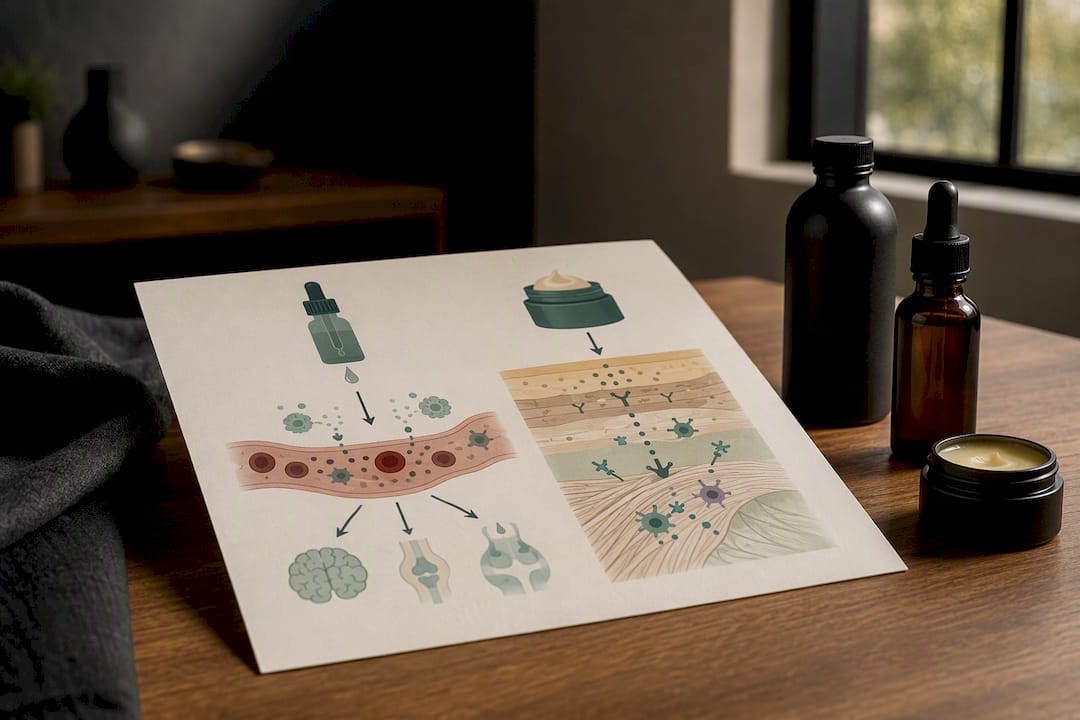
Formulation matters here. Topical CBD stays largely local, absorbed through skin layers to reach nearby tissue without significant systemic circulation, which is why it is favoured for focal joint or tendon pain. Oral tinctures work differently, entering the bloodstream and affecting the whole body rather than one sore spot. None of this confirms clinical efficacy for tendon repair. Mechanism plausibility and proven outcomes are two different things, and only one of them is currently backed by robust human data.
Topicals, tinctures and patches: which form to use and how to apply it
The form you choose should match the type of pain you have. Topical creams, gels, roll-ons, and patches sit directly over the tendon and stay mostly local, while oral tinctures and gummies enter the bloodstream and act more broadly across the body.
- For a single sore tendon (a golfer’s elbow or Achilles flare, for example), a topical is usually the sensible starting point. It minimises systemic exposure and lets you judge whether that specific area responds.
- For widespread aches, or if sleep and anxiety are also part of the picture, an oral tincture may suit better, since it works systemically rather than on one joint.
- Application technique matters more than people assume. Massage the product gently into the skin around, not directly onto, any broken or irritated skin, and avoid overloading a small area hoping for faster results.
- Combine with basics, never instead of them. Rest, graded loading exercises, and any physiotherapy plan remain the actual drivers of tendon recovery.
Onset timing differs sharply between forms. Topicals tend to produce a local sensation within minutes, largely from the cooling or warming feel of the base formulation, while genuine effects build over days. Oral tinctures typically take 30 to 90 minutes to take effect and last longer per dose. Give either form a fair trial window of one to four weeks before deciding whether it is doing anything measurable, ideally tracking pain on a simple 0 to 10 scale so you’re not relying on memory alone.
Pro Tip: Keep a short daily log of pain scores and what you did that day (rest, exercise, application). Four weeks of consistent notes tells you more than a gut feeling ever will.
For anyone managing sports-related strain specifically, it’s worth reading more on CBD for sports recovery, which covers overlapping territory with tendon overuse injuries.
Safety, drug interactions and UK guidance
The NHS is clear that over-the-counter CBD products are not licensed medicines for tendonitis and should never replace standard care. Prescription cannabinoid medicines, used for a narrow set of licensed conditions, are an entirely separate category from the CBD oils and gummies sold as wellness supplements.
Side effects tend to be mild but worth knowing:
- Dry mouth, mild drowsiness, or digestive upset with oral products.
- Skin irritation or redness with topical products, particularly on sensitive skin.
- A small but real risk of THC traces in poorly manufactured products, which matters for anyone facing workplace drug testing.
One interaction risk deserves particular attention: CBD can inhibit CYP450 liver enzymes, the same pathway that metabolises many prescription medicines, including some blood thinners and anti-seizure drugs. Anyone on regular prescription medication should check with a pharmacist or GP before adding CBD, rather than assuming a supplement is automatically harmless alongside tablets. If you notice an unexpected side effect, report it and stop use, and always favour products carrying a current, verifiable NHS-referenced safety standard with third-party lab certificates attached.
For a fuller breakdown of safety considerations specific to the UK market, see this guide to CBD for pain relief.
Checklist: choosing a CBD product for tendon discomfort
Not all CBD products are made equal, and the difference often comes down to paperwork you never see unless you go looking for it.
- Certificate of analysis (COA): a third-party lab should confirm both CBD content and THC levels, ideally with a batch number that matches the product in your hand.
- Spectrum: broad-spectrum retains other beneficial hemp compounds without detectable THC, full-spectrum includes trace THC, and isolate is CBD alone. Broad-spectrum suits most people wanting the entourage effect without THC risk.
- Clear mg-per-serving labelling: look for milligrams per dose, not just a vague total per bottle.
- Added actives: ingredients like menthol, lidocaine, or arnica can genuinely ease surface discomfort but may mask an underlying problem rather than address it, so don’t mistake a cooling sensation for tendon improvement.
Dosing is best approached cautiously: start low, note the effect over a week or two, then adjust rather than jumping straight to a high strength. Walk away from any product making outright cure claims, lacking a visible COA, or with a supplier you can’t verify. Those are the red flags that separate a credible wellness product from a gamble.
Publisher evidence: how Smokocbd demonstrates quality and responsible use
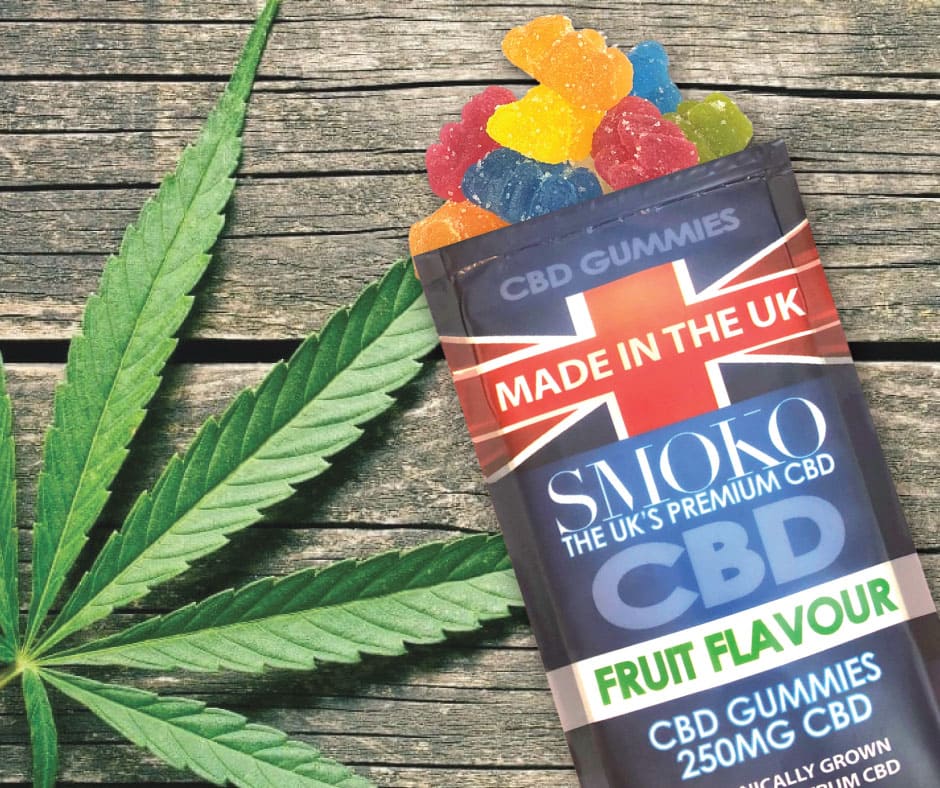
Smokocbd operates as a UK-based specialist in broad-spectrum CBD products, including tinctures, gummy bears, and soft gel capsules, sourced from organically grown hemp. Every batch goes through third-party lab testing to confirm zero THC content, alongside educational resources and direct customer support for product-specific questions.
Against the checklist above, that covers the essentials: verifiable lab testing, clear spectrum labelling, and transparent sourcing. None of it changes the underlying point. A well-tested product is still an adjunct for symptom management, not a substitute for a proper tendonitis diagnosis or a rehab plan from a physiotherapist.
Potential side effects specific to tendonitis patients
Anyone using CBD alongside tendonitis treatment should watch for a few specific issues beyond the general side effect profile. Topical application directly over an already inflamed, sensitive area can occasionally increase redness or irritation, particularly if the skin over the tendon is thin, as it often is around the wrist, elbow, or Achilles.
There’s also a masking risk worth taking seriously. If a topical numbs surface discomfort effectively, it can tempt people back into activities that continue to strain a healing tendon, undermining the rest period that actually matters for recovery. This is especially relevant for carpal tunnel syndrome, which shares overlapping wrist and forearm discomfort with tendonitis. If CBD dulls the ache enough to keep typing or gripping through pain that should be a warning sign, it can slow underlying recovery rather than support it.
Oral tinctures carry a different set of considerations. Mild drowsiness could affect anyone doing rehab exercises that require balance or coordination, and digestive upset is possible at higher doses. None of these effects are usually severe, but they’re worth tracking in the same log used for pain scores, so you can tell quickly whether a symptom is from the tendon, the CBD, or something else entirely.
How CBD compares with other tendonitis treatments
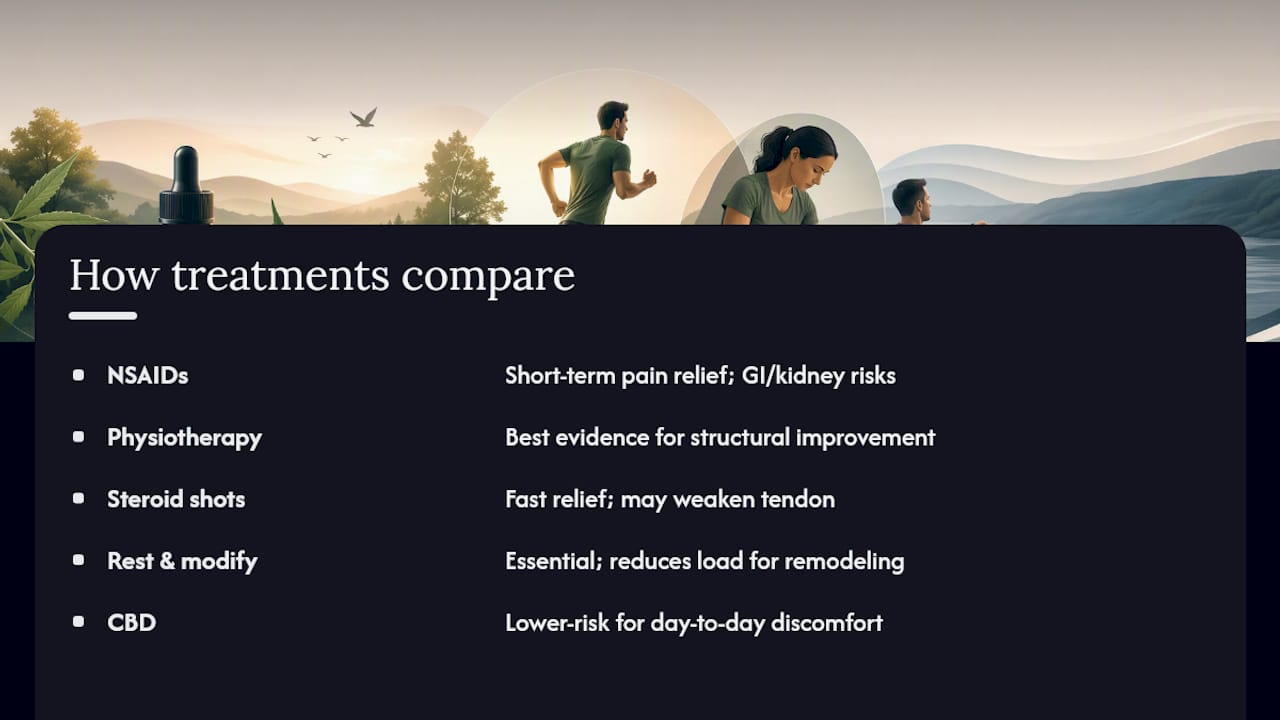
CBD sits alongside, not above, the standard tendonitis toolkit. Nonsteroidal anti-inflammatory drugs (NSAIDs) like ibuprofen remain the most widely used option for short-term pain and inflammation control, though they carry gastrointestinal and kidney risks with prolonged use that CBD generally does not. Physiotherapy, particularly eccentric loading exercises, has the strongest evidence base for actually improving tendon structure over time, something no CBD study has demonstrated.
Corticosteroid injections offer fast relief for some patients but have a well-documented downside: repeated use can weaken tendon tissue further, making them a short-term tool rather than a long-term strategy. Rest and activity modification remain unglamorous but essential, since tendons need reduced load to remodel.
Where CBD fits is as a lower-risk option for people who want to manage discomfort without the gastrointestinal load of NSAIDs or the tissue risk of repeated steroid injections. It won’t replace eccentric loading exercises or a physiotherapist’s assessment, but it can sit comfortably alongside them for people whose main complaint is day-to-day discomfort rather than structural damage requiring intervention. Natural remedies for tendonitis more broadly, including cold therapy, compression, and gentle stretching, tend to work best in combination rather than as standalone fixes, and CBD fits that pattern rather than standing apart from it.
Optimal dosing strategies and how long to trial CBD
There is no officially agreed dose for tendonitis because no regulator has approved CBD for this use, so dosing guidance here is practical rather than clinical. For topical products, apply a thin, even layer over the affected area two to three times daily, adjusting based on how the skin and pain respond over the first week.
For oral tinctures, starting low, often in the 10 to 20mg per dose range, and increasing gradually over one to two weeks tends to be a sensible, cautious approach used across wellness guidance generally, rather than a doubling-up-immediately strategy. Give any product a genuine trial of two to four weeks before judging its effect, since inflammation and pain perception can fluctuate day to day regardless of treatment.
Duration of use matters too. Short-term flare-ups might only need a few weeks of support alongside rest and rehab, while chronic, recurring tendon pain might justify longer, ongoing use, provided a clinician is aware and no concerning side effects appear. Reassess every month: if there’s no discernible change in pain or function by the four-week mark, the product likely isn’t the right tool for that particular case, and it’s worth revisiting the rehab plan or getting reassessed rather than simply increasing the dose.
What people say about using CBD for tendonitis
Reports from people using topical CBD for tendon pain tend to describe modest, gradual improvement rather than dramatic relief. That pattern lines up with what the pilot studies found: tolerable products with measurable but moderate reductions in pain over several weeks, not overnight transformation.
It’s worth treating individual accounts with appropriate caution. Personal experience varies enormously based on the severity of the tendon issue, whether rehab exercises are being followed alongside CBD use, and simply how each person’s body responds to cannabinoids. Someone with mild, early-stage tendonitis who rests appropriately is likely to report a different experience than someone pushing through moderate to severe tendinopathy while continuing high-load activity.
The most useful signal from the broader athlete-focused literature isn’t a single glowing account but a consistent pattern: people who combine topical CBD with sensible activity modification tend to report better outcomes than those using it as a standalone fix while ignoring the underlying strain pattern. That’s consistent with the practical guidance on CBD in sport recovery from third-party sources covering athlete use cases, which frames CBD as one part of a recovery routine rather than the centrepiece of it.
Tendonitis explained: causes, symptoms, and standard treatment
Tendonitis is inflammation of a tendon, the tough, fibrous cord that connects muscle to bone, most commonly triggered by repetitive strain, overuse, or a sudden increase in activity load. Common sites include the Achilles tendon, the rotator cuff in the shoulder, the elbow (tennis or golfer’s elbow), and the wrist and forearm tendons affected by repetitive typing or gripping motions.
Symptoms typically include localised pain that worsens with movement, tenderness directly over the tendon, mild swelling, and stiffness that’s often most noticeable first thing in the morning or after periods of rest. Pain that radiates, tingles, or is accompanied by numbness may point towards a related but distinct condition like carpal tunnel syndrome, where a compressed nerve rather than an inflamed tendon is the source, and CBD’s relevance there is even less established.
Standard medical treatment follows a fairly consistent path: rest and activity modification first, ice for acute flare-ups, NSAIDs for pain and inflammation control, and physiotherapy focused on graded, progressive loading exercises once acute pain settles. Persistent cases may involve corticosteroid injections or, in chronic, treatment-resistant tendinopathy, more advanced interventions. A GP or physiotherapist assessment is the appropriate first step for anyone with new or worsening tendon pain, since accurate diagnosis shapes every decision that follows, including whether CBD is even worth trying.
A practical next step, not a promise
If focal tendon pain is the main issue, trial a topical for up to four weeks, keep rehab and clinician oversight running alongside it, and check any prescription medicines for interactions first. Verify the product’s COA and ask customer support about batch specifics before you commit to a bottle.
— Mike
Try Smokocbd for a lab-verified starting point
Smokocbd’s broad-spectrum CBD oil in mint flavour covers every point on the checklist above: broad-spectrum extraction, third-party lab testing confirming zero THC, and clear milligram-per-serving labelling so you know exactly what you’re taking rather than guessing from a vague total.
If tendon discomfort is focal, a topical remains the better starting point for targeted relief, but for anyone managing broader aches, disrupted sleep, or wanting a measured systemic approach, this tincture is designed to be titrated slowly. Begin with a low dose, ideally in the evening the first few times to gauge how your body responds, and patch-test any topical CBD elsewhere in the range on a small area of skin first if sensitivity is a concern. Visit the product page to check current batch certificates and place an order when you’re ready to start your own four-week trial.
Sources
- Cannabis-based products for medicinal use (NHS England long read)
- Biomechanical effects of Δ9-tetrahydrocannabinol (THC) and cannabidiol (CBD) on tendon to tendon healing
- Assessment of the Effect of a Cosmetic Cream With CBD and Natural Ingredients on the Recurring Chronic Tendon Pain in Triathletes, Runners, Cyclists, and Swimmers