The evidence points to a qualified yes for short-term relief, particularly around surgery, but no for fixing the underlying damage. Clinical trials show buccal CBD reduces pain and boosts satisfaction in the first 24 to 48 hours after rotator cuff repair, with weaker support for neuropathic shoulder pain and little proof it helps long-term structural problems like a torn tendon. If you’re on other medication or recovering from surgery, talk to your GP before adding CBD to the mix.
TL;DR:
- CBD provides short-term pain relief mainly in the first 48 hours after shoulder surgery but does not impact long-term recovery or structural healing.
- Evidence supports CBD’s effectiveness for nerve-related pain and postoperative discomfort but remains limited for inflammatory or mechanical shoulder pain.
- Topical CBD delivers localized relief but likely does not penetrate deeply enough to affect joint tissues, while oral CBD offers broader action on deep or nerve pain.
- Using CBD alongside other medications requires medical consultation due to potential interactions, especially because it affects liver enzymes involved in drug metabolism.
- Proper trial protocols involve starting with a suitable form based on pain type, over a 2-4 week period, with careful monitoring for worsening symptoms or side effects.
Table of Contents
- How does CBD for shoulder pain hold up in clinical trials?
- Which types of shoulder pain respond best to CBD?
- Should you use topical or oral CBD for shoulder pain?
- What are the safety and interaction risks with CBD?
- How to trial CBD for shoulder pain safely
- Why the perioperative evidence deserves more attention than it gets
- Ready to trial CBD for your shoulder pain?
- Sources
- FAQ
How does CBD for shoulder pain hold up in clinical trials?
The strongest data comes from surgery, not the gym or the sofa. A randomised, placebo-controlled trial using a buccally absorbed CBD tablet after arthroscopic rotator cuff repair found significantly lower pain scores and higher patient satisfaction in the first one to two days post-surgery, compared with placebo.
That early advantage didn’t last. The one-year follow-up to the same trial found no meaningful differences in patient-reported outcomes between the CBD and placebo groups at seven days, fourteen days, or twelve months. CBD appears to smooth the roughest early days of recovery rather than change the healing trajectory.
Statistic callout: In the rotator cuff RCT, pain scores and satisfaction favoured CBD only during the first two days post-surgery. By the one-year mark, both groups reported comparable outcomes.
Other registered trials are filling in the gaps around dosing and protocol. Clinicaltrials testing CBD oral solutions, dissolvable tablets, and even Epidiolex-style formulations for shoulder arthroscopy pain, with dosing schedules that vary considerably from trial to trial. There is no single agreed dose yet, which matters when you’re deciding how much to try yourself.
Zoom out to the broader pain literature and the picture splits along different lines:
- Cannabinoids show moderate-quality evidence for helping some neuropathic pain conditions, where nerves themselves are damaged or irritated.
- Evidence for general inflammatory and mechanical pain, the kind most shoulder sufferers actually have, is thinner and more mixed.
- A critical academic review has warned that over-the-counter CBD products vary hugely in quality, and that broad pain-relief claims often outrun what the data supports.
Put together, the trial evidence backs CBD as a plausible short-term adjunct around surgery and possibly for nerve-related pain, not as a proven fix for chronic shoulder wear and tear.
Which types of shoulder pain respond best to CBD?
Shoulder pain isn’t one condition, and that distinction matters for what you should expect from CBD. Four categories cover most cases people search for relief from:
- Inflammatory pain comes from swelling around joints or bursae, often linked to overuse or arthritis.
- Mechanical or tendon pain, including rotator cuff tears and tendonitis, stems from physical wear or injury to soft tissue.
- Neuropathic pain arises when nerves themselves are compressed, irritated, or damaged, sometimes radiating down the arm.
- Postoperative pain follows surgery, such as arthroscopic rotator cuff repair, and is usually sharpest in the first days afterwards.
The cannabinoid evidence lines up most convincingly behind neuropathic pain and postoperative symptom relief. Inflammatory and mechanical pain, the categories most people mean when they say “shoulder pain”, have far less direct trial support. CBD may ease the discomfort that comes with a rotator cuff tear or tendonitis, but it will not repair torn fibres or reverse joint degeneration. Think of it as managing the pain signal, not fixing the plumbing.
Should you use topical or oral CBD for shoulder pain?
Delivery method changes what CBD can realistically do for you, and the two main routes work in quite different ways.
Topical CBD (creams, balms, roll-ons) delivers relief close to the skin and joint surface. Absorption stays local with minimal systemic exposure, which suits people wary of feeling “spaced out” or worried about drug interactions. The catch: preclinical studies show promising anti-inflammatory activity in skin and surface tissue, but there’s no solid human evidence that topicals penetrate deeply enough to reach the joint capsule or rotator cuff tendons themselves.
Systemic CBD (oral tinctures, capsules, or the buccal tablets used in the rotator cuff trial) travels through the bloodstream and can act on central pain pathways, which is why it’s the format used in most neuropathic and postoperative studies. It takes longer to kick in but reaches further than a cream ever will.
Pro Tip: If your shoulder pain has both a surface component (tenderness, local swelling) and a deeper ache that radiates down the arm, some people combine a topical for immediate spot relief with a systemic product like a tincture or soft gel for broader coverage.
- Prefer topical for surface tenderness, mild swelling, or a shoulder that hurts to touch.
- Prefer systemic (oral/sublingual) for deep ache, nerve-type pain, or general inflammation you feel throughout the joint.
- Consider both if symptoms are mixed and you want to trial each route separately first.
What are the safety and interaction risks with CBD?
Trial-grade caution applies here, not blanket reassurance. In the perioperative rotator cuff studies, researchers built in liver-function monitoring at day seven and day fourteen, because CBD can affect liver enzymes, particularly at higher doses. The small trials found no significant liver differences versus placebo, but the monitoring itself signals that this isn’t a supplement to take casually if you’re already on medication.
Statistic callout: Trial protocols in postoperative shoulder studies included scheduled liver-function checks at days 7 and 14, standard practice given CBD’s known effect on liver enzyme pathways.
CBD is broken down by the same liver enzyme system, CYP450, that metabolises many common prescription drugs. That includes several blood thinners, some antidepressants, and certain seizure medications. If you take any regular prescription, this is the point to check with your GP or pharmacist before starting, not after.
Common side effects reported across trials include:
- Mild drowsiness or fatigue
- Dry mouth
- Changes in appetite
- Occasional digestive upset
A sensible starting approach, echoed across clinical dosing practice, is to start low and titrate slowly, tracking how you feel over several days before increasing. Dosing in trials has varied widely between studies, which only reinforces that consistency and patience matter more than chasing a specific milligram figure.
How to trial CBD for shoulder pain safely
A structured trial beats random dabbling, and it doesn’t need to be complicated.
- Match the form to your pain. Surface tenderness or localised swelling: try a topical first. Deep ache, nerve-type pain, or general stiffness: start with an oral or sublingual product.
- Run a 2 to 4 week trial, paying attention to the optimal CBD timing for energy and sleep quality to get the best results. Keep a simple daily diary noting pain level (0 to 10), range of motion, and sleep quality. Take the same dose at the same time each day.
- Set stop criteria upfront. If pain worsens, new numbness or weakness appears, or you notice unusual bruising or jaundice, stop and see a doctor promptly.
Pro Tip: Photograph or note your shoulder’s range of motion in week one, then repeat the same simple movements at week four. Pain scores are subjective; movement is a fact you can compare directly.
If you’re managing tendon-related pain specifically, a structured multi-week trial approach gives a useful template for what consistent tracking looks like in practice.
Why the perioperative evidence deserves more attention than it gets
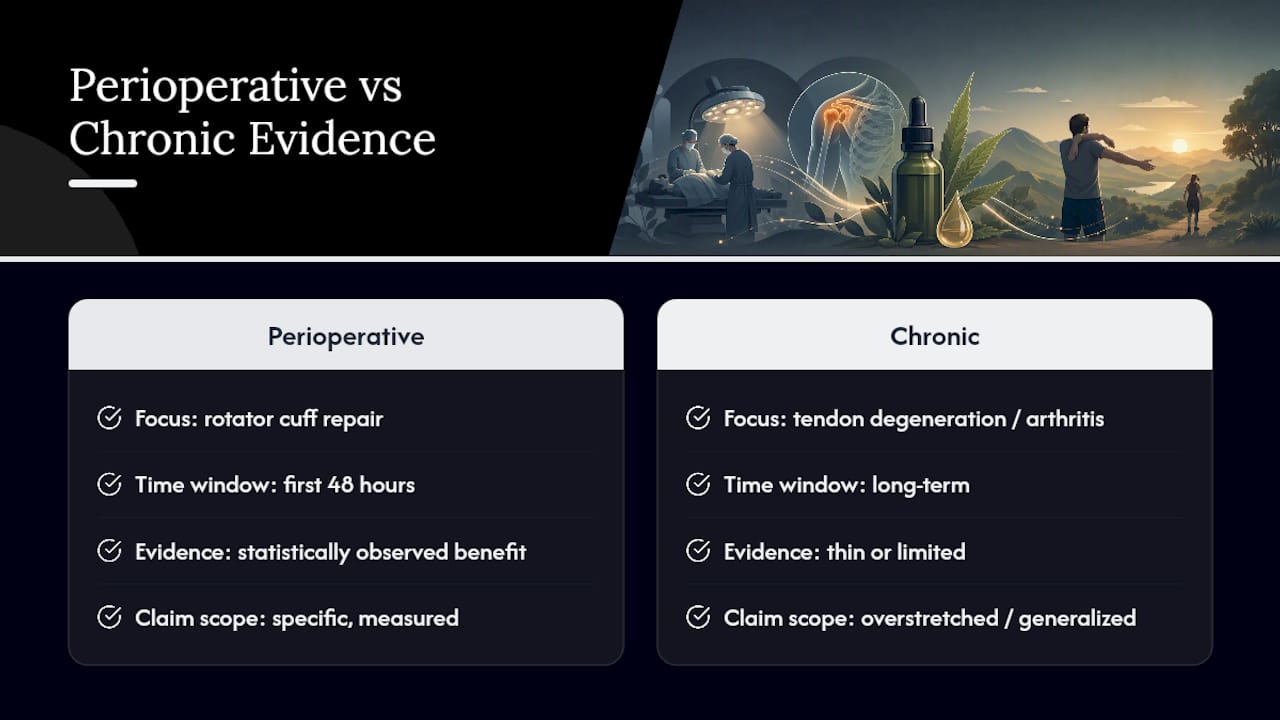
Most CBD content treats shoulder pain as one big undifferentiated ache and pitches CBD as a general cure-all. That’s sloppy, and it undersells what the actual trial data shows. The rotator cuff repair studies are genuinely interesting because they isolate a specific, measurable window, the first 48 hours after surgery, and found a real, statistically observed benefit in that window. That’s a much stronger claim than “CBD helps pain” in the abstract, and it deserves more attention than it gets.
What frustrates me is watching that narrow, solid finding get stretched to cover chronic tendon degeneration or arthritis, where the evidence is thin at best. Readers deserve the distinction: CBD looks genuinely useful as a short-term adjunct around acute pain events and for some nerve-related discomfort, and far less proven as a long-term fix for structural shoulder problems. SMOKO CBD’s own blog covers related cannabinoid research and real customer trial experiences, and that context is worth reading alongside the clinical picture. None of this replaces a conversation with your GP, particularly if your shoulder pain is new, worsening, or followed an injury.
— Mike
Ready to trial CBD for your shoulder pain?
It is straightforward to match the trial approach above to an actual broad-spectrum CBD product made from organically grown hemp and independently lab-tested to confirm zero THC, so you know exactly what you’re titrating.
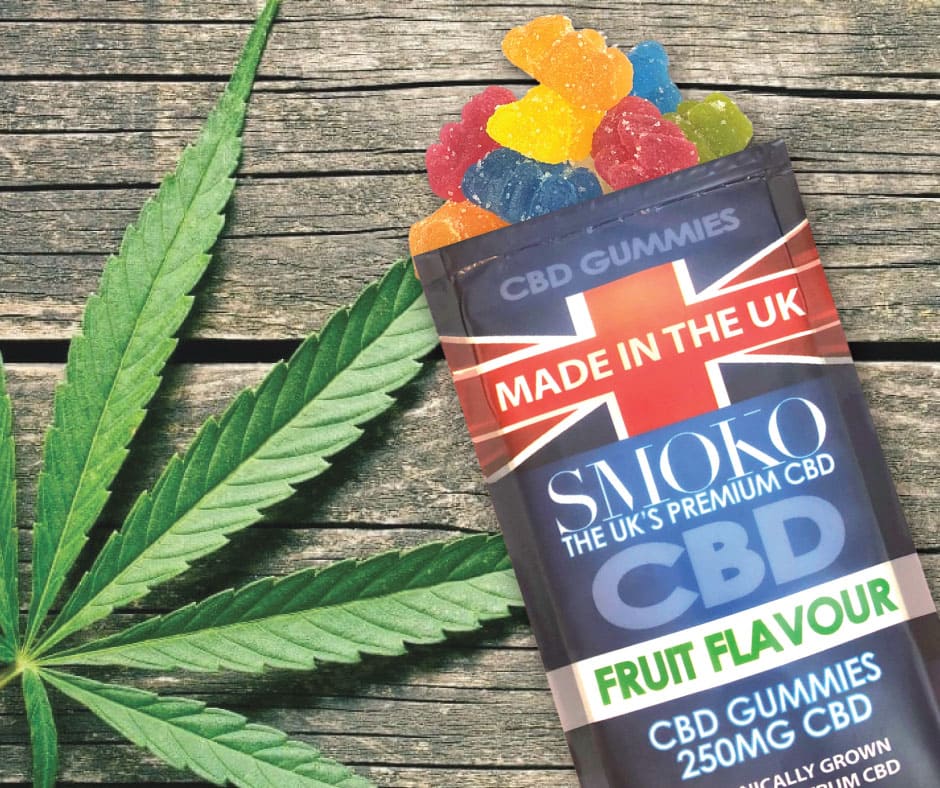
For the systemic route covered in the trials above, the CBD Gummy Bears offer a consistent, pre-measured dose that’s easy to track day to day in a pain diary, while tinctures suit readers who want finer control over titration. If you’d rather browse the full range and compare tinctures, gummies, and soft gels side by side, the full product collection is the place to start. Free UK shipping applies on orders over £30, which makes running a proper multi-week trial more affordable from the outset. Pick the form that matches your pain type, start low, and give it the two to four weeks the trial structure above recommends.
FAQ
Will CBD oil help shoulder pain?
It can help with short-term pain, particularly in the days following shoulder surgery, based on randomised trial data. It’s less proven for chronic conditions like long-standing tendon damage or arthritis.
Is CBD better for you than ibuprofen?
Neither is universally “better”; they work differently. Ibuprofen is a proven anti-inflammatory with well-established dosing, while CBD’s evidence is strongest for short-term postoperative pain and certain neuropathic pain, so many people use them for different situations rather than as direct swaps. Speak to a pharmacist before combining them, especially if you take other medication.
Which form of CBD is best for pain?
For deep or nerve-related shoulder pain, oral or sublingual products (like tinctures or gummies) reach further into the body’s pain pathways than topicals. For surface tenderness or localised swelling, a topical applied directly to the skin often works faster.
Is CBD oil good for muscular pain?
CBD may ease muscular discomfort as part of a broader pain-management approach, though the strongest clinical evidence remains focused on postoperative and neuropathic pain rather than general muscle soreness. Starting low and tracking your response over two to four weeks is the most reliable way to judge whether it helps your specific pain.