Current evidence does not show that CBD cures plantar fasciitis, though topical use may ease discomfort for some people alongside standard care. Any oral use should stay within the UK Food Standards Agency’s guidance of 10 mg per day, and you should check for drug interactions before starting. The sensible first step is a topical trial, continued alongside stretching and proper footwear, not instead of them.
TL;DR:
- No published trial has tested CBD for plantar fasciitis; evidence from other pain conditions finds no consistent benefit from purified CBD alone.
- If you try CBD, start with a topical product for four to eight weeks, track pain and heel raise performance, and stop for skin irritation.
- Keep CBD at or below 10 mg daily, and ask a pharmacist about interactions; pregnant or breastfeeding people, minors, and immunosuppressed people should avoid it.
- Continue stretching, activity changes, supportive footwear, and ice during any trial; plantar fasciitis recovery can take up to 18 months.
Table of Contents
- What the best evidence says about CBD and chronic or neuropathic pain
- Topical versus oral CBD: delivery, plausibility and evidence
- Safety, dosing and legality for CBD users
- A step-by-step way to trial CBD for plantar fasciitis safely
- A cautious take from someone who has seen this pattern before
- Where SMOKO CBD fits into a cautious CBD trial
- FAQ
- Sources
What the best evidence says about CBD and chronic or neuropathic pain
Plantar fasciitis is, at its root, a mechanical injury: repeated strain creates small tears in the band of tissue that runs along the sole of the foot, and the NHS treats it accordingly, with stretching, load management, supportive footwear and ice rather than medication as the primary approach. That matters when you are weighing up where CBD fits, because most pain research looks at nerve-related or widespread chronic pain, not a localised overuse injury in a tendon-like structure.
A living systematic review of cannabis and other plant-based treatments for chronic pain gives the clearest picture available. It found low-to-moderate strength evidence that some THC:CBD combination products produce small improvements in chronic or neuropathic pain, but purified or low-THC CBD used on its own was not associated with meaningful pain reduction. The review drew on 29 randomised controlled trials and a number of observational studies, and noted that adverse events such as dizziness, sedation and nausea were reported with certain products. Most of the trials included were short-term, often running a matter of weeks rather than months.
A few points follow from that review that are worth holding onto:
- The strongest signal in cannabinoid pain research involves THC:CBD combinations, not CBD alone, which is the opposite of what most UK sellers can legally offer given THC restrictions.
- Evidence strength is rated low-to-moderate even for the conditions with the most research, meaning confidence in any benefit is modest at best.
- None of the included trials targeted plantar fasciitis specifically, so any extrapolation to heel pain is an inference, not a finding.
The living systematic review on cannabinoids for chronic pain rates evidence for purified CBD as low-to-moderate strength, with no consistent pain reduction shown for CBD used alone. That single sentence probably matters more than any marketing claim you will read about CBD and joint or tendon pain, because it sets a ceiling on what you should expect.
The mechanical nature of plantar fasciitis is the other half of this picture. Medical consensus treats it as a biomechanical problem first: analgesics or topical agents applied without addressing the underlying strain on the fascia rarely resolve the condition on their own, according to NHS clinical guidance. Recovery can take up to 18 months in some cases, and the mainstay of care remains stretching and activity modification rather than any product applied to the skin or taken as a capsule.
Topical versus oral CBD: delivery, plausibility and evidence
Topical CBD is applied directly to the skin over the painful area and is designed to act locally, without significant absorption into the bloodstream. Transdermal products are formulated to cross the skin barrier and reach deeper tissue or circulation, a distinction some brands blur in their marketing. Oral CBD, whether as an oil, a gummy or a soft gel, is absorbed through the digestive system and distributed throughout the body, which means it reaches the endocannabinoid system more broadly but also takes longer to act and is subject to the liver’s first-pass metabolism.

For a localised problem like heel pain, the appeal of a topical product is obvious: you are putting it where it hurts, and systemic absorption is typically limited, which may reduce the risk of interactions with other medicines. The trade-off is that evidence for topical cannabinoids is thinner than for oral products, and what exists tends to come from other joint conditions rather than plantar fasciitis itself.
A few practical distinctions are useful when choosing a format:
- Topical products tend to act faster at the application site but the effect, where present, is usually modest and short-lived.
- Oral products take longer to reach peak effect, often an hour or more, but the effect lasts longer once established.
- Absorption through skin is inconsistent between formulations, so a cream and an oil with the same labelled CBD content will not necessarily deliver the same amount to the tissue.
Small topical trials in related musculoskeletal conditions, such as comparisons between topical hemp seed oil or diclofenac gel in knee osteoarthritis, offer a loose analogue but cannot be read across directly to plantar fasciitis. A clinical trial registry entry shows that topical CBD for plantar fasciitis specifically is under investigation, but published results are not yet available, so anyone trying it now is doing so ahead of the evidence rather than because of it. Onset, absorption and duration all remain somewhat unpredictable with topical cannabinoids, which is one reason a structured, time-limited trial with clear stopping points makes more sense than open-ended use.
Safety, dosing and legality for CBD users
The Food Standards Agency sets a provisional acceptable daily intake of 10 mg of CBD per day for healthy adults, a precautionary limit rather than a dose shown to be optimal for any particular condition. The same FSA guidance advises that pregnant or breastfeeding people, children, those who are immunosuppressed, and anyone taking prescription medicines should avoid CBD or seek clinical advice before using it.
Three things are worth checking before you start:
- Your current medicines. CBD can inhibit the liver enzymes CYP3A4 and CYP2C19, which alters how the body processes some statins, certain anticoagulants and some antidepressants, so a pharmacist or GP check is sensible even at low oral doses.
- Whether you fall into a vulnerable group. If you are pregnant, breastfeeding, immunosuppressed or under 18, the FSA’s advice is to avoid CBD rather than attempt a low-dose trial.
- Product quality. Look for a Certificate of Analysis showing the actual CBD concentration and confirming THC is at zero or negligible levels, since labelling across the market varies considerably.
Our own dosage guidance for UK CBD use and our explainer on who should avoid CBD go into more detail on both of these points if you want to check your own situation before buying anything.
Pro Tip: Ask your pharmacist specifically about CYP3A4 interactions if you take any prescription medicine daily, even if the leaflet does not mention CBD by name.
A step-by-step way to trial CBD for plantar fasciitis safely
If you want to try CBD for heel pain, structure matters more than the product itself. A protocol with a clear start, a fixed length and a defined stopping point gives you a fair chance of judging whether it helped, rather than attributing a natural recovery to the cream or capsule.
- Confirm the diagnosis and record a baseline. Note your pain on a simple 0 to 10 scale, how many days’ activity is limited, and how you perform a single-leg heel raise, since this gives you something to compare against later.
- Choose topical as your first route. Given the limited absorption and lower interaction risk, a topical cream or balm applied to the heel is the more cautious starting point than an oral product.
- If you do use an oral product, stay within 10 mg total CBD per day and write down exactly what you take and when, so you are never guessing at your running total across different products.
- Apply topical CBD with a short massage, working it into the most tender part of the heel for around 30 to 45 seconds to encourage local blood flow, and do your first application when you can watch for any skin reaction.
- Run the trial for four to eight weeks, which matches the duration used in most of the small topical and oral studies that exist for related conditions, and keep a short daily log of pain and function.
- Continue your mechanical care throughout, including the calf and plantar fascia stretches, footwear changes and any orthotic advice your clinician has given, since CBD is not a substitute for addressing the strain on the fascia itself.
A few extra points worth keeping in mind during the trial:
- Clinicians treating plantar fasciitis commonly recommend tracking objective measures like pain score and heel-raise function so any improvement can be weighed against natural variation.
- Skin irritation, however mild, is a reason to stop the topical product rather than push through it.
- Worsening pain, new swelling or pain that wakes you at night are reasons to see a GP or podiatrist rather than extend the trial.
Pro Tip: Photograph or note your heel-raise count weekly rather than relying on memory. Small changes are easy to miss without a written record.
A cautious take from someone who has seen this pattern before
I have talked to plenty of customers dealing with tendon and joint pain over the years, and the pattern is consistent: people who pair a topical CBD product with proper stretching and footwear changes report better outcomes than those who expect the product to do the work alone. That lines up with what the evidence actually shows. We put weight on Certificates of Analysis and third-party testing precisely because so much of the market sells on vague promises rather than verifiable content. If you try CBD for heel pain, treat it as one small input alongside your stretching routine and a conversation with your GP or pharmacist, not as the main event.
— Mike
Where SMOKO CBD fits into a cautious CBD trial
If you decide a topical-first trial makes sense for you, the format you choose should match the caution this condition calls for. Our CBD Tinctures, Gummy Bears and Soft Gels are broad-spectrum, made in the UK from organically grown hemp, and independently lab-tested to confirm zero THC, which gives you a clear basis for checking exactly what you are putting on or in your body.
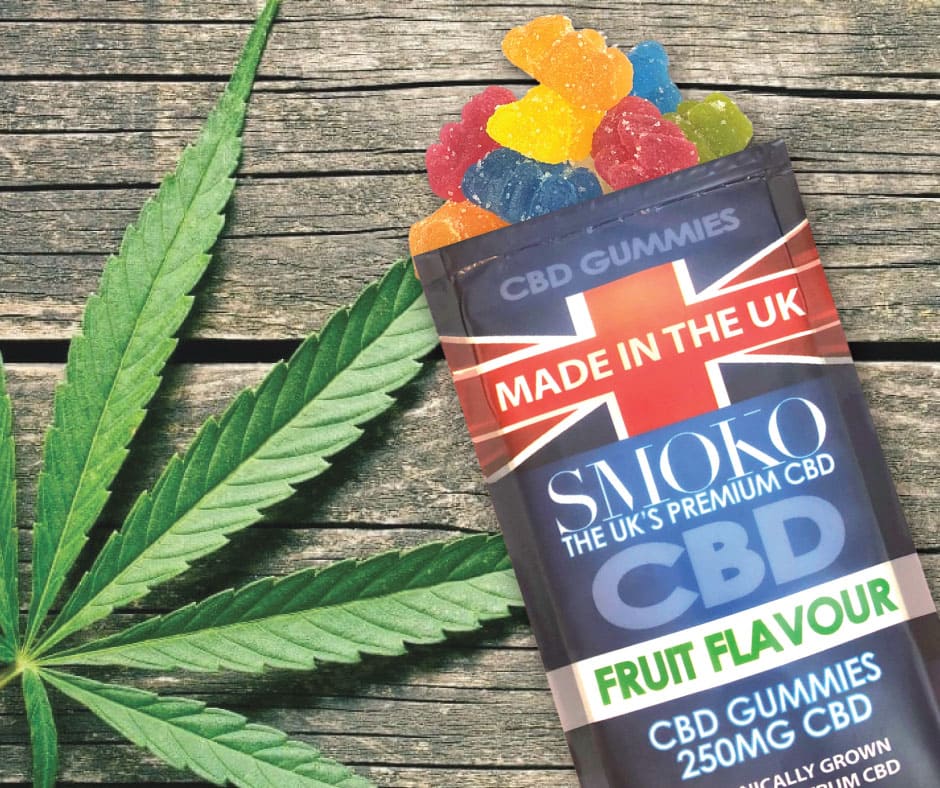
For an oral trial that stays within the FSA’s 10 mg per day guidance, our 250mg CBD Gummy Bears let you work out the CBD content per gummy and split or limit servings accordingly, rather than guessing at a dose. Before buying any CBD product for this purpose, check:
- The Certificate of Analysis for declared CBD per serving and confirmed THC content.
- The batch number, so any result can be traced back to its specific testing.
- Whether the testing was carried out by an independent third-party lab rather than the seller itself.
| Product form | Best suited for | What to check before buying |
|---|---|---|
| CBD Tinctures | Flexible oral dosing in small increments | CBD per drop, COA, batch number |
| CBD Gummy Bears | Low-effort oral trial with a fixed dose | CBD per gummy against the 10 mg/day limit |
| CBD Soft Gels | Consistent oral dosing without taste | CBD per capsule, COA, batch number |
Our gummy dosage guide and guidance on combining CBD with ibuprofen are worth reading before you start, particularly if you already take an over-the-counter painkiller for heel pain. Shipping offers vary; for current details, please see the pricing page on the seller’s website.
FAQ
What finally cured my plantar fasciitis?
There is no single cure that works for everyone, but the NHS notes that consistent stretching, supportive footwear, load management and ice typically bring improvement over time, with recovery sometimes taking up to 18 months. Addressing the underlying mechanical strain, rather than relying on any single product, is what tends to produce lasting results.
What’s the best anti-inflammatory for plantar fasciitis?
There is no single best anti-inflammatory, and the NHS frames mechanical care, such as stretching, footwear and ice, as the primary treatment rather than medication. Any analgesic or anti-inflammatory, topical or oral, should be discussed with a GP or pharmacist, particularly if you take other medicines.
Does CBD actually do anything for inflammation?
A living systematic review found low-to-moderate strength evidence that certain cannabinoid combination products offer small benefits for chronic or neuropathic pain, but purified CBD alone was not shown to reduce pain consistently. The evidence on inflammation specifically is limited, and CBD should not be treated as a proven anti-inflammatory.
Does CBD help with pain in the feet?
There is no published trial evidence specifically on CBD for foot or plantar fasciitis pain, though a clinical trial registry entry confirms topical CBD for plantar fasciitis is under investigation. Some people report mild relief from topical use alongside standard mechanical care, but this is not supported by strong trial data for this condition.
Sources
- Plantar fasciitis - NHS
- Gov
- Living systematic review on cannabis and other plant‑based treatments for chronic pain (NCBI Bookshelf)
- Clinicaltrials