CBD may ease some of the sleep disruption, anxiety and pain that come with perimenopause, according to patient-reported surveys, though it has not been shown to rebalance hormones or protect bone density. The clinical evidence base is thin, built mostly on surveys and mechanistic research rather than menopause-specific trials. Before trying it, check the UK’s provisional safety guidance and speak to a pharmacist if you take regular medication.
TL;DR:
- Most existing research on CBD for perimenopause is observational and based on surveys, without rigorous clinical trials or proof of hormone regulation.
- CBD may support sleep and mood but does not directly address hormonal imbalances or bone density related to menopause.
- UK safety guidelines recommend limiting intake to about 10 mg of CBD daily, especially for those on medications like blood thinners or thyroid drugs, which can interact with CBD.
- Choosing a high-quality product involves checking for batch-specific lab analysis, clear CBD-per-serving information, and consulting a healthcare professional before use.
- The primary benefit women report is improved sleep and reduced anxiety, with many products containing both CBD and THC, which complicates efficacy and safety assessment.
Table of Contents
- What does the research on CBD for perimenopause actually show?
- How might CBD affect sleep, mood and pain?
- What are the UK safety rules and interaction risks?
- How do you choose a CBD product for perimenopause symptoms?
- How should you start, dose and track CBD safely?
- What does SMOKO CBD offer for perimenopause support?
- Why the loudest CBD claims about menopause miss the point
- How to try CBD safely for perimenopause symptoms
- Sources
- FAQ
What does the research on CBD for perimenopause actually show?
The honest answer is that most of what we know comes from asking women what they’re already doing, not from controlled trials. That distinction shapes everything else in this section.
A survey of medical cannabis use during perimenopause and postmenopause found that a large share of respondents were using cannabis or CBD specifically to manage menopause-related symptoms, and the pattern of what they used it for was strikingly consistent. Sleep disturbance and mood or anxiety symptoms were, by a wide margin, the most commonly reported targets, well ahead of hot flushes or joint pain. In the same survey published on PMC, A large share of respondents reported using cannabis-based products for sleep disturbance, with many also using them for mood or anxiety.
That’s a meaningful signal about what women are actually reaching for CBD to fix. It is not, however, proof that CBD works for those things in any rigorous sense. Surveys like this are observational: they capture self-reported experience, not outcomes measured against a placebo. Many of the products respondents described also contained THC alongside CBD, which muddies the picture further, since THC and CBD behave differently in the body and produce different symptom profiles.
Harvard Health’s commentary on the trend puts it plainly: patients are increasingly telling their clinicians they’ve tried cannabis or CBD for sleep and anxiety during midlife, but long-term safety and efficacy in this population remain unestablished. That’s a fair summary of where things stand. A more detailed review chapter on cannabinoids in women’s health goes further, stating that direct clinical studies of CBD for perimenopausal hormonal imbalance are insufficient, and that any reported benefit is best understood as indirect. In other words, CBD does not appear to be correcting the underlying oestrogen and progesterone shifts that drive perimenopause. It may be easing some downstream symptoms, such as poor sleep or a jittery mood, without touching the hormonal cause. That’s an important distinction, and one that our own look at CBD and menopause covers in more depth.
Here’s a snapshot of what the survey data actually captured:
- Sleep disturbance was the single most commonly cited reason for use.
- Mood and anxiety symptoms followed closely behind.
- Hot flushes and joint or muscle pain were reported less frequently as primary reasons for trying CBD.
- Many respondents used products containing both CBD and THC, not CBD alone.
Many women surveyed who used cannabis-based products for menopause symptoms cited sleep disturbance as their reason. That single figure tells you where the genuine demand sits, and it’s a useful anchor when you’re weighing whether CBD might be worth trying for your own symptoms.
None of this amounts to a clinical guarantee. What it tells you is that a lot of women in your position have tried it, many report benefit for sleep and mood specifically, and the scientific community hasn’t yet caught up with trials designed to test those exact claims properly.
How might CBD affect sleep, mood and pain?
CBD interacts with the endocannabinoid system, a network of receptors and signalling molecules found throughout the brain and body that helps regulate sleep, mood, pain sensitivity and inflammation. Think of it as a background tuning system: it doesn’t create these functions, but it helps keep them within a workable range. When the system is running smoothly, you sleep at reasonable hours, your stress response calms down after the trigger passes, and pain signals get dialled down once they’ve done their job of warning you.
Perimenopause disrupts a lot of this tuning, partly because oestrogen itself interacts with the endocannabinoid system. As oestrogen fluctuates and declines, some researchers think the knock-on effects on this signalling network may contribute to the sleep and mood symptoms so many women report. CBD is thought to influence these same pathways, potentially supporting the body’s own calming signals rather than sedating you outright, and possibly helping tone down pain and inflammatory responses.
That’s the plausible mechanism. It is not the same as clinical proof.
- Preclinical and animal studies have shown CBD interacting with receptors involved in anxiety and pain, which supports a biological rationale.
- Human trials testing CBD specifically for perimenopausal or menopausal symptoms are scarce.
- A mechanism that works cleanly in animal models frequently behaves less predictably in people, especially across a symptom cluster as individual as perimenopause.
A review chapter on cannabinoids in women’s health makes a point worth repeating here: mechanistic plausibility should never be read as clinical proof. It’s the difference between “this could work, and here’s why” and “this has been shown to work in people going through perimenopause.” Right now, CBD sits firmly in the first category.
What are the UK safety rules and interaction risks?
The Food Standards Agency has set a provisional acceptable daily intake of around 10 mg of CBD per day for healthy adults consuming high-purity CBD products (98% CBD or above). That figure is not a therapeutic dose recommended for treating symptoms. It’s a precautionary ceiling, set by the Advisory Committee on Novel Foods and Processes after reviewing toxicology data that flagged potential effects on the liver and thyroid at higher intakes. Many CBD products on the market, including some tinctures and gummies, contain servings well above this figure, which is why checking the label matters more than trusting the marketing.
Certain groups are advised to avoid CBD altogether or seek medical advice before trying it. The FSA’s safety assessment on CBD isolate specifically names pregnant or breastfeeding people, those trying to conceive, children, immunosuppressed individuals, and anyone taking prescription or regular medication. That last category covers a lot of perimenopausal women, particularly those on antidepressants, thyroid replacement therapy, blood thinners such as warfarin, or sleep medication, since CBD can interact with how the liver processes these drugs.
Before starting CBD, take these steps:
- Write down every medicine and supplement you currently take, including doses.
- Book a short conversation with a pharmacist or your GP, specifically to ask about CBD interactions with your current prescriptions.
- Bring the product label showing CBD per serving, not just the total CBD in the bottle.
- Ask to see the batch-specific certificate of analysis if you already have a product in mind.
- Confirm there’s no personal reason (pregnancy, planned surgery, existing liver or thyroid condition) that your prescriber would flag as a concern.
Pro Tip: Keep a running note on your phone listing every supplement and medicine you take, with the date you started each one. It sounds excessive until the day a pharmacist asks exactly this, and you’re grateful you didn’t have to reconstruct it from memory.
For a fuller breakdown of how UK rules apply to CBD products generally, our overview of CBD regulation in the UK and the updated 2026 regulatory guide both go into more detail on novel food status and what a compliant label should show.
How do you choose a CBD product for perimenopause symptoms?
Format matters more than most product pages let on. Each delivery method changes how quickly CBD takes effect, how easy it is to adjust your dose, and how much room there is for error.
Tinctures (oil drops taken under the tongue) let you adjust dose in small increments, drop by drop, which makes them the easiest format for finding your personal minimum effective amount without overshooting the FSA’s 10 mg guidance. They take effect faster than swallowed formats, usually within 15 to 45 minutes.
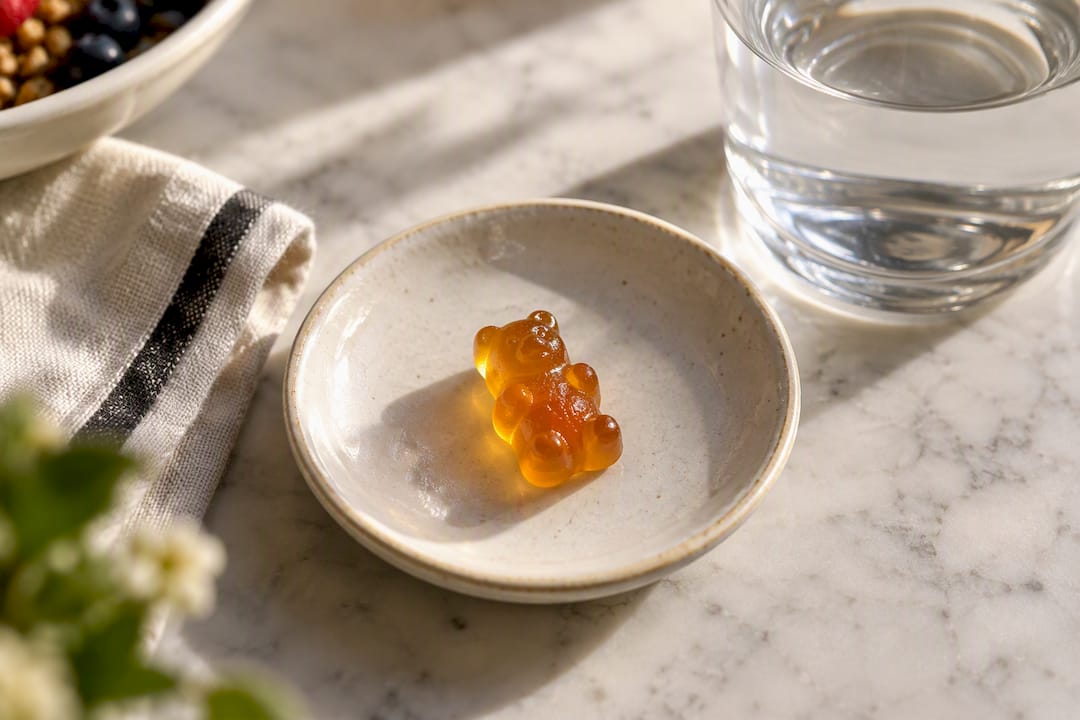
Gummies are convenient and easy to dose consistently once you know your serving, but they’re absorbed through digestion, so effects are delayed and less predictable, and it’s easy to underestimate how much you’ve had if you eat more than one serving without checking the label. There’s no independent evidence identifying a single best CBD gummy for perimenopause specifically. Choosing well depends on transparent labelling and your own tolerability, not on marketing that name-drops menopause.
Soft gels offer fixed dosing in a capsule, which suits anyone who wants consistency without measuring drops, though like gummies they’re slower to act than a tincture.
Reading a label properly matters as much as choosing a format. Look specifically for CBD milligrams per serving, not just the total amount printed in bold on the front of the bottle, since those two figures get conflated constantly. A trustworthy product will make its batch-specific certificate of analysis (COA) easy to find, showing both the cannabinoid profile and results for contaminants like heavy metals, pesticides and residual solvents. Wording such as “broad-spectrum” or “THC-free” describes the product type; it is not, on its own, proof of what’s actually in the bottle. Food Standards Agency guidance is clear that batch testing, not label claims, is what confirms contents and safety.
Watch out for these red flags on a product page:
- No CBD-per-serving figure, only a vague total milligram count for the whole bottle.
- No downloadable or linked COA, or one that isn’t batch-specific.
- Menopause-specific claims with no supporting evidence attached.
- Vague sourcing information with no mention of where the hemp was grown or extracted.
Stick to one product at a time when you’re testing effects, and our quality standards checklist walks through exactly what a transparent listing should include.
How should you start, dose and track CBD safely?
Start conservatively and treat the FSA’s 10 mg/day figure as a ceiling, not a target to hit on day one. A sensible approach is to begin with a fraction of that amount, split across the day if your product allows it, and hold there for at least a week before deciding whether to adjust.
- Spend three to five days tracking your baseline symptoms before you take anything, so you have something honest to compare against.
- Score sleep quality, anxiety level and pain each day on a simple 1 to 10 scale, alongside any other medication you took.
- Start your CBD product at a low dose and hold it steady for at least two weeks before judging effect, since perimenopause symptoms naturally fluctuate week to week.
- Note any side effects immediately, however minor, rather than waiting to see if they pass.
- Review your tracking log after four weeks and decide, ideally with a pharmacist’s input, whether to continue, adjust or stop.
Seek medical review promptly if you notice changed or heavier bleeding patterns, palpitations, a severe shift in mood, or new pain that feels different from your usual perimenopause symptoms. NHS guidance on perimenopause is explicit that symptoms affecting your health, relationships or work deserve clinical assessment, and that some of these signs can point to conditions unrelated to perimenopause entirely.
Pro Tip: Change one variable at a time. If you start a new CBD product and also switch your bedtime routine in the same week, you’ll never know which one actually helped. Timing matters too. If sleep is your main target, independent guidance on when to take CBD suggests evening use suits that goal better than a morning dose.
What does SMOKO CBD offer for perimenopause support?
Smokocbd sells broad-spectrum CBD across three formats: tinctures, gummy bears and soft gel capsules, each made in the UK from organically grown hemp sourced in the USA. Every batch goes through third-party lab testing, with the brand’s stated aim being zero detectable THC, so you’re not left guessing what’s actually in the bottle.
For readers who want the regulatory groundwork before buying anything, our guides on UK CBD regulation and broader menopause relief options sit alongside the product pages, so you can check the rules and the label claims before you commit to a purchase.
Why the loudest CBD claims about menopause miss the point
The biggest problem with CBD marketing aimed at menopause isn’t that it’s dishonest exactly. It’s that it skips a step. Products get sold on the promise of “hormonal balance,” when the actual evidence supports something more modest and more useful: help with sleep and anxiety symptoms that make an already difficult stretch of life harder to cope with.
That’s not a small thing. Sleep disturbance was the top reason women in the survey data reached for cannabis-based products, and poor sleep compounds nearly every other perimenopause symptom, from mood swings to brain fog. If CBD helps you sleep four extra nights a month, that has real value, even if it’s doing nothing whatsoever to your oestrogen levels.
What the reader should prioritise first isn’t finding the “strongest” product. It’s checking the label, confirming the CBD-per-serving figure against the FSA’s 10 mg guidance, and having the medication conversation with a pharmacist before buying anything. Get that right, and the rest is straightforward experimentation with a product like SMOKO CBD’s range.
— Mike
How to try CBD safely for perimenopause symptoms
If you’re weighing up whether to try CBD for sleep, mood or general perimenopause discomfort, the practical starting point is a product where the label tells you exactly what you’re getting. Smokocbd’s range of tinctures, gummy bears and soft gels is made in the UK from organically grown hemp, with third-party lab testing behind every batch to confirm zero-THC status.
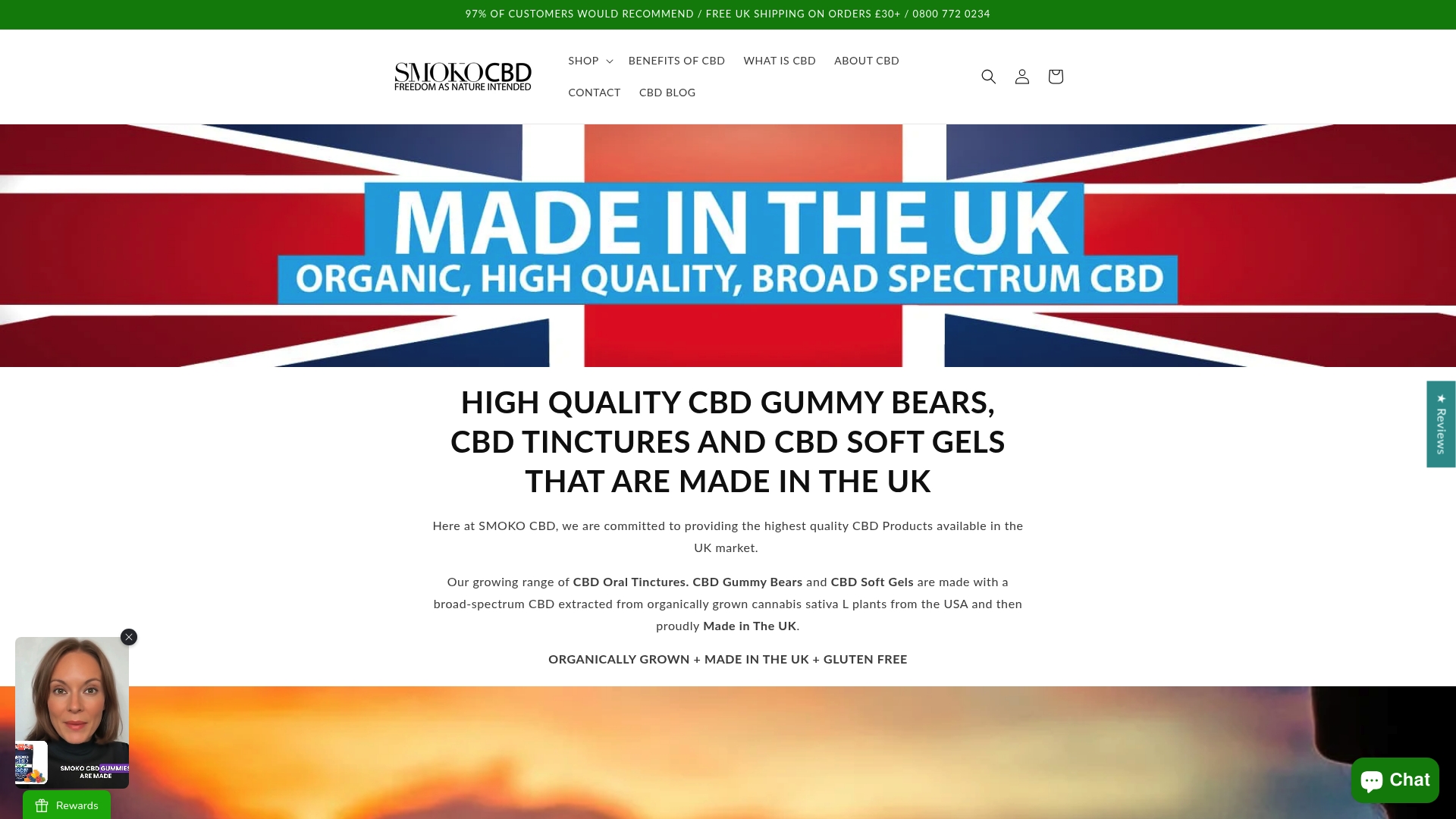
Before you buy, run through the basics: check the CBD milligrams per serving against the FSA’s 10 mg/day guidance, look for a batch-specific certificate of analysis, and if you’re on any regular medication, have a quick conversation with a pharmacist first. If you’d rather start small, the SMOKO CBD Gummy Bears offer a straightforward, pre-measured way to test tolerability before committing to a larger bottle. Browse the full collection to compare formats and find the one that fits your routine.
This article is general information, not a substitute for advice from a qualified doctor. Consult a qualified healthcare professional about your own circumstances before acting on anything here.
Sources
- A survey of medical cannabis use during perimenopause and postmenopause – PMC
- NHS: Menopause and perimenopause symptoms
- ACNFP/COT subgroup advice on CBD provisional ADI
FAQ
Can CBD help with hormonal imbalance?
CBD has not been shown to correct the hormonal changes of perimenopause, and current clinical research is insufficient to support hormone-balancing claims. Any benefit reported by users appears to be indirect, such as improved sleep or reduced anxiety, rather than a direct effect on oestrogen or progesterone levels.
What are the best CBD gummies for perimenopause?
There’s no authoritative evidence naming a single best gummy for perimenopause specifically. The safer approach is choosing a product with a clear CBD-per-serving figure and a batch-specific COA, then judging tolerability yourself, ideally from a range like SMOKO CBD’s gummy bears.
Is CBD good for menopause symptoms in the UK?
CBD may help some menopause-related symptoms, particularly sleep disturbance and anxiety, according to self-reported survey data, though it isn’t a proven treatment for menopause itself. UK buyers should stick to the FSA’s provisional guidance of around 10 mg per day and check with a pharmacist if they take regular medication.
What do the Japanese use for menopause?
This falls outside the evidence this article covers, and reliable comparative data on traditional Japanese approaches to menopause wasn’t part of the research reviewed here. If you’re exploring non-CBD natural remedies for perimenopause, it’s worth discussing options with a GP or menopause specialist directly.
Which medications interact with CBD?
CBD can interact with several common medication classes, including antidepressants, some anticoagulants such as warfarin, thyroid replacement therapy, and certain sleep medicines, because it affects how the liver processes these drugs. Anyone on regular prescription medication should check with a pharmacist before starting CBD.