CBD and antibiotics can interact for some drugs, mainly because CBD is processed by liver enzymes (CYP450 and UGT) and can add stress to the liver. Our advice is simple: speak to your prescriber or pharmacist before you combine them, and bring the product’s lab report. They can check the exact antibiotic against BNFC interaction listings and the latest systematic review.
TL;DR:
- Clarithromycin and erythromycin inhibit CYP3A4, the enzyme that also clears CBD, so pharmacists should check this pairing against your full medication list.
- People taking warfarin, valproate, tacrolimus, or sirolimus face documented interaction concerns, while liver disease or several medicines can further complicate the combination.
- CBD inhibited Staphylococcus aureus, including MRSA, at laboratory concentrations often below 4 mg/L, but those findings do not establish an effective or safe human dose.
- A clinician may recommend pausing CBD, lowering its dose, or checking liver function, but you should never stop or change your antibiotic without advice.
Table of Contents
- How does CBD change the way your body handles medicines?
- Which antibiotics deserve a second look?
- What does the laboratory research say about CBD as an antibacterial?
- What should you do if you take antibiotics and want to use CBD?
- Who should avoid combining CBD and antibiotics?
- What does the strongest evidence tell clinicians so far?
- Why we put safety ahead of the headlines
- Where can you check our CBD products and lab reports?
- FAQ
- Sources
How does CBD change the way your body handles medicines?
Your liver breaks down most medicines using a family of enzymes called cytochrome P450 (CYP450), plus a second group called UDP-glucuronosyltransferases (UGT). CBD is a busy passenger in this system. It is metabolised largely through CYP3A4, and it can also inhibit CYP2C19, CYP2D6 and CYP2C9, which is why reviews of CBD and medications describe interactions with a wide range of commonly prescribed drugs.
Think of it as a queue at a single checkout. When CBD occupies the enzymes, other drugs wait longer to be cleared. That is “inhibition”, and it can push the level of a co-medicine higher than intended. The opposite effect, “induction”, happens when something speeds the enzymes up, so a drug is cleared faster and may work less well. Other metabolic pathways may also affect how medicines are processed.
What this means in practice:
- Higher drug levels: if CBD slows the breakdown of another medicine, more of it stays in your blood, which raises the chance of side effects or toxicity.
- Lower drug levels: if another substance speeds up the enzymes CBD relies on, CBD may be cleared faster, and some co-medicines may be affected in the same way.
- Liver monitoring: prescribed cannabidiol can be associated with raised liver enzymes, so discuss monitoring with your clinician.
- Unpredictable combinations: the more medicines you take, the harder it is to predict the net effect without a professional check.
The evidence for real-world problems is not purely theoretical. A 2024 systematic review of cannabinoid drug interactions found reports of clinically significant interactions involving warfarin, valproate, tacrolimus and sirolimus, and noted that cannabinoids are metabolised by CYP3A4, CYP2C9 and CYP2C19 with the potential to change serum drug concentrations.
A 2024 systematic review found reports of clinically significant cannabinoid interactions with warfarin, valproate, tacrolimus and sirolimus. That tells you the risk is documented in patients, not just in test tubes.
A pharmacist can check an appropriate interaction reference for cannabidiol and other medicines. Harvard Health makes a useful distinction here: prescribed cannabidiol has defined dosing and monitoring, whereas unlicensed consumer products vary in content. That variation is exactly why the strength on the label and the lab report matter. Our own guide to CBD drug interactions covers the general picture if you take other medicines too.
Which antibiotics deserve a second look?
Not every antibiotic behaves the same way, so a blanket rule is no substitute for checking the specific drug. A sensible way to think about it is by class, asking one question of each: is metabolism by liver enzymes the issue, or is liver strain the issue?
- Macrolides (clarithromycin, erythromycin): these are CYP3A4 inhibitors, so they can raise the level of drugs cleared by that enzyme. CBD is also cleared by CYP3A4, so the two can change each other’s levels. This is the pairing a pharmacist will most want to look at.
- Amoxicillin with clavulanate (co-amoxiclav): ask a pharmacist to check this antibiotic against your CBD and other medicines.
- Fluoroquinolones (ciprofloxacin and similar): check the exact medicine with a pharmacist rather than assuming how it may interact.
- Tetracyclines (doxycycline and similar): ask a pharmacist to check the exact antibiotic and your other medicines.
- Other beta-lactams (penicillins, cephalosporins): ask a pharmacist to check the exact antibiotic, especially if you take other medicines.
The key point is that interaction risk depends on the specific antibiotic, your other medicines, your health and the CBD product you use. The real action is to name the exact antibiotic and the exact CBD product when you ask.
Pro Tip: Write down your antibiotic’s name, your CBD product’s strength per dose and every other medicine or supplement you take, then show the list to your pharmacist in one go.
What does the laboratory research say about CBD as an antibacterial?
This is where the science gets genuinely interesting, and where it is easiest to over-read the headlines. Laboratory studies show that CBD can kill or stop the growth of certain bacteria. They do not show that CBD treats infections in people.
A peer-reviewed systematic review of in vitro efficacy against Streptococcus and Staphylococcus found CBD effective against Staphylococcus aureus, including MRSA, with minimum inhibitory concentrations (MICs) often below 4 mg/L. It also reported synergy with some antibiotics in certain studies, naming bacitracin and ciprofloxacin, while stressing that more research is needed before any clinical use.
CBD showed in vitro activity against Staphylococcus aureus and MRSA, with MICs often below 4 mg/L. An MIC is the lowest concentration that stops visible bacterial growth in a dish, so it describes a test-tube result, not a dose for a patient.
The broader picture of what has been reported:
- Gram-positive bacteria: CBD has shown in-vitro activity against Staphylococcus aureus, including MRSA, in some studies.
- Gram-negative bacteria: some studies report activity, but laboratory findings do not establish clinical benefit. Work on antibacterial effects of phytocannabinoids discusses mechanisms such as membrane disruption and synergy with membrane-permeabilising antibiotics, which is why combinations with agents like polymyxin B have attracted interest.
- Synergy examples: published studies report combined effects with antibiotics such as bacitracin and ciprofloxacin against some Gram-positive strains.
- Mechanism clues: researchers point to disruption of bacterial membranes as one way cannabinoids may work.
Why does a promising MIC not become a treatment? Several reasons stack up. CBD taken by mouth has low and variable bioavailability, so the concentrations used in a dish are hard to reach in the blood. Tissue penetration at the site of an infection is unproven. Formulation matters enormously, because CBD is fat-soluble and behaves differently depending on what it is mixed with, a point we explore in our piece on CBD and food interactions. And safety constraints at the doses a systemic antibacterial would need have not been established.
These findings may inform research into topical uses and combinations, but they do not support replacing a prescribed antibiotic. If your doctor has prescribed one, the infection is the thing to treat, and CBD is not a substitute.

What should you do if you take antibiotics and want to use CBD?
Clear steps can help put the decision in the hands of people who can check it properly.
- Tell your prescriber and pharmacist about your CBD. Show them the product’s certificate of analysis (COA) and the serving size you use. Prescribed cannabidiol needs monitoring, and MedlinePlus advises telling your clinician about all prescription and non-prescription products because cannabidiol can cause liver enzyme elevations and interact with other drugs.
- Check the exact antibiotic, not the class. Ask the pharmacist to look at your specific drug in the BNFC or another interaction reference, rather than relying on a general rule you found online.
- Follow the advice you are given. Depending on your antibiotic, your other medicines and your liver health, the prescriber may suggest pausing CBD for the course, lowering the dose, or arranging liver function tests.
- Do not stop or alter the antibiotic yourself. Ask your prescriber or pharmacist what to do if you have concerns about the treatment.
- Audit the product before you buy. Use the checklist below.
A quick checklist for a CBD product:
- A certificate of analysis you can read, matching the batch you hold
- Clear information about the product’s contents
- Manufacturing origin and producer details
- A customer support contact for questions
Regulatory status also matters when you assess a product. Government guidance, including the MHRA’s guide to what is a medicinal product, sets out registration and importation details for cannabidiol as an active substance, which is useful background if a claim on a label sounds more like a medicine than a wellness product.
Pro Tip: Photograph the COA and the label on your phone before your appointment, so your pharmacist can read the batch details without you having to describe them.
If you want to see how the same approach works with other medicines, our guide to checking the COA and CYP450 risk with antihistamines follows the same logic.
Who should avoid combining CBD and antibiotics?
Some people need the combination checked before using CBD with antibiotics, and some may be advised to avoid it.
Higher-risk groups include:
- People with known liver disease, who have less spare capacity to handle added enzyme load
- Transplant patients taking tacrolimus, sirolimus or cyclosporine, where small changes in drug levels matter
- People on anticoagulants such as warfarin, where documented interactions exist
- Anyone taking several interacting medicines at once, where the combined effect is hard to predict
Seek immediate emergency care for concerning symptoms such as yellowing of the skin or eyes, unexpected bruising or bleeding, severe drowsiness, a sudden change in thinking, or an infection getting worse despite treatment.
Clinicians may order liver function tests (LFTs) when they think CBD is likely to be continued alongside a liver-stressing drug, or if symptoms appear. If you notice any of these symptoms, seek immediate emergency care. Our overview of what happens with too much CBD lists the everyday side effects worth recognising early.
What does the strongest evidence tell clinicians so far?
The most recent big-picture reading comes from a 2025 scoping review of the past five years. It concluded that cannabinoids show antimicrobial potential and can sometimes improve the effect of other antimicrobials, but that laboratory activity and synergy do not establish human dosing, tissue penetration or clinical benefit.
- CBD against MRSA: MICs are often reported below 4 mg/L in vitro, as the Streptococcus and Staphylococcus review above shows.
- Gram-negative activity: reported mainly in selective settings and often needing a membrane-disrupting partner.
- Practical obstacles: oral bioavailability and the lack of systemic safety data stand between the lab and the clinic.
Lab activity and synergy do not establish human dosing, tissue penetration or clinical benefit. More trials are required before any of this changes patient care.
Why we put safety ahead of the headlines
I find the antibacterial research fascinating, and I understand why a headline about CBD fighting MRSA catches attention. But the person reading this is probably mid-course on a real prescription, and for them the known risks matter more than the exciting possibilities. Enzyme interactions and liver stress are documented. Clinical antibacterial benefit is not.
If you are concerned about using CBD while taking an antibiotic, ask your prescriber or pharmacist to review your medicines and product. If you take several medicines, or you have any liver concern, a conversation with your pharmacist is the most useful thing you can do before adding CBD.
— Mike
Where can you check our CBD products and lab reports?
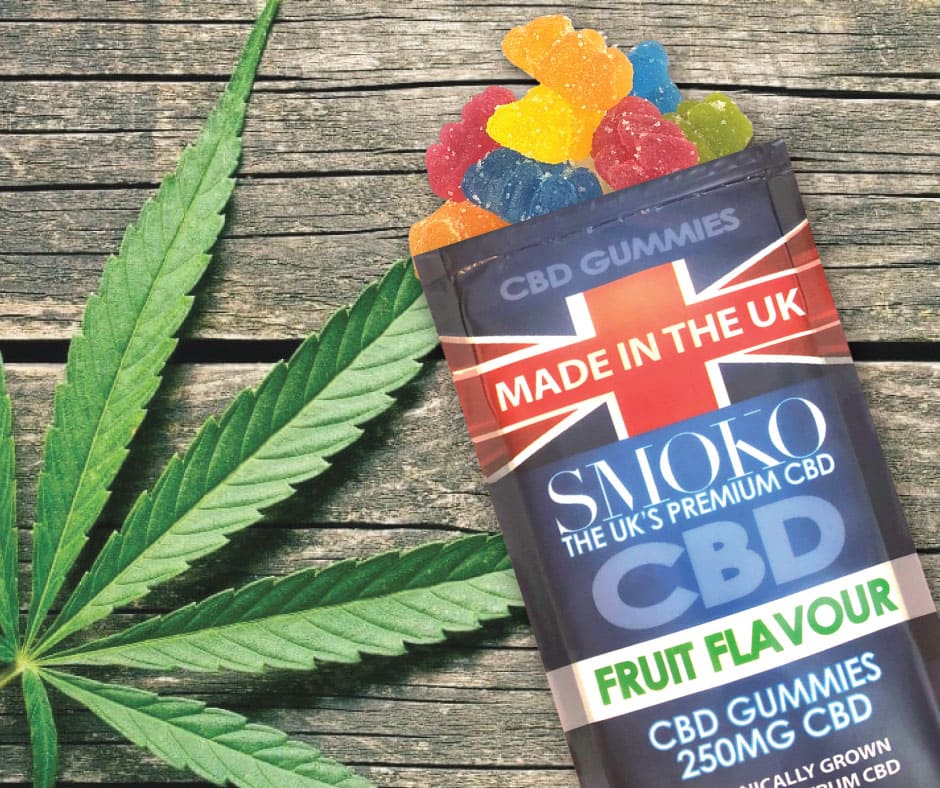
If you decide with your clinician that CBD is appropriate for you, we offer CBD tinctures, gummy bears and soft gels. Check the product information and lab report, and speak to your prescriber before use. Read the COA, begin with the low dose your clinician agrees, and compare options in our full product collection, or look at our CBD gummies if you prefer edibles. Please speak to your prescriber before combining any of them with antibiotics.
FAQ
What medicine should not be taken with CBD?
Medicines cleared by CYP3A4, CYP2C19 and CYP2C9 deserve the most attention, including warfarin, tacrolimus, sirolimus and valproate, where interactions have been reported. Ask your pharmacist to check your full list rather than relying on a single rule.
Is there a strong natural antibacterial I can use instead of antibiotics?
No natural product should replace a prescribed antibiotic for a bacterial infection. Laboratory work on cannabinoids is promising but, as the 2025 scoping review stresses, it does not establish clinical benefit in people.
Can I take a CBD edible if I have a urinary tract infection?
Speak to your prescriber or pharmacist first, because the answer depends on which antibiotic you are given and what else you take. An edible does not treat the infection, and your antibiotic course should be finished as directed.
What drugs cannot be taken with antibiotics?
It depends entirely on the antibiotic. Macrolides such as clarithromycin and erythromycin affect CYP3A4, so a pharmacist will check them against your other medicines using the BNFC. Always share your full medicine list.
Sources
- Systematic review of drug-drug interactions of delta-9-tetrahydrocannabinol, cannabidiol, and Cannabis
- Cannabidiol: MedlinePlus Drug Information
- A guide to what is a medicinal product