TL;DR:
- Cannabis originated in Central Asia and has adapted to diverse climates and altitudes worldwide.
- Most commercial production occurs in the United States, Canada, and Germany, with outdoor growth dependent on sunlight, soil, and temperature.
Cannabis is a plant native to temperate Central Asia, yet it now grows naturally and commercially across six continents under the right conditions. The question of where does cannabis grow has a more complex answer than most growers expect. Genomic and fossil pollen evidence places its origin at the northeastern Tibetan Plateau, making it one of the oldest cultivated plants on Earth. Today, the United States, Canada, and Germany lead global commercial production, while wild and feral populations persist from the Himalayas to the American Midwest. Understanding where cannabis thrives, and why, is the foundation of any serious cultivation practice.
Where does cannabis grow naturally?
Cannabis originates from temperate Asia, with scientific consensus placing its earliest populations near the northeastern Tibetan Plateau. From there, human migration and trade spread the plant across Eurasia over thousands of years. You can read more about this long history in the history of cannabidiol, which traces the plant’s journey from ancient cultivation to modern medicine.
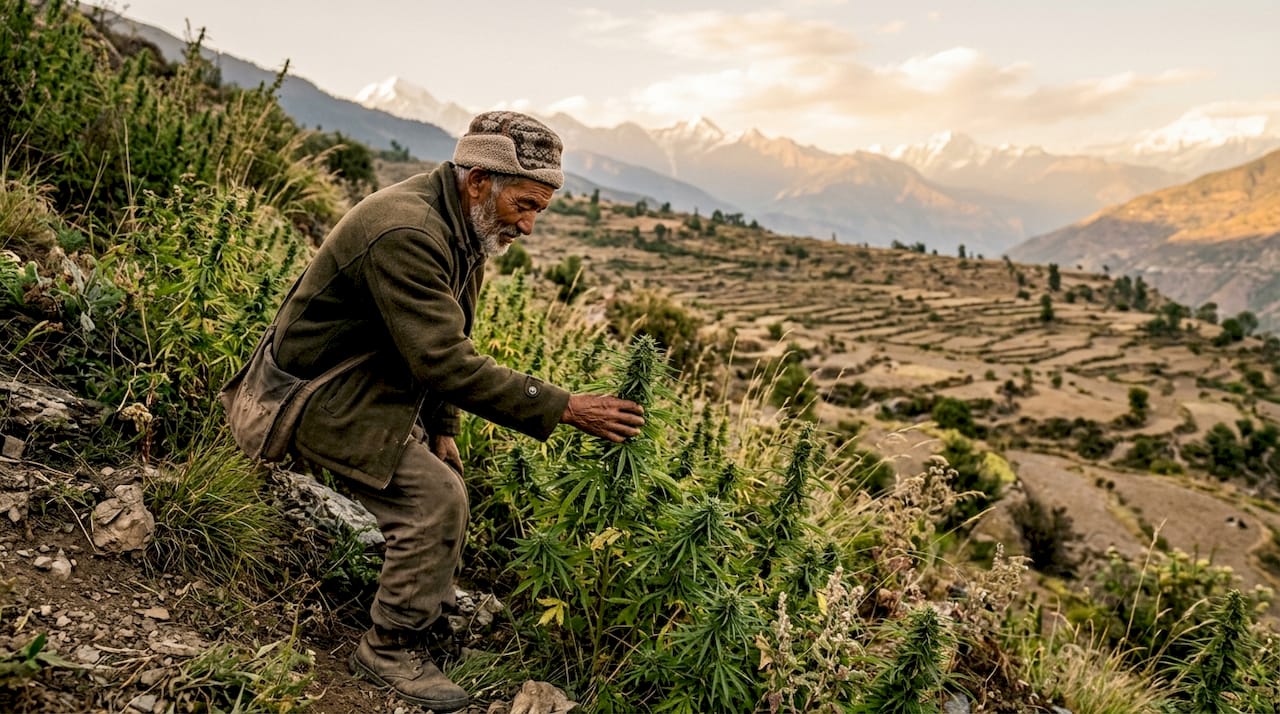
Wild and feral populations now exist across a wide range of environments. Cannabis has naturalised in parts of Central Asia, Eastern Europe, the Indian subcontinent, and North America. These populations are not truly wild in the strictest botanical sense. They are largely descended from cultivated or industrial hemp crops that escaped into surrounding land.
The plant’s preferred natural habitats share a few consistent features:
- Well-drained soils near rivers, streams, or other water sources
- Disturbed ground, such as roadsides, field margins, and cleared forest edges
- Moderate to high sunlight with warm summers and cool nights
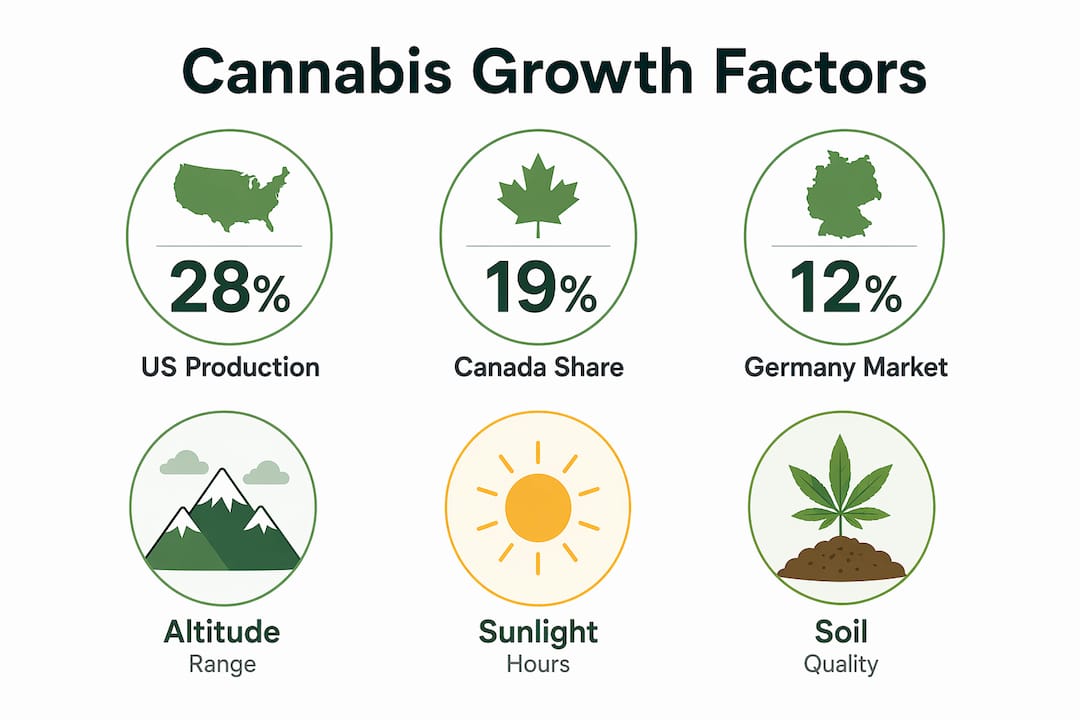
- Altitudes ranging from 300m to 3,500m, particularly in the Western Himalayas
That last point is striking. Wild cannabis populations in the Western Himalayas thrive across an extraordinary altitude range, demonstrating a phenotypic plasticity that few other crop plants can match. A plant growing at 300m will look and behave quite differently from one at 3,500m, yet both belong to the same species.
Pro Tip: If you are selecting an outdoor growing site, prioritise locations near a natural water source with loose, well-drained soil. Cannabis roots need oxygen as much as moisture, and compacted or waterlogged ground will stunt growth regardless of climate.
Cannabis is also an opportunist. Feral populations rely heavily on soil disturbance and water access rather than climate alone. This explains why cannabis persists along motorway verges and riverbanks in regions where the climate is far from ideal.
Which countries produce the most cannabis commercially?
The global cannabis industry is concentrated in a handful of countries, and the gap between leaders and followers is significant. As of early 2026, the United States accounts for 28% of global cannabis production, followed by Canada at 19% and Germany at 12%. These three countries together represent nearly 60% of worldwide output. That concentration reflects both regulatory maturity and the scale of investment each country has attracted.
The United States produces more cannabis than any other nation. Within the US, production is not evenly spread. Santa Barbara and Humboldt counties alone host 44% of California’s total cannabis canopy as of 2025. California’s climate, with its long dry summers and mild winters, suits outdoor cultivation particularly well. Humboldt County in Northern California has a decades-long cultivation tradition, while Santa Barbara’s agricultural infrastructure has made it a centre for large-scale licensed growing.
Canada built its legal industry from scratch after federal legalisation in 2018. The country’s cold climate pushed most producers indoors, which raised costs but also raised quality consistency. Germany’s 12% share reflects its rapid emergence as Europe’s largest medical cannabis market, with domestic cultivation expanding quickly since 2024.
| Country | Global production share | Primary cultivation method |
|---|---|---|
| United States | 28% | Outdoor and greenhouse |
| Canada | 19% | Indoor controlled environment |
| Germany | 12% | Indoor medical-grade |
Pro Tip: If you are researching where the best weed is grown commercially, look at regions combining long daylight hours, low humidity, and established agricultural infrastructure. California’s Central Coast ticks all three boxes for outdoor cultivation.
Cannabis is not truly native to the US. Feral populations that persist in states like Nebraska, Kansas, and Missouri are largely a legacy of industrial hemp farming from the early 20th century. This matters for growers because it shows how quickly cannabis can naturalise, but it also means that “wild” American cannabis is typically low in cannabinoids.
How do climate, altitude, and sunlight affect cannabis growth?
Environmental conditions determine not just whether cannabis survives, but what kind of plant it becomes. Photoperiod sensitivity is the most critical factor. Cannabis is a short-day plant, meaning it begins flowering when daily light drops below a threshold, typically around 12 hours. Outdoor cultivation requires 12 or more hours of sunlight daily during the vegetative phase, with planting windows running from mid-april to early june in the Northern Hemisphere and growth cycles lasting 4 to 9 months.
Altitude adds another layer of complexity. Cannabis grown at high elevations in the Western Himalayas develops thicker leaves and denser resin coatings as adaptations to UV radiation and temperature swings. These traits have made Himalayan landraces particularly valued by breeders working on stress-resistant strains.
The key environmental variables that growers must account for include:
- Temperature: Cannabis grows best between 20°C and 30°C during the day. Night temperatures below 10°C slow growth significantly.
- Humidity: High humidity above 70% during flowering creates conditions for mould and bud rot. Dry climates with humidity below 50% at harvest are ideal.
- Soil composition: Loamy, slightly acidic soils with good drainage produce the strongest root systems. Sandy soils drain too fast; clay soils hold too much water.
- Light spectrum: Full-spectrum sunlight, particularly UV-B, stimulates cannabinoid and terpene production. Indoor growers replicate this with full-spectrum LED or HPS lighting.
Seasonal cycle length is a practical constraint that many growers underestimate. A strain bred for the long, warm summers of California will not finish flowering outdoors in Scotland before the autumn rains arrive. Matching strain genetics to your local photoperiod and frost dates is as important as soil preparation.
What cultivation methods do growers use around the world?
Cultivation methods vary enormously depending on geography, regulation, and the scale of the operation. Outdoor growing follows the natural seasonal cycle and remains the most cost-effective method at scale.
In the Northern Hemisphere, the standard outdoor calendar runs as follows:
- Germination and seedling stage (march to april): Seeds are started indoors or in protected nurseries to avoid late frosts.
- Transplanting outdoors (mid-april to early june): Plants move outside once night temperatures stabilise above 10°C.
- Vegetative growth (june to august): Long summer days drive rapid leaf and stem development.
- Flowering initiation (late august): Shortening days trigger the switch from vegetative to reproductive growth.
- Harvest (september to november): Timing depends on strain and latitude. Northern growers harvest earlier to beat autumn rains.
Indoor cultivation breaks free from this calendar entirely. Controlled environment agriculture enables multiple annual harvests, with indoor yields running 2 to 3 times higher per square foot annually than outdoor production. The trade-off is energy cost. Indoor facilities consume significant electricity for lighting, climate control, and ventilation.
The Himalayan model offers a third approach that is rarely discussed in Western cultivation literature. In parts of the Western Himalayas, cannabis is cultivated on state-owned forest land, which gives landless families access to cultivation opportunities they would otherwise lack. This system has a meaningful social equity dimension. It provides economic mobility to communities with no land ownership, and the plants grown at altitude develop the resin profiles that make Himalayan cannabis botanically distinct.
Feral populations demonstrate a fourth dynamic: self-perpetuating cannabis that requires no human management at all. These populations persist wherever soil disturbance and water access coincide, from riverbanks in Central Asia to abandoned farmland in North America. They are a reminder that cannabis, given the right conditions, is extraordinarily good at looking after itself.
The advantages of organic hemp cultivation are well documented for growers focused on cannabinoid quality rather than raw yield. Organic practices tend to produce richer terpene profiles and cleaner extracts, which matters greatly for CBD production.
Key takeaways
Cannabis grows most successfully where photoperiod, soil drainage, and temperature align. The plant’s origin in Central Asia explains its adaptability across a wide range of climates and altitudes worldwide.
| Point | Details |
|---|---|
| Central Asian origin | Cannabis originated near the northeastern Tibetan Plateau and spread globally through human activity. |
| Top commercial producers | The US (28%), Canada (19%), and Germany (12%) account for nearly 60% of global production. |
| Photoperiod is critical | Outdoor cannabis needs 12+ hours of daily sunlight to stay in vegetative growth before flowering begins. |
| Altitude adaptability | Wild cannabis in the Western Himalayas grows from 300m to 3,500m, showing exceptional phenotypic range. |
| Feral persistence | Feral populations depend on soil disturbance and water access more than climate alone. |
Cannabis cultivation: what the data reveals
I have spent years reading cultivation research and speaking with growers across different regions, and one thing consistently surprises people: cannabis is not a tropical plant. Most growers picture sun-drenched equatorial fields, but the plant’s actual origin is a high-altitude, seasonally cold plateau in Central Asia. That origin shapes everything about how it grows.
What strikes me most about the current production data is how quickly Germany has emerged as a serious player. A 12% global share within just a few years of domestic cultivation expansion is remarkable. Europe’s regulatory environment is shifting, and Germany’s model of indoor, medical-grade production may well become the template other European countries follow.
The Himalayan cultivation story is the one I find most compelling from a botanical perspective. Plants growing at 3,500m in the Western Himalayas are not just surviving. They are producing resin profiles that lowland cultivation cannot replicate. There is a lesson there for any grower: environmental stress, managed correctly, produces quality. The same principle applies to why UK-grown hemp can produce excellent CBD extracts despite Britain’s cooler climate.
My honest view is that the future of cannabis cultivation lies in matching genetics to geography rather than forcing any single method everywhere. The growers who will produce the best material in the next decade are the ones studying their local environment as carefully as they study their plants.
— Mike
Quality CBD products rooted in great cultivation
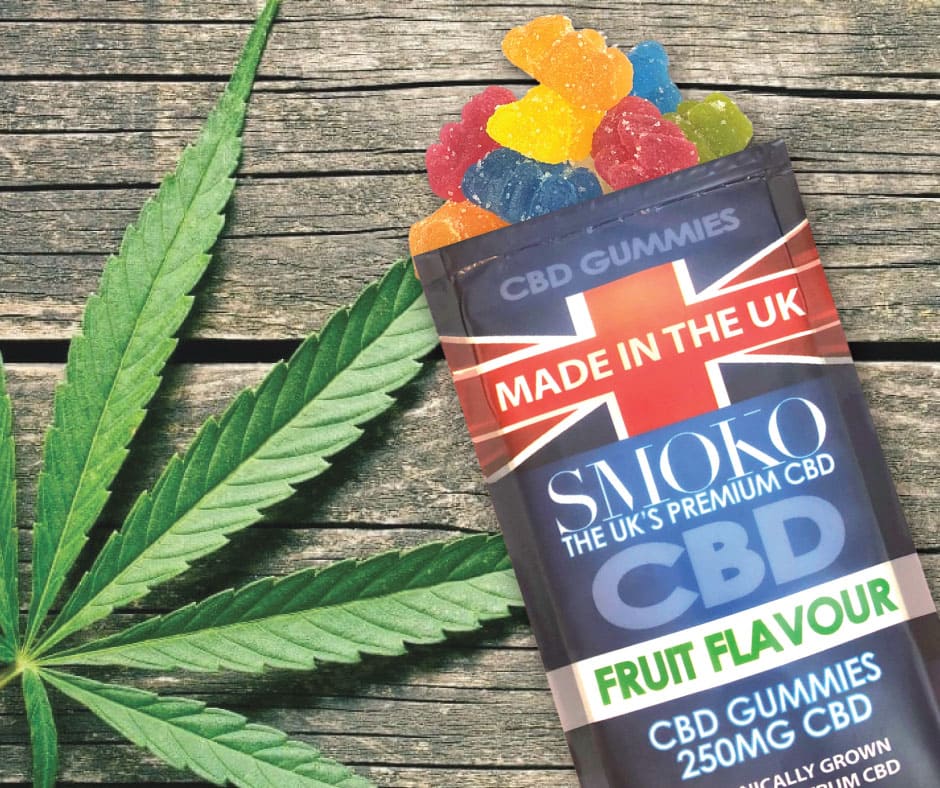
Understanding where cannabis grows and how environment shapes quality makes it easier to appreciate what goes into a well-made CBD product. The hemp used in Smokocbd’s broad-spectrum range is organically grown in the USA, sourced from regions with the climate and soil conditions that produce clean, cannabinoid-rich extracts.
Smokocbd’s 1000mg broad-spectrum CBD tincture is third-party lab tested to confirm zero THC and consistent cannabinoid levels, so you know exactly what you are getting. For those who prefer a different format, the CBD soft gels and gummies bundle offers the same quality in a convenient daily option. Good cultivation is the starting point. Smokocbd takes it from there.
FAQ
Where does cannabis grow naturally in the wild?
Cannabis grows naturally in Central Asia, particularly near the Tibetan Plateau, and has naturalised across Eurasia and North America. Feral populations persist wherever soil disturbance and water access coincide, regardless of climate.
What country grows the most cannabis?
The United States leads global cannabis production with a 28% market share as of 2026, followed by Canada at 19% and Germany at 12%.
What conditions does cannabis need to grow outdoors?
Outdoor cannabis requires at least 12 hours of daily sunlight during vegetative growth, well-drained loamy soil, temperatures between 20°C and 30°C, and low humidity at harvest to prevent mould.
Why does cannabis grow at such different altitudes?
Cannabis shows high phenotypic plasticity, meaning it adapts its physical traits to local conditions. Wild populations in the Western Himalayas grow successfully from 300m to 3,500m by adjusting leaf thickness, resin production, and growth rate.
Is cannabis native to the United States?
Cannabis is not native to the US. Feral populations found in states like Nebraska and Kansas are largely descended from industrial hemp crops grown in the early 20th century, not from naturally occurring wild plants.