TL;DR:
- Cannabidiol has a 12,000-year history, from ancient use in medicine to modern pharmaceutical approval. Research was delayed because THC attracted more attention, but the discovery of the endocannabinoid system revitalized CBD studies. Today, third-party testing and FDA-approved drugs set higher quality standards for CBD products.
Cannabidiol (CBD) is a non-intoxicating compound found in the cannabis plant, and its history stretches back at least 12,000 years. The history of cannabidiol is not a single story. It is three overlapping ones: ancient plant use, 20th-century chemical discovery, and modern regulated medicine. Key figures including Roger Adams, Raphael Mechoulam, and organisations like Project CBD each shaped a different chapter. Understanding how CBD moved from Neolithic East Asia to a licensed pharmaceutical tells you a great deal about how science, culture, and law interact over time.
How was cannabidiol used in ancient cannabis?
Cannabis containing CBD originated around 12,000 years ago in early Neolithic East Asia, according to a 2021 genomic study of 110 whole genomes published in Science Advances. That date places cannabis among humanity’s oldest cultivated plants, predating many cereal crops. Early cannabis carried a balanced ratio of CBD and THC, quite unlike the high-THC strains bred for recreational use in the 20th century.
Ancient civilisations used whole cannabis rather than purified CBD. The distinction matters. Emperor Shen Nung of China is credited with recording cannabis as a medicine around 2700 BCE, recommending it for conditions ranging from rheumatism to absent-mindedness. Ayurvedic texts from ancient India referenced cannabis preparations for pain and anxiety. Egyptian papyri and Greek writings also describe cannabis-based remedies applied topically and consumed orally.
None of these cultures isolated CBD as a molecule. They worked with the whole plant, which means they were unknowingly benefiting from what scientists now call the entourage effect: the combined action of cannabinoids, terpenes, and other plant compounds working together.
Key ancient uses of cannabis across cultures include:
- China: Medicinal preparations for pain, inflammation, and digestive complaints, recorded as early as 2700 BCE
- India: Ayurvedic formulations using cannabis resin for anxiety, sleep, and ritual purposes
- Egypt: Topical cannabis applications referenced in the Ebers Papyrus for inflammation
- Greece: Dioscorides documented cannabis in De Materia Medica around 70 CE for earache and pain relief
Pro Tip: When reading ancient accounts of cannabis medicine, remember that the therapeutic effects described almost certainly came from whole-plant preparations. These are not records of CBD alone, but of a complex botanical mixture that happened to contain CBD.
What are the key milestones in cannabidiol discovery?
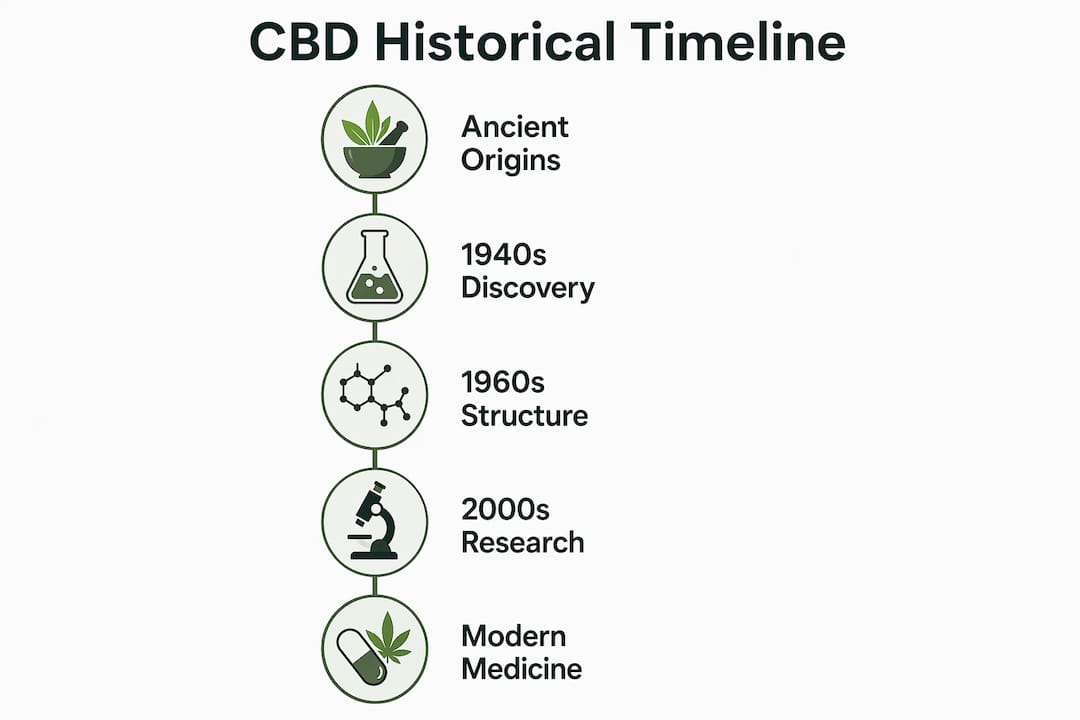
The scientific history of CBD begins in the early 1940s. Roger Adams isolated and synthesised CBD at the University of Illinois, receiving a patent in 1942. Adams did not, however, fully determine CBD’s chemical structure. That achievement came two decades later.

In 1963, Raphael Mechoulam’s group elucidated CBD’s chemical structure at the Hebrew University of Jerusalem. The following year, in 1964, Mechoulam’s team isolated THC and confirmed it as the psychoactive compound in cannabis. That discovery shifted scientific attention firmly toward THC. CBD received comparatively little research interest for the next several decades, a bias that significantly slowed its path to clinical medicine.
One reason for the delay was practical. Cannabis’s oily mixtures made active compounds difficult to isolate, and advances in analytical chemistry were needed before researchers could work with CBD reproducibly. Without the ability to define and measure CBD precisely, standardised clinical applications were impossible.
| Milestone | Year | Key figure |
|---|---|---|
| CBD isolated and synthesised | 1940–1942 | Roger Adams |
| CBD chemical structure elucidated | 1963 | Raphael Mechoulam |
| THC isolated and identified | 1964 | Raphael Mechoulam |
| Endocannabinoid system described | Early 1990s | Multiple researchers |
| Epidiolex FDA approval | 2018 | GW Pharmaceuticals |
Pro Tip: The chemical differences between CBD and THC are subtle at the molecular level but profound in effect. Understanding that distinction is what eventually allowed CBD to be developed as a medicine without the legal complications attached to THC.
How did culture and regulation shape CBD’s history?
The 19th century produced a surprisingly modern-looking CBD boom, though nobody called it that at the time. Cannabis products were marketed widely in foods and medicines during this period, with cannabis-based drinks like Maltos-Cannabis and numerous patent medicines sold with minimal regulatory oversight. The parallels to today’s CBD market are striking.
William Brooke O’Shaughnessy, an Irish physician working in British India, introduced cannabis to Western medicine in the 1830s and 1840s. He conducted clinical observations on cannabis’s effects on pain, muscle spasms, and cholera, then brought his findings back to Britain. His work sparked genuine medical interest and contributed to cannabis appearing in the British Pharmacopoeia by 1850.
Historical patterns of cannabis commercialisation during weak regulation closely parallel modern CBD marketing and consumer scepticism. Extravagant health claims, limited evidence, and enthusiastic commercial activity have appeared in every era of cannabis’s history. That context is worth keeping in mind when evaluating contemporary CBD products.
Major regulatory and cultural turning points in the cannabidiol timeline include:
- 1850: Cannabis added to the United States Pharmacopoeia as a recognised medicine
- 1937: The U.S. Marihuana Tax Act effectively ended medicinal cannabis use in America, cutting off research and commercial supply
- 1961: The UN Single Convention on Narcotic Drugs placed cannabis under international control, restricting research globally
- 1970: The U.S. Controlled Substances Act classified cannabis as a Schedule I drug, further limiting scientific study
- 1996: California became the first U.S. state to legalise medical cannabis, beginning a gradual regulatory reversal
- 2018: The UK reclassified cannabis-based medicines, allowing prescription access for the first time in decades
What drove the modern resurgence of cannabidiol research?
The early 2000s marked a turning point. Scientific interest in cannabinoids reignited after the discovery of the endocannabinoid system (ECS), which provided a biological basis for why cannabinoids produce therapeutic effects. The ECS is a network of receptors found throughout the human body that regulates mood, pain, sleep, and immune response. Understanding how CBD interacts with the endocannabinoid system transformed it from a folk remedy into a legitimate research subject.
Clinical research accelerated through the 2000s and 2010s. Studies focused on CBD’s potential for anxiety, epilepsy, and chronic pain. The most significant regulatory outcome came in 2018, when the FDA approved Epidiolex, a purified CBD oral solution developed by GW Pharmaceuticals, for the treatment of rare epilepsy syndromes including Dravet syndrome and Lennox-Gastaut syndrome. Epidiolex was the first purified marijuana-based drug ever approved by the FDA. That approval validated decades of research and signalled that CBD could meet pharmaceutical standards.
The revival of high-CBD plant genetics ran alongside the clinical work. Key steps in that process included:
- Late 2000s: Breeders including Lawrence Ringo began selectively cultivating high-CBD cannabis strains, reversing decades of THC-focused breeding
- 2010: Project CBD, an American advocacy and research organisation, was founded to promote scientific research into CBD’s medical applications
- 2013: Charlotte’s Web, a high-CBD strain developed by the Stanley Brothers in Colorado, gained international attention after its use in a young epilepsy patient was featured in a CNN documentary
- 2018: The U.S. Farm Bill legalised hemp-derived CBD at the federal level, opening the market significantly
- 2018–present: Regulatory frameworks in the UK and EU began distinguishing CBD from controlled cannabis, enabling legal consumer products
CBD’s drug-like status required reproducible chemical measurement before standardised clinical applications were possible. The pharmaceutical approval of Epidiolex proved that standard could be met. It also raised the bar for the broader CBD industry, pushing manufacturers toward third-party testing and verified potency claims.
Pro Tip: If you are evaluating any CBD product today, look for a certificate of analysis from an independent laboratory. That document is the direct descendant of the analytical chemistry advances that made CBD’s medical history possible in the first place.
Key takeaways
The history of cannabidiol spans 12,000 years of plant evolution, three centuries of medical use, and six decades of molecular science, culminating in the first FDA-approved CBD pharmaceutical in 2018.
| Point | Details |
|---|---|
| Ancient origins | Cannabis containing CBD originated around 12,000 years ago in Neolithic East Asia. |
| Chemical discovery | Roger Adams isolated CBD in 1940–1942; Raphael Mechoulam confirmed its structure in 1963. |
| Regulatory disruption | The 1937 U.S. Marihuana Tax Act halted medicinal cannabis research for decades. |
| ECS as turning point | Discovery of the endocannabinoid system in the early 2000s reignited evidence-based CBD research. |
| Modern approval | The FDA approved Epidiolex in 2018 as the first purified CBD pharmaceutical drug. |
Why CBD’s history is more complicated than most people realise
What strikes me most about the cannabidiol timeline is how often the science and the culture moved in opposite directions. Mechoulam’s team had elucidated CBD’s structure by 1963, yet CBD was largely overlooked for decades because THC attracted all the attention. That is not a failure of science. It is a reminder that research priorities are shaped by social context as much as by evidence.
The 19th-century cannabis boom is the part of this story that most people skip, and it is the most instructive. O’Shaughnessy brought rigorous clinical observation to cannabis medicine. Within a generation, that rigour had been replaced by patent medicine salesmanship. The same cycle appeared in the early CBD market of the 2010s, when products flooded shelves before the evidence base had caught up.
What separates the current era from previous ones is the existence of a regulatory framework and a pharmaceutical benchmark. Epidiolex exists. The endocannabinoid system is well characterised. Third-party testing is accessible. The history of CBD is, at its core, a story about what happens when a genuinely useful plant compound finally gets the scientific infrastructure it deserves.
— Mike
Smokocbd: CBD products rooted in quality and transparency
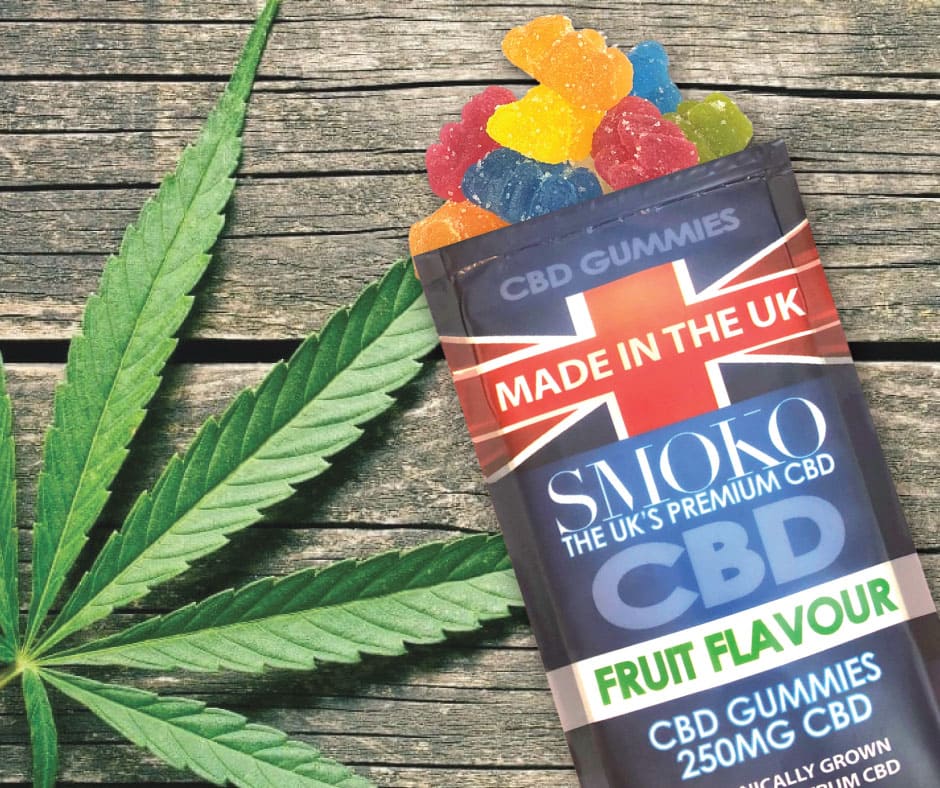
The long history of cannabidiol research has raised the standard for what a quality CBD product should look like. Smokocbd applies that standard directly to its range of broad-spectrum tinctures, soft gel capsules, and gummy bears, all made from organically grown hemp and verified by independent laboratory testing.
Whether you prefer the convenience of a broad-spectrum CBD tincture or the measured dosing of CBD soft gels and gummies, Smokocbd offers products with confirmed zero THC levels and clear potency information. Every product reflects the same principle that drove Mechoulam’s work: you cannot trust what you cannot measure. Smokocbd makes the measurement visible.
FAQ
When was CBD first discovered?
Roger Adams first isolated and synthesised CBD in the early 1940s, receiving a patent in 1942. Raphael Mechoulam’s group confirmed its full chemical structure in 1963.
What is the oldest recorded use of cannabis as medicine?
Emperor Shen Nung of China recorded cannabis as a medicine around 2700 BCE. Ancient Indian, Egyptian, and Greek texts also describe cannabis-based remedies predating the common era.
How did the 1937 Marihuana Tax Act affect CBD research?
The 1937 U.S. Marihuana Tax Act effectively ended medicinal cannabis use in America, cutting off both research funding and commercial supply for several decades.
What was the first pharmaceutical drug made from CBD?
Epidiolex, a purified CBD oral solution developed by GW Pharmaceuticals, received FDA approval in 2018 for rare epilepsy syndromes. It was the first purified marijuana-based drug approved by the FDA.
Why did CBD receive less research attention than THC for so long?
THC’s identification as the psychoactive compound in cannabis in 1964 directed most scientific and regulatory attention toward it. CBD was largely overlooked until the discovery of the endocannabinoid system provided a biological framework for its effects.