TL;DR:
- The global CBD market is projected to nearly double by 2032, driven by steady consumer demand and product innovation. Regulatory compliance, especially addressing novel food approvals and labelling standards, is crucial for long-term investment success. Diversifying across product categories with lighter regulatory burdens and conducting thorough due diligence can mitigate sector risks.
Interest in CBD has surged alongside wellness trends, and so has curiosity about how to invest in CBD as a financial opportunity. The global market is expanding, product categories are multiplying, and regulatory frameworks are shifting in ways that matter enormously to anyone putting money into this space. But the enthusiasm can outrun the evidence. This guide cuts through the noise to give you a grounded, honest picture of market growth, the regulatory environment on both sides of the Atlantic, the concrete ways to invest, and the risks you genuinely need to understand before committing capital.
Table of Contents
- Key takeaways
- Invest in CBD: the market landscape right now
- Regulatory environment and what it means for investors
- Investment avenues: stocks, private deals, and alternatives
- Risk factors and how to manage them
- My honest take on investing in CBD
- Explore Smokocbd’s compliant CBD range
- FAQ
Key takeaways
| Point | Details |
|---|---|
| Market is growing steadily | The global CBD hemp oil market is forecast to nearly double by 2032, offering a real long-term growth thesis. |
| Regulation shapes returns | Whether in the UK or US, compliance status is the single biggest factor determining a CBD company’s viability. |
| Multiple investment routes exist | Publicly traded stocks, specialty finance firms, and private deals each carry distinct risk and return profiles. |
| Diversification protects capital | No single CBD stock should represent more than 10% of an investment portfolio given sector volatility. |
| Due diligence must go deep | Verify licences, lab results, supplier documentation, and regulatory compliance before any commitment. |
Invest in CBD: the market landscape right now
Before you commit any capital, you need a clear picture of how large this market actually is and what is driving its growth. The global CBD hemp oil market is forecast to grow from USD 2,627 million in 2025 to approximately USD 5,746 million by 2032, representing a compound annual growth rate of roughly 11.83%. That is not explosive growth by technology sector standards, but it is steady and broadly supported by several converging trends.
Consumer adoption is the primary engine. People across age groups are turning to CBD for help with sleep, anxiety, pain, and inflammation, and that demand is not slowing. Product innovation is a secondary driver. The category has expanded well beyond tinctures into soft gels, edibles, topicals, and even functional beverages, each with its own consumer segment and regulatory pathway.
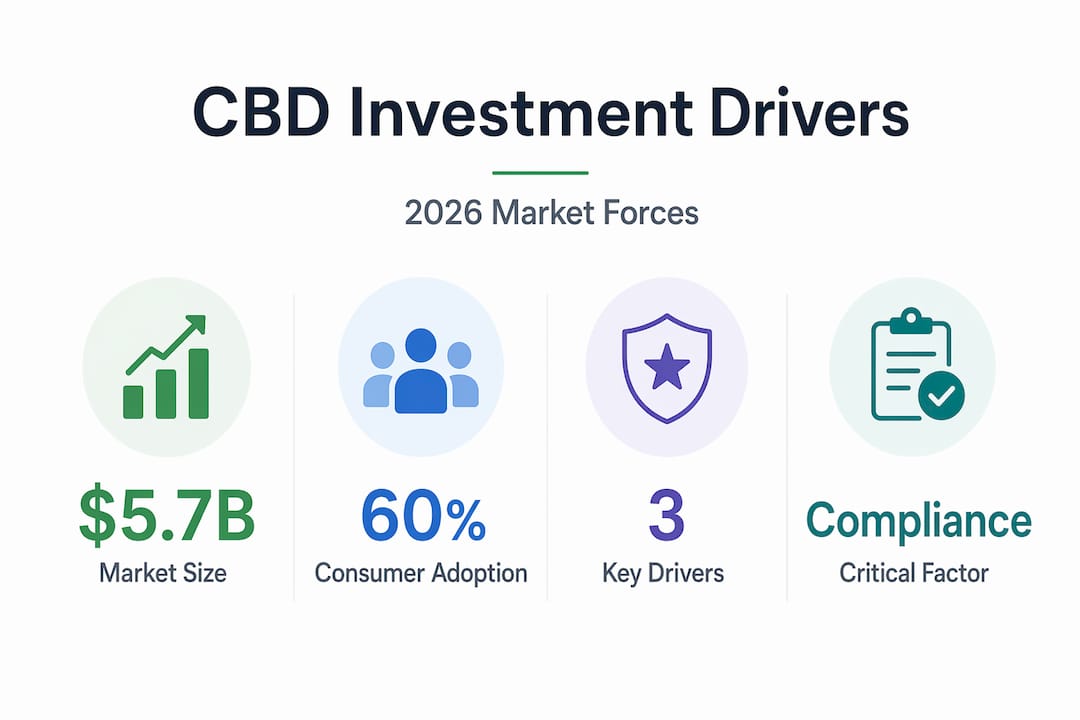
The third driver is perhaps the least obvious but arguably the most important for investors: brand trust and supply chain quality. In a market flooded with products of wildly varying purity and potency, compliant CBD companies that offer source traceability, consistent product standardisation, and transparent third-party lab testing are pulling ahead. The race to the bottom on price is losing ground to a race to the top on credibility.
The table below gives a useful snapshot of the major CBD market segments and some of the forces shaping each one.
| Market segment | Key demand drivers | Investor considerations |
|---|---|---|
| Tinctures and oils | Established consumer base, flexible dosing | Regulatory scrutiny on label claims is high |
| Gummies and edibles | Mass market appeal, ease of use | Novel food rules apply in the UK |
| Soft gels and capsules | Precise dosing, health-focused buyers | Supplement regulations vary by market |
| Topicals | Low systemic absorption, fewer restrictions | Relatively lighter regulatory burden |
| Specialty beverages | Emerging category, high growth potential | Complex food law landscape in both UK and US |
Pro Tip: When researching CBD investment opportunities, look beyond market size headlines and focus on which segments carry the lightest regulatory load. Topicals, for example, often face fewer compliance barriers than ingestibles, making them a comparatively lower-risk sub-category.
Regulatory environment and what it means for investors
Regulation is where many would-be CBD investors stumble. The excitement about CBD market growth investment often glosses over the fact that in both the UK and the US, the regulatory picture is still evolving and quite restrictive in certain areas.

In the United States, the FDA has maintained that CBD cannot legally be used as a food ingredient or dietary supplement under standard federal law without a specific regulatory exemption. The 2026 update is more nuanced than encouraging. The FDA’s April 2026 enforcement discretion applies only to orally administered hemp-derived CBD for Medicare beneficiaries under medical item programmes and only under prescriber direction. This is a narrow carve-out, not a broad green light for the consumer supplements market.
In the UK, the situation is clearer but still has meaningful constraints. The Food Standards Agency and Food Standards Scotland concluded that CBD isolate is safe as a novel food under specific conditions, including a maximum 10 mg per day intake for general populations, with stricter exclusions for pregnant women, people who are breastfeeding, and those on certain medications. Any company selling CBD food products in the UK needs an approved or pending novel food application to operate legally.
For investors, here is what these regulatory realities mean in practical terms:
- Compliance is a moat. Companies that have navigated the novel food application process or have FDA-aligned quality controls are genuinely harder to replicate and represent lower legal risk.
- Label claims are a liability. Companies that overclaim therapeutic benefits on their packaging are exposed to enforcement action, which can wipe out value quickly.
- The regulatory environment creates barriers to entry. That cuts both ways. It makes the market smaller, but it also rewards the companies that have done the compliance work.
- UK regulations are more defined than US ones. For UK-focused investors, the UK CBD regulatory framework gives more certainty than the US federal patchwork.
Pro Tip: Always check whether a CBD company you are considering has an active novel food application in the UK, or how its US products are classified under FDA rules. This single piece of due diligence can tell you a great deal about long-term market access.
Investment avenues: stocks, private deals, and alternatives
Once you understand the market and regulatory backdrop, the question becomes: how do you actually invest in CBD? There are several routes, each with a different risk and return profile.
-
Publicly traded CBD and cannabis stocks. Some cannabis companies with CBD product lines are listed on public exchanges. The appeal is liquidity and transparency. The drawback is that regulatory uncertainty directly impacts expected returns, and the sector has seen substantial share price volatility linked to policy announcements rather than underlying business performance. If you are researching the best CBD stocks to buy, look carefully at each company’s product mix and how much of its revenue comes from regulated versus unregulated segments.
-
Specialty finance companies. One less-discussed route when investing in CBD oil indirectly is through specialty finance firms that provide debt to private cannabis and hemp companies. Firms such as Chicago Atlantic BDC invest via loans rather than direct equity, giving investors exposure to sector growth with a different risk profile from pure equity plays. Interest income is more predictable than equity upside, which can suit more conservative investors.
-
Private licensed extraction and production deals. Private placements in licensed cannabis extraction operations sometimes quote returns in the range of 22% to 30% with minimum investments of around $20,000. These headline numbers can be compelling, but private cannabis deals need institutional-grade diligence. That means reviewing legal filings, confirming insurance coverage, checking licence validity, and scrutinising quality control processes rather than relying on marketing brochures alone.
-
Exchange-traded funds (ETFs). Cannabis and hemp-focused ETFs give you diversified exposure across multiple companies without the concentration risk of single-stock picks. They are not pure CBD plays, but they can form part of a broader sector allocation.
-
Direct product investment via growing brands. Some investors take an angel or seed position in early-stage CBD brands. This carries the highest risk but also the highest potential upside if the brand achieves scale and compliance simultaneously.
Each of these avenues demands a different level of sophistication. The common thread is that due diligence on product labelling compliance and regulatory status is non-negotiable regardless of the route you choose.
Risk factors and how to manage them
Investing in CBD products is speculative. That is not a reason to avoid the sector, but it is a reason to go in with your eyes open and your position sizing considered.
The most immediate risks are regulatory and operational in nature:
- Sector volatility. CBD and cannabis stocks can swing dramatically on news of regulatory changes, even when the underlying business fundamentals have not changed. Liquidity can also be thin in smaller-cap names.
- Concentration risk. No more than 10% of your portfolio should be allocated to any single CBD stock, according to guidance from financial advisers familiar with the sector. Treat the whole CBD allocation as your speculative sleeve.
- Compliance runway. This is a concept worth understanding properly. A company’s compliance runway refers to its demonstrated ability to keep pace with evolving regulatory requirements over time. You assess it by looking at testing cadence, labelling posture, supply chain transparency, and the quality of supplier certificates of analysis. A company with a short compliance runway is one regulatory change away from a significant operational disruption.
- Private offer pitfalls. High return projections in private placements are sometimes more aspiration than analysis. Always request audited financials, verify licences independently, and treat any deal where documentation is slow to arrive as a warning sign.
- Medical versus consumer revenue stability. One nuance that experienced investors miss: within a single CBD company, revenues from medical-adjacent product lines tend to be more stable than those from consumer wellness products, partly because the customer base is less trend-sensitive and partly because the compliance profile is better defined.
Good CBD quality standards are not just a consumer concern. They are a proxy for the operational rigour you want to see in any company you back financially.
My honest take on investing in CBD
What I have learned from watching the CBD investment space over the past several years is that most people fixate on the consumer demand story and underweight the regulatory story. That is a mistake.
I have seen investors get excited about impressive revenue projections and glossy brand presentations, only to discover that the company had no novel food approval in the UK or was making health claims that put it in direct conflict with regulators. Regulatory clarity is, in my view, the single most reliable predictor of whether a CBD company will still exist in five years. Consumer demand is real and growing, but it does not protect a company that loses its licence to operate.
My other observation is that the best CBD investment opportunities I have come across are not always the most exciting ones. They tend to be companies doing unglamorous but rigorous work: third-party testing at every batch, conservative label claims, transparent ingredient sourcing. That is the kind of operational discipline that builds a compliance runway and ultimately commands a premium valuation.
If I were putting money into this sector today, I would start by understanding which product categories carry the most defensible regulatory position, diversify across multiple vehicles rather than betting on a single stock, and treat any private deal offering returns above 20% as something requiring extraordinary scepticism until proven otherwise. The CBD market growth investment thesis is real. But the wealth in this sector will go to those who treat compliance as their primary investment criterion, not an afterthought.
— Mike
Explore Smokocbd’s compliant CBD range
If you are exploring the CBD market from a consumer wellness angle while you research investment opportunities, trying products from reputable, quality-verified brands gives you genuine first-hand insight into what the better end of the market looks like.
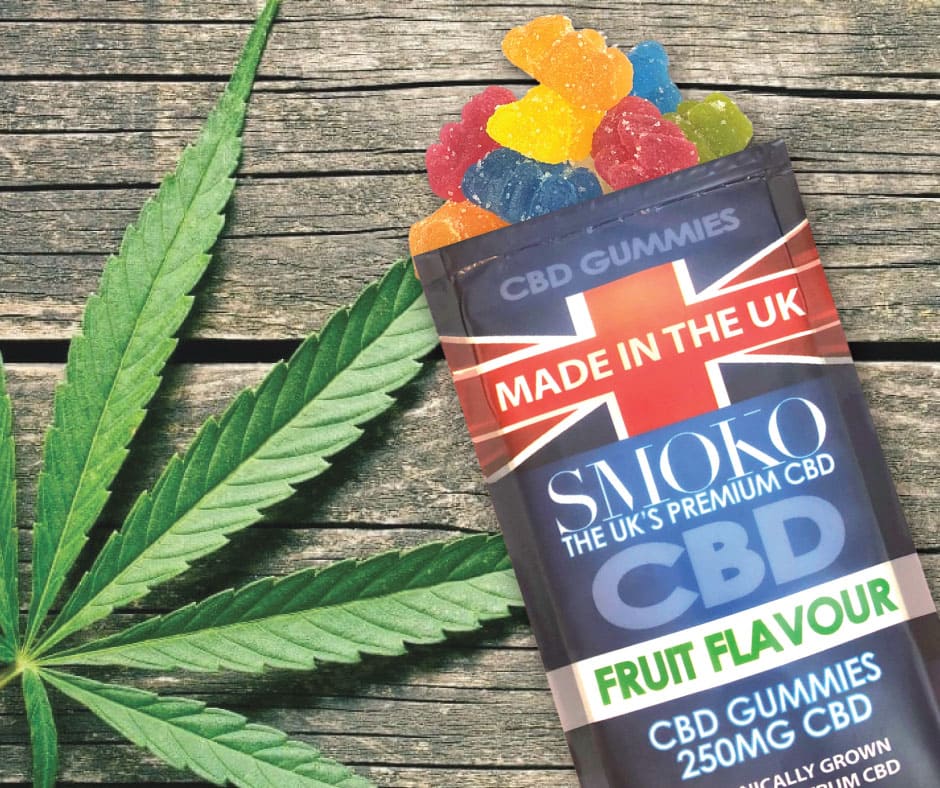
Smokocbd produces broad-spectrum CBD products in the UK using organically grown hemp extracts sourced from the USA, with full third-party lab testing and zero THC verification on every batch. Their mint 1000mg CBD tincture is a popular choice for those seeking a higher-strength daily supplement, while the CBD soft gels and gummies bundle offers a convenient, precisely dosed option for everyday wellness routines. All products meet UK novel food standards, which is precisely the kind of compliance rigour that matters both for consumers and for anyone trying to understand what a well-run CBD brand looks like in practice.
FAQ
How big is the CBD market in 2026?
The global CBD hemp oil market is valued at approximately USD 2,627 million in 2025 and is forecast to reach USD 5,746 million by 2032 at a CAGR of around 11.83%, making it a meaningful but not explosive growth sector.
Is it legal to sell CBD products in the UK?
Yes, CBD products can be sold legally in the UK, but they must comply with novel food regulations, including having an approved or pending application and adhering to the recommended maximum intake of 10 mg per day for certain population groups.
What are the best ways to invest in CBD?
Publicly traded cannabis stocks, specialty finance firms offering indirect exposure, cannabis ETFs, and vetted private placements all represent routes to invest in CBD, each carrying different levels of risk and requiring different levels of due diligence.
How much of my portfolio should I put into CBD stocks?
Financial advisers and investment analysts recommend treating CBD stocks as speculative and limiting exposure to no more than 10% of your portfolio per individual holding to manage volatility and regulatory risk.
What is a compliance runway and why does it matter?
A compliance runway describes a CBD company’s capacity to keep meeting regulatory requirements as rules evolve. Investors assess it by examining testing frequency, label claims, and the quality of supplier documentation, as it is one of the strongest indicators of long-term business viability.