TL;DR:
- Broad spectrum oil retains most hemp compounds except THC and offers a synergy that enhances wellness. It is preferred for natural pain relief, anxiety reduction, and sleep support without psychoactive effects. Consistent use verified by third-party testing ensures safety, quality, and effective results.
Spectrum oil is a cannabinoid extract derived from hemp that delivers natural health benefits by combining multiple plant compounds in a single product. The term covers three distinct categories: full spectrum oil, broad spectrum oil, and CBD isolate. Each differs in cannabinoid and terpene composition, and that difference matters enormously for wellness outcomes. Broad spectrum oil retains the beneficial compounds of the hemp plant while excluding THC entirely, making it the preferred choice for people who want natural relief without any psychoactive effects. Smokocbd produces its broad spectrum range from organically grown hemp sourced from the USA, with every batch verified through third-party lab testing.
What is spectrum oil and how do the types differ?
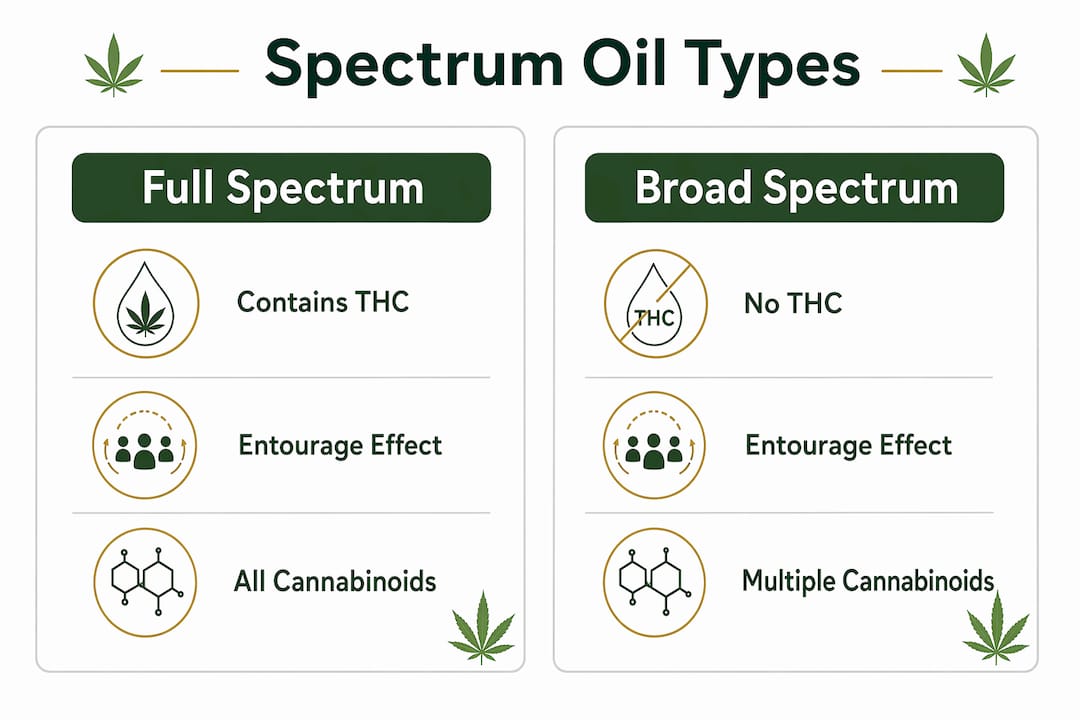
Spectrum oil is defined by which hemp compounds survive the extraction process. Full spectrum oil keeps everything, including THC, cannabidiol (CBD), cannabigerol (CBG), cannabinol (CBN), and the aromatic terpenes that give hemp its distinctive character. Broad spectrum oil removes THC but retains the rest. CBD isolate strips everything away except pure CBD, leaving a single compound with no supporting cast.

The distinction matters because of something called the entourage effect. This is the theory, supported by growing research, that cannabinoids and terpenes work better together than any single compound does alone. Broad spectrum products exclude THC while retaining other beneficial hemp compounds, which means you get the synergy without the psychoactivity. That is a meaningful advantage for anyone subject to workplace drug testing or simply cautious about THC.
| Type | THC | Other cannabinoids | Terpenes | Entourage effect |
|---|---|---|---|---|
| Full spectrum | Yes | Yes | Yes | Full |
| Broad spectrum | No | Yes | Yes | Partial |
| CBD isolate | No | No | No | None |
CBD isolate is the simplest product, but simplicity comes at a cost. Without terpenes and secondary cannabinoids, isolate misses the cooperative chemistry that makes broad spectrum extracts particularly effective for wellness applications. For most people researching natural pain relief or stress management, broad spectrum is the practical middle ground.
Pro Tip: If you are new to cannabinoid extracts, broad spectrum is the most sensible starting point. You get the entourage effect without any THC exposure, which removes the two most common concerns in one step.
What are the health and wellness benefits of spectrum oil?
Broad spectrum oil supports several key areas of natural wellness, and the evidence base is building steadily. Multiple cannabinoids and terpenes work synergistically to reduce inflammation and anxiety, which explains why so many people turn to it as a natural alternative to conventional remedies. The endocannabinoid system, a network of receptors throughout the body, responds to these plant compounds and helps regulate mood, pain perception, and sleep.
The most commonly reported spectrum oil benefits fall into four areas:
- Pain relief. Cannabinoids interact with CB1 and CB2 receptors involved in pain signalling. Many people use broad spectrum oil specifically for spectrum oil for pain, particularly for chronic low-grade inflammation linked to conditions like arthritis or muscle soreness.
- Anxiety and stress reduction. CBD acts on serotonin receptors, which play a central role in mood regulation. Regular use can help tone down the body’s stress response without sedation.
- Sleep support. By reducing anxiety and physical discomfort, broad spectrum oil creates conditions that make restful sleep more achievable. This is not a sedative effect but a calming one.
- Inflammation management. Terpenes such as beta-caryophyllene have demonstrated anti-inflammatory properties in research settings, adding another layer of benefit beyond CBD alone.
Forbes Health notes that CBD is most effective when integrated into a daily routine rather than used as a quick fix. That framing is important. Broad spectrum oil is not a fast-acting painkiller. It works gradually, and consistency is what produces results.
Pro Tip: Track your experience in a simple journal for the first four weeks. Note your dose, timing, and how you feel. This makes it far easier to identify what is working and adjust accordingly.
How to use spectrum oil safely and effectively
The form you choose affects both how quickly you feel results and how convenient the routine is to maintain. Tinctures allow sublingual absorption; capsules provide convenience. Each has a legitimate place depending on your lifestyle.
Here is a practical approach to getting started:
- Choose your format. Tinctures held under the tongue for 60–90 seconds absorb directly into the bloodstream, producing effects within 15–45 minutes. Soft gel capsules pass through the digestive system, which delays onset to 45–90 minutes but extends duration. Topical applications target localised discomfort without entering the bloodstream at all.
- Start low. A starting dose of 10–25mg of CBD per day is a widely used reference point for adults new to broad spectrum oil. Your body weight, metabolism, and the severity of your symptoms all influence the right amount.
- Titrate gradually. Increase your dose by small increments every five to seven days until you find the level that delivers consistent results. Jumping straight to a high dose rarely improves outcomes and can cause unnecessary side effects.
- Time it deliberately. For sleep support, take your dose 30–60 minutes before bed. For daytime anxiety or pain management, morning or midday dosing tends to work better.
- Be consistent. CBD integrated into a daily routine yields better results than sporadic use. Treat it like any other supplement and build it into an existing habit, such as your morning coffee or evening wind-down.
Potential side effects are generally mild and include dry mouth, drowsiness at higher doses, and minor digestive changes. Broad spectrum oil can interact with certain medications, particularly those metabolised by the liver’s cytochrome P450 enzyme system. If you take prescription medication, speak with your GP before starting.
What should you look for when choosing a spectrum oil product?
Product quality varies considerably across the market, and the label alone is not enough to judge a product. Third-party lab testing is critical to verify the absence of THC and confirm cannabinoid content. A reputable brand publishes its Certificates of Analysis (COAs) openly, showing the full cannabinoid profile and screening results for pesticides, heavy metals, and solvents.
When evaluating any broad spectrum product, look for the following:
- Published COAs from an independent laboratory. The lab should have no commercial relationship with the brand.
- Clear cannabinoid concentration. The label should state milligrams of CBD per millilitre, not just per bottle. Vague labelling is a warning sign.
- Organic or GMP certification. Products certified organic or GMP comply with higher extraction and testing standards. In the UK, Good Manufacturing Practice (GMP) certification is the most meaningful quality marker.
- Confirmed zero THC. For broad spectrum oil specifically, the COA should show THC at or below the detection threshold, not simply “below 0.2%.”
- Transparent sourcing. Knowing where the hemp was grown and how it was extracted tells you a great deal about likely quality.
| Certification | What it confirms | Why it matters |
|---|---|---|
| Organic (USDA or EU) | No synthetic pesticides or fertilisers | Cleaner raw material |
| GMP | Consistent manufacturing standards | Reliable potency batch to batch |
| Third-party COA | Independent cannabinoid and contaminant testing | Verifies label claims |
Clear labelling and batch testing foster consumer trust and empower you to make genuinely informed decisions. If a brand cannot or will not show you its lab results, that tells you everything you need to know.
Key takeaways
Broad spectrum oil is the most practical choice for natural wellness because it delivers the entourage effect without any THC exposure, making it safe, legal, and effective for daily use.
| Point | Details |
|---|---|
| Broad spectrum beats isolate | Retaining terpenes and secondary cannabinoids produces better wellness outcomes than pure CBD alone. |
| Consistency drives results | Daily use integrated into an existing routine outperforms sporadic, high-dose applications. |
| Third-party testing is non-negotiable | Always verify cannabinoid content and zero THC status through published COAs before purchasing. |
| Start low and titrate | Begin at 10–25mg daily and increase gradually to find your effective dose without side effects. |
| Format affects onset time | Tinctures act faster; capsules last longer. Choose based on your specific wellness goal. |
My honest view on broad spectrum oil for wellness
I have followed the CBD market closely for years, and the shift towards broad spectrum products reflects something genuinely sensible in consumer behaviour. People are not abandoning full spectrum oil because it does not work. They are choosing broad spectrum because they want the benefits without the legal and professional complications that THC can create, even at trace levels.
What I find underappreciated is how much the entourage effect changes the experience. I have spoken with many people who tried CBD isolate, felt little, and concluded that CBD simply did not work for them. When they switched to a broad spectrum product with a proper terpene profile, the results were noticeably different. The terpenes are not a marketing flourish. They are doing real biochemical work.
The other thing worth saying plainly is that patience matters more than dose. The instinct when something is not working is to take more. With broad spectrum oil, the better move is almost always to wait longer and stay consistent. The endocannabinoid system takes time to respond, particularly if you are starting from a baseline of chronic stress or inflammation.
My advice is to treat broad spectrum oil as a long-term wellness tool, not a rescue remedy. Set a realistic trial period of at least four weeks, keep your dose steady, and assess honestly at the end of it. That approach produces far more useful information than chasing immediate effects ever will.
— Mike
Smokocbd broad spectrum oils worth trying
Smokocbd’s broad spectrum range is built around the principle that quality should be verifiable, not just claimed. Every product is made from organically grown hemp and tested by an independent laboratory, with results available to view before you buy.
The 1000mg Mint Broad Spectrum Tincture is a strong starting point for anyone new to tinctures, offering a clean flavour and a mid-range concentration that suits most adults. If you prefer a higher strength, the 2000mg Mint Tincture delivers the same formula at double the potency. For those who prefer not to use tinctures, CBD soft gels and gummies offer a straightforward capsule format with no measuring required. All products contain zero THC, confirmed by batch-level lab testing.
FAQ
What is the difference between full spectrum and broad spectrum oil?
Full spectrum oil contains all hemp cannabinoids including THC, while broad spectrum oil removes THC and retains the remaining cannabinoids and terpenes. Both provide the entourage effect, but broad spectrum does so without any psychoactive risk.
Does broad spectrum oil show up on a drug test?
Broad spectrum oil is formulated to contain zero THC, which is the compound drug tests screen for. A product with a verified zero-THC COA from an independent laboratory carries the lowest possible risk of a positive result.
How long does it take for spectrum oil to work?
Tinctures taken sublingually typically produce effects within 15–45 minutes. Capsules and gummies take longer, usually 45–90 minutes, because they pass through the digestive system first.
Is broad spectrum oil legal in the UK?
Broad spectrum CBD oil is legal in the UK provided it contains no detectable THC and is derived from approved hemp strains. Products sold by reputable UK brands carry third-party lab results confirming legal compliance.
What is the best starting dose for broad spectrum oil?
A starting dose of 10–25mg of CBD per day is a widely used reference point for adults. Increase gradually every five to seven days until you find the level that delivers consistent results for your specific wellness goal.