TL;DR:
- Coconut oil and hemp oil are popular natural oils with distinct chemical profiles and uses. Coconut oil is mainly saturated fat and acts as an occlusive moisturizer, while hemp oil is rich in polyunsaturated fatty acids and supports skin health without clogging pores. Combining both oils provides structural protection and nutritional benefits for skin, hair, and overall wellness.
Coconut oil and hemp oil are two of the most widely used natural oils in health, beauty, and wellness today. Coconut oil is extracted from the flesh of Cocos nucifera, while hemp seed oil is cold-pressed from the seeds of Cannabis sativa. Both oils appear in skincare, haircare, and dietary supplements, yet they have very different chemical profiles and serve distinct purposes. Virgin coconut oil, hemp seed oil, and CBD-infused coconut oil each occupy a specific role in natural wellness. Understanding which oil does what helps you choose the right one for your needs.
What are the nutritional differences between coconut oil and hemp oil?
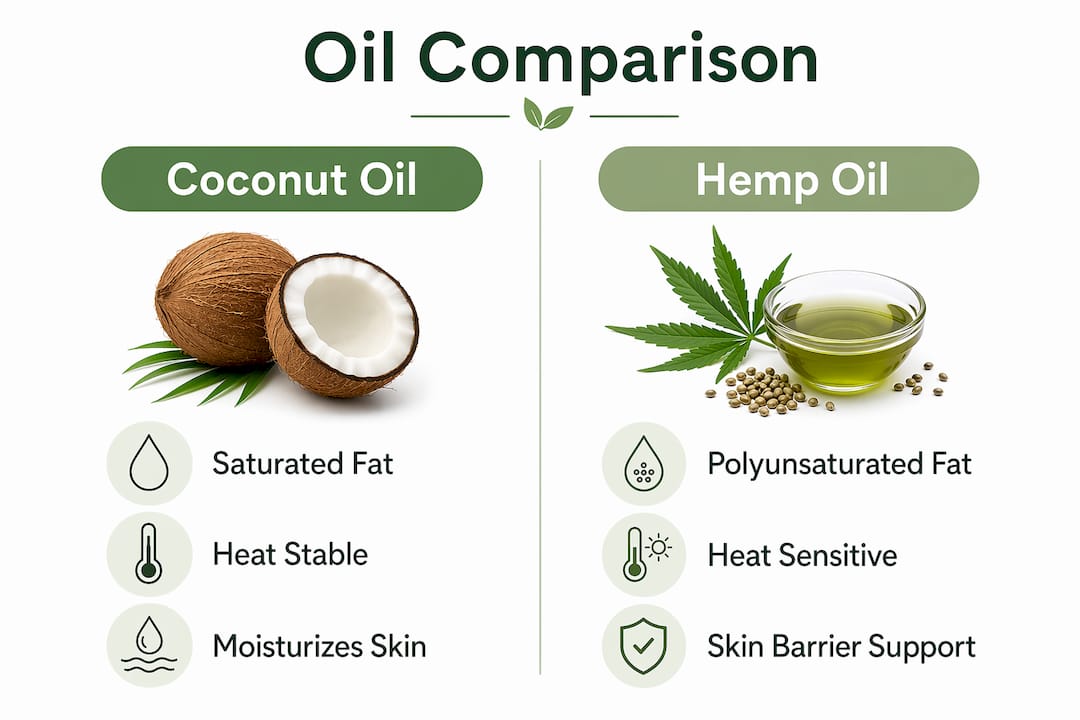
Coconut oil and hemp oil sit at opposite ends of the fatty acid spectrum. Coconut oil is predominantly saturated fat, with lauric acid making up roughly 46% of its composition. Hemp seed oil, by contrast, is rich in polyunsaturated fatty acids (PUFAs), including omega-3 and omega-6 in a near-ideal 3:1 ratio, plus gamma-linolenic acid (GLA), a compound with well-documented anti-inflammatory properties.
A common misconception is that coconut oil is a rich source of medium-chain triglycerides (MCTs). Coconut oil contains only 13–14% true MCTs (caprylic acid C8 and capric acid C10). The remainder is lauric acid, which behaves more like a long-chain fatty acid in the body. Purified MCT oil, sold separately, is a different product with different metabolic effects.
Virgin coconut oil also contains bioactive phenolic compounds not present in refined coconut oil. These phenolics contribute antioxidant and anti-inflammatory activity, which is why cold-pressed, unrefined versions are consistently preferred in wellness applications.
Hemp seed oil contains no CBD and no THC. The distinction between hemp seed oil and CBD oil is one of the most misunderstood areas in natural wellness. CBD oil is extracted from hemp flowers and contains cannabinoids. Hemp seed oil comes from the seeds and contains none. Knowing this difference matters when you are choosing a product for a specific health goal.
| Property | Coconut oil | Hemp seed oil |
|---|---|---|
| Primary fat type | Saturated (lauric acid ~46%) | Polyunsaturated (omega-3, omega-6, GLA) |
| True MCT content | 13–14% (C8/C10) | Negligible |
| CBD/THC content | None | None |
| Antioxidant compounds | Phenolics (virgin only) | Tocopherols (vitamin E) |
| Best use | Cooking, occlusive skincare | Skincare, cold dietary use |
How do coconut oil and hemp oil benefit skin and hair?
Coconut oil is an occlusive agent. It forms a physical barrier on the skin’s surface that prevents moisture from escaping. Research shows that topical virgin coconut oil reduced hair protein loss by nearly 50% compared to mineral oil and sunflower oil. That figure reflects coconut oil’s ability to penetrate the hair shaft and bind to the protein structure from within.
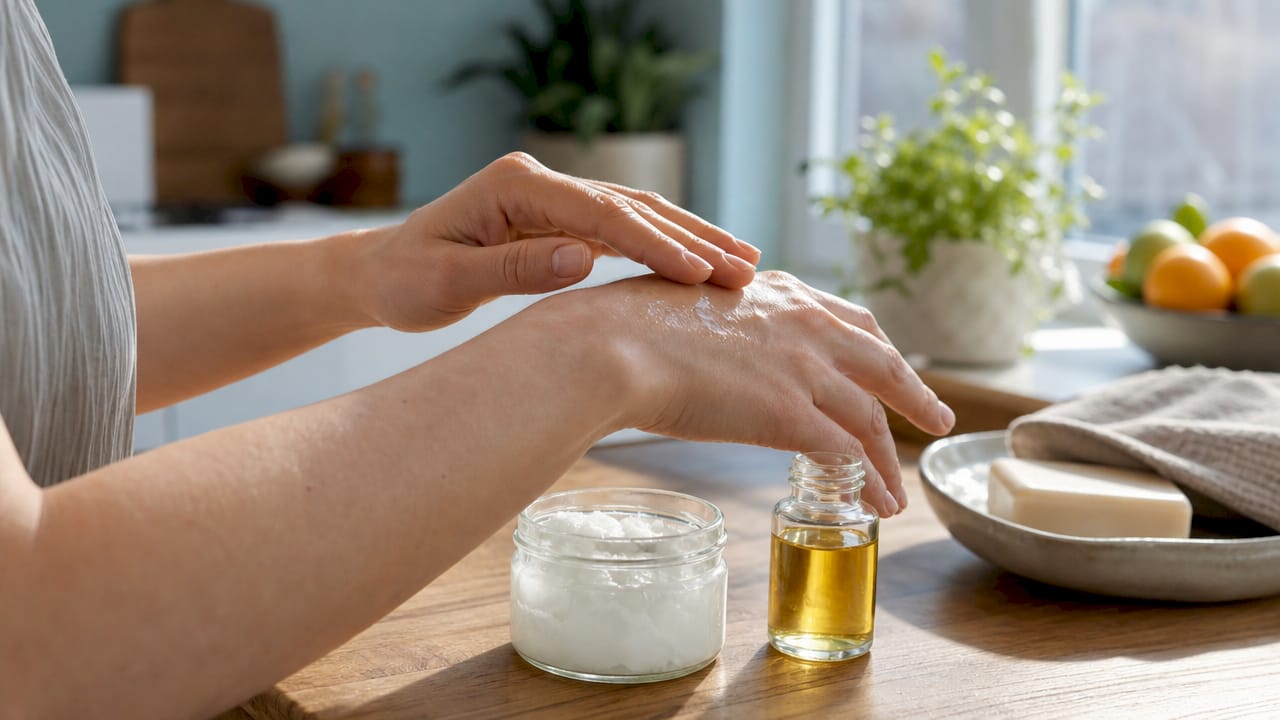
The same study found that virgin coconut oil reduced eczema symptoms by 68% and cleared 95% of Staphylococcus aureus colonisation over eight weeks. S. aureus is a bacterium that worsens eczema flare-ups. Clearing it from the skin significantly reduces inflammation and itching.
Hemp seed oil works differently. It is non-comedogenic, meaning it does not block pores. Its GLA content supports the skin’s lipid barrier without adding heaviness, making it well suited to sensitive, oily, or acne-prone skin. Coconut oil, by contrast, can clog pores on the face for some people, so it is better suited to body skin, hair, and scalp.
For hair specifically, both oils serve complementary roles. Coconut oil seals moisture into the hair shaft and reduces breakage. Hemp seed oil nourishes the scalp with essential fatty acids and supports circulation at the follicle level. Using them together addresses both structural protection and scalp health.
| Benefit | Coconut oil | Hemp seed oil |
|---|---|---|
| Hair protein loss reduction | ~50% vs mineral oil | Scalp nourishment via EFAs |
| Eczema symptom improvement | 68% reduction | Skin barrier support via GLA |
| Pore safety | Can clog pores (face) | Non-comedogenic |
| Best skin type | Dry, body skin, scalp | Sensitive, oily, combination |
Pro Tip: Mix a few drops of hemp seed oil into a small amount of coconut oil before applying to your hair. The coconut oil seals the shaft while the hemp oil feeds the scalp. Leave it on for 30 minutes before washing out for noticeably softer, less brittle hair.
What are the cardiovascular and metabolic effects of each oil?
Virgin coconut oil has a measurable impact on blood lipids. Research shows it reduced triglycerides by 12.12 mg/dL and raised HDL cholesterol by 7.91 mg/dL in adults. HDL is the protective form of cholesterol, so raising it is generally considered beneficial.
The complication is LDL. The same research found that virgin coconut oil raised LDL cholesterol by 10.47 mg/dL compared to nontropical vegetable oils. Elevated LDL is associated with cardiovascular risk. This does not make coconut oil dangerous in moderate amounts, but it does mean it should not be treated as a heart-health superfood.
Hemp seed oil contributes essential fatty acids that the body cannot produce on its own. Its omega-3 and omega-6 content supports general cardiovascular health through dietary means, without the LDL concern associated with saturated fats. Hemp seed oil is best consumed cold, drizzled over food or added to smoothies, rather than used for cooking.
Key nutritional considerations when using both oils:
- Coconut oil raises both HDL and LDL cholesterol. Use it in moderation, particularly if you have existing cardiovascular concerns.
- Hemp seed oil provides GLA and essential fatty acids without saturated fat. It supports the diet without adding cholesterol risk.
- Purified MCT oil is not the same as coconut oil. If you are seeking metabolic or weight management benefits, MCT oil is the relevant product.
- Virgin coconut oil retains phenolic antioxidants. Refined coconut oil does not. Choose unrefined versions for maximum nutritional benefit.
- Hemp seed oil contains no cannabinoids. For CBD-specific benefits, you need a product that clearly states it contains CBD, such as a broad-spectrum tincture. The Smokocbd guide on cannabinoid oil vs hemp oil explains this distinction clearly.
How should you use and store coconut oil and hemp oil?
Coconut oil is one of the most oxidatively stable cooking fats available. Its high saturated fat content means it does not break down or oxidise at moderate cooking temperatures. You can use it for sautéing, baking, and roasting without the oil degrading into harmful compounds. Store it at room temperature in a sealed container, away from direct sunlight.
Hemp seed oil is the opposite. Its high PUFA content makes it extremely sensitive to heat and light. Cooking with hemp seed oil destroys its beneficial fatty acids and can produce harmful oxidation products. It must be kept refrigerated and used within 3–4 months of opening. Always buy it in a dark glass bottle to protect it from light degradation.
A frequent source of confusion is the labelling of hemp products. “Hemp oil” on a product label could mean hemp seed oil (no cannabinoids, nutritional use) or CBD oil (cannabinoids, therapeutic use). These are not interchangeable. If you are looking for CBD-specific effects, check that the product clearly states its CBD content in milligrams. Smokocbd’s guide on what is in hemp oil breaks this down in plain language.
For daily wellness routines, coconut oil works well as a morning skin moisturiser or hair treatment, while hemp seed oil fits naturally into an evening skincare routine or a cold dietary application. Combining both in a routine gives you the occlusive protection of coconut oil and the barrier-nourishing properties of hemp seed oil.
Pro Tip: Store hemp seed oil in the fridge door rather than the main shelf. The slightly warmer temperature of the door slows oxidation without letting the oil get so cold that it thickens. Check the colour regularly: fresh hemp seed oil is clear green. A yellow or murky appearance means it has gone rancid.
Key takeaways
Coconut oil and hemp oil are chemically distinct oils with complementary benefits: coconut oil excels in heat-stable cooking and occlusive skin protection, while hemp seed oil delivers essential fatty acids and non-comedogenic skin nourishment.
| Point | Details |
|---|---|
| Different fat profiles | Coconut oil is mostly saturated fat; hemp seed oil is rich in polyunsaturated omega-3, omega-6, and GLA. |
| Skin and hair roles | Coconut oil seals moisture and reduces protein loss; hemp seed oil nourishes without blocking pores. |
| Cardiovascular impact | Virgin coconut oil raises both HDL and LDL cholesterol; use it in moderation alongside a balanced diet. |
| Storage requirements | Coconut oil is stable at room temperature; hemp seed oil must be refrigerated and used within 3–4 months. |
| Hemp seed oil vs CBD oil | Hemp seed oil contains no cannabinoids; CBD oil is a separate extract with distinct therapeutic properties. |
My honest view on using these two oils together
I have spent a fair amount of time working through the marketing noise around both of these oils, and the honest picture is more nuanced than most wellness content suggests. Coconut oil is genuinely useful, particularly for hair and body skincare, but the “superfood” label it earned in the 2010s was always overstated. The LDL data alone should give anyone pause before spooning it into their morning coffee every day.
Hemp seed oil, on the other hand, is quietly underrated. Because it shares a name with CBD oil, people either dismiss it as a gimmick or expect it to have therapeutic effects it simply does not have. What it does have is an excellent fatty acid profile that genuinely supports skin barrier function. I have seen it work particularly well for people with dry, reactive skin who find heavier oils too occlusive.
Where I think the real value lies is in using them together, deliberately and for different purposes. Coconut oil for hair treatments and body moisturising. Hemp seed oil in your diet and your evening facial routine. That combination covers the structural and nutritional bases without asking either oil to do something it is not designed for. The Smokocbd resource on CBD wellness routines is worth reading if you want to see how CBD fits alongside these oils in a broader daily routine.
The one thing I would say firmly: do not buy a hemp seed oil product expecting CBD benefits. Check the label. If it does not state a CBD milligram content, it is a nutritional oil, not a cannabinoid supplement. That distinction saves a lot of disappointment.
— Mike
Smokocbd’s CBD tinctures with an MCT coconut oil base
If you are ready to take the next step beyond hemp seed oil and coconut oil alone, Smokocbd’s broad-spectrum CBD tinctures combine the benefits of both worlds.
Smokocbd’s 1000mg mint flavour CBD tincture uses an MCT coconut oil base, which improves the absorption of CBD into the bloodstream compared to standard carrier oils. The hemp extract is organically grown in the USA, third-party lab tested, and verified to contain zero THC. For anyone exploring how CBD, hemp oil, and coconut oil can work together in a daily wellness routine, this tincture is a practical and well-formulated starting point.
FAQ
What is the difference between hemp seed oil and CBD oil?
Hemp seed oil is cold-pressed from hemp seeds and contains no cannabinoids. CBD oil is extracted from hemp flowers and contains cannabidiol (CBD) along with other cannabinoids, making them entirely different products with different uses.
Can you cook with hemp seed oil?
Hemp seed oil must not be used for cooking. Its high polyunsaturated fat content degrades rapidly under heat, destroying its nutritional value and potentially producing harmful compounds. Use it cold, in dressings or smoothies.
Is coconut oil good for eczema?
Virgin coconut oil reduced eczema symptoms by 68% and cleared 95% of Staphylococcus aureus skin colonisation over eight weeks in clinical research. It works as an occlusive moisturiser that also has antimicrobial properties.
Does coconut oil raise cholesterol?
Virgin coconut oil raises both HDL (good) cholesterol by 7.91 mg/dL and LDL (bad) cholesterol by 10.47 mg/dL. It is best used in moderation rather than as a daily dietary staple.
Can you use coconut oil and hemp oil together on skin?
Yes. Coconut oil acts as an occlusive barrier that locks in moisture, while hemp seed oil delivers essential fatty acids that support the skin’s lipid barrier. Used together, they address both moisture retention and skin nourishment.