People take CBD softgels mainly for calm, better sleep, and relief from everyday aches. The honest picture is more modest than most product pages suggest. Softgels are a convenient, measured, taste-free way to take CBD, and that practical benefit is well established. Whether the CBD inside delivers a noticeable effect at the low doses sold in the UK is much less certain, and the research says so plainly. This guide separates what softgels reliably offer from what remains unproven, then shows you what to check before you buy.
TL;DR
- The proven benefit of a softgel is practical: a pre-measured dose, no taste, easy to carry and simple to fit into a daily routine.
- Evidence for CBD helping anxiety, sleep or pain at typical shop-bought doses is limited. The strongest clinical results come from far higher, prescribed doses.
- The Food Standards Agency (FSA) advises healthy adults to keep CBD to 10 mg a day, and to avoid it if pregnant, breastfeeding, under 18 or on medication.
- Choose softgels with a batch-specific lab report (COA) that confirms the CBD content and THC levels. Label accuracy is a known weak spot in the market.
Table of Contents
- What a CBD softgel actually is
- The benefits softgels reliably offer
- The health benefits people take CBD for, and how strong the evidence is
- What UK rules mean for you
- Side effects and interactions
- How to judge a CBD softgel before you buy
- How to try softgels sensibly
- Our perspective
- Where to find our softgels
- FAQ
- Sources
What a CBD softgel actually is
A softgel is a one-piece capsule, made from gelatin or a vegan alternative, sealed around liquid CBD oil. You swallow it with water, like a vitamin. Because the oil is already inside the shell, you skip the earthy taste of a tincture and you avoid the guesswork of counting drops.
Once swallowed, the capsule dissolves in your stomach and the CBD is absorbed through digestion. One UK-based capsule guide puts onset at roughly 30 to 60 minutes, though this varies from person to person and with whether you have eaten.

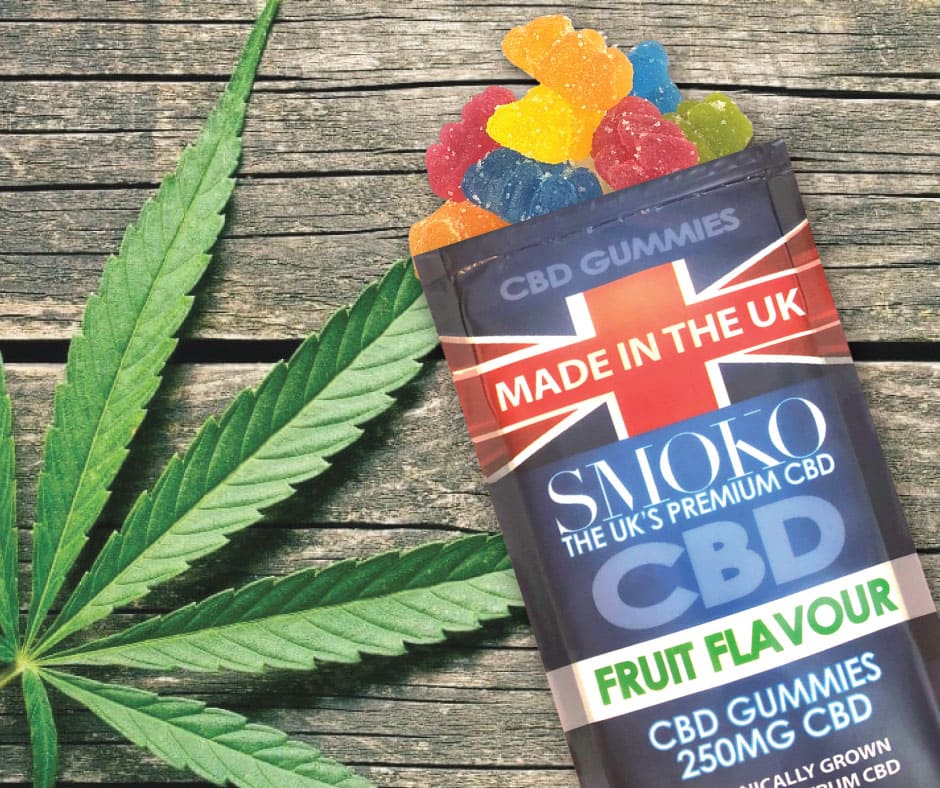
SMOKO CBD makes its soft gels in the UK with broad-spectrum CBD. Broad spectrum means the extract keeps other hemp compounds (other cannabinoids and terpenes) while THC is removed. For a fuller walkthrough of the format, see our guide to soft gel capsules and what they offer.
The benefits softgels reliably offer
Before the health claims, the format itself has genuine advantages. These do not depend on contested science.
A consistent, known dose
Each capsule holds the same amount of CBD. With a tincture, a dropper that is half-full or a drop that falls short changes your dose. Clinical guidance on cannabinoid medicines notes that oral formulations such as capsules offer more dosage consistency than inhalation, and consistency matters when you are trying to judge whether something works for you.
No taste, no mess
Hemp oil is an acquired taste. A softgel removes it. If you have tried drops and disliked the flavour, this is usually the simplest fix.
Easy to build into a routine
CBD works best judged over days, not hours, so a habit helps. Taking one capsule alongside your morning vitamins is easier to repeat than measuring oil. They also travel well in a bag or desk drawer.
Clear labelling of strength
A capsule has one number on the box: milligrams of CBD per capsule. That makes it simple to stay within a daily limit. Our guide to soft gel potency options explains how to read strengths.
The health benefits people take CBD for, and how strong the evidence is
This is where care is needed. The table summarises what the research currently supports for over-the-counter (OTC) products, the kind you buy online or on the high street.
| Reason people take CBD | What the evidence says | Confidence for OTC softgels |
|---|---|---|
| Anxiety and stress | Pure CBD at low doses has not been convincingly shown to work on its own in large, high-quality trials | Low |
| Sleep | Some benefit seen alongside pain relief in clinical settings, mostly at higher, supervised doses | Low to moderate |
| Chronic pain | Moderate benefit in reviews of cannabinoid medicines, mostly prescribed products | Low for typical shop doses |
| Inflammation and recovery | Mostly early-stage or animal research | Very low |
| Everyday calm and routine | Reported by users, hard to separate from placebo and habit | Anecdotal |
Anxiety and stress
Anxiety is the most common reason people reach for CBD, and it is also where experts urge the most caution. A review of the evidence for over-the-counter CBD found a lack of robust proof of effectiveness or safety for OTC products. Clinical commentators also warn that self-treating anxiety can delay evidence-based care that is known to work.
If anxiety is affecting your daily life, speak to your GP first. CBD, if you choose to try it, should sit alongside that conversation, not replace it. We cover the topic in more depth in CBD for anxiety explained and CBD anxiety management tips.
Sleep
Sleep is often the reason softgels are taken in the evening. The clinical guidelines on cannabinoid-based medicines found moderate benefit for pain and for the sleep disruption that comes with it. Note what that covers: people with chronic pain, under clinical supervision, using cannabinoid medicines. It does not show that a low-dose wellness capsule will fix poor sleep in someone without pain.
Pain and inflammation
Guidelines suggest cannabinoid-based medicines may be considered for chronic pain when standard treatments fail or are not tolerated. The same guidance stresses clinical supervision rather than self-medication. Meta-analyses report around a 30% reduction in pain in some clinical groups, but those figures come from prescribed products, not capsules sold as food supplements.
Why dose matters so much
The central problem is absorption. Researchers describe CBD’s oral bioavailability as very low, meaning only a small fraction of a swallowed dose reaches the bloodstream. A review of oral CBD delivery covers the formulation and absorption challenges in detail. This is one reason clinical trials use hundreds of milligrams a day, while most wellness softgels contain 10 to 25 mg each.
That gap is not a reason to dismiss CBD. It is a reason to be realistic. A review of low oral doses of CBD is a useful read if you want to see how researchers weigh the evidence at the amounts people actually buy.
What UK rules mean for you
In the UK, CBD sold as food or a supplement is a novel food. The FSA’s CBD guidance explains that novel food status requires authorisation before sale, and that products on the market before 13 February 2020 with a credible application can remain on sale while it is assessed. The FSA publishes a register of those products, and it advises checking it before you buy.
Three points matter most to a shopper:
- The 10 mg advice. The FSA recommends healthy adults limit CBD to 10 mg per day. Check the milligrams per capsule on the label and work out your daily total.
- Who should avoid CBD. The same FSA page says children and those who are pregnant, breastfeeding, trying to conceive or taking medication should avoid CBD, because evidence on reproduction, development and drug interactions is lacking. Our article on CBD and pregnancy goes through this in detail.
- THC limits. In July 2025 the government’s expert committees set a safe upper limit for THC as a contaminant of 1 microgram per kilogram of body weight per day, roughly 0.07 mg a day for a 70 kg adult.
Rules change, so it is worth reading our overview of UK CBD regulations in 2026 alongside the FSA’s own pages.
Side effects and interactions
CBD is generally well tolerated by healthy adults at low doses, but not risk-free. Reported effects include tiredness, digestive upset and changes in appetite.
The point that catches people out is medication. CBD can inhibit liver enzymes (CYP2C19 and CYP3A4) that break down many common drugs, including some antidepressants, proton pump inhibitors and blood thinners, as described in the review of OTC cannabidiol products. That can raise the level of those drugs in your blood. If you take any prescribed medicine, speak to your GP or pharmacist before starting CBD, even at a low dose.
How to judge a CBD softgel before you buy
Searching for the best CBD softgels in the UK is really a question of trust. The product matters less than whether you can verify what is inside it. A study of 84 online CBD products, summarised in the Merck Manual, found only 30% accurately labelled their CBD concentration, and 21% contained detectable THC. Use this checklist.
- A batch-specific certificate of analysis (COA). It should come from an independent, third-party lab, match the batch number on your box, and show both CBD content and THC.
- Milligrams per capsule, stated clearly. Not just “500 mg per bottle”. Divide by the number of capsules.
- Extract type. Broad spectrum, full spectrum or isolate. Broad spectrum aims to keep other hemp compounds without THC.
- Ingredients. Check the carrier oil and the shell (gelatin or vegan), especially if you avoid animal products.
- Regulatory status. Look for the brand’s position on novel food status, and check the FSA register yourself.
- Realistic claims. Be wary of any page promising to cure anxiety, pain or insomnia.
Our short guide, spot fake CBD with six checks, starts with the COA and takes a couple of minutes to read.
How to try softgels sensibly
If you are an adult in good health, not on medication and not pregnant or breastfeeding, a cautious trial looks like this:
- Start low. Begin with the lowest strength and stay within the FSA’s 10 mg daily advice.
- Take it at the same time each day. With a meal, if you can, as many people find that gentler on the stomach.
- Give it a fortnight. Practitioners suggest a consistent daily routine for at least two weeks before judging, because CBD is not an instant analgesic. Switching after two or three days is a common reason people give up too soon.
- Keep a simple note. Sleep quality, mood and aches on a 1 to 5 scale is enough. It protects you from fooling yourself either way.
- Stop and speak to a professional if you feel unwell, or if your symptoms are persistent or worsening.
Our perspective
We make CBD, so you might expect us to promise the earth. We would rather you bought from us knowing exactly what you are getting.
Here is how we see softgels. They are the easiest format to stay consistent with, and consistency is what lets you judge whether CBD does anything for you. We make ours in the UK with broad-spectrum extract from organically grown hemp sourced in the USA, and we have them independently tested by a third-party lab to verify zero THC. That testing matters to us because the label problems documented across the market are real.
We do not claim that a softgel will treat pain, anxiety or insomnia. The research does not support that for shop-bought products, and anyone selling it that way is overreaching. What we hear from customers is about routine and a sense of calm. That is worth something, but it is not a medical outcome, and we would never want it to stand in the way of seeing your GP.
If you are curious, start low, be patient, and ask any brand, including us, to show you the lab report.
— Mike
Where to find our softgels
If you would like to try CBD in capsule form, our CBD soft gels, tinctures and gummy bears are all in one collection. Every product is broad spectrum and made in the UK, and orders over £30 ship free within the UK. Read the strength on each product page and keep your daily total within the FSA’s advice.
FAQ
Do CBD softgels work better than oil or gummies?
Not necessarily. Softgels give a more consistent dose and no taste, which makes them easier to judge over time. Oils can be adjusted drop by drop and may act a little faster under the tongue, while gummies are tasty but easy to overeat. The best format is the one you will take consistently and safely.
How long do CBD softgels take to work?
Onset after swallowing is often described as 30 to 60 minutes, but noticeable effects, if any, tend to build over days. Give a consistent routine about two weeks before deciding. If you notice nothing, that is useful information too.
Can I take CBD softgels every day?
For healthy adults, the FSA advises no more than 10 mg of CBD a day from any food product. Check the strength per capsule and count every CBD product you use. If you are on medication or have a health condition, ask your GP first.
Are CBD softgels legal in the UK?
CBD is legal to buy as a food supplement, but it is a novel food, so products need authorisation. The FSA’s CBD guidance explains which products can stay on sale while applications are assessed. THC is a controlled substance, so trace levels are tightly limited. Check the FSA register and the brand’s lab reports.
Can CBD softgels help with menopause symptoms?
There is not enough good-quality evidence to say so. Some articles claim benefits for hot flushes, sleep and mood, but those claims are not backed by large trials of OTC products. If menopause symptoms are troubling you, your GP can discuss options with proven benefit.
Sources
- FSA: Food Fact Check on CBD safety and health claims
- FSA: Cannabidiol (CBD) guidance
- GOV.UK: Joint position paper on a safe upper limit for Δ9-THC
- Clinical Practice Guidelines for Cannabis and Cannabinoid-Based Medicines in the Management of Chronic Pain
- Lack of evidence for the effectiveness or safety of over-the-counter cannabidiol products
- The safety and efficacy of low oral doses of cannabidiol
- Oral delivery of cannabidiol: formulation and absorption challenges
- Merck Manual: Cannabidiol (CBD)
- CBD gel capsules UK guide