TL;DR:
- CBD supports energy balance by modulating the endocannabinoid system, which regulates stress, metabolism, and inflammation. Using CBD consistently and at appropriate times can help enhance natural energy production without causing a stimulant rush.
CBD is a natural compound that supports energy balance by working with your body’s own regulatory systems, not by acting as a stimulant. Unlike caffeine, which forces alertness, CBD interacts with the endocannabinoid system (ECS) to stabilise stress responses, support metabolic function, and reduce the inflammation that quietly drains your vitality. This cbd for energy balance guide explains the science clearly, gives you practical steps to use CBD well, and sets honest expectations about what it can and cannot do. If you want steady, sustained energy without crashes or dependency, understanding CBD’s role is a genuinely useful starting point.
How does CBD support energy balance biologically?
CBD supports energy balance by modulating the endocannabinoid system, a network of receptors and signalling molecules that regulates everything from appetite to stress hormones. The ECS is not widely taught in school, but it is one of the body’s most important regulatory networks. When it falls out of balance, energy levels, mood, and metabolism all suffer.
CBD interacts with several key receptors in this system:
- CB1 and CB2 receptors: CB1 receptors sit mainly in the brain and nervous system, influencing mood, appetite, and energy perception. CB2 receptors are found in immune tissue and play a role in inflammation control.
- TRPV1 receptors: These regulate body temperature and pain signalling, both of which affect how energised you feel day to day.
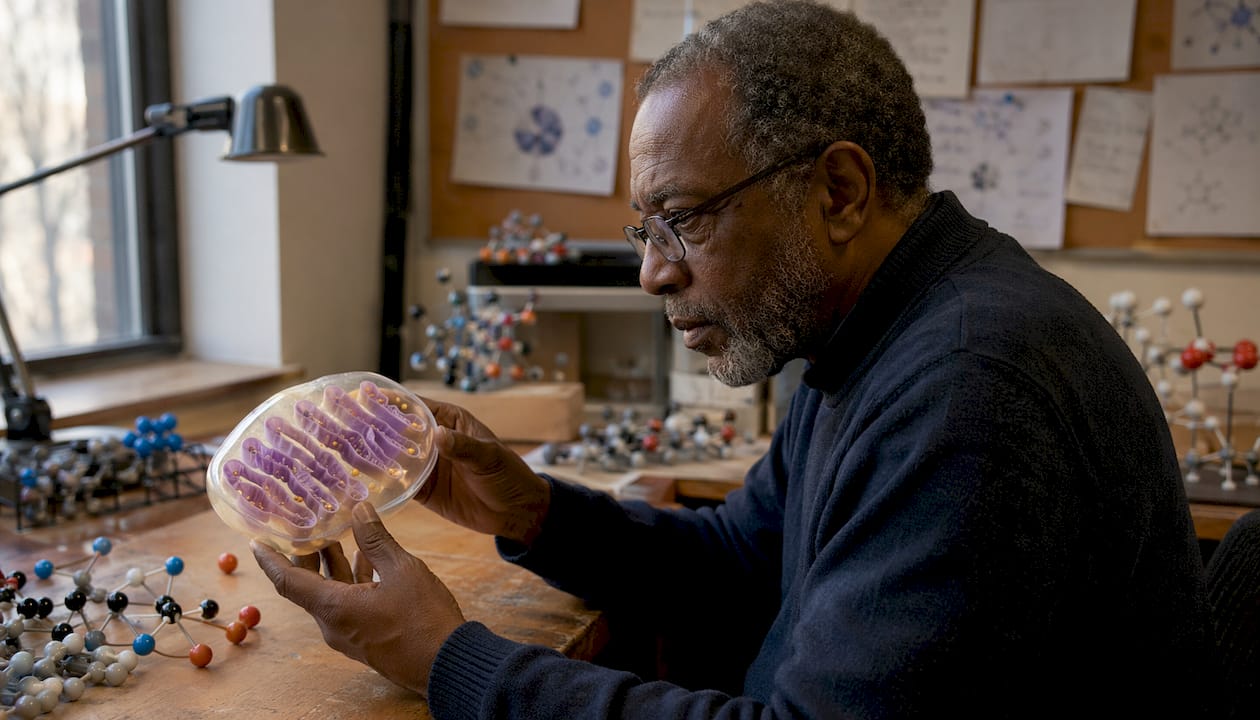
- GPR3 and GPR12 receptors: CBD modulates mitochondrial function and insulin signalling via these receptors, which are directly linked to how efficiently your cells produce and use energy.
- PPARγ receptors: CBD activates PPARγ, influencing lipid metabolism and insulin sensitivity across different tissues.
These interactions matter because mitochondria are your cells’ power generators. When mitochondrial function is compromised by oxidative stress or chronic inflammation, fatigue follows. CBD’s antioxidant properties reduce pro-inflammatory cytokines and oxidative stress markers, which are key drivers of metabolic fatigue. CBD reduces these inflammatory markers, supporting the metabolic conditions your body needs to produce energy consistently.
The ECS also connects directly to your endocannabinoid system functions, which explains why CBD’s effects on energy are felt across so many areas at once: sleep quality, stress resilience, and appetite regulation all shift together.
| Receptor | Location | Energy-related role |
|---|---|---|
| CB1 | Brain, nervous system | Mood, appetite, energy perception |
| CB2 | Immune tissue | Inflammation control |
| TRPV1 | Peripheral nerves | Pain and temperature regulation |
| GPR3/GPR12 | Multiple tissues | Mitochondrial function, insulin signalling |
| PPARγ | Fat and liver tissue | Lipid metabolism, insulin sensitivity |
Pro Tip: Think of CBD as a volume dial on your ECS, not an on/off switch. It gently tones down overactive stress signals and ramps up recovery processes, rather than forcing a single dramatic change.
How to use CBD for energy balance: timing, dose, and routine
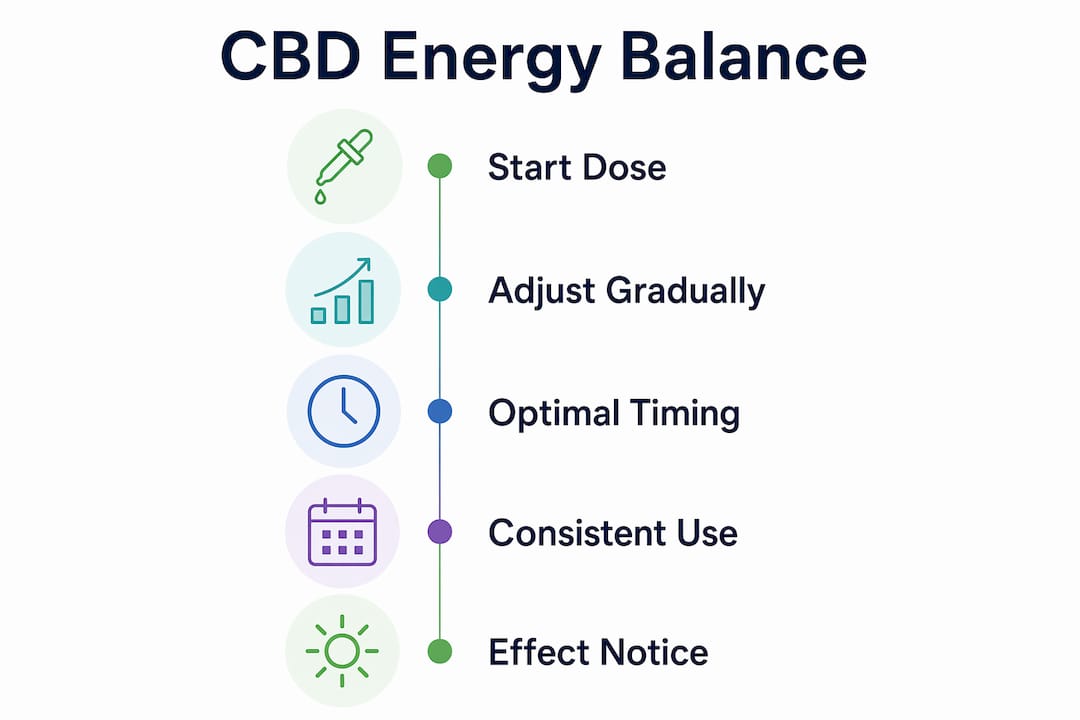
CBD dosage for energy support is not one-size-fits-all. The right approach starts low, builds gradually, and gives your body time to respond. Consistency in serving size and timing over at least 7 days is the minimum needed to fairly assess whether CBD is working for you. Most people who give up early do so because they expect a caffeine-like buzz that CBD simply does not deliver.
Follow these steps to build an effective CBD routine for energy balance:
- Start with a low dose. Begin with 10–20mg of CBD per day. This gives your ECS time to adjust without overwhelming it. Oils and tinctures make it easy to measure precisely.
- Choose the right time. Morning or early afternoon is best for energy support. Taking CBD too late in the day can promote relaxation when you need alertness. How CBD works with the ECS explains why timing affects the outcome.
- Pick a format that suits your lifestyle. Oils absorb quickly (typically within 15–45 minutes under the tongue). Capsules and soft gels take longer but deliver a consistent dose throughout the day. Gummies are convenient but have slower onset. Vapes act fastest but are not suited to everyone.
- Track your response. Keep a simple note of your energy levels, sleep quality, and mood each day. After 7–10 days, you will have enough data to decide whether to adjust the dose upward.
- Pair CBD with supporting habits. CBD works best alongside adequate hydration, a balanced diet, regular movement, and good sleep hygiene. It is not a substitute for these foundations. CBD for sleep quality is one of the most well-supported indirect routes to better daytime energy.
- Adjust gradually. If you feel no difference after 10 days, increase by 5–10mg at a time. If you feel drowsy, reduce the dose or shift it to the evening.
Pro Tip: A Canadian study with 260 adults found that replacing some caffeine with CBD led to steadier energy, fewer crashes, and improved sleep over eight weeks. The key word is “steadier,” not “stronger.” That is the realistic goal.
What CBD cannot do: misconceptions about energy support
CBD is not caffeine, and treating it like one is the most common mistake people make. CBD is a non-intoxicating compound regulated as a natural health product, with THC levels below 0.3%. It does not trigger the adrenal response that caffeine does, and it does not produce a stimulant buzz.
The more accurate framing is this:
- CBD removes obstacles to natural energy, such as chronic inflammation, elevated cortisol, and disrupted sleep.
- It does not add energy directly. It creates the conditions where your body can produce and sustain energy more effectively.
- CBD acts as a regulator, not a simple metabolic booster. Its effects vary by tissue type, dose, and individual biology.
CBD supports a calm baseline that enables sustained energy throughout the day. It is not a rapid stimulant. Practitioners who work with CBD consistently describe its role as clearing the path, not pushing you forward. Expecting an immediate lift sets you up for disappointment and causes most people to abandon a protocol that would have worked with more patience.
High doses can cause drowsiness, particularly in people who are sensitive to CBD or who take it at the wrong time of day. Drowsiness is a signal to reduce the dose or shift timing, not a reason to stop entirely. CBD is also not a treatment for diagnosed metabolic conditions such as type 2 diabetes or thyroid disorders. Those require medical supervision. More rigorous human clinical trials are still needed before CBD can be formally recommended as a primary metabolic treatment.
How to choose quality CBD products for energy support
Third-party lab testing is the single most important factor when choosing a CBD product. A Certificate of Analysis (CoA) from an independent laboratory confirms the CBD content, verifies THC levels are within legal limits, and screens for contaminants such as pesticides and heavy metals. Without a CoA, you have no way to verify what you are actually taking.
When selecting a product for CBD metabolic health support, look for:
- Broad-spectrum CBD: This retains beneficial cannabinoids and terpenes beyond CBD alone, supporting what researchers call the “entourage effect,” where compounds work better together.
- Verified THC levels below 0.3%: This is the legal standard in the UK and confirms the product is non-intoxicating.
- Clear dosage information: Products that list exact milligrams per serving make it far easier to titrate your dose accurately.
- Reputable sourcing: Organically grown hemp from traceable sources reduces the risk of pesticide contamination.
- No vague “energy blend” claims: Products that promise instant energy without explaining their mechanism are marketing claims, not science.
Smokocbd sources its hemp from the USA, uses broad-spectrum extracts, and publishes third-party lab results confirming zero THC. That level of transparency is what you should expect from any brand you consider. Regulatory compliance in the UK means products must meet Food Standards Agency (FSA) guidelines, so checking whether a brand is on the FSA’s public list of novel food applications is a practical step.
Pro Tip: Exploring cannabinoids for focus and wellness beyond CBD, such as CBC and THCV, is an emerging area. For now, broad-spectrum CBD remains the most researched and accessible option for energy balance.
Key takeaways
CBD supports energy balance by reducing inflammation, stabilising stress responses, and improving sleep quality, not by acting as a stimulant.
| Point | Details |
|---|---|
| CBD works via the ECS | It modulates CB1, CB2, TRPV1, and GPR receptors to regulate metabolism and stress. |
| Consistency is non-negotiable | Maintain the same dose and timing for at least 7 days before assessing results. |
| Timing affects outcome | Morning or early afternoon dosing supports energy; late doses may promote drowsiness. |
| Quality requires a CoA | Only use products with third-party lab results confirming CBD content and THC levels. |
| CBD removes obstacles | It supports natural energy by reducing inflammation and stress, not by stimulating directly. |
Why patience is the part nobody talks about
I have watched a lot of people try CBD for energy and give up after three or four days because nothing dramatic happened. That frustration is completely understandable. We are conditioned by caffeine and energy drinks to expect an immediate response. CBD simply does not work that way, and I think the wellness industry does a poor job of setting that expectation upfront.
What I have found, both from following the research closely and from observing how people actually use these products, is that the people who benefit most from CBD for energy balance are the ones who treat it like a long-term investment rather than a quick fix. They pair it with better sleep habits, they cut back on excess caffeine gradually, and they give their ECS time to recalibrate. The natural remedy for energy guide on the Smokocbd blog captures this well.
The other thing I would say is this: if you feel drowsy after taking CBD, do not assume it is not working for you. Drowsiness almost always means the dose is too high or the timing is off. Adjust one variable at a time. Move the dose to the morning, reduce it by 5mg, and reassess after another week. Individual responses genuinely vary, and that is not a flaw in the product. It is just how biology works.
Talk to your GP if you have an underlying metabolic condition or take prescription medication. CBD is well-tolerated for most people, but it does interact with certain drugs, particularly those processed by the liver’s CYP450 enzyme pathway.
— Mike
Smokocbd products for steady, balanced energy
If you are ready to put this guidance into practice, Smokocbd offers two products particularly well-suited to energy balance support.
The SMOKO CBD Mint 1000MG Tincture is a broad-spectrum CBD oil in MCT carrier oil, designed for precise daily dosing. It absorbs quickly under the tongue, making it ideal for morning use. For those who prefer a measured, no-fuss format, the SMOKO CBD 750MG Soft Gel Capsules deliver a consistent dose with every capsule, fitting naturally into any daily wellness routine. Both products are third-party lab tested, contain zero THC, and are made with organically sourced hemp. Smokocbd also offers a higher-potency 2000MG broad-spectrum tincture for those who have already established a baseline and want to step up their support.
FAQ
What is CBD energy balance support?
CBD energy balance support refers to using CBD to stabilise the biological systems that regulate energy, including the ECS, metabolic pathways, and stress responses, rather than stimulating energy directly.
How long does CBD take to affect energy levels?
Most people need at least 7 days of consistent use before noticing a change in energy levels. Immediate stimulant-like effects should not be expected.
Can CBD cause tiredness instead of energy support?
Yes. High doses or incorrect timing can cause drowsiness. Reducing the dose or shifting it to the morning typically resolves this.
What CBD dose supports energy balance?
A starting dose of 10–20mg per day is appropriate for most adults. Gradual increases of 5–10mg every 7–10 days allow you to find the dose that works for your individual biology.
Is CBD safe to use daily for energy support?
CBD is well-tolerated for daily use in most healthy adults. Anyone taking prescription medication or managing a metabolic condition should consult their GP before starting a CBD routine.