The 0.2% figure governs licensed hemp cultivation, not finished products on a shelf. What actually counts for legality and safety is the Home Office and Government Chemist guidance treating 1 mg per container as the practical benchmark, alongside the Food Standards Agency’s advisory intake limits. For a risk-averse buyer, a finished-product Certificate of Analysis (COA) showing “not detected” THC, with a sensible limit of quantification for the pack size, is the safer choice.
TL;DR:
- The FSA advises healthy adults to limit CBD from food to 10 mg daily; the ACMD recommends a 50 microgram THC cap per serving.
- Choose a batch COA for the finished retail product, and check that its quantification limit is low enough for the pack’s total contents.
- FSA surveillance found that 21 of 46 CBD oil samples exceeded the container benchmark, with six containing between 10 mg and 117 mg.
- Ask a clinician before using CBD if you are pregnant, breastfeeding, or taking medication, and avoid combining oils with gummies because daily food intake accumulates.
- Drivers and people in safety sensitive jobs should choose products whose batch tests show no detectable THC, rather than trust label claims.
Table of Contents
- What the 0.2% figure actually means
- Which UK legal and safety thresholds matter: 1 mg per container, FSA ADI and microgram limits
- How lab testing and COAs define ‘zero’ and ‘trace’ THC
- Practical implications: driving, workplace tests and food product suitability
- What FSA surveillance found and why labels can be misleading
- Quick checklist: choose a low-risk CBD product in the UK
- Publisher perspective: our approach to zero-THC and consumer safety
- Where to find COA-backed zero-THC products
- FAQ
- Sources
What the 0.2% figure actually means
The cultivation threshold has nothing to do with what ends up in a bottle of oil, a tub of gummies or a strip of capsules once that plant has been processed, concentrated and blended into a finished product.
This is a genuinely common misunderstanding. Growers in the UK can only cultivate hemp varieties that test below 0.2% THC in the field, a rule tied to agricultural licensing and crop approval rather than to consumer products. As the guidance on CBD and the Advisory Council on the Misuse of Drugs makes clear, there is no general rule that a finished CBD product is automatically legal just because it was made from hemp grown under that 0.2% threshold. A related review of harms and misconceptions around CBD products makes the same point: licensed growers must use varieties under 0.2% THC, but that says nothing about whether the oil extracted from that plant, once concentrated, stays within safe or legal limits by the time it reaches a bottle.
The reason this gap exists is straightforward once you think about extraction. A plant’s THC percentage by dry weight does not show how much THC will be present in the finished extract after processing. Percentage in the raw crop and milligrams in the finished pack are two different measurements answering two different questions.
What the 0.2% figure can and cannot tell you:
- It confirms the raw hemp was grown from an approved, licensed variety.
- It says nothing about the THC content of the oil, gummy or capsule you are holding.
- It cannot be used to predict compliance with the UK’s finished-product thresholds.
Which UK legal and safety thresholds matter: 1 mg per container, FSA ADI and microgram limits
Once hemp has been processed into a consumer product, a different set of rules applies, and these are the ones that actually determine whether what you are buying sits on the right side of the law and of basic food safety.
The Home Office and Government Chemist guidance on analytical limits sets a 1 mg threshold for controlled cannabinoids, applied as a worst-case sum across the psychoactive compounds present. Crucially, this 1 mg figure applies to the whole container, the entire bottle or packet, not to a single dose or serving.
The FSA’s provisional advisory limit for CBD intake is 10 mg per day for healthy adults, a figure set out in the Food Standards Agency’s CBD guidance. That advice sits alongside a separate safety assessment identifying 70 micrograms per day of delta-9-THC as the safe upper level for a healthy adult consuming CBD food products. The Advisory Council on the Misuse of Drugs went further, recommending that total delta-9-THC (including its acidic precursor THCA) be capped at 50 micrograms per unit of consumption, a tighter per-serving figure than the container-level enforcement benchmark.
It helps to separate these into two distinct concerns:
- Controlled-drug enforcement asks whether a product exceeds the 1 mg per container threshold for psychoactive cannabinoids.
- Food safety guidance asks whether daily intake of CBD and THC from food stays within the FSA’s advisory limits, regardless of whether the product is technically compliant as a controlled substance.
A product can clear the first test and still be one you would want to think twice about if you are eating several CBD gummies a day on top of an oil tincture. Both frameworks matter, and neither one on its own tells the whole story.
How lab testing and COAs define ‘zero’ and ‘trace’ THC
“Zero THC” on a label almost never means an absolute, literal absence of the molecule. It means the laboratory’s testing method did not detect any, which is a different and more honest claim once you understand the terms behind it.
Three abbreviations do the real work on a Certificate of Analysis:
- ND (not detected) means the sample returned no measurable signal for that compound under the method used.
- LOD (limit of detection) is the smallest amount of a substance the test can reliably spot at all.
- LOQ (limit of quantification) is the smallest amount the test can measure accurately enough to report as a number, and it is usually the figure that determines whether “zero” is a meaningful claim.
A safety assessment on CBD isolate as a novel food shows why this matters in practice: a lab might report “< LOQ” across several batches, and whether that is reassuring depends entirely on how low that LOQ is relative to the 1 mg per container benchmark. A lower LOQ per container provides more information about small amounts of THC than a higher LOQ, even though both might appear on a label as “non-detectable.”
Container size adds another layer of complexity, because the Government Chemist guidance applies its 1 mg threshold to the entire pack. A larger bottle or a bigger tub of capsules needs a correspondingly more sensitive test to confirm it stays under that line, since the same percentage concentration in a bigger pack means more total milligrams.
Pro Tip: When you look at a COA, check that it tests the finished product you are buying, not the raw hemp extract before blending, since the two can give very different results.
A COA worth trusting should show the full analyte panel (delta-9-THC and other controlled cannabinoids, not CBD alone), the LOQ and LOD for each analyte, a recent test date, the testing lab’s accreditation, and explicit confirmation that the sample tested was the finished retail product.
Practical implications: driving, workplace tests and food product suitability
Legal status and personal risk are not the same question, and this matters most for driving and for people in safety-sensitive jobs. UK drug-driving law sets a specific blood THC limit, and a government review of medical cannabis and road safety makes the point plainly: a product being broadly “legal” to sell does not mean it is automatically safe from creating testing uncertainty if you drive or operate machinery for work.
Anyone in that position should favour verified non-detectable THC products with a COA to back the claim, rather than relying on marketing language like “THC-free” with no testing evidence behind it.
Edibles change the maths because they involve repeated, cumulative exposure rather than a single application. A gummy or capsule sits within a daily intake pattern, which is exactly why the FSA’s CBD guidance frames its 10 mg per day CBD advice, and the ACMD’s 50 microgram per serving THC recommendation, around food products specifically rather than around topical creams or one-off applications.
Sensible habits for anyone managing this risk:
- Choose COA-verified, non-detectable finished products rather than trusting a percentage on the front of the pack.
- Avoid combining multiple CBD foods (an oil and gummies on the same day), since intake adds up against the same daily guidance.
- Follow the specific warnings on your product’s label and packaging.
Pro Tip: If you are pregnant, breastfeeding, on prescribed medication or otherwise medically vulnerable, speak to a clinician before adding CBD to your routine, since the FSA’s advisory limits are set for the general healthy adult population.
What FSA surveillance found and why labels can be misleading
Government testing has repeatedly shown that labels alone are an unreliable guide. In FSA surveillance of CBD oil products from 2022 to 2023, 21 of 46 oil-based samples tested contained delta-9-THC above the 1 mg per container benchmark, and six of those contained between 10 mg and 117 mg per container, far beyond what the guidance treats as acceptable.

Products containing psychoactive substances are noncompliant as foods, and samples above the 1 mg per-container benchmark were not classed as foods. That is why a batch-specific COA matters more than a front-of-pack claim.
Warning signs worth watching for:
- No COA available at all, or one that cannot be produced on request.
- A COA for the raw hemp extract rather than the finished retail product.
- A reported LOQ so vague or high that “not detected” tells you very little.
If you suspect a product is non-compliant, the safest step is to contact the retailer for a current batch COA before continuing to use it.
Quick checklist: choose a low-risk CBD product in the UK
Cutting through the percentages and the lab jargon, here is what actually protects you as a buyer:
- Ask for a batch-specific COA on the finished product, listing delta-9-THC and other controlled cannabinoids with their LOQ and LOD values and the testing lab’s accreditation.
- Compare the total milligrams per container against the 1 mg benchmark, and check per-serving micrograms against the ACMD’s 50 microgram recommendation.
- Stay within the FSA’s 10 mg CBD per day advisory limit for food products, avoid stacking multiple CBD foods in one day, and check with a clinician first if you are pregnant, breastfeeding or on medication.
Publisher perspective: our approach to zero-THC and consumer safety
We test our broad-spectrum tinctures, gummy bears and soft gels through independent third-party laboratories, which verify zero THC.
We also point customers towards the FSA’s 10 mg per day CBD guidance when they ask about serving sizes, and we recommend speaking to a GP or pharmacist first if you are pregnant, breastfeeding or taking other medication. If you want to check the detail behind a specific batch, our customer support team can talk you through the COA before you buy.
— Mike
Where to find COA-backed zero-THC products
If the testing detail above has left you wanting a product where the Certificate of Analysis does the talking rather than a percentage on the front label, that is exactly what we built our range around. We make our tinctures, gummy bears and soft gels in the UK from organically grown, USA-sourced hemp, and they are tested by independent labs to verify zero THC.
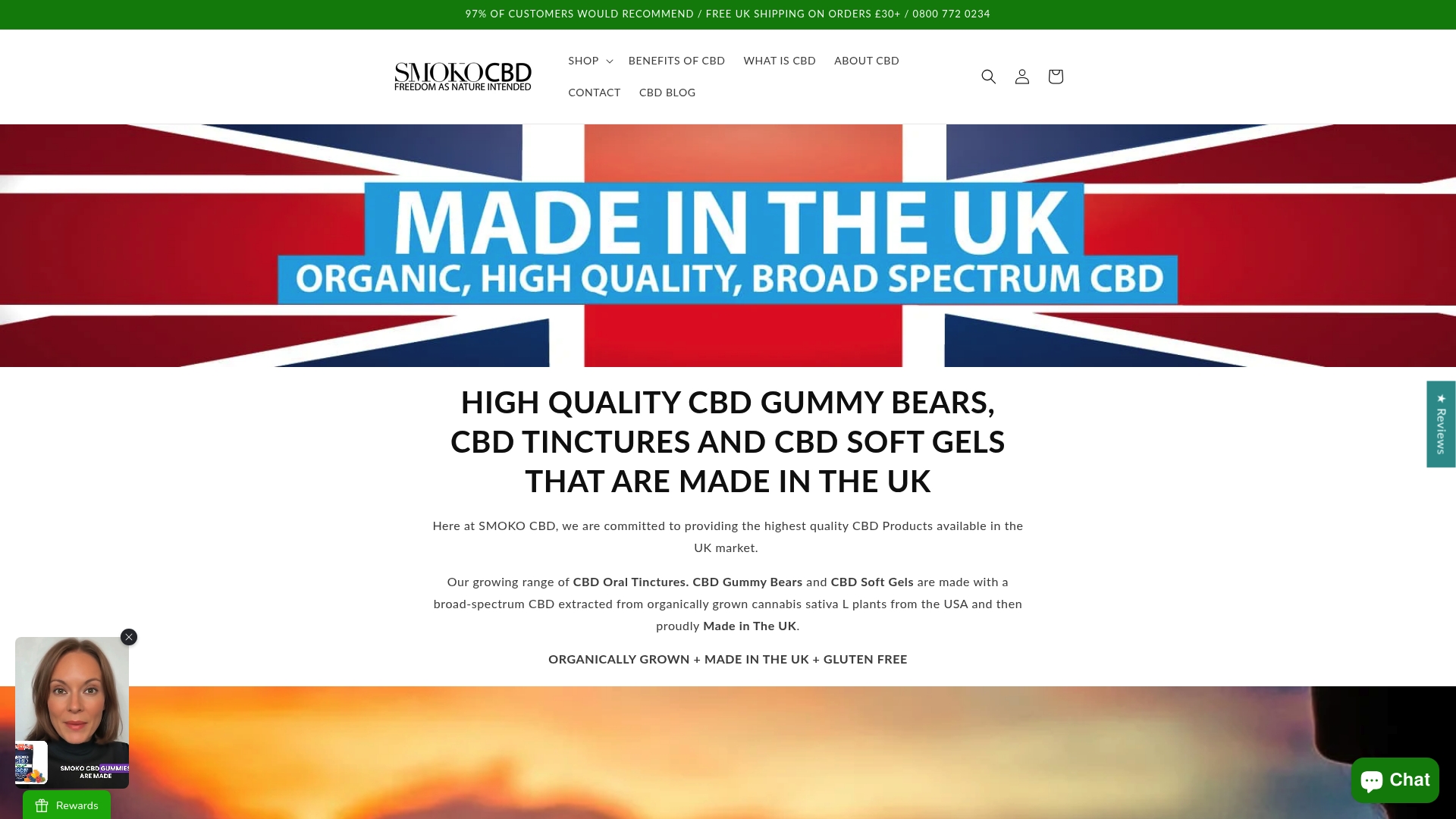
Our current range includes:
- CBD tinctures.
- CBD gummy bears, for anyone tracking daily intake against FSA guidance.
- CBD soft gels.
Before you buy anything, from us or anyone else, check the batch COA, confirm the LOQ suits the pack size, and get in touch with our customer support team if you have questions about a specific product.
This article is general information, not a substitute for advice from a qualified doctor. Consult a qualified healthcare professional about your own circumstances before acting on anything here.
FAQ
What is the legal THC limit in the UK?
There is no single finished-product THC percentage that makes a CBD product automatically legal. The practical enforcement benchmark from the Home Office and Government Chemist is 1 mg of controlled cannabinoids per whole container, assessed as a worst-case total rather than a simple percentage.
What does it feel like to use THC?
THC is the cannabinoid responsible for intoxicating effects, and how strongly it is felt depends on the amount absorbed and the route taken, whether oral, inhaled or topical, according to ACMD guidance. A genuine CBD product with zero detectable THC should not be expected to produce any intoxicating effect at all.
What is the maximum THC limit?
For consumer products, the relevant figure is the 1 mg per container benchmark, alongside the ACMD’s recommended 50 microgram per serving cap for total delta-9-THC.
Does THC oil get you stoned?
A genuine CBD oil with verified non-detectable THC, backed by a Certificate of Analysis, should not produce intoxicating effects, since there is effectively no measurable THC present. Products with meaningful THC content behave differently, which is exactly why checking a batch COA before buying matters more than reading a percentage on the label.