TL;DR:
- THC-free CBD is safer and more compliant with UK regulations than full-spectrum options containing THC.
- Choosing THC-free CBD reduces legal risks, drug test failures, and health concerns like anxiety or sleep disruptions.
- Always verify third-party lab reports confirming non-detectable THC levels before purchasing CBD products.
Not all CBD products are created equal, and for UK consumers focused on pain relief, anxiety management, or better sleep, the difference between THC-containing and THC-free CBD could matter far more than you realise. Many people assume that buying a CBD oil or gummy automatically means zero THC, but that simply is not the case. Full-spectrum extracts retain varying levels of tetrahydrocannabinol (THC), the psychoactive compound in cannabis, and even trace amounts carry real legal and health implications. This guide breaks down exactly why choosing THC-free CBD is the smarter, safer decision for your wellness routine.
Table of Contents
- Understanding THC and CBD: What sets them apart
- Legal and health reasons to avoid THC in CBD products
- How THC-free CBD maximises wellness benefits
- Recognising and choosing quality THC-free CBD products in the UK
- Why the THC-free trend is more than a legal technicality
- Explore trusted THC-free CBD solutions for your wellness
- Frequently asked questions
Key Takeaways
| Point | Details |
|---|---|
| THC and CBD differ | THC is psychoactive and tightly regulated in the UK while CBD offers wellness benefits without intoxication. |
| Legal risks of THC | Even small amounts of THC in CBD products can risk drug test failures and legal trouble. |
| Wellness is maximised | THC-free CBD supports anxiety, sleep, and pain relief with minimal risk of unwanted effects. |
| Check for quality | Verify every purchase with visible lab reports and opt for broad-spectrum or isolate CBD in the UK. |
Understanding THC and CBD: What sets them apart
With the context set, it is important to grasp what makes THC and CBD fundamentally different before making any purchasing decision.
CBD (cannabidiol) and THC (tetrahydrocannabinol) are both cannabinoids found in the cannabis plant, but they behave very differently once inside the body. CBD is non-psychoactive, meaning it does not produce a “high.” It interacts with the endocannabinoid system in a way that supports balance, calm, and comfort without altering your state of mind. THC, on the other hand, binds directly to CB1 receptors in the brain and central nervous system, which is precisely what triggers the intoxicating effect associated with cannabis use.
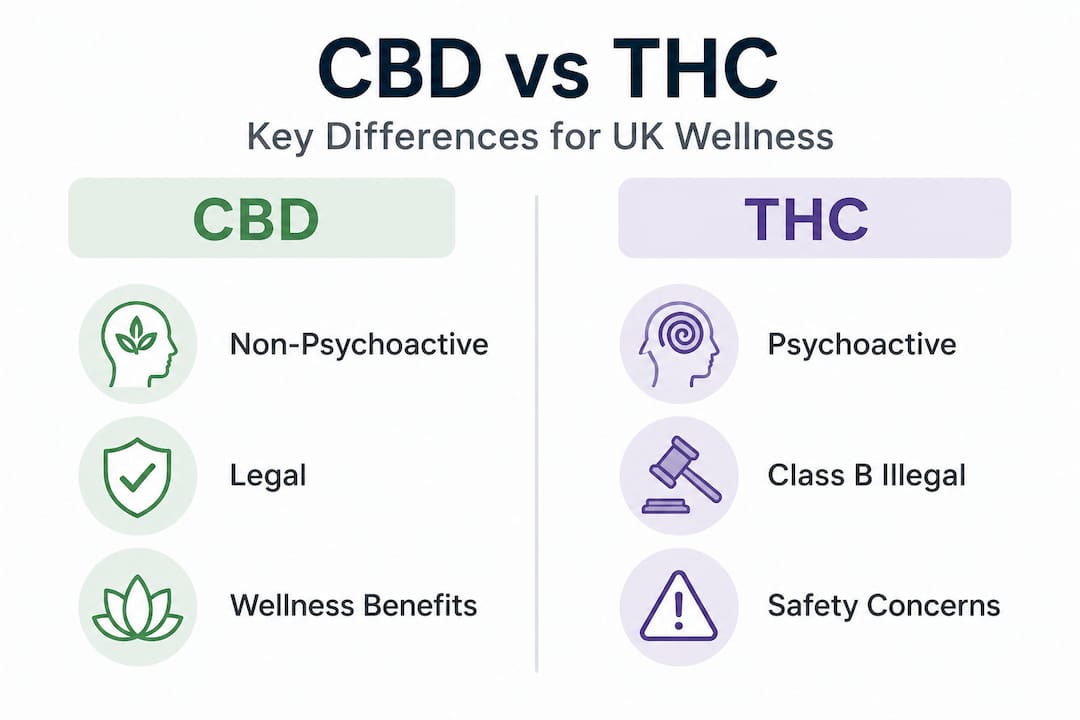
In the UK, THC and CBD carry different legal statuses that consumers must understand. CBD products are legal to buy and use, provided they meet strict criteria. THC, however, remains a Class B controlled substance. CBD products sold in the UK must not exceed 1mg of THC per container, regardless of the product’s overall size. This is a hard limit, not a guideline. Understanding what is THC-free CBD and how it differs from full-spectrum options is the first step toward making a truly informed choice.
Here is a quick comparison to clarify the key distinctions:
| Feature | CBD | THC |
|---|---|---|
| Psychoactive? | No | Yes |
| Legal in UK? | Yes (within limits) | No (Class B) |
| Causes a “high”? | No | Yes |
| Drug test risk? | Low | High |
| Common wellness use | Pain, anxiety, sleep | Recreational/medical |
| Typical product type | Oils, gummies, capsules | Controlled medicines only |
The summary of differences between THC and CBD makes it clear that these are not interchangeable compounds. CBD supports your body’s natural regulatory systems without the unwanted psychoactive baggage. For anyone using CBD for daily wellness, understanding these CBD vs THC key differences is not just academic. It is genuinely practical.
Key distinctions at a glance:
- CBD does not impair judgement, coordination, or cognitive function
- THC can cause anxiety, paranoia, and impaired reaction time even at low doses
- CBD is widely available as a food supplement in the UK
- THC remains tightly controlled and is not available in standard wellness products
- Third-party lab testing is the only reliable way to confirm actual THC content
Legal and health reasons to avoid THC in CBD products
Now that the basics are clear, let us look at why it is crucial, from both legal and health perspectives, to opt for THC-free CBD in the UK.
The UK regulatory framework around CBD is stricter than many consumers appreciate. UK law and compliance considerations for THC levels mean that any product exceeding 1mg of THC per container is technically illegal to sell. The Food Standards Agency (FSA) also maintains a list of approved CBD products, and novel food authorisation requirements are tightening. Buying unverified products from overseas brands could put you on the wrong side of the law without you even knowing.
Drug testing is another serious concern. Employers in safety-sensitive industries, including transport, construction, healthcare, and emergency services, routinely screen for THC. Even trace amounts from a “low-THC” CBD product can accumulate in fatty tissue over time and trigger a positive result. This is not a theoretical risk. The CBD safe use checklist highlights this as one of the most frequently overlooked hazards for regular CBD users.
Important: Vulnerable groups and legal standards require particular caution. Pregnant individuals, breastfeeding mothers, children, and those on certain medications face heightened risks from any THC exposure, even at levels that might seem negligible to a healthy adult.
Here is a breakdown of who faces the greatest risk from trace THC in CBD products:
| Population group | Primary concern |
|---|---|
| Pregnant or breastfeeding | THC crosses placental barrier |
| Children and adolescents | Developing brain sensitivity |
| Safety-sensitive workers | Drug test failure and job loss |
| Those on medication | Potential drug interactions |
| Anxiety sufferers | THC can worsen anxiety symptoms |
| Elderly users | Increased sensitivity to psychoactive effects |
There are also direct health reasons to steer clear of THC. Even at low concentrations, THC can trigger or worsen anxiety in some people, which is the opposite of what most CBD users are seeking. It can also disrupt sleep architecture, causing fragmented rest rather than the deep, restorative sleep that CBD alone tends to support. Reviewing CBD drug safety tips is wise for anyone combining CBD with prescription medicines, as THC adds an additional layer of interaction risk.
Steps to protect yourself from THC exposure in CBD products:
- Always request or download the Certificate of Analysis (COA) before purchasing
- Confirm the COA is from an accredited third-party laboratory, not the brand itself
- Look specifically for “non-detectable” or “ND” next to THC on the lab report
- Check that the product is labelled as broad-spectrum or CBD isolate, not full-spectrum
- Verify the brand complies with UK FSA novel food requirements
- Cross-reference the CBD gummies safety checklist if buying edibles specifically
Following these steps does not take long, and the peace of mind it provides is absolutely worth it.
How THC-free CBD maximises wellness benefits
Beyond legal reasons, wellness-focused users will value the direct benefits of going THC-free, and the advantages are more tangible than you might expect.
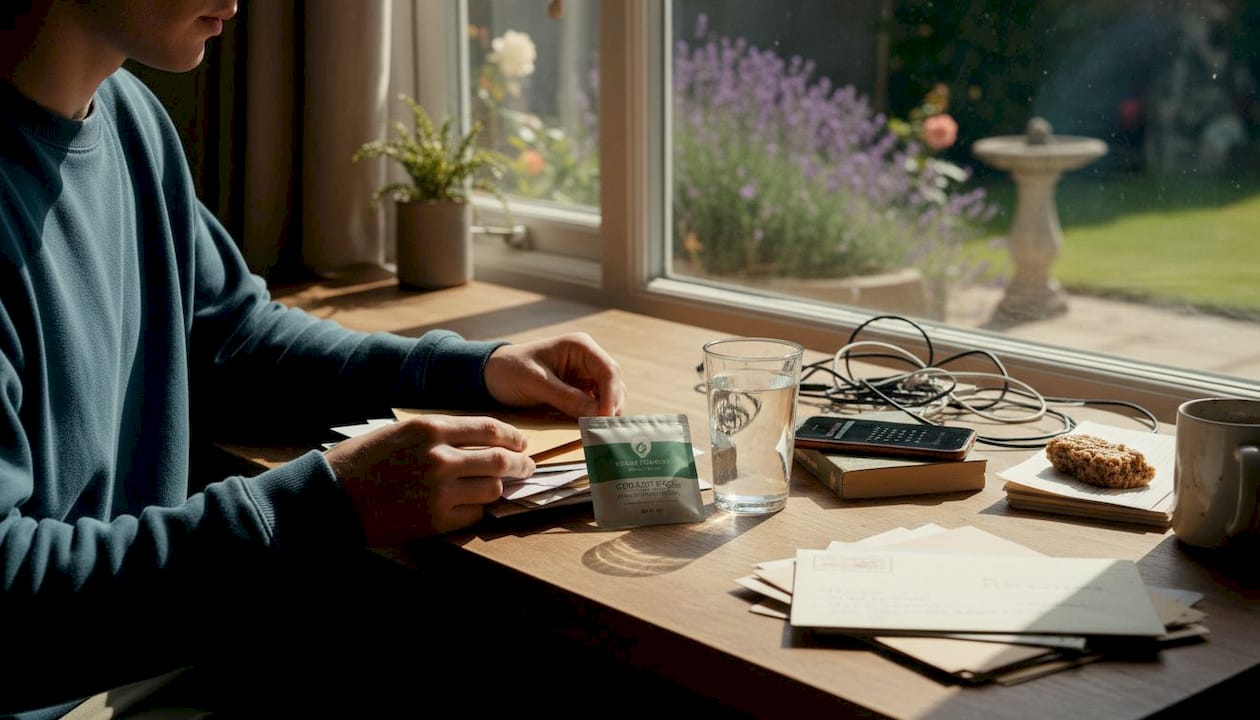
The core appeal of THC-free CBD is simplicity. You get the beneficial cannabinoids, terpenes, and plant compounds your body responds to, without the unpredictable psychoactive element that THC introduces. Broad-spectrum CBD and THC-free choices increase both safety and effectiveness by retaining the “entourage effect,” where multiple cannabinoids and terpenes work together synergistically, minus the THC.
For pain relief, this matters enormously. CBD interacts with the endocannabinoid system to help tone down inflammatory signals and modulate pain perception. Adding THC into the mix can cloud the experience, making it harder to gauge whether your CBD dose is working effectively. THC-free CBD allows better control over your wellness outcomes because you can adjust your dose with confidence, knowing the only active compound is CBD.
Sleep is another area where going THC-free pays dividends. While THC may initially induce drowsiness, research suggests it suppresses REM sleep, the stage associated with memory consolidation and emotional regulation. CBD, by contrast, appears to support natural sleep cycles by reducing the anxiety and physical discomfort that often prevent restful sleep in the first place.
Key wellness benefits of choosing THC-free CBD:
- Clear-headed calm: No psychoactive interference, so you stay focused and functional throughout the day
- Consistent dosing: Predictable effects make it easier to find your optimal daily amount
- Anxiety support: CBD without THC is less likely to trigger or amplify anxious thoughts
- Natural pain management: Supports the endocannabinoid system’s role in regulating inflammation and discomfort
- Better sleep quality: Promotes relaxation without disrupting REM cycles
- Safe for daily use: No risk of tolerance build-up or psychoactive dependence associated with THC
When exploring the various types of CBD products available in the UK, you will find that broad-spectrum oils, soft gel capsules, and gummy bears all offer excellent THC-free options. Each format suits different lifestyles and preferences, but all can deliver meaningful wellness support when sourced correctly.
Pro Tip: If you are new to CBD and unsure whether to choose broad-spectrum or isolate, start with broad-spectrum. It retains beneficial terpenes and minor cannabinoids that work alongside CBD, giving you more of the plant’s natural goodness without any THC.
Recognising and choosing quality THC-free CBD products in the UK
With the benefits and risks covered, it is time to focus on how to shop smart for guaranteed THC-free CBD in the UK.
The single most important document when buying CBD is the Certificate of Analysis (COA). This is a lab report produced by an independent, accredited testing facility that confirms exactly what is (and is not) in the product. Consumers must check lab reports to ensure no THC is present. A trustworthy COA will show a full cannabinoid profile, including a clear “ND” (non-detectable) or “0.00%” reading next to THC.
Here is a practical step-by-step process for selecting a genuinely THC-free CBD product:
- Start with the product type. Choose broad-spectrum or CBD isolate. Full-spectrum always contains some THC, so rule it out from the start.
- Find the COA. Reputable UK brands publish these on their website or provide them on request. If a brand cannot or will not share a COA, walk away.
- Check the testing date. Lab reports should be recent, ideally within the last 12 months, as formulations can change between batches.
- Verify the lab. The testing laboratory should be independent and accredited. Check that it is not affiliated with the brand itself.
- Read the cannabinoid panel. Confirm that THC reads as non-detectable. Also check for THCV and delta-8 THC if you want to be thorough.
- Check UK compliance. Ensure the product meets FSA guidelines and is listed as a food supplement, not a medicine.
- Look at the hemp source. Organically grown hemp from reputable regions, including the USA and parts of Europe, tends to produce cleaner extracts.
Pro Tip: Be cautious of international brands that market aggressively in the UK but are not aligned with UK law. US-legal products may contain THC levels that exceed UK limits. Always buy from brands that specifically confirm compliance with UK FSA regulations and provide UK-specific lab testing. Consulting the broad-spectrum CBD guide can help you understand exactly what to look for on a product label.
Why the THC-free trend is more than a legal technicality
There is a deeper shift happening in the UK CBD market, and it goes well beyond ticking regulatory boxes.
The growing demand for THC-free CBD reflects a broader change in how UK consumers think about wellness. People are no longer just looking for a product that is technically legal. They want something they can trust completely, use every single day, and integrate into a healthy lifestyle without second-guessing. The wellness guide to pure CBD captures this shift well. Transparency, consistency, and verified purity have become the new benchmarks for quality.
Here is the contrarian point worth making: THC-free CBD is not just for vulnerable populations or people worried about drug tests. It is for anyone who values predictability in their wellness routine. Even wellness-savvy users who feel comfortable with cannabis in general can underestimate how trace THC accumulates over weeks of daily CBD use. The psychoactive threshold is not a fixed line. It shifts depending on your body weight, metabolism, and how much CBD you are taking alongside it.
Brands are responding to this demand by investing in better extraction technology, more rigorous batch testing, and clearer labelling. The market is moving towards a model where zero-THC is the default expectation, not a premium add-on. That is a genuinely positive development for UK consumers, because it raises the standard across the board.
What comes next is likely even tighter FSA oversight, more standardised COA formats, and greater consumer literacy around cannabinoid profiles. The brands that will thrive are those that treat transparency as a core value rather than a marketing tactic. If you are choosing a CBD brand in 2026, look for one that publishes batch-specific lab results, not just a single generic report. That level of rigour is what separates genuinely trustworthy products from the rest.
Explore trusted THC-free CBD solutions for your wellness
If you are ready to experience the benefits of CBD without any of the uncertainty around THC, SMOKO CBD has done the hard work for you.
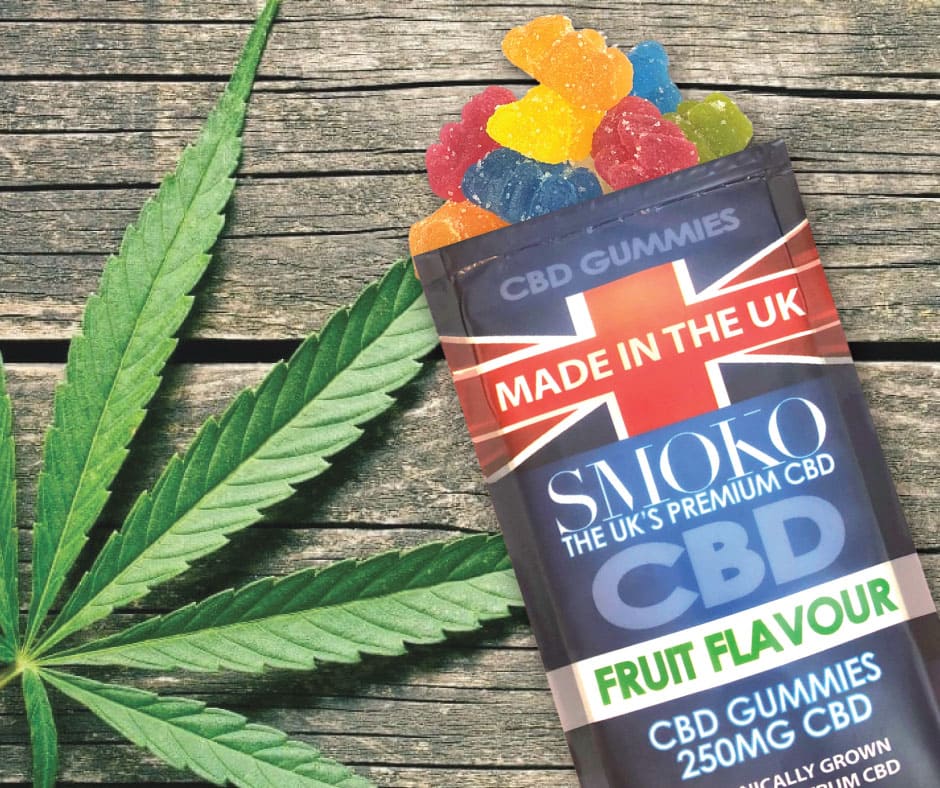
Every SMOKO CBD product is broad-spectrum, third-party lab tested, and confirmed THC-free, so you can focus on your wellness rather than worrying about compliance or unwanted side effects. Whether you prefer the flexibility of a CBD mint tincture for precise daily dosing, the convenience of 750mg soft gels for on-the-go use, or the enjoyable simplicity of CBD gummies and tinctures, there is a format to suit your routine. All products are made in the UK using organically grown hemp, giving you the peace of mind that comes from knowing exactly what you are putting into your body.
Frequently asked questions
Can trace THC in CBD products show up on drug tests in the UK?
Yes, even trace levels of THC can accumulate in the body and trigger a positive drug test result, making THC-free products essential for anyone subject to workplace or legal testing.
Is broad-spectrum CBD always THC-free?
Broad-spectrum CBD is formulated to contain no THC, but you should always verify this by checking the product’s COA for a non-detectable THC reading before purchasing.
Who should be most cautious about THC in CBD?
Vulnerable populations must avoid THC exposure, particularly pregnant and breastfeeding individuals, children, those in safety-sensitive employment, and anyone taking prescription medication that may interact with cannabinoids.
Why do some CBD products contain THC at all?
Full-spectrum CBD contains various cannabinoids including THC, because the extraction process retains the complete profile of the hemp plant. Always check the product type and lab results before buying to avoid unintended THC exposure.
How do I check if a CBD product is truly THC-free?
Lab reports verify the absence of THC, so look for a Certificate of Analysis from a reputable, independent UK laboratory showing a non-detectable result for THC before committing to any product.