If you need the plant’s supporting compounds but must avoid THC entirely, broad-spectrum is the safer pick. If you want the fullest plant profile and can accept trace THC, full-spectrum often delivers a stronger effect at a lower dose. Either way, the FSA’s provisional daily limit of 10 mg a day for a healthy 70 kg adult should guide how much you take, and a lab report should confirm what’s actually in the bottle.
TL;DR:
- Broad-spectrum CBD products are safer for those avoiding THC due to drug testing, pregnancy, or medication, as they contain non-detectable THC confirmed by lab reports.
- Full-spectrum extracts can be more effective at lower doses because of the entourage effect, but they retain trace THC levels, which might be unacceptable for certain users.
- Dosing limits for CBD in the UK are generally capped at 10 mg per day for a healthy adult, and a lab report should verify actual cannabinoid content before purchase.
- The choice between full-spectrum and broad-spectrum depends mainly on individual THC tolerance and the need for verified lab transparency, not on spectrum superiority.
- Reputable brands, like Smokocbd, publish third-party lab results confirming non-detectable THC, making verified transparency essential for safe, effective use.
Table of Contents
- Broad spectrum vs full spectrum: the three extract types explained
- Key differences between full spectrum and broad spectrum
- When full spectrum is likely to work best
- When broad spectrum is likely to work best
- How to choose between full and broad spectrum
- Smokocbd’s approach to quality and transparency
- Why the entourage effect debate misses the point
- Ready to try a verified zero-THC broad-spectrum product?
- Sources
- FAQ
Broad spectrum vs full spectrum: the three extract types explained
Every CBD product on the market falls into one of three categories, and the label rarely explains the difference clearly enough.
- Full-spectrum contains the hemp plant’s complete range of cannabinoids and terpenes, including naturally occurring trace THC.
- Broad-spectrum starts life as full-spectrum, then goes through an additional process that strips out THC while keeping the other minor cannabinoids and terpenes intact.
- Isolate is pure CBD with everything else removed. No terpenes, no minor cannabinoids, no THC.
The phrase “non-detectable” THC matters more than it sounds. It means a lab’s testing equipment cannot pick up any trace, which differs from “zero” in a strictly chemical sense but is the practical benchmark manufacturers and regulators use. A certificate of analysis (COA) from independent lab testing is the only reliable way to confirm this, because label claims alone tell you nothing verifiable. You’ll find all three extract types across the usual product forms: oral tinctures, gummies, and soft gel capsules, so the spectrum matters more to your decision than the delivery method does.
Key differences between full spectrum and broad spectrum
The technical gap between these two come down to one compound: THC. Full-spectrum extracts retain it at trace levels, typically defined by regulation rather than by taste or effect. Broad-spectrum extracts go through a further refinement step, often a secondary chromatography pass, specifically to bring THC below detectable limits while leaving cannabinoids like CBG and CBN, along with the plant’s terpenes, largely untouched.
Statistic callout: One clinical discussion of whole-plant versus isolated cannabinoids found a treatment response at around 30 mg/day for a full-spectrum extract, compared with roughly 300 mg/day needed for an isolate in the same trial context. That’s a tenfold dosing gap, though the researchers stress this comparison is not conclusive across conditions.
That dosing gap is the practical case for the “entourage effect”, the theory that cannabinoids and terpenes work better together than any single compound alone. It’s a reasonable hypothesis, but the evidence base is still thin, and broad-spectrum users don’t lose entirely on this front since most of the supporting terpenes and minor cannabinoids survive the THC-removal step. What you lose is the THC itself, not the surrounding cast of compounds thought to amplify it.
When full spectrum is likely to work best
Full-spectrum tends to suit people who want the strongest possible effect from the smallest dose and who have no reason to worry about even trace THC turning up in their system.
Open-label studies of commercially available CBD products have shown improvements in wellbeing, sleep, and anxiety symptoms across all three spectrum types, though researchers haven’t proven any single spectrum superior once you account for dose, form, and the confounding effect of other ingredients. Where full-spectrum does have a plausible edge is in dosing efficiency: because THC and minor cannabinoids may work together, some people report noticeable results at doses well below what an isolate would require for the same effect.
Full-spectrum tends to make sense for:
- Someone with no workplace drug testing to worry about.
- Someone who has tried broad-spectrum or isolate products without the results they wanted.
- Someone managing more stubborn sleep or pain symptoms who wants the strongest available plant profile.
Pro Tip: If you’re new to full-spectrum, start at the low end of the manufacturer’s suggested dose and give it at least a week before adjusting. Trace THC accumulates gradually with daily use, even though it won’t intoxicate you at these concentrations.
When broad spectrum is likely to work best
Broad-spectrum earns its place for anyone who wants the terpene and minor-cannabinoid support of a full-plant extract without any THC risk at all. The same open-label research that failed to crown one spectrum universally superior also found broad-spectrum products delivering comparable improvements in wellbeing measures, which suggests the THC removal step doesn’t gut the extract’s usefulness.
Reasons to lean broad-spectrum include:
- Workplace or professional drug testing where any THC result, however trace, is a problem.
- Pregnancy or breastfeeding, where the FSA and other health bodies advise avoiding CBD products altogether without medical guidance.
- Taking prescription medication, where THC’s own interaction profile adds an extra variable you’d rather remove.
Verifying a zero-THC claim always comes back to the COA. Check that the lab report lists THC as “non-detectable” or below the stated limit, not simply absent from the ingredients panel, and confirm the report is dated and matches the batch number on your product.
How to choose between full and broad spectrum
Work through these in order, and the decision usually resolves itself within a couple of minutes.
- Decide your THC tolerance first. If any THC exposure is unacceptable (testing, pregnancy, certain professions), broad-spectrum is the only sensible route.
- Check for a current COA. Reputable brands publish one for every batch; if you can’t find it, treat that as a red flag rather than an oversight.
- Read the claimed cannabinoid profile. Look for CBG, CBN, and terpene content alongside the CBD figure, not just the headline CBD milligrams.
- Match the form to your routine. Tinctures suit flexible dosing, gummies suit consistency, and soft gels suit anyone who’d rather not taste hemp extract at all.
- Respect the UK’s provisional limit. The FSA’s guidance sets a provisional ADI of 10 mg CBD per day for a healthy 70 kg adult, with added caution for pregnant or breastfeeding people, children, and anyone on medication.
CBD products sit in a transitional regulatory phase in the UK: extracts and isolates are classed as novel foods and require authorisation, so buying from brands linked to a credible application matters as much as checking the lab report. If you take prescription medicines, speak to a clinician before starting, since interaction risk is a genuine concern flagged by UK food safety guidance, not a theoretical one.
Pro Tip: Keep a simple log of dose, timing, and how you feel for the first fortnight. It’s the fastest way to work out whether you’re actually under, at, or over your personal effective dose.
Smokocbd’s approach to quality and transparency
Smokocbd focuses entirely on broad-spectrum formulations across its tinctures, gummy bears, and soft gel capsules, all made in the UK using organically grown hemp sourced from the USA. Every batch goes through third-party lab testing specifically to confirm zero detectable THC, which matters most to exactly the readers this article is written for: people who want the terpene and minor-cannabinoid support of a full-plant extract without any THC exposure at all.
Because the UK novel food framework is still settling, brands that publish current lab reports and clear dosage guidance are simply more useful to work with than those that don’t. Readers who want the fuller picture on dosing limits, age restrictions, or how isolates differ from broad-spectrum can find more detail in Smokocbd’s own guides:
- How much CBD is too much? A UK safety guide
- Why the UK’s 18+ age limit and 10 mg ADI matter
- What cannabidiol isolate actually is
Why the entourage effect debate misses the point
The industry loves to argue full-spectrum versus broad-spectrum as though one has definitively won. It hasn’t, and pretending otherwise does readers a disservice. The honest clinical position, drawn from research comparing whole-plant extracts against isolates, is that no spectrum has unequivocal superiority across all conditions. Dose, form, and individual biology confound the comparison far more than most marketing admits.

What the conventional advice gets wrong is treating “which spectrum is stronger” as the main question. For most wellness users, the more useful question is “which spectrum fits my actual constraints”, and that’s a THC question first, an evidence question second. If you have zero tolerance for THC, whether by choice, pregnancy, medication, or testing, broad-spectrum removes the debate entirely while still giving you the terpene and minor-cannabinoid support that full-spectrum fans prize.
My honest take: readers should prioritise a verified COA over spectrum theory every time. A broad-spectrum product with a clean, current lab report beats a full-spectrum product with vague labelling, regardless of which theoretically works better. The entourage effect might be real; a missing lab report is definitely a problem.
— Mike
Ready to try a verified zero-THC broad-spectrum product?
Smokocbd’s entire range is broad-spectrum by design, built for readers who want the plant’s supporting compounds without any THC risk at all. That’s a genuinely different proposition from a full-spectrum tincture you’d have to trust on THC content alone: every batch carries third-party lab testing to confirm non-detectable THC before it reaches your door.
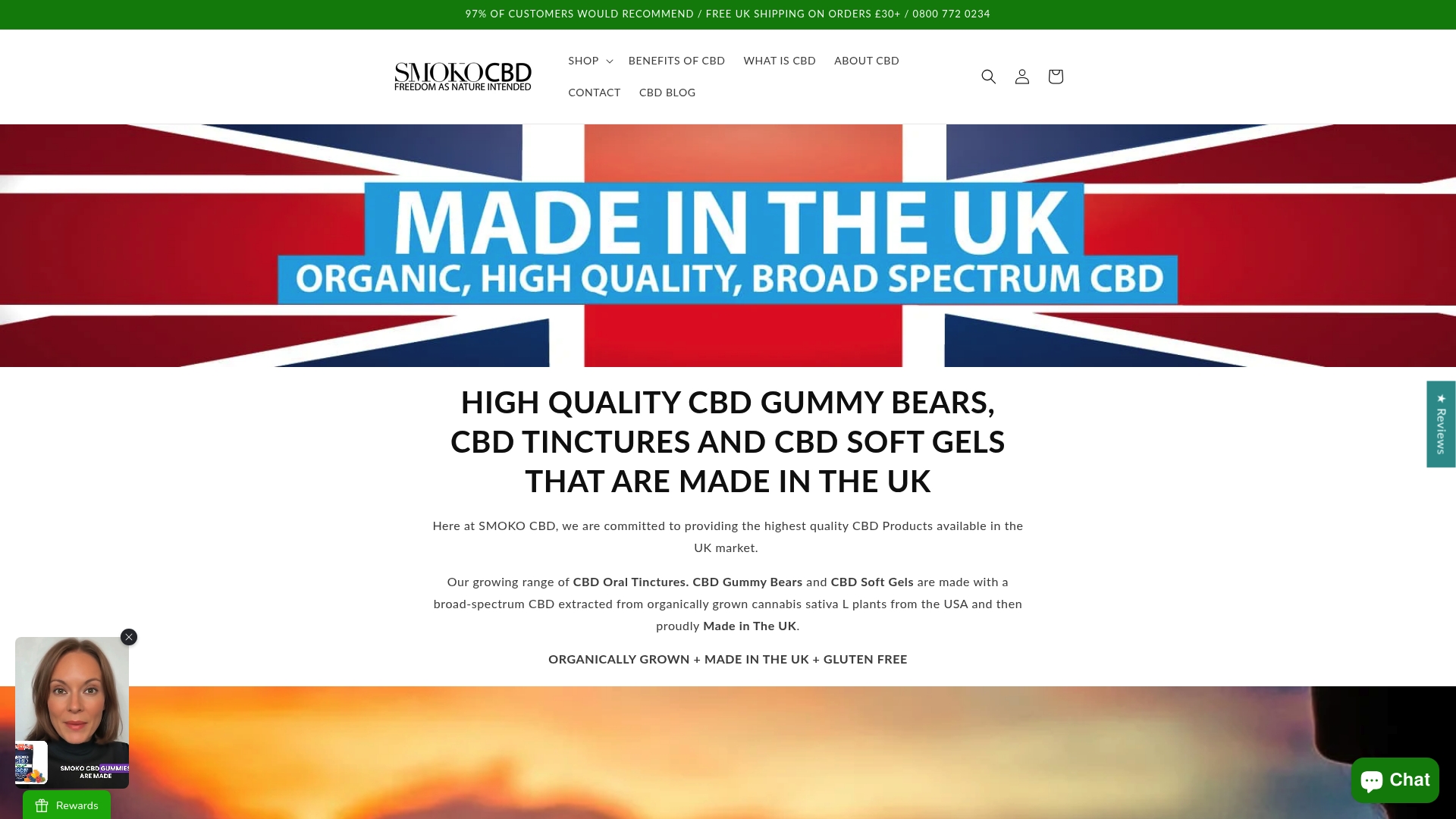
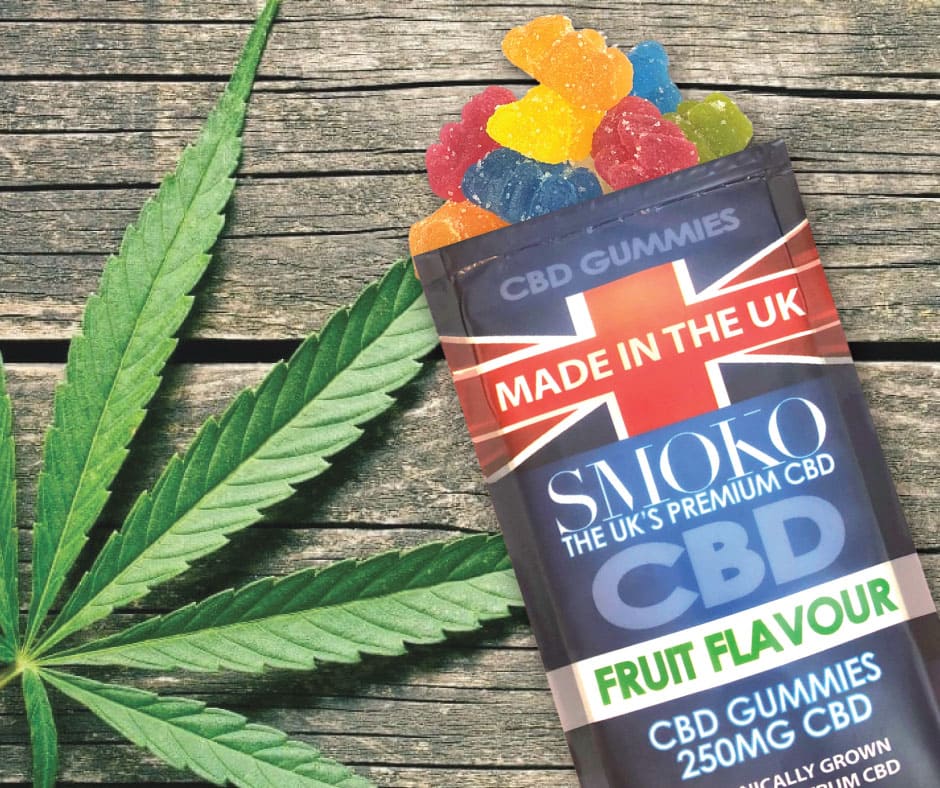
Whether you prefer the flexible dosing of an oral tincture, the consistency of a gummy, or the no-taste convenience of a soft gel, Smokocbd’s product collection lists all three broad-spectrum forms side by side. The 250mg broad-spectrum gummy pack is a straightforward starting point if you’d rather count gummies than measure drops. Check the COA linked against each product before you buy, compare it to the batch number on arrival, and order with any available shipping offers.
This article is general information, not a substitute for advice from a qualified doctor. Consult a qualified healthcare professional about your own circumstances before acting on anything here.
Sources
- Safety assessment of cannabidiol (CBD) — FSA
- Clinical discussion of whole‑plant versus isolated cannabinoids (PMC)
- Full‑spectrum CBD vs broad‑spectrum CBD — Medical News Today
- CBD business guidance — Food Standards Agency
FAQ
Is full-spectrum CBD legal in the UK?
Full-spectrum CBD is legal provided its THC content stays within the UK’s controlled drugs threshold and the product is properly authorised as a novel food under FSA guidance. Buying from a brand linked to a credible novel food application is the safest way to confirm legitimacy.
Does full-spectrum CBD get you higher?
No. The trace THC levels in full-spectrum products fall far below the threshold needed to cause intoxication, so users don’t experience a “high” from typical doses. It can still contribute to the entourage effect some users report, without the psychoactive impact associated with recreational THC amounts.
Does broad-spectrum CBD actually work?
Open-label research on commercially available CBD products has recorded improvements in wellbeing, anxiety, and sleep measures for broad-spectrum users, comparable to full-spectrum and isolate products in the same trials. No spectrum has been proven definitively superior, so broad-spectrum options like Smokocbd’s tinctures, gummies, and soft gels remain a reasonable, THC-free route to those benefits.
Which form of CBD is most effective, full spectrum, broad spectrum, or isolate?
There’s no single answer, since dose, product form, and individual biology all affect the outcome more than spectrum alone. Full-spectrum may allow lower effective doses thanks to the entourage effect, but broad-spectrum delivers similar minor-cannabinoid support without any THC exposure, making it the more individualised choice for THC-sensitive users.