TL;DR:
- Cannabis originated in temperate Asia, particularly in the Himalayan regions, due to its high genetic diversity.
- Today, it is cultivated worldwide in diverse climates, with practices shaped by regional climate and tradition.
Cannabis, known formally as Cannabis sativa, is cultivated on every inhabited continent, with its origins traced to temperate Asia centred on the eastern Tibetan Plateau and the Hindu Kush mountain range. The plant’s greatest genetic diversity sits in the Himalayan foothills and adjacent South Asian lowlands, which tells us this is where cultivation first took root thousands of years ago. Today, the question of where is pot grown has a genuinely global answer. From outdoor fields in California to greenhouse operations in the Netherlands, cannabis farming reflects an extraordinary range of climates, traditions, and legal frameworks. Understanding where and how it grows helps explain why different regions produce such distinct varieties and products.
Where is pot grown around the world?
Cannabis grows naturally or is actively cultivated across a remarkable spread of geography. Its spread from Central Asia outward followed human migration routes, trade paths, and colonial expansion over millennia. The history of cannabidiol traces this movement from ancient Asian civilisations through to modern medicine, showing just how far the plant has travelled.
The regions best suited for cannabis cultivation share a few common traits: adequate sunlight, moderate to warm temperatures, and reliable water sources. Broadly, cannabis thrives in:
- Central Asia and the Himalayas. Afghanistan, Pakistan, and northern India represent the original centres of diversity. The Hindu Kush range in particular gave rise to the short, resinous drug-type plants used for hashish production for centuries.
- South and Southeast Asia. Countries including Thailand, Cambodia, and India cultivate tall, narrow-leaf varieties adapted to tropical and subtropical conditions. These plants grow vigorously in high humidity and intense sunlight.
- Africa. Morocco remains one of the world’s largest producers of cannabis resin. Sub-Saharan nations including South Africa and Malawi have long histories of outdoor cultivation for local and export markets.
- The Americas. North America, particularly the United States, has become a major production centre following legalisation in multiple states. South American countries including Colombia and Jamaica have cultivated cannabis for decades, benefiting from tropical climates.
- Europe and Australasia. Regulated hemp cultivation is widespread across Europe, with countries such as France, the Netherlands, and Spain leading production. Australia has developed a licensed medical cannabis sector since 2016.
Feral or naturalised cannabis populations also exist across parts of Eastern Europe, Central Asia, and North America. These are descended from historical hemp crops and grow without human intervention, though they typically produce low levels of cannabinoids.
How does climate shape cannabis farming practices?
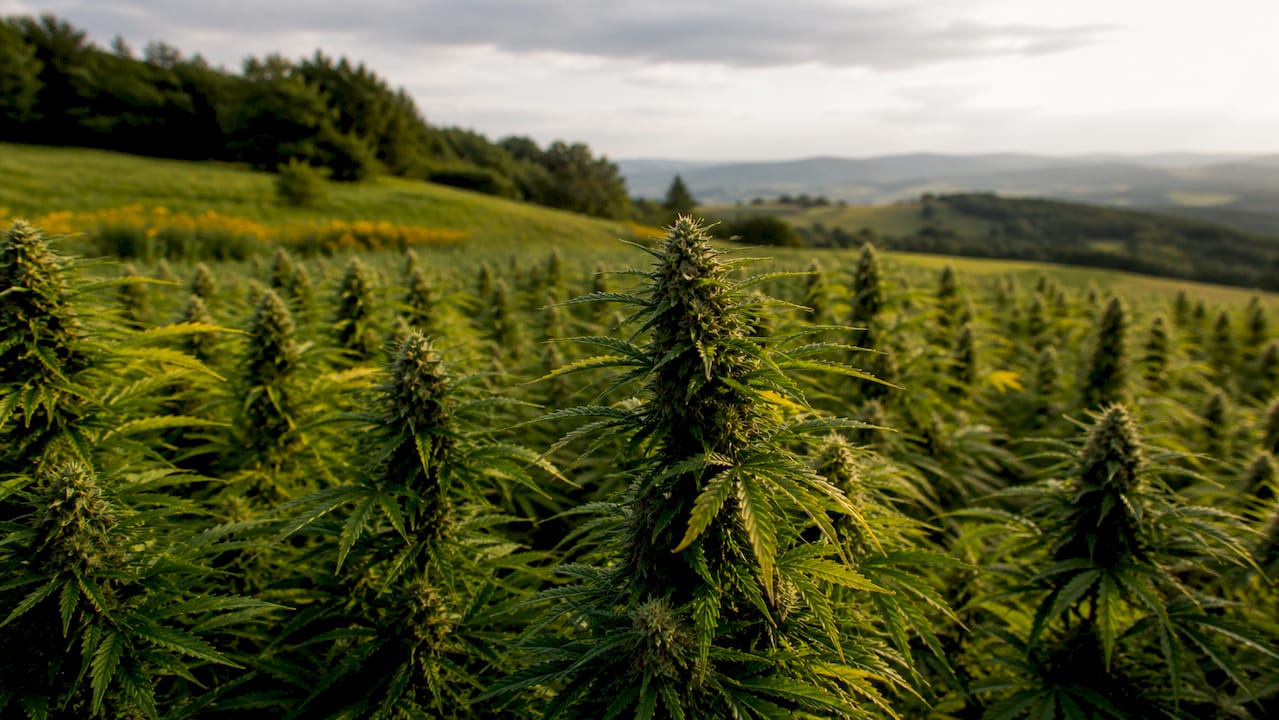
Climate is the single biggest factor determining how cannabis is farmed in any given region. Outdoor cultivation dominates globally, with local practices shaped tightly by tradition and environment. The Hindu Kush tradition favours short, stocky plants bred for resin production and hashish making. Southeast Asian cultivation, by contrast, produces tall, narrow-leaf plants suited to long tropical growing seasons.
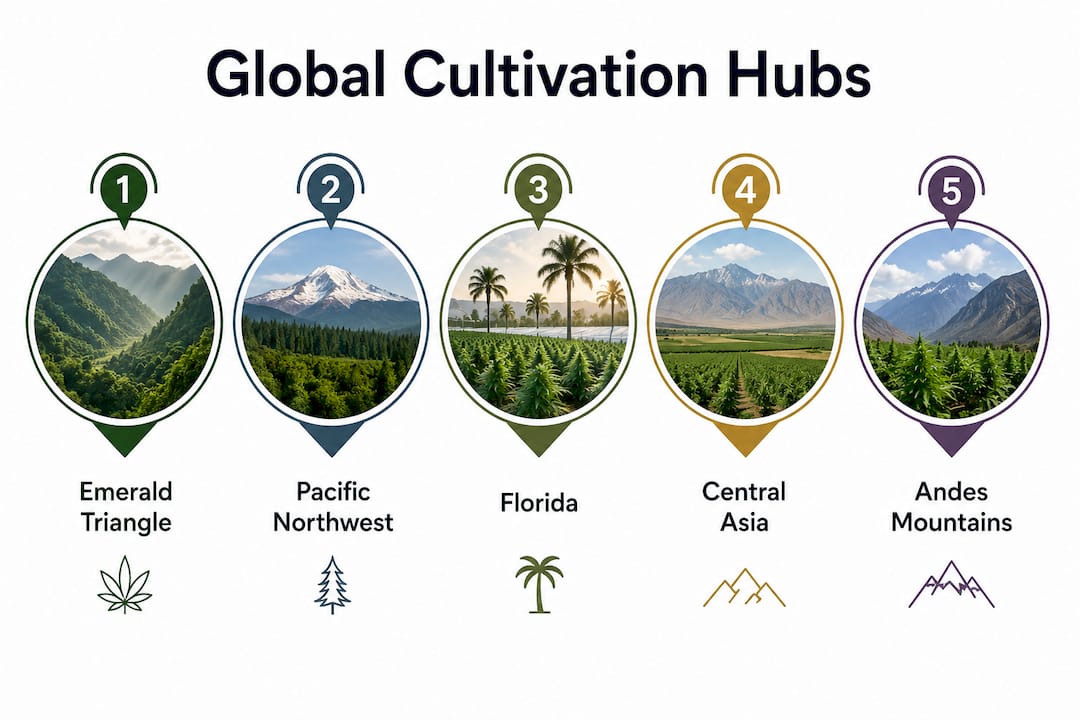
Sunlight hours, temperature ranges, humidity, and water availability all dictate which strains succeed and which methods growers use. In humid temperate zones, mould resistance becomes a priority. Growers in the Pacific Northwest of the United States, for example, select strains with tight bud structures that resist botrytis (grey mould) during the wet autumn harvest window. In desert climates, heat stress and water scarcity push growers towards drought-tolerant genetics and drip irrigation systems.
Subtropical Florida offers a striking contrast. Florida’s solar elevation maintains a high daily light integral even in winter, which means growers can sustain plant growth without heavy reliance on artificial lighting. This climate advantage supports three to four full harvest cycles per year, a figure that most temperate regions simply cannot match.
Altitude also plays a significant role. High-altitude regions like the Himalayas and parts of the Andes experience intense ultraviolet radiation and short growing seasons. Cannabis plants there have evolved to flower quickly and produce dense, resinous buds as a response to environmental stress. Growers in these zones rely on early-flowering genetics that complete their cycle before the first frost arrives.
Pro Tip: If you are growing outdoors in a temperate climate, choose an autoflowering or early-finishing variety. These genetics complete their cycle in 70–90 days regardless of day length, giving you a reliable harvest before autumn rains set in.
What are the major cannabis cultivation hubs today?
The geography of cannabis production has shifted considerably over the past decade, driven by legalisation, market demand, and environmental pressures. Several regions now stand out as dominant production centres.
California’s Emerald Triangle
The Emerald Triangle, comprising Humboldt, Mendocino, and Trinity counties in Northern California, is the most recognised cannabis cultivation region in the United States. Its Mediterranean climate, with warm dry summers and mild winters, suits outdoor cannabis perfectly. However, California’s cultivation geography has shifted between 2018 and 2024, with unlicensed grows moving from remote mountain terrain to flatter, more accessible areas and then back again as enforcement patterns changed. Licensed and unlicensed operations now occupy distinctly different geographic niches within the same state.
The Pacific Northwest
Oregon and Washington State offer long growing seasons with warm summers, though autumn humidity creates mould risk. Growers here invest heavily in strain selection and harvest timing to avoid crop losses. The region’s established cannabis culture and skilled workforce make it a significant production hub despite the climatic challenges.
Florida’s subtropical advantage
Florida represents one of the most promising emerging regions for commercial cannabis cultivation. Subtropical Florida provides a prime environment for year-round production, with multiple annual harvests possible due to its photoperiod and solar radiation profile. Infrastructure stability, access to water, and a growing licensed market make it an increasingly attractive location for commercial operators.
The table below summarises the key characteristics of major cultivation regions.
| Region | Climate type | Key advantage | Main challenge |
|---|---|---|---|
| Emerald Triangle, California | Mediterranean | Long dry summers, established expertise | Wildfire risk, regulatory complexity |
| Pacific Northwest | Temperate maritime | Long growing season | Autumn humidity, mould pressure |
| Florida | Subtropical | Multiple annual harvests, high solar input | Regulatory framework still maturing |
| Hindu Kush, Central Asia | Semi-arid, high altitude | Centuries of hashish tradition, adapted genetics | Limited infrastructure, political instability |
| Morocco | Semi-arid | Large-scale outdoor production | Unlicensed status, water scarcity |
What cultivation techniques are used worldwide?
Cannabis cultivation methods vary enormously depending on legal status, climate, and the intended end product. Three broad approaches define the global picture.
Outdoor cultivation remains the dominant method worldwide for fibre, seed, and traditional drug-type cannabis. It requires the least energy input and produces the largest yields per plant. Farmers in regions like Morocco, Afghanistan, and rural California rely almost entirely on sunlight and natural rainfall, with minimal infrastructure.
Indoor cultivation has grown significantly in legally regulated markets. Indoor grows require high-intensity lighting and carefully managed light and dark cycles during flowering. Energy consumption is high, but growers gain complete control over temperature, humidity, and photoperiod. This method suits urban markets where outdoor space is limited and year-round supply is expected.
Greenhouse cultivation sits between the two. Growers use natural sunlight supplemented by artificial lighting, with climate control systems managing temperature and humidity. This method is common in the Netherlands and increasingly in North America, offering a balance between energy efficiency and production consistency.
Key techniques used across all three methods include:
- Living soil preparation. Custom living soils with organic amendments such as bone meal, kelp, and worm castings buffer plants against poor native soils, whether heavy clay or sandy loam. This approach feeds the soil ecosystem rather than the plant directly, producing more stable and flavourful results.
- Movable pot systems. Movable pots allow growers in temperate and humid zones to react quickly to unexpected weather. Plants can be moved indoors during cold snaps or heavy rain, protecting the crop without the cost of a full greenhouse structure.
- Strain-specific selection. Matching genetics to the local environment is the single most reliable way to improve outcomes. Mould-resistant varieties suit humid coastal regions. Heat-tolerant strains perform better in desert climates. Early-finishing autoflowers work well at high altitudes or in short-season temperate zones.
Pro Tip: When building a living soil mix for outdoor cannabis, include a slow-release nitrogen source such as blood meal alongside a phosphorus-rich amendment like bone meal. This combination supports vigorous vegetative growth followed by strong flower development without mid-season feeding.
You can read more about regional cultivation differences and how geography shapes the plant’s characteristics in Smokocbd’s dedicated cultivation guide.
Key takeaways
Cannabis cultivation is a global practice shaped by climate, tradition, and legal frameworks, with the most productive regions combining strong sunlight, stable temperatures, and adapted genetics.
| Point | Details |
|---|---|
| Origins in Central Asia | Cannabis originates in the Tibetan Plateau and Hindu Kush, where genetic diversity is greatest. |
| Climate drives method | Outdoor cultivation dominates globally, but indoor and greenhouse methods suit regulated markets. |
| Florida leads in harvests | Subtropical Florida supports three to four annual harvest cycles due to its solar and photoperiod advantages. |
| Strain selection is critical | Matching genetics to local climate conditions determines yield quality and crop resilience. |
| Living soils improve results | Organic amendments in custom soil mixes buffer plants against poor native growing conditions. |
Why cultivation geography matters more than most people realise
I have spent years reading about and following cannabis cultivation trends, and the thing that consistently surprises people is how much geography still drives everything. Most readers assume that modern indoor technology has made location irrelevant. It has not.
The future of cannabis farming depends on climate stability, infrastructure, and energy efficiency far more than tradition alone. Florida is a perfect example of a region that ticks all three boxes, yet it barely featured in cannabis conversations a decade ago. Meanwhile, parts of the Emerald Triangle face genuine existential pressure from wildfires and water shortages that no amount of cultivation expertise can fully offset.
What I find most compelling is the resilience of traditional cultivation zones. The Hindu Kush has produced cannabis for hashish for centuries because the environment and the genetics co-evolved. You cannot replicate that in a warehouse in Manchester, no matter how sophisticated your lighting rig. Local adaptation matters in ways that are genuinely difficult to quantify.
The shift in unlicensed cultivation geography in California, moving between remote and accessible terrain as enforcement changed, also tells you something important. Growers are rational actors. They respond to risk and opportunity just like any other producer. As legalisation spreads, those dynamics will keep reshaping where cannabis is grown and how. Watching that shift is, frankly, one of the more fascinating stories in modern agriculture.
— Mike
Smokocbd and the world of cannabis wellness
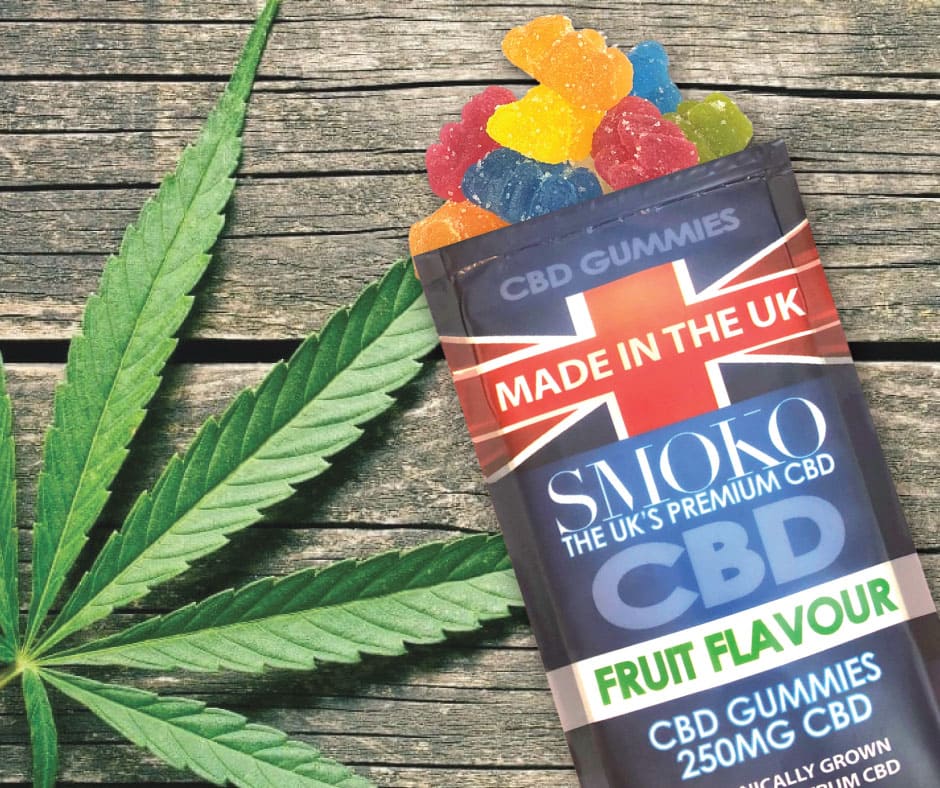
If reading about cannabis cultivation has sparked your curiosity about what the plant can offer for everyday wellness, Smokocbd brings that interest to life through quality CBD products made for the UK market.
Smokocbd’s broad-spectrum CBD tinctures are made from organically grown hemp sourced from the USA, third-party lab tested to confirm zero THC levels. For those who prefer a no-fuss daily routine, the 750mg soft gel capsules offer a consistent, measured dose in an easy-to-swallow format. Both products reflect the same attention to growing conditions and plant quality that serious cultivators apply in the field. Smokocbd makes it straightforward to bring that quality into your wellness routine.
FAQ
Where does cannabis originally come from?
Cannabis originates in temperate Asia, with the greatest genetic diversity found in the Himalayan foothills and adjacent South Asian lowlands, particularly the Hindu Kush region.
What climate is best for growing cannabis outdoors?
Cannabis grows best in warm, sunny climates with moderate humidity and reliable water access. Subtropical regions like Florida support multiple annual harvests, while Mediterranean climates suit long outdoor seasons.
Why do growers use movable pots?
Movable pots allow growers to protect plants from unexpected cold snaps or heavy rain without the cost of a full greenhouse. This technique is particularly useful in temperate and humid growing zones.
How does indoor cannabis cultivation differ from outdoor?
Indoor cultivation uses high-intensity artificial lighting and controlled environments to produce cannabis year-round, regardless of season. Outdoor cultivation relies on natural sunlight and is more energy-efficient but is subject to weather and seasonal constraints.
Is cannabis cultivation legal in the UK?
Cannabis cultivation for personal or recreational use is not legal in the UK. Licensed cultivation of industrial hemp (with very low THC content) is permitted under a Home Office licence, and a regulated medical cannabis sector exists for approved producers.