TL;DR:
- CBD oil has an earthy, bitter, and grassy flavor mainly influenced by terpenes and hemp compounds. Spectrum type, strength, carrier oils, and flavorings significantly shape its taste, with full-spectrum being the most hemp-forward and isolate nearly neutral. Masking options like flavored oils, capsules, mixing into food, or gradual palate adaptation help improve the experience.
CBD oil is defined by an earthy, bitter, and grassy flavour that comes directly from the natural plant compounds in hemp extract. If you have been wondering what does CBD oil taste like before committing to a bottle, the short answer is: think raw hemp seeds mixed with a hint of freshly cut grass, with a lingering bitter finish. The full picture is more nuanced. Terpenes, carrier oils, spectrum type, and added flavourings all shift the CBD oil flavour profile considerably. This guide breaks down every variable so you can choose a product that suits both your wellness goals and your palate.
What does CBD oil taste like in its natural form?
Unflavoured CBD oil has a earthy, bitter, grassy taste that most first-time users compare to olive oil stirred into freshly cut lawn clippings. The bitterness hits first, followed by a vegetal, slightly peppery finish. That aftertaste can linger for several seconds after swallowing, which catches many newcomers off guard.
The flavour is not random. Terpenes such as myrcene, pinene, and linalool contribute musky, pine-like, and floral notes respectively, creating a layered botanical character. These are the same aromatic compounds found in lavender, pine trees, and hops. Their presence in hemp extract is what gives CBD oil its distinctive, health-food-shop aroma and taste.
Here is what you can expect from a typical unflavoured oil:
- Earthy and grassy baseline: The dominant note, often described as raw hemp seeds or green tea without sweetness
- Bitter mid-note: Comes from cannabinoids and terpene compounds interacting on the palate
- Slightly peppery finish: A mild spice sensation, more noticeable in higher-strength products
- Lingering aftertaste: Bitterness that fades within 10–30 seconds of swallowing
- Vegetal aroma: The smell often amplifies the perceived taste, especially with sublingual drops
Pro Tip: Hold the oil under your tongue for 60 seconds before swallowing. This improves absorption and means the strongest flavour phase passes quickly, rather than coating your throat on the way down.
The taste drivers in CBD oil are largely due to plant terpenes rather than cannabidiol itself. Pure CBD has almost no flavour on its own. The complexity you experience comes from the full botanical profile of the extract.
How do full-spectrum, broad-spectrum, and isolate oils compare in taste?
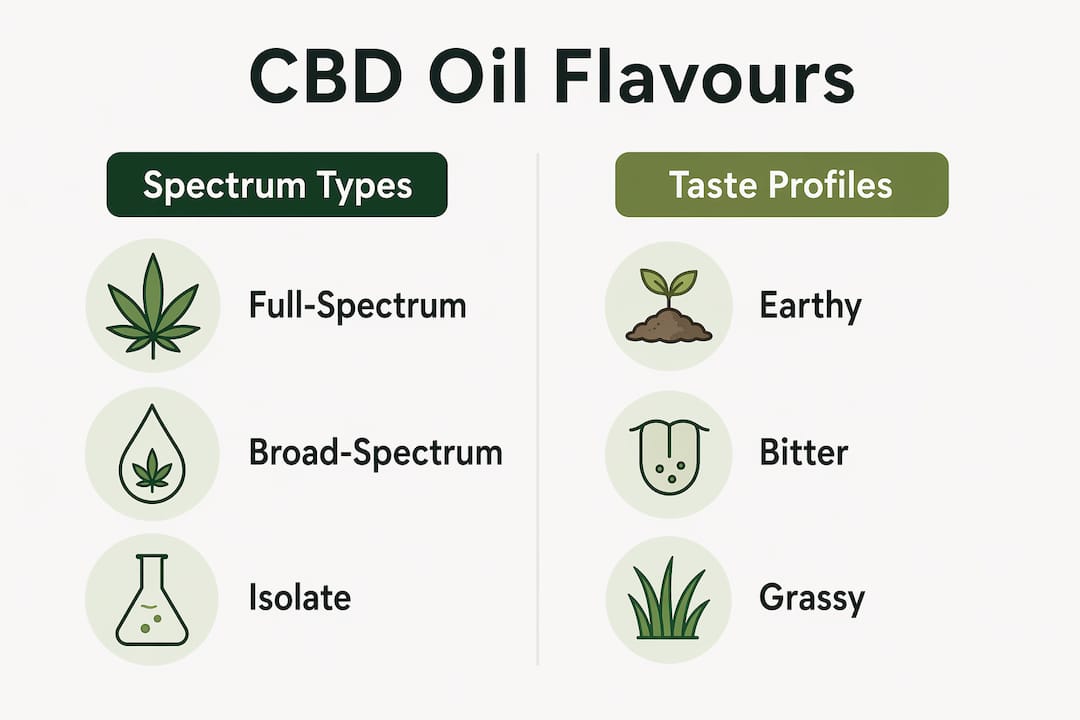
Spectrum type is the single biggest variable in how CBD oil tastes. The CBD oil taste comparison across spectrum types is significant enough to determine whether a first-time user continues or gives up entirely.

Full-spectrum oils contain the complete range of cannabinoids, terpenes, and trace plant compounds from the hemp plant. You can read more about what that means for the overall experience in this full-spectrum CBD guide. The result is the strongest, most hemp-forward flavour of any CBD format. The bitterness is pronounced, and the earthy notes are unmistakable. Full-spectrum oil is never truly tasteless because terpenes are always present.
Broad-spectrum oils remove THC but retain most other cannabinoids and terpenes. The flavour is milder and less aggressive than full-spectrum, though you will still detect the earthy, botanical character. Many users find broad-spectrum the best middle ground between potency and palatability.
CBD isolate is 99% pure cannabidiol with all other plant compounds removed. The flavour is almost entirely neutral, reflecting whatever carrier oil is used rather than hemp itself.
| Spectrum Type | Flavour Profile | Typical Bitterness | Strength Range |
|---|---|---|---|
| Full-spectrum | Strong, earthy, hemp-forward | High | 300mg–3,000mg |
| Broad-spectrum | Mild, botanical, slightly grassy | Moderate | 300mg–2,000mg |
| CBD isolate | Near-neutral, carrier oil dominant | Low | 250mg–1,500mg |
Pro Tip: If you are new to CBD and sensitive to strong flavours, start with a broad-spectrum or isolate product. You get the wellness benefits without the intensity of a full-spectrum oil.
Understanding the differences between these formats is easier with a clear CBD terminology guide, which explains spectrum types and cannabinoid content in plain language.
What role do carrier oils and added flavours play?
The carrier oil in a CBD tincture does more than dilute the extract. It actively shapes the overall taste experience. Carrier oils like MCT, hemp seed oil, and olive oil each bring their own flavour character to the final product.
MCT oil (derived from coconut) gives a clean, mildly coconut-like base that most people find neutral and pleasant. Hemp seed oil amplifies the plant-forward, grassy notes because it shares botanical origins with the extract. Olive oil adds a mild, slightly bitter vegetal undertone that can intensify the natural hemp character. The carrier oil choice matters most in isolate products, where it becomes the dominant flavour.
Added flavourings are the most direct way to change what CBD oil tastes like. Flavoured CBD oils use mint, citrus, berry, and vanilla to mask or complement the natural bitterness. These flavourings do not alter the CBD content or its effects. They simply make the experience more enjoyable.
Here is how the most popular flavour additions work:
- Mint or peppermint: The most popular choice. Menthol in peppermint oil creates a cooling, slightly numbing effect that actively counteracts the bitter sensation of hemp extract under the tongue. Peppermint contains 35–45% menthol; spearmint contains less than 1%, making peppermint far more effective at masking bitterness.
- Citrus (orange, lemon): Bright, acidic notes cut through the earthiness and leave a clean, refreshing finish
- Mixed berry: Sweet and fruity, effective at softening the grassy baseline without completely masking the botanical character
- Vanilla: Warm and sweet, pairs well with MCT carrier oils for a smooth, dessert-like profile
Mint accounts for 35–40% of flavoured CBD sales in 2026. That dominance reflects how effectively menthol neutralises the bitterness that puts so many first-time users off.
How does CBD oil strength affect its taste?
Strength and flavour intensity are directly linked. Higher-strength CBD oils taste stronger and more bitter because they contain a greater concentration of hemp extract and terpenes per millilitre. The relationship is straightforward: more extract means more of every compound that contributes to flavour.
Here is how strength typically maps to taste intensity:
- 300mg–500mg: Mild flavour, gentle bitterness, suitable for those new to CBD or sensitive to strong tastes
- 750mg–1,000mg: Moderate hemp character, noticeable earthy notes, bitterness present but manageable
- 1,500mg–2,000mg: Pronounced bitterness, strong botanical flavour, more noticeable aftertaste
- 2,500mg and above: Very strong, sometimes described as sharp or “weed-like,” with an intense and lasting aftertaste
The bitterness and aftertaste linger for several seconds after swallowing, with sublingual application intensifying the sensory impact because the oil absorbs directly through the tissue under the tongue. At higher strengths, this effect is amplified. Users who find a 500mg oil perfectly acceptable sometimes find a 2,000mg version of the same product unexpectedly strong.
This does not mean high-strength oils are lower quality. Stronger taste reflects more natural hemp compounds in full-spectrum products, not contamination or spoilage. Bitterness is a natural characteristic of the formulation.
How can you manage or improve the taste of CBD oil?
Taste is the most common reason people stop using CBD oil. The good news is that there are several practical ways to make the experience more comfortable without compromising the quality of what you are taking.
- Choose a flavoured oil: Mint, citrus, or berry flavours mask the natural bitterness effectively. This is the simplest solution for most people
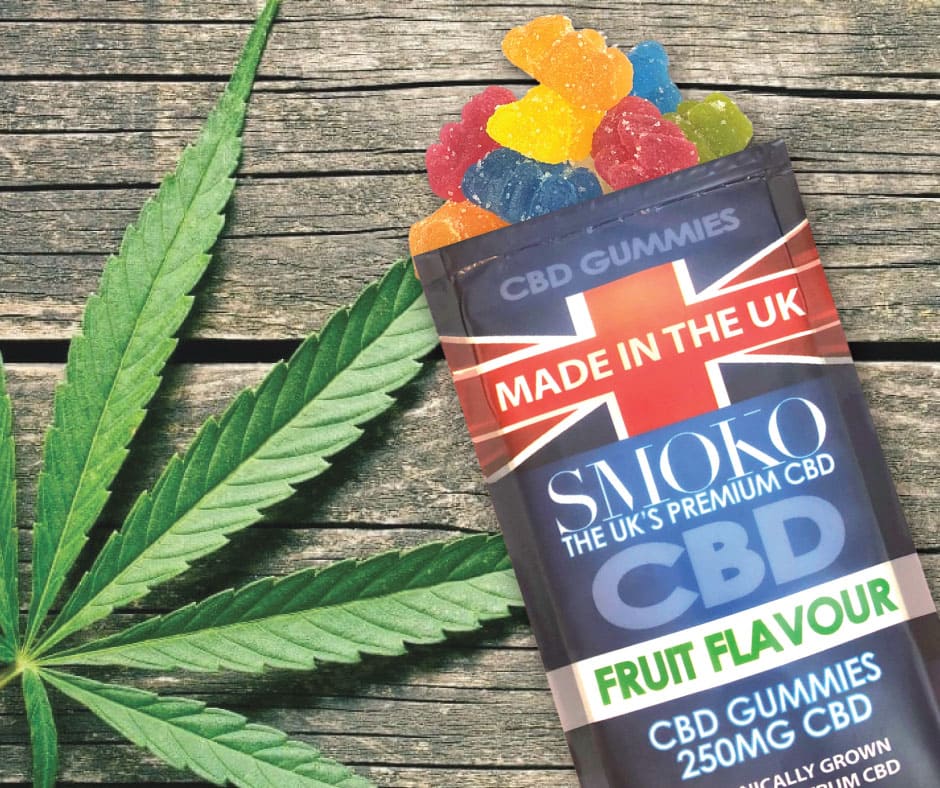
- Switch to CBD capsules or gummies: CBD soft gels and gummies bypass the taste entirely. Capsules are odourless and flavourless; gummies are sweet and enjoyable
- Adjust your sublingual technique: Hold the oil under your tongue for 60 seconds, then swallow quickly. Chasing it immediately with a glass of water or juice dilutes the aftertaste
- Mix with food or drink: Stirring CBD oil into a smoothie, yoghurt, or warm (not hot) drink masks the flavour well. Absorption may be slightly slower than sublingual use, but the experience is far more pleasant
- Start with a lower strength: A 300mg–500mg oil is noticeably milder than a 1,000mg product. Building up gradually lets your palate adapt
- Try broad-spectrum over full-spectrum: The milder flavour profile of broad-spectrum oils suits those who want the benefits of multiple cannabinoids without the full intensity of a complete hemp extract. The advantages of zero-THC CBD products are worth exploring if you are sensitive to strong flavours
Pro Tip: Many users report that their sensitivity to the taste of CBD oil decreases after two to three weeks of regular use. The palate adapts. If you can get through the first fortnight, the flavour often becomes a non-issue.
My honest take on CBD oil flavour
Mike’s take on navigating CBD oil taste
I have tried more CBD oils than I can count, across every spectrum type and strength range. The single biggest misconception I encounter is that a strong, bitter taste means a low-quality product. The opposite is often true. The richest, most botanically complex oils I have used have also been the most effective. That bitterness is the terpene and cannabinoid content doing exactly what it should.
That said, taste genuinely matters for consistency. You will not take something every day if you dread the experience. What I have found is that most people who struggle with CBD oil taste are either using too high a strength for their starting point, or they have not tried a well-formulated flavoured option. A quality mint broad-spectrum oil is a completely different sensory experience from a raw, unflavoured full-spectrum tincture at 2,000mg.
My practical advice: start with a flavoured broad-spectrum oil at 500mg–1,000mg. Give it three weeks. By that point, most people have either adapted to the natural flavour or found a format they genuinely enjoy. The goal is a sustainable daily habit, and taste is a legitimate part of that equation.
— Mike
Try smokocbd’s flavoured CBD oils for a better experience
If the thought of that earthy, grassy flavour has been holding you back, Smokocbd has made it easy to start comfortably. The Smokocbd Mint 1,000mg Broad Spectrum CBD Tincture uses MCT oil as its carrier and natural peppermint flavouring to deliver a clean, cooling experience that actively counteracts the bitterness of the hemp extract.
For those who prefer something lighter, the Smokocbd Citrus 500mg Tincture offers a bright, refreshing flavour at a gentler strength, ideal for beginners. Smokocbd also offers a Mixed Berry 500mg option for those who prefer a fruity profile. All products are broad-spectrum, third-party lab tested, and contain zero THC. Quality and palatability do not have to be a compromise.
Key takeaways
CBD oil’s natural flavour is earthy, bitter, and grassy, shaped by terpenes and hemp compounds, but spectrum type, strength, carrier oil, and flavouring all determine what you actually taste.
| Point | Details |
|---|---|
| Natural flavour profile | Unflavoured CBD oil tastes earthy, grassy, and bitter with a lingering aftertaste of 10–30 seconds. |
| Spectrum type matters most | Full-spectrum is strongest; broad-spectrum is milder; isolate is nearly neutral and reflects the carrier oil. |
| Strength increases intensity | Oils above 1,000mg are noticeably more bitter and hemp-forward than 300mg–500mg options. |
| Flavourings work effectively | Mint, citrus, and berry flavourings mask bitterness without altering CBD content or effects. |
| Taste adapts over time | Most users find their sensitivity to CBD oil flavour reduces after two to three weeks of regular use. |
FAQ
Is it normal for CBD oil to taste bitter?
Yes. Bitterness is a natural characteristic of CBD oil and reflects the presence of cannabinoids and terpenes, not poor quality or spoilage. Full-spectrum products taste the most bitter because they contain the widest range of plant compounds.
Does flavoured CBD oil work as well as unflavoured?
Flavoured CBD oil contains the same cannabidiol content as unflavoured versions. The added flavourings change the taste experience only, not the potency or effectiveness of the CBD.
What does CBD isolate taste like compared to full-spectrum?
CBD isolate is nearly tasteless and reflects the flavour of its carrier oil, such as MCT or olive oil. Full-spectrum oil has a strong, earthy, hemp-forward flavour due to its complete terpene and cannabinoid profile.
Which CBD oil flavour is most popular in the UK?
Mint and peppermint are the top-selling flavour category, accounting for 35–40% of flavoured CBD sales in 2026. The menthol in peppermint oil actively counteracts bitterness, making it the most effective flavour for masking the natural hemp taste.
Can you mix CBD oil with food or drink to hide the taste?
Yes. Stirring CBD oil into a smoothie, yoghurt, or warm drink effectively masks the flavour. Absorption may be slightly slower than taking it sublingually, but the method is perfectly valid and widely used by those who find the natural taste difficult.