TL;DR:
- CBD is a non-intoxicating cannabinoid that promotes calm, relaxation, and mental clarity without producing a high. Its effects vary based on dosage, formulation, and individual factors, often resulting in reduced anxiety, physical relaxation, and mental quietness over time. Safety is well established at typical doses, but starting low, taking with food, and tracking responses optimize benefits and minimize side effects.
CBD is defined as a non-intoxicating cannabinoid that makes most people feel calm, relaxed, and mentally clearer without producing the high associated with THC. Understanding how CBD makes you feel is the first step to deciding whether it suits your wellness goals. The effects work through your body’s endocannabinoid system, a network of receptors that regulates mood, stress, sleep, and pain. Unlike THC, CBD does not bind directly to CB1 receptors in the brain, which is precisely why it does not cause intoxication. What it does instead is modulate serotonin receptors, tone down the stress response, and gently support the body’s natural balance.
How does CBD make you feel day to day?
The most commonly reported CBD feelings include a quiet sense of calm, reduced mental tension, and a general easing of physical tightness. Most people describe it not as a dramatic shift but as a gradual settling, similar to the feeling after a long walk or a warm bath. There is no euphoria, no altered perception, and no psychoactive effect of the kind associated with cannabis containing THC. The World Health Organisation classifies CBD as safe and non-addictive, which means the calming sensation you experience is not a dependency-forming response.
The effects of CBD vary depending on the product, dose, and individual, but the core experience tends to follow a recognisable pattern:
- Calm and reduced anxiety. Most users report a noticeable softening of anxious thoughts, particularly in social or stressful situations.
- Physical relaxation. Muscle tension eases, and the body feels less braced against stress.
- Mental clarity. Rather than sedation, lower doses often produce a cleaner, quieter headspace.
- Mild drowsiness. At higher doses, some people feel sleepy, which can be useful at bedtime but less welcome during the day.
- Dry mouth. A common and mild side effect that passes quickly with water.
Onset time matters too. Tinctures placed under the tongue typically take effect within 15 to 45 minutes. Soft gel capsules and gummies pass through digestion, so effects may take 60 to 90 minutes but tend to last longer. Vaping CBD produces the fastest onset, often within minutes, though duration is shorter.
Pro Tip: If you are new to CBD, try a tincture on an evening when you have no obligations. This lets you observe the effects of CBD on your mood and body without any pressure, and gives you a reliable baseline for future dosing.
What does the science say about CBD and mood?
Clinical research now provides a clearer picture of CBD’s emotional impact, and the findings are genuinely encouraging. A 2024 Phase 3 randomised trial involving 178 adults with mild-to-moderate anxiety found that CBD produced statistically significant improvements in GAD-7, HAM-A, PHQ-9, and sleep quality scores over 15 weeks compared to placebo. This is one of the most rigorous studies to date, and it confirms that CBD’s effect on mood is not simply a placebo response.
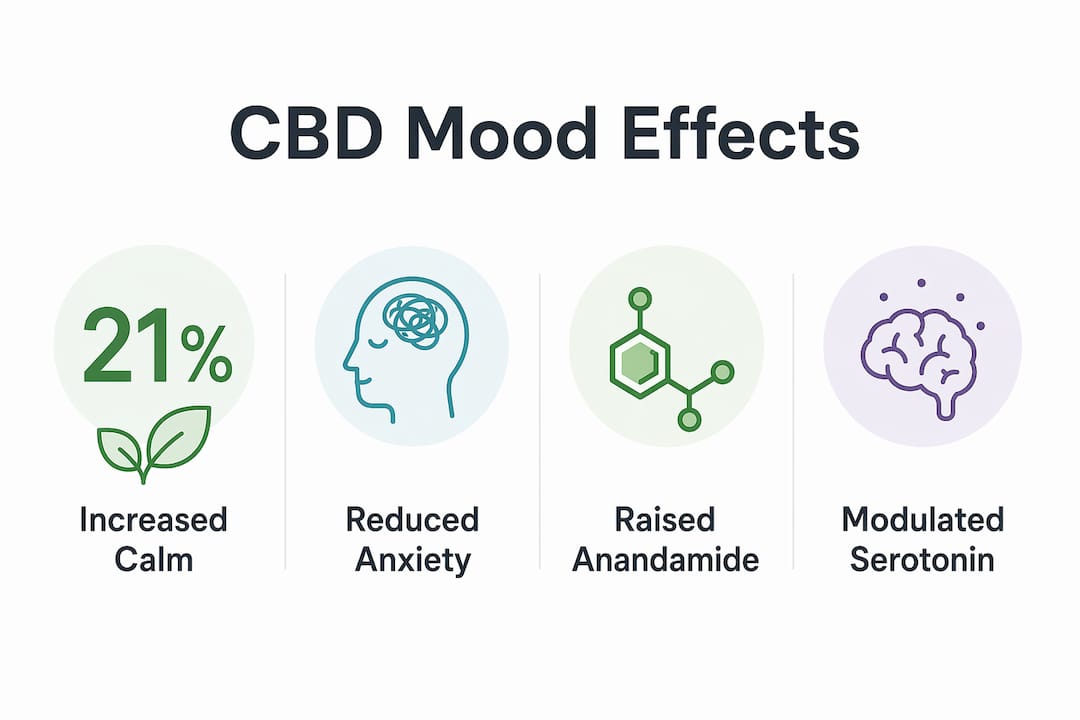
A separate 2025 pilot study found that a single 300 mg oral dose of CBD increased self-reported calm by 21% and relaxed feelings by 22% versus placebo, measured two hours after administration. That is a meaningful acute shift in subjective wellbeing from a single dose, with no gastrointestinal symptoms or performance impact observed. The study suggests CBD can produce real, measurable changes in how you feel even after one use.
The pharmacological explanation centres on two main pathways. CBD activates 5-HT1A serotonin receptors, which regulate anxiety and mood, and it inhibits the enzyme FAAH, which breaks down anandamide. Anandamide is sometimes called the “bliss molecule” and is naturally produced in the brain. When CBD slows its breakdown, anandamide levels rise, contributing to the calm and contented feeling many users describe.
| Study | Population | Key finding |
|---|---|---|
| Phase 3 RCT, 2024 | 178 adults, mild-to-moderate anxiety | Significant improvement in GAD-7, HAM-A, PHQ-9, and sleep over 15 weeks |
| Pilot study, 2025 | Healthy adults, single dose | 21% increase in calm, 22% increase in relaxed feelings at 300 mg |
| Opioid use disorder study, 2026 | Adults on methadone | CBD effects on pain and mood varied with timing relative to methadone dose |
“CBD’s calming and anxiety-reducing effects may be subtle and noticed retrospectively rather than as an immediate, intoxication-like shift.” — Pilot study, MDPI Nutrients, 2025
This is worth sitting with. Many people try CBD and feel underwhelmed in the moment, only to notice hours later that they handled a stressful situation more calmly than usual. That retrospective recognition is actually consistent with how the science describes the effect.
How dose, timing, and formulation change the experience
Not everyone feels CBD the same way, and the reason is largely pharmacokinetic. The dose you take, when you take it, what you eat beforehand, and the formulation you choose all shape the intensity and timing of the effects. A 2026 Phase I pharmacokinetic study comparing CBtru® powder and Epidyolex® oil found that food significantly increased CBD bioavailability and altered the timing of peak effects. Taking CBD with a fatty meal can meaningfully increase the amount that reaches your bloodstream.
The table below summarises how key variables shift the experience:
| Variable | Lower end | Higher end |
|---|---|---|
| Dose | Clarity and mild calm (10 to 25 mg) | Drowsiness and deeper relaxation (75 mg and above) |
| Formulation | Tincture: faster onset, shorter duration | Capsule or gummy: slower onset, longer duration |
| Food state | Fasted: lower absorption, quicker but weaker effect | Fed (fatty meal): higher absorption, stronger and later peak |
| Timing with medication | Pre-dose: variable interaction | Post-dose: altered pain and mood thresholds in clinical populations |
Research on people with opioid use disorder found that CBD’s mood effects varied depending on whether it was taken before or after methadone, highlighting that co-administered medications can shift the experience considerably. For most healthy adults this is less of a concern, but it reinforces the principle that CBD does not operate in isolation.
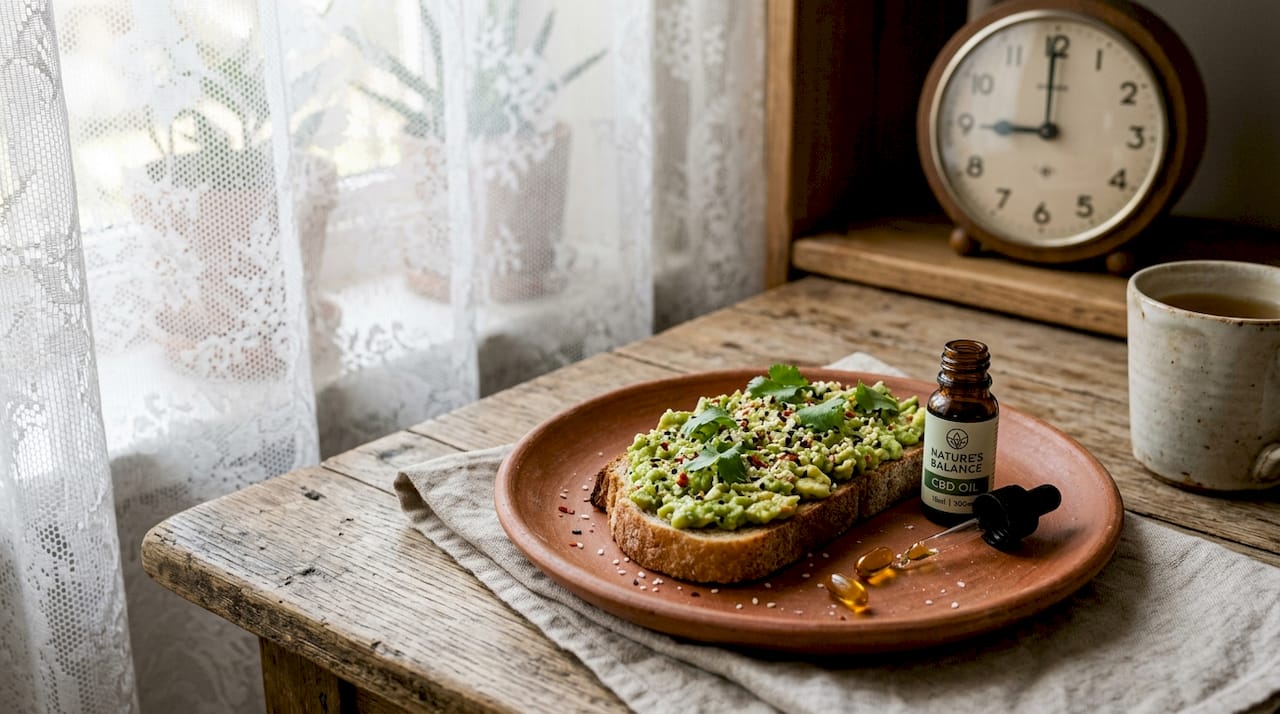
Pro Tip: Take your CBD tincture with a small handful of nuts or a piece of avocado toast. The healthy fats increase CBD absorption and help you get more consistent results from the same dose.
What are the side effects and safety considerations?
CBD has a well-established safety profile, but it is not entirely without risk, particularly at higher doses. The UK Food Standards Agency and Food Standards Scotland 2026 safety assessment identified drowsiness at doses up to 10 mg/kg/day and liver-related adverse effects at doses as low as 5 mg/kg/day. For a 70 kg adult, 5 mg/kg equates to 350 mg per day, which is well above the doses in most consumer products, but it is a signal worth respecting.
The most commonly reported side effects in everyday use are:
- Drowsiness or fatigue. More likely at higher doses or when combined with other calming supplements.
- Dry mouth. Caused by CBD’s interaction with salivary gland receptors. Easily managed with water.
- Reduced appetite. Some users notice a mild decrease in hunger, particularly at the start.
- Elevated liver enzymes. Seen in clinical trials at high doses. Relevant if you have existing liver concerns.
- Drug interactions. CBD inhibits cytochrome P450 enzymes, which process many common medications including blood thinners and anticonvulsants.
The FSA assessment also noted that the safety of CBD isolate has not been officially established for vulnerable groups, including children, pregnant individuals, and those who are breastfeeding. If you fall into any of these categories, speak to a GP before using CBD. For healthy adults using standard consumer doses of 10 to 50 mg per day, the risk profile is low, but awareness of these signals is part of using CBD responsibly.
Practical steps for trying CBD for mood and wellbeing
If you are curious about CBD’s emotional impact and want to try it safely, a structured approach gives you the best chance of noticing genuine effects. The following steps reflect current evidence and practical experience.
- Start with a low dose. Begin with 10 to 20 mg per day and hold that dose for at least one week before adjusting. This gives your endocannabinoid system time to respond and lets you identify your baseline reaction.
- Choose the right formulation. Tinctures are ideal for beginners because you can adjust the dose in small increments. Soft gels and gummies offer convenience and consistent dosing once you know what works for you. Smokocbd’s broad spectrum tinctures are third-party lab tested to confirm zero THC.
- Take it with food. A fatty meal or snack improves absorption and reduces the variability in how quickly and strongly you feel the effects.
- Track your mood. Use a simple notes app or journal to record how you feel before and two hours after taking CBD. This makes it far easier to spot the subtle, retrospective calm that many users experience.
- Be aware of interactions. If you take any prescription medication, particularly blood thinners, antidepressants, or anticonvulsants, consult your GP before starting CBD. The anxiety relief guide from Smokocbd also covers this in practical detail.
- Use lab-tested products. Third-party testing confirms cannabinoid content and the absence of THC, pesticides, and heavy metals. This is the single most important quality check for any CBD product.
Key takeaways
CBD primarily makes you feel calm and relaxed by modulating serotonin receptors and raising anandamide levels, with effects that are real, measurable, and distinct from any form of intoxication.
| Point | Details |
|---|---|
| Core feeling | CBD produces calm, relaxation, and reduced anxiety without euphoria or intoxication. |
| Scientific backing | A 2024 Phase 3 trial confirmed significant anxiety and mood improvements over 15 weeks. |
| Dose and formulation matter | Food, timing, and product type all affect how strongly and quickly you feel CBD’s effects. |
| Side effects are manageable | Drowsiness and dry mouth are the most common; liver signals appear only at very high doses. |
| Start low and track | Begin at 10 to 20 mg, take with food, and journal your mood to identify your personal response. |
Why CBD’s subtlety is actually its strength
I have spoken with many people who tried CBD once, felt nothing dramatic, and concluded it did not work. That reaction is understandable, but it misreads what CBD actually does. The effects of CBD on mood are not a switch being flipped. They are more like a dial being turned down on the background noise of stress and anxiety. You do not always notice it happening. You notice it later, when you realise you did not catastrophise during a difficult meeting, or that you fell asleep without the usual mental chatter.
What I find genuinely interesting about the recent research is how consistent this pattern is. The 2025 pilot study measured calm and relaxation retrospectively, not as an immediate sensory event. That is not a limitation of the research. It is an accurate description of how CBD works. The Phase 3 trial results built over 15 weeks, not 15 minutes. This is a compound that supports your system over time, not one that overrides it acutely.
The variability in response is also real and worth acknowledging honestly. Timing relative to food, the formulation you choose, and any medications you take all shape the outcome. CBD is not a cure for anxiety or chronic stress. It is a complement to other wellbeing practices, and it works best when you approach it with realistic expectations and a willingness to adjust. The people who get the most from it are those who treat it as a tool to be calibrated, not a remedy to be swallowed and forgotten.
— Mike
Try Smokocbd’s broad spectrum tinctures for calm and clarity
If you are ready to experience CBD’s calming effects for yourself, Smokocbd offers a range of broad spectrum tinctures made from organically grown hemp, third-party lab tested for zero THC and consistent cannabinoid content.
The Mint 1000mg CBD tincture is a popular choice for adults seeking daily mood support, with a clean flavour and precise dosing. For those just starting out, the Citrus 500mg tincture offers a gentler introduction at a mid-strength dose. Both products are designed for adults who want a natural, evidence-informed approach to managing stress and supporting emotional wellbeing, without compromise on quality or transparency.
FAQ
Does CBD get you high?
CBD does not cause a high. It is non-intoxicating and classified as safe and non-addictive by the World Health Organisation, with no psychoactive effect on perception or cognition.
How long does it take to feel the effects of CBD?
Tinctures taken sublingually typically take effect within 15 to 45 minutes, while capsules and gummies can take 60 to 90 minutes due to digestion. Food intake and formulation both affect onset time.
What does a CBD high feel like compared to THC?
There is no CBD high in the way THC produces one. CBD creates a subtle sense of calm and reduced anxiety rather than euphoria, altered perception, or impaired coordination.
Can CBD help with anxiety?
A 2024 Phase 3 clinical trial found CBD significantly improved anxiety scores in adults with mild-to-moderate anxiety over 15 weeks. For personalised guidance, the CBD for anxiety guide from Smokocbd explains the evidence in practical terms.
Are there any side effects from taking CBD?
The most common side effects are drowsiness and dry mouth, particularly at higher doses. The UK FSA’s 2026 assessment identified liver-related signals at doses above 5 mg/kg/day, so staying within standard consumer doses and consulting a GP if you take other medications is advisable.