Pure cannabidiol (CBD) is not considered addictive. The World Health Organization’s review found no evidence of abuse potential, and the UK Food Standards Agency has set a provisional daily intake limit. The real risks come from contaminated products, high doses, and drug interactions, not from CBD itself forming a habit.
TL;DR:
- Trials tested doses up to 600 mg and found no drug liking or physiological response beyond placebo, while long term population data remain limited.
- The UK FSA’s provisional 10 mg daily limit applies to healthy adults using foods or supplements, so add tinctures, capsules, and infused foods together.
- CBD can alter how prescription medicines clear through the liver; consult a doctor or pharmacist first, especially when taking warfarin, antiepileptics, or hormonal contraception.
- Before buying, request a certificate of analysis and verify that its batch number matches the product and that testing confirms zero THC.
Table of Contents
- What the evidence shows about addiction potential
- Why CBD differs from THC and how poor-quality products change the picture
- Safety, side effects and the UK Food Standards Agency provisional ADI
- Drug interactions and who should consult a clinician
- Daily and long-term use: tolerance, dependence and withdrawal
- Practical checklist: how to use CBD safely and reduce risk
- A straightforward view on CBD and addiction risk
- SMOKO CBD: a tested broad-spectrum option
- FAQ
- Sources
What the evidence shows about addiction potential
When regulators and researchers ask whether a substance carries addiction risk, they look at abuse liability: does it produce the reward response that keeps people coming back for more. The WHO’s expert committee reviewed exactly this question for CBD and concluded that pure CBD “does not appear to have abuse potential,” drawing on both animal studies and human experimental trials.
Those human trials are worth understanding properly. Researchers gave participants high oral doses, in some cases up to 600 mg, and measured their responses using tools designed to detect exactly the kind of reward signal that marks an addictive substance.
- Participants showed no ‘drug liking’ response on standard psychometric scales
- Physiological measures matched placebo rather than a reinforcing substance
- Researchers used recognised tools, including the Addiction Research Center Inventory and visual analogue scales, to capture these responses
The WHO review found CBD performed like placebo even at high oral doses, unlike THC. That distinction runs through nearly every piece of abuse-potential research on CBD.
It’s also worth noting what the evidence doesn’t contain. There are no case reports of dependence on pure CBD in the clinical literature. That absence has limits of its own: CBD is a relatively recent entrant to mainstream use, and long-term population data is still thin. The picture so far is reassuring, but it’s built on years rather than decades of close observation.
Why CBD differs from THC and how poor-quality products change the picture
CBD and THC come from the same plant but behave very differently once inside the body. THC binds strongly to CB1 receptors in the brain’s reward circuitry, which is what drives the high and the addictive pull. CBD interacts with that system far more loosely and doesn’t trigger the same reward cascade, which is consistent with the placebo-like results seen in abuse-potential trials.

The complication is manufacturing. Extraction processes can leave trace amounts of Δ9-THC and other cannabinoids behind, and FSA assessments of CBD isolate specifically flag this as a contaminant risk worth testing for. A product sold as “pure CBD” that actually carries meaningful THC could introduce the dependence-forming effects that pure CBD itself doesn’t have.
Watch for these warning signs before buying:
- No certificate of analysis (COA) available from the seller
- Missing batch numbers or vague sourcing information
- Prices far below the market norm for broad-spectrum or isolate products
Pro Tip: Always ask for the COA before you buy, not after, and check that the batch number on the certificate matches the one on your product.
Safety, side effects and the UK Food Standards Agency provisional ADI
The FSA’s safety assessment sets a provisional acceptable daily intake of 10 mg per day for healthy adults. That figure isn’t a response to addiction concerns. It reflects gaps in long-term safety data, particularly around liver function and organ effects over extended use, rather than any sign that CBD hooks people.
The provisional ADI of 10 mg/day applies to food and supplement formats for healthy adults, and it’s a figure that’s easy to exceed without noticing once you combine tinctures, capsules and CBD-infused foods across a single day.
Common side effects reported in the research include:
- Somnolence, or daytime drowsiness, particularly at higher doses
- Changes to liver enzyme levels, with signals observed at exposures in the hundreds of milligrams in some studies
- Dry mouth, reduced appetite and mild digestive upset in some users
Certain groups are advised to avoid CBD altogether under current FSA guidance: pregnant and breastfeeding women, children, and anyone taking prescription medicines, due to the data gaps mentioned above. If you want a fuller breakdown of how the ADI translates into everyday dosing, our UK safety guide to CBD dosing walks through the maths product by product.
Drug interactions and who should consult a clinician
CBD is processed by the same liver enzyme system, CYP450, that metabolises a wide range of prescription medicines. When CBD competes for that pathway, it can change how quickly those medicines clear from your body, which alters their effect.
NICE’s guidance on cannabis-based medicinal products asks clinicians to review a patient’s current prescriptions and any history of cannabis use before recommending these products, with particular attention to interaction and misuse risk where THC is present. That advice centres almost entirely on interactions and prior substance use, not on addiction to CBD itself.
Medicines worth flagging to a doctor or pharmacist before starting CBD:
- Anticoagulants such as warfarin, where enzyme competition can affect blood clotting control
- Antiepileptic medicines, several of which share the same metabolic pathway as CBD
- Hormonal contraception, where altered drug clearance can reduce reliability
If you take any regular prescription medicine, speak to your GP or pharmacist before adding CBD. If you have a history of substance misuse, mention this too, since it shapes how a clinician weighs the overall recommendation.
Daily and long-term use: tolerance, dependence and withdrawal
Taking CBD every night doesn’t appear to produce the classic markers of dependence, tolerance or withdrawal that researchers look for when assessing abuse potential. The same human trials that found placebo-like responses at high doses also found no indication that regular use builds a need for escalating amounts.
This is worth separating clearly from THC-containing cannabis, where regular users can experience genuine withdrawal, including irritability and disrupted sleep, when they stop. Pure CBD doesn’t carry that profile in the current evidence base.
- No documented withdrawal syndrome from stopping pure CBD after regular use
- No evidence of tolerance requiring steadily higher doses to maintain effect
- THC-containing cannabis withdrawal is a distinct, separately documented phenomenon
If you notice new or worsening symptoms after starting CBD, or anything that feels like a dependence pattern, that’s a signal to speak to a clinician rather than push through. For more on what nightly use typically looks like in practice, see our guide to taking CBD every day.
Practical checklist: how to use CBD safely and reduce risk
Reducing your risk with CBD comes down to product quality and sensible dosing rather than worrying about addiction itself.
- Request the COA and batch number for any product before buying, and confirm zero-THC verification
- Stay within the FSA’s provisional ADI of 10 mg/day, counting every CBD source you use in a day, not just one product
- Start with a low dose and keep a short diary of effects before adjusting
- Pause CBD for two to three weeks before a drug test, and before starting any new prescription medicine
Pro Tip: Keep a single running tally of your daily CBD intake across all products so you don’t accidentally stack past the ADI. For drug-test specific guidance, our article on avoiding a positive THC test covers timing and COA checks in more detail.
A straightforward view on CBD and addiction risk
Pure CBD isn’t addictive, and the evidence on this point is about as settled as it gets for a relatively young area of research. The real work for consumers lies in product quality and medicine interactions, not in worrying about dependence. Check your COAs and ask us if you’re unsure.
— Mike
SMOKO CBD: a tested broad-spectrum option
We offer broad-spectrum CBD tinctures, gummy bears and soft gels, with third-party lab testing available to verify zero THC. Testing documentation is provided with batches, so you can check product contents rather than relying on labels.
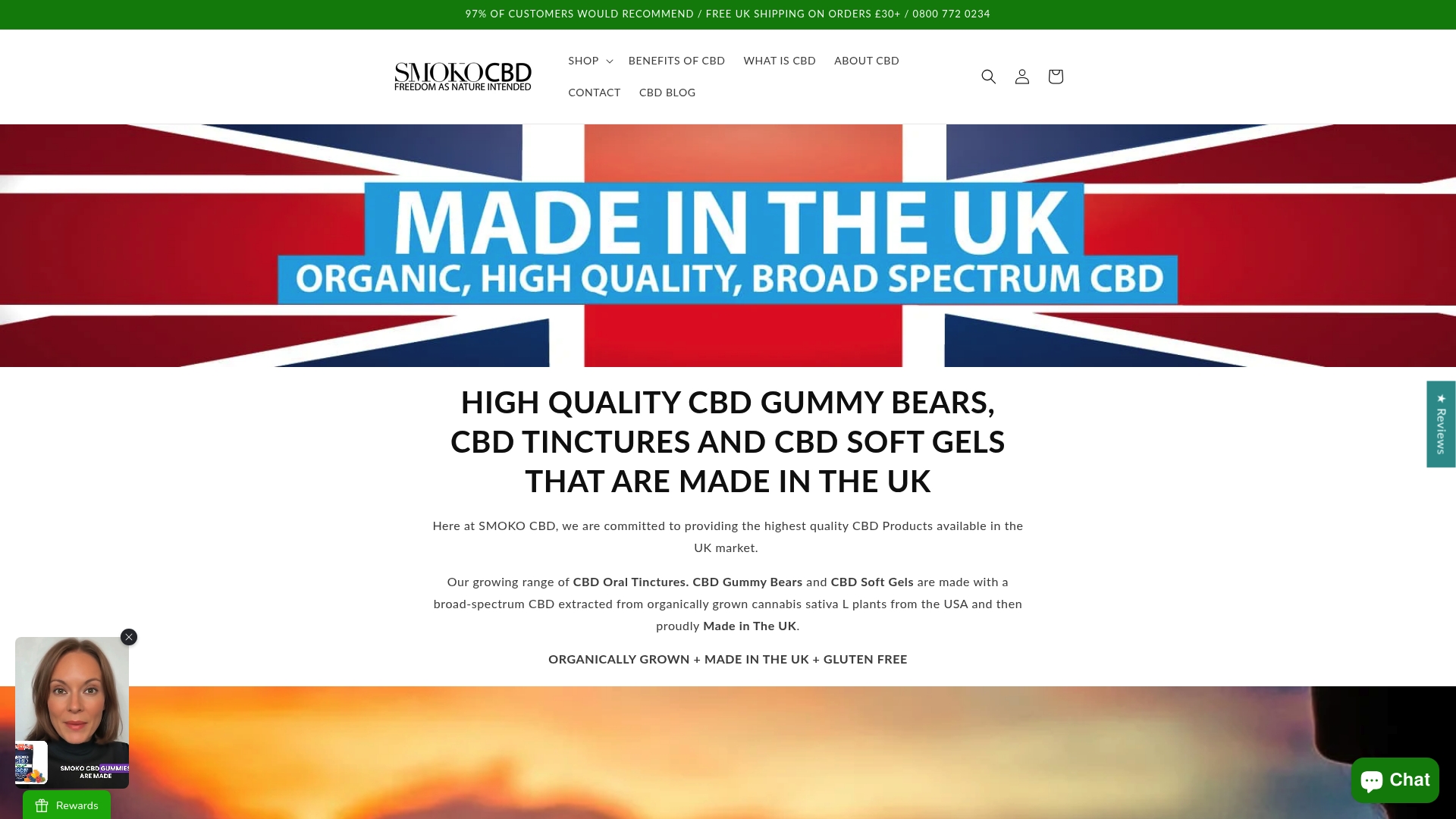
- Tinctures, gummies and soft gels made from hemp extracts
- Third-party lab reports confirming zero THC levels
- Shipping options within the UK available for qualifying orders
If gummies suit your routine, our 250mg broad-spectrum CBD gummy bears are a good starting point, or browse the full CBD tinctures, gummy bears and soft gels collection to compare strengths. Check the COA on any product, choose a lower strength to start, and get in touch with our customer support team if you want help working out a dose that fits your day.
This article is general information, not a substitute for advice from a qualified doctor. Consult a qualified healthcare professional about your own circumstances before acting on anything here.
FAQ
Is it safe to have CBD every night?
Nightly CBD use hasn’t been shown to produce dependence or tolerance in the available research, so it’s generally considered safe for most healthy adults within the FSA’s provisional ADI of 10 mg/day. Anyone on regular medication should check for interactions first.
Can your body become dependent on CBD?
Current evidence, including the WHO’s abuse-liability review, shows no pattern of dependence forming from pure CBD use. Dependence risk rises mainly when a product is contaminated with THC rather than from CBD itself.
What happens if I take CBD every day?
Most people tolerate daily CBD well within recommended limits, with side effects limited to mild drowsiness or digestive upset at higher doses. Exceeding the provisional ADI or combining multiple CBD products increases the chance of these effects.
Is CBD ok to take long term?
Long-term safety data is still developing, which is why the FSA set a conservative provisional ADI rather than a higher figure. Pregnant or breastfeeding women, children and anyone on prescription medicines are advised to avoid CBD until more data is available.
Sources
Claims in this article draw on the WHO’s abuse-liability review, FSA novel food safety assessments, NICE guidance on cannabis-based medicinal products, and peer-reviewed clinical research, alongside a general consumer guide to CBD safety.
- WHO review on cannabidiol (CBD) — May 2018
- FSA safety assessment of cannabidiol (CBD) as a novel food (RP521)
- NICE guidance: Cannabis-based medicinal products — recommendations