TL;DR:
- A CBD workout routine should prioritize product quality, realistic expectations, and consistent tracking over weeks.
- Research demonstrates CBD mainly supports wellness by reducing perceived exertion and anxiety rather than enhancing performance.
A CBD workout checklist is a structured set of product, timing, dosage, and compliance checks that fitness enthusiasts and athletes follow to use cannabidiol safely and effectively within their training routines. The industry term for this practice is “CBD supplementation protocol,” though most athletes simply call it their CBD fitness routine. Getting it right means understanding that CBD is not a performance drug. It is a wellness support tool, and the research confirms exactly that.
1. The CBD workout checklist: start with product quality
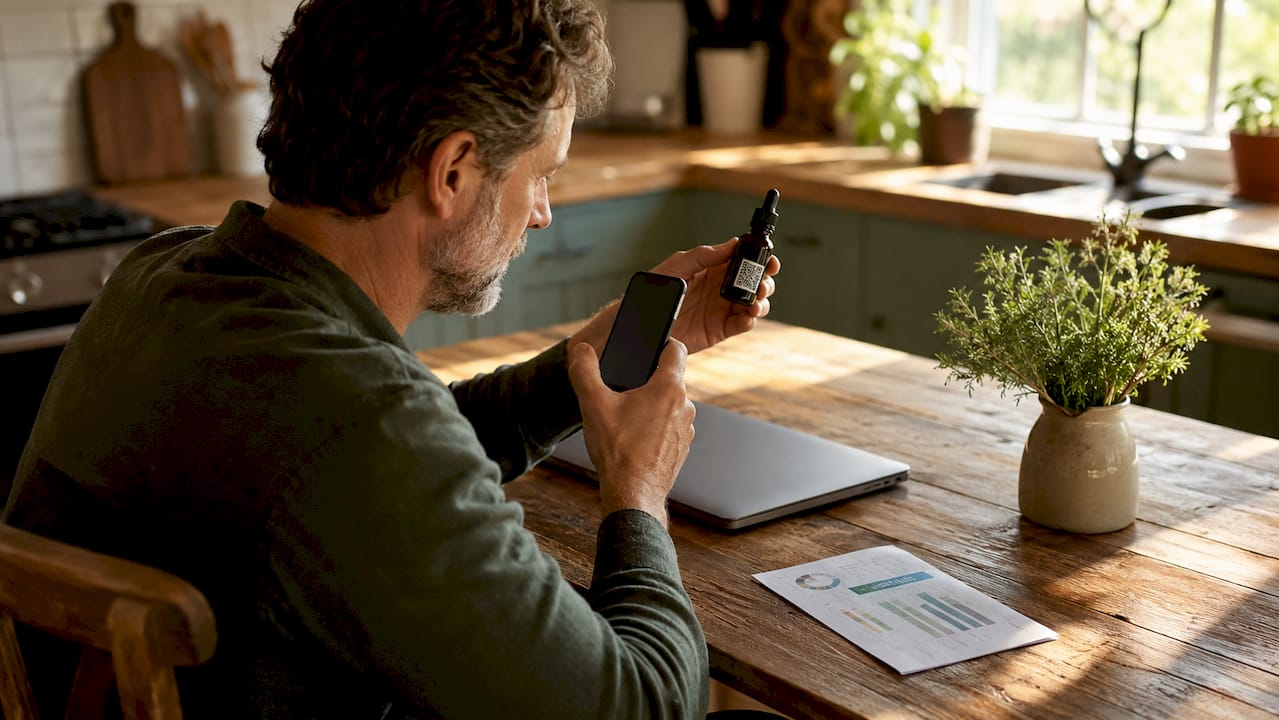
Product quality is the single most important item on any CBD workout checklist. About 70% of CBD products sold online were mislabelled in a 2023 study, meaning the majority of what is on the market cannot be trusted at face value. That statistic alone should make you pause before picking up the cheapest option on a shelf.
When selecting products for your CBD fitness routine, look for these markers of genuine quality:
- Batch-specific certificate of analysis (COA): Every product batch should have its own COA from an ISO-17025-accredited laboratory. A generic or undated COA is a red flag.
- Broad-spectrum or isolate formulations: These carry a lower risk of THC contamination than full-spectrum products, which is particularly relevant for competitive athletes.
- Contaminant screening: The COA must confirm the absence of heavy metals, pesticides, and residual solvents. These are not rare contaminants; they appear in poorly processed hemp extracts with concerning regularity.
- Third-party certification programmes: Look for logos from Informed Sport, NSF Certified for Sport, or BSCG Certified CBD. These programmes test specific product batches against WADA prohibited substance lists.
Price and branding are also useful signals. Products with transparent sourcing, clear ingredient lists, and accessible lab results are almost always produced by manufacturers who take quality seriously. Smokocbd sources its hemp from organically grown USA farms and publishes third-party lab results confirming zero THC, which is exactly the standard to hold any product to. You can read more about choosing safe CBD products on the Smokocbd blog.
Pro Tip: Before buying any CBD product for workout use, scan the QR code or visit the brand’s website to pull up the batch-specific COA. If you cannot find it within two minutes, move on.
2. Understand what CBD actually does for exercise
CBD’s benefits in workouts are primarily related to subjective anxiety reduction and perceived effort, not objective performance improvement. This distinction matters enormously when setting expectations for your CBD fitness routine.
A 2025 pilot study on 12 runners found that an acute 300 mg oral dose taken two hours before a two-mile run produced a 21% increase in feelings of calm, a 22% increase in relaxed feelings, and an 8% reduction in perceived exertion at mile one. Race time, however, showed no measurable difference. CBD did not make the runners faster. It made the effort feel more manageable, which is a genuinely useful outcome for training consistency and mental resilience.
This means CBD is best understood as a supporter of workout wellness rather than a direct performance enhancer. Athletes who approach it with that framing get far more out of it than those chasing a competitive edge that the evidence simply does not support.
3. Time your CBD dose correctly before training
Pre-workout dosing is one of the most practical items in a CBD supplementation protocol. The 300 mg oral dose taken two hours prior to exercise is the best-studied timing window currently available, showing consistent subjective calming effects without gastrointestinal issues in the research cohort.
For most recreational athletes and fitness enthusiasts, 300 mg is a high starting point. A more practical approach to pre-workout CBD use follows this progression:
- Start at 10 to 25 mg per serving for the first two weeks to assess individual tolerance and response.
- Take your dose 60 to 120 minutes before training to allow for absorption, particularly with oral formats like tinctures or soft gel capsules.
- Observe subjective effects across at least three to five sessions before drawing any conclusions about whether the dose is working.
- Adjust incrementally by increasing by 10 mg at a time if you feel no effect, rather than jumping to a significantly higher dose.
- Document each session in a training journal, noting calmness, focus, perceived exertion, and any discomfort.
Pro Tip: Always trial your CBD dosing on regular training days, not the day before or the day of a competition. You need several weeks of data before you can judge the effect accurately, and experimenting near a race or match introduces unnecessary uncertainty.
4. Use CBD post-workout for recovery support
Post-workout CBD use is where the evidence becomes more nuanced. A 2026 pilot study on topical CBD gel applied after exercise-induced muscle damage found no significant reduction in delayed onset muscle soreness (DOMS) or plasma myoglobin levels compared to placebo. There was, however, a moderate effect on isometric torque favouring CBD at 24 to 72 hours post-exercise.
This tells us that topical CBD is unlikely to accelerate DOMS recovery on its own, but it may support temporary strength retention during the recovery window. Oral CBD, by contrast, appears better suited to managing the anxiety and stress that often accompany intense training blocks. The distinction between recovery goals matters: subjective calmness, localised discomfort relief, and measurable physical recovery each have different evidence profiles.
For a practical post-workout CBD approach, consider pairing a Smokocbd broad-spectrum tincture with established recovery methods: adequate hydration, protein-rich nutrition within 60 minutes of training, seven to nine hours of sleep, and progressive training loads. CBD works best as part of this wider system, not as a replacement for any of it. The Smokocbd guide on faster workout recovery covers these complementary strategies in detail.
5. Choose the right CBD format for your goals
Different CBD formats serve different purposes within a workout routine. The table below compares the three main options available from Smokocbd.
| Format | Best use case | Onset time | Limitations |
|---|---|---|---|
| Broad-spectrum tincture | Pre-workout calm, post-workout stress relief | 15 to 45 minutes | Taste may not suit everyone |
| Soft gel capsules | Consistent daily dosing, travel-friendly | 30 to 90 minutes | Slower onset than tinctures |
| Topical CBD gel or muscle rub | Localised discomfort after training | 15 to 30 minutes (local) | No systemic anxiety relief |
Tinctures offer the most flexibility for timing adjustments, which makes them a strong choice for pre-workout CBD use. Soft gels provide consistency and are easier to incorporate into a daily supplement routine. Topical products are best reserved for targeted areas of soreness rather than as a primary recovery tool. You can explore the types of CBD for athletes to match the right format to your specific training goals.
6. Know the compliance rules if you compete
WADA’s 2026 Prohibited List confirms that CBD remains permitted at all times, including in-competition. THC, however, remains prohibited in-competition above a urinary threshold of 150 ng/mL. Other cannabinoids including CBG and CBN also remain on the prohibited list. This is the compliance reality every competing athlete must understand before adding CBD to their routine.
The risk is not from CBD itself. It comes from contaminated products. Many full-spectrum and even some broad-spectrum products contain trace cannabinoids that are not declared on the label. For competing athletes, the compliance checklist must include:
- Verify the product uses broad-spectrum or isolate formulation, not full-spectrum.
- Confirm the batch-specific COA shows undetectable THC and no other prohibited cannabinoids.
- Check for Informed Sport or BSCG Certified CBD certification on the specific lot number you are using.
- Never introduce a new CBD product within four weeks of a competition.
- Understand that strict liability rules apply in anti-doping: a positive test is your responsibility regardless of the product’s marketing claims.
The Smokocbd guide on athlete CBD compliance explains these rules clearly and is worth reading before your first competition season using CBD.
7. Track your response over multiple weeks
CBD does not produce immediate, measurable results in the way a caffeine-based pre-workout supplement does. Consistent use over several weeks is required before you can make an honest assessment of whether it is working for your specific goals. Expecting a single dose to transform your training is the most common mistake new users make.
Keep a simple workout journal with five data points per session: perceived calmness before training, perceived exertion during training, soreness rating 24 hours post-training, sleep quality that night, and overall mood. After four weeks, patterns become visible. Some athletes notice a genuine reduction in pre-competition anxiety. Others find their post-session soreness feels more manageable. A minority notice no subjective difference at all, which is also valid data.
Individual differences in metabolism, endocannabinoid system tone, and training intensity all influence how CBD is experienced. There is no universal dose or format that works for everyone, which is precisely why tracking matters.
8. Avoid the most common CBD workout mistakes
Several pitfalls consistently undermine the CBD fitness routine of otherwise well-informed athletes. Being aware of them saves time, money, and potential compliance headaches.
- Buying untested products: Mislabelled CBD is not a fringe problem. It is the majority of the market. Always verify the COA.
- Expecting performance gains: CBD does not increase VO2 max, improve sprint times, or build muscle. Approaching it with those expectations leads to disappointment and abandonment of a tool that genuinely supports recovery and wellbeing.
- Ignoring individual tolerance: Some people are highly sensitive to CBD at low doses. Others feel nothing at 50 mg. Start low and adjust based on your own documented response.
- Choosing products based on price alone: Budget-friendly CBD that meets quality standards does exist, but it requires the same COA verification as premium products. The Smokocbd range offers competitive pricing without compromising on third-party testing.
- Using CBD as a substitute for sleep and nutrition: CBD supports recovery. It does not replace the fundamentals. Hydration, protein intake, and sleep quality remain the primary drivers of physical adaptation.
Pro Tip: If you are on a tight budget, prioritise a lower-potency broad-spectrum tincture from a certified brand over a higher-potency product from an uncertified one. Dose accuracy and purity matter more than milligram count.
9. Build CBD into a holistic recovery plan
CBD works best when it is one component of a wider recovery and wellness strategy, not the centrepiece of it. The evidence for CBD’s role in workout support consistently points to subjective benefits: reduced anxiety, lower perceived exertion, and a calmer mental state during and after training. These are real and meaningful outcomes, particularly for athletes managing high training volumes or competitive stress.
Pair your CBD use with progressive training loads, structured rest days, adequate sleep, and sound nutrition. Consider the Smokocbd CBD recovery tips guide for a practical framework that integrates CBD with these established methods. When all these elements work together, the cumulative effect on training quality and consistency is far greater than any single supplement could achieve alone.
Key takeaways
A successful CBD workout routine requires verified product quality, realistic expectations, and consistent use over weeks rather than days.
| Point | Details |
|---|---|
| Product quality is non-negotiable | Always verify a batch-specific COA from an ISO-17025-accredited lab before use. |
| CBD supports wellness, not performance | Research shows subjective calming effects and reduced perceived exertion, not faster race times. |
| Timing and dose matter | Start at 10 to 25 mg, take 60 to 120 minutes pre-workout, and track effects across multiple sessions. |
| Compliance is the athlete’s responsibility | WADA permits CBD but prohibits THC above 150 ng/mL; use batch-certified products only. |
| Track consistently before judging | Four weeks of journalled data gives a reliable picture of how CBD affects your specific training response. |
Why I think most athletes approach CBD backwards
Most people I speak to about CBD and training start with the product and work backwards to the goal. They see a well-designed label, read a few positive reviews, and assume the product will do something specific for their performance. That is the wrong order entirely.
The athletes who get the most out of CBD start with a clear question: what do I actually want to improve? If the answer is pre-competition anxiety, a broad-spectrum tincture taken two hours before training is a reasonable place to start. If the answer is post-session soreness in a specific muscle group, a topical product applied directly to that area is worth trialling. If the answer is “I want to run faster,” CBD is not the right tool, and no amount of quality testing changes that.
What I find genuinely reassuring about the current research is its honesty. The 2025 runner study did not claim CBD improved performance. It reported exactly what it found: calmer athletes who felt the effort less acutely, with no change in race time. That is useful information. It tells you precisely what you are buying. The athletes I respect most treat CBD the same way they treat any other supplement: with scepticism, documentation, and patience. Start slow, verify everything, and let your own data guide the decision.
— Mike
Try Smokocbd for your workout routine
If you are ready to add CBD to your training, Smokocbd makes it straightforward to start safely. Every product in the range is made from organically grown, broad-spectrum hemp extract with batch-specific lab results confirming zero THC and no prohibited substances.
The 750mg CBD soft gels and gummies bundle is a practical starting point for athletes who want consistent daily dosing alongside a flexible option for post-workout use. For those who prefer tinctures, the 1000mg mint broad-spectrum tincture offers precise dosing and fast absorption, making it well-suited to pre-workout timing protocols. Both products are third-party tested and designed with athlete safety in mind.
FAQ
What is a CBD workout checklist?
A CBD workout checklist is a structured set of steps covering product quality verification, dosage timing, compliance checks, and recovery integration to help athletes use CBD safely and effectively within their training routines.
Does CBD improve workout performance?
CBD does not improve objective performance markers such as race time or strength output. Research shows it reduces perceived exertion and increases subjective feelings of calm, which can support training consistency and mental resilience.
Is CBD legal for competing athletes in 2026?
Yes. WADA’s 2026 Prohibited List confirms CBD is permitted at all times. THC remains prohibited in-competition above 150 ng/mL in urine, so athletes must use batch-certified, THC-free products to avoid inadvertent violations.
How much CBD should I take before a workout?
A practical starting dose is 10 to 25 mg taken 60 to 120 minutes before training. The best-studied pre-workout dose in research is 300 mg, but most athletes should build up gradually and track their individual response over several weeks.
What is the best CBD format for post-workout recovery?
Oral formats such as tinctures and soft gels are better suited to systemic anxiety and stress relief after training. Topical CBD gels can provide localised support for specific areas of soreness, though current evidence does not show significant reduction in overall DOMS from topical use alone.