TL;DR:
- Many athletes are now using CBD for recovery and pain relief, but choosing a safe product requires understanding its cannabinoid profile. CBD isolate is the safest option for tested athletes due to its purity and lack of THC, minimizing doping risks. Always verify batch-specific analysis and select products from certified brands to ensure compliance and safety.
More athletes are turning to CBD for recovery, pain management, and improved sleep, but choosing the right product is far from straightforward. Understanding the main types of CBD for athletes means knowing the difference between isolate, broad-spectrum, and full-spectrum products, and recognising how each one affects your risk of a positive doping test. With 38% of elite Canadian athletes reporting CBD use, the conversation has moved well beyond niche wellness circles. This guide cuts through the confusion so you can make a properly informed choice.
Table of Contents
- Key takeaways
- What to look for when choosing CBD as an athlete
- 1. CBD isolate: the safest option for tested athletes
- 2. Broad-spectrum CBD: moderate benefits, moderate risk
- 3. Full-spectrum CBD: strongest effects, highest risk
- 4. CBD topicals: localised relief without systemic risk
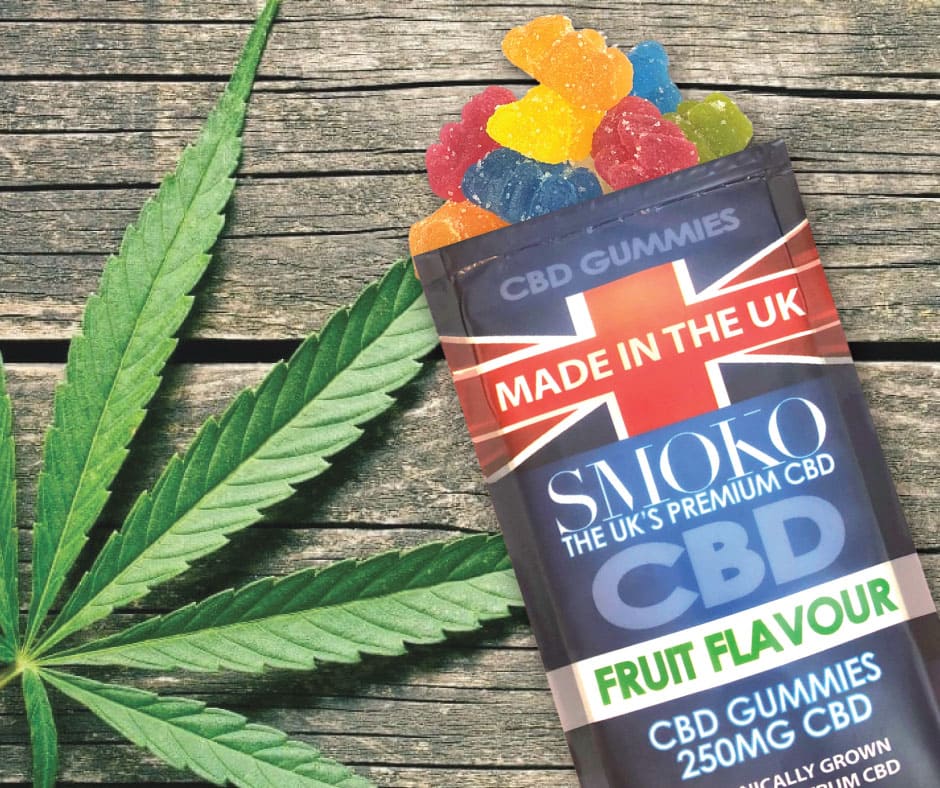
- 5. CBD capsules and gummies: convenient but slower
- 6. CBD sublingual oils: balanced absorption and flexibility
- 7. Comparing CBD types: a side-by-side view
- My honest take on CBD types for athletes
- Smokocbd’s CBD range for athletes: safe, tested, and transparent
- FAQ
Key takeaways
| Point | Details |
|---|---|
| Three core CBD types exist | Isolate, broad-spectrum, and full-spectrum each carry different cannabinoid profiles and doping risks. |
| Isolate is safest for tested athletes | CBD isolate contains 99%+ pure CBD with no THC, reducing the risk of a positive anti-doping test. |
| Batch-specific COAs are non-negotiable | Always request a certificate of analysis for the specific batch you are buying, not a general lab report. |
| WADA permits CBD, not THC | As of 2026, CBD is allowed at all times, but THC and most other cannabinoids remain prohibited in competition. |
| Strict liability applies to you | Athletes bear full responsibility for any prohibited substance found in their system, regardless of product labelling. |
What to look for when choosing CBD as an athlete
Before comparing the types of CBD products available, it helps to have a clear framework for evaluation. Not every consideration that matters to a general wellness consumer will matter to a competitive athlete, and some factors that athletes overlook can cost them their careers.
Here are the critical criteria to weigh up:
- Cannabinoid spectrum. Whether a product is isolate, broad, or full-spectrum determines what compounds enter your body alongside CBD.
- THC and prohibited cannabinoid risk. WADA’s 2026 guidelines permit CBD at all times but prohibit THC in competition at a threshold of 150 ng/mL. Other cannabinoids carry no threshold at all, meaning any detectable level is a violation.
- Third-party certification. Programmes such as Informed Sport, NSF Certified for Sport, and BSCG Certified CBD test products batch by batch. A certified batch is your strongest safeguard, not just a reassuring label on the front.
- Product form and bioavailability. Oils, capsules, topicals, and gummies each absorb at different rates and serve different recovery needs.
- UK FSA dosage limits. The UK Food Standards Agency recommends a maximum of 10 mg of CBD per day for healthy adults. Many commercial products exceed this, so check your serving size carefully.
- Strict liability. Under anti-doping rules, you are responsible for whatever enters your body. Contamination is not a defence.
Pro Tip: Never rely solely on a product’s front label. Always obtain the batch-specific certificate of analysis (COA) and verify that it has been produced by an accredited third-party laboratory.
1. CBD isolate: the safest option for tested athletes
CBD isolate is exactly what it sounds like. It is CBD and nothing else, refined to 99%+ purity with no THC, no terpenes, and no other cannabinoids present.
For athletes who compete under anti-doping rules, isolate is the lowest-risk option available. Because there are no other cannabinoids present, the chance of inadvertently consuming a prohibited substance is as close to zero as you can get. Most of the existing clinical research on CBD, including the studies that inform sports medicine discussions, has been conducted using isolate formulations. So while the entourage effect is not available here, the scientific grounding is actually stronger for isolate than for other types.
Key characteristics of CBD isolate:
- Form: Available as powders, oils, and capsules. Easy to measure precisely.
- THC content: None detectable when produced correctly.
- Entourage effect: Absent. You receive the effects of CBD alone.
- Clinical evidence: Most robust among the three types.
- Cost: Generally the most affordable per milligram of CBD.
- Best suited to: Tested athletes during competition season and anyone with zero tolerance for risk.
The main drawback is that isolate may deliver a narrower range of effects compared to products that retain a broader cannabinoid profile. That said, for anyone who is drug-tested, the trade-off is straightforward.
Pro Tip: If you are a competitive athlete subject to anti-doping testing, CBD isolate from a batch-certified supplier should be your default choice. No other type offers the same level of peace of mind.
2. Broad-spectrum CBD: moderate benefits, moderate risk
Broad-spectrum CBD sits between isolate and full-spectrum. It contains CBD alongside minor cannabinoids such as CBG and CBN, plus terpenes, but is processed to remove THC. On paper, this sounds like the ideal middle ground. In practice, the risks require careful attention.
The challenge is that “THC-free” on a label does not always mean what you think it does. Up to 69% of commercial CBD products have been found to be mislabelled, with detectable THC found in products claiming to contain none. This is not just a consumer inconvenience. For a tested athlete, a trace amount of THC in a broad-spectrum product could accumulate over time and trigger a positive result.
There is an additional complication worth knowing. Research has shown that broad-spectrum CBD users can show urinary metabolites of prohibited cannabinoids like CBG and CBDV, and moderate exercise appears to amplify their detection. So even when a product is genuinely THC-free, the presence of other minor cannabinoids may create a compliance issue.
Points to consider with broad-spectrum CBD:
- Entourage effect: Present to a degree, as multiple cannabinoids and terpenes interact.
- THC risk: Lower than full-spectrum but not zero without verified batch testing.
- Other prohibited cannabinoids: Some minor cannabinoids remain and carry no WADA threshold.
- Regulation quality: Varies significantly between brands and batches.
- Best suited to: Non-tested athletes, or tested athletes in the off-season who have sourced batch-certified products from a reliable supplier.
Smokocbd’s broad-spectrum products address this concern directly through third-party batch testing to verify zero THC, which places them in a different category from less rigorous market offerings.
3. Full-spectrum CBD: strongest effects, highest risk
Full-spectrum CBD retains everything the hemp plant produces: CBD, minor cannabinoids, terpenes, flavonoids, and up to 0.3% THC by dry weight, which is the legal limit in the UK and USA. This profile is believed to produce the strongest entourage effect, where all the plant’s compounds work together to produce a more pronounced overall response.
For athletes who are not subject to drug testing, full-spectrum CBD may offer the most comprehensive benefits. For anyone who competes under WADA or similar anti-doping authority rules, it carries the highest risk of any CBD type.
THC at 0.3% sounds negligible, but regular use of full-spectrum products can lead to accumulation in fat tissue. During competition or heavy training, this stored THC can be released back into the bloodstream and show up in urine testing. Strict liability means this outcome remains your responsibility, regardless of the product’s legal THC content.
Key characteristics of full-spectrum CBD:
- Entourage effect: Strongest of the three types.
- THC content: Present up to 0.3%, which can accumulate with regular use.
- Doping risk: Highest. Not recommended for tested athletes during competition season.
- Clinical and anecdotal support: Broad but less specific to sports recovery.
- Best suited to: Non-tested athletes seeking the full range of plant-derived benefits, or off-season use under medical guidance.
Understanding why athletes use CBD helps here. The motivation is often sleep, pain management, and inflammation. Full-spectrum products may address all three more effectively than isolate, but that benefit comes with a compliance cost that many athletes simply cannot afford.
4. CBD topicals: localised relief without systemic risk
Topicals include creams, balms, gels, and roll-ons infused with CBD. They are applied directly to the skin over a sore muscle or joint and do not pass into the bloodstream in meaningful amounts. For drug testing purposes, topicals are considered the lowest-risk delivery method.
This makes them genuinely useful for localised recovery without the compliance concerns attached to ingestible products. A CBD balm applied to a strained quad or an aching shoulder can provide targeted relief while leaving your anti-doping risk profile unchanged.
The trade-off is that topicals do not address systemic issues like sleep quality, anxiety, or whole-body inflammation. They are best used as part of a broader sports recovery plan rather than as a standalone solution.
5. CBD capsules and gummies: convenient but slower
Capsules and gummies offer precise, pre-measured doses in a familiar format. They are easy to incorporate into a daily routine and do not require any measuring or mixing. The downside is onset time. Because they pass through the digestive system, effects can take 45 minutes to 2 hours to appear, and bioavailability (the proportion of CBD that actually reaches your bloodstream) is lower than with sublingual oils.
When defining CBD gummies for athletes, the key considerations are the ingredient list and the carrier substances. Watch for added sugars, artificial additives, or undisclosed herbal extracts that could themselves contain prohibited compounds. Always check the full COA for gummy products, not just the CBD content.
6. CBD sublingual oils: balanced absorption and flexibility
Sublingual oils are the most established delivery method for CBD and arguably the most practical for athletes. You place a few drops under the tongue, hold for 60 to 90 seconds, and the CBD absorbs directly through the mucous membrane into the bloodstream. This bypasses the digestive system, which means faster onset (typically 15 to 45 minutes) and higher bioavailability than capsules or gummies.

Oils also allow you to adjust your dose incrementally, which is useful when you are starting out or calibrating your intake to specific recovery needs. As part of any guide to CBD for athletes, sublingual oils consistently rank among the most practical and controllable options available.
7. Comparing CBD types: a side-by-side view
Choosing between CBD types comes down to your specific situation. Here is a clear comparison to help:
| Feature | CBD isolate | Broad-spectrum | Full-spectrum |
|---|---|---|---|
| THC content | None | Trace or none | Up to 0.3% |
| Doping risk | Lowest | Low to moderate | Highest |
| Entourage effect | None | Partial | Full |
| Clinical evidence | Strongest | Moderate | Moderate |
| Cost | Lowest | Moderate | Moderate to high |
| Best for tested athletes | Yes | With caution | No |
| Best for off-season/non-tested | Yes | Yes | Yes |
Pro Tip: When sourcing any CBD product as an athlete, look for the Informed Sport or NSF Certified for Sport logo. These batch-level certification programmes test for over 200 prohibited substances and are specifically designed for competitive athletes.
Reviewing CBD quality standards before purchasing is one of the most practical steps you can take, particularly if you are new to the CBD space.
My honest take on CBD types for athletes
I’ve spoken with a lot of athletes who approach CBD the same way they approach a new supplement: they read a few positive reviews, pick a product that looks reputable, and assume the label tells the whole story. It rarely does.
What I’ve found time and again is that the biggest risk is not CBD itself. CBD is legal, permitted by WADA, and reasonably well-tolerated by most people. The actual risk comes from the other cannabinoids that hitch a ride in broad and full-spectrum products, sometimes without appearing on the label. The contamination reality in the commercial CBD space is not a minor footnote. It is the central issue for any athlete who competes under anti-doping rules.
My honest recommendation is this: if you are a tested athlete, start with isolate from a batch-certified supplier and stay there until your sport’s regulations change. If you are not tested, broad-spectrum from a properly certified brand is a reasonable step up, and Smokocbd’s approach to third-party verification puts them in a trustworthy category. Full-spectrum is a personal choice, but going into it with eyes open about THC accumulation and strict liability is non-negotiable.
I also think athletes underestimate how much the FSA’s 10 mg daily limit matters. Many products on the UK market significantly exceed this, and nobody warns you at checkout. Check your numbers.
Finally, CBD is not a cure-all. The clinical consensus is that its efficacy in sports recovery is still being established. Use it as one variable in your recovery toolkit, not the centrepiece.
— Mike
Smokocbd’s CBD range for athletes: safe, tested, and transparent
If you are ready to make an informed choice, Smokocbd makes it genuinely straightforward. All products are formulated with broad-spectrum CBD sourced from organically grown US hemp and are third-party tested batch by batch to verify zero THC. That means you get the benefits of multiple cannabinoids and terpenes without the compliance risk that comes with less rigorous products.
Whether you are looking for flexibility in dosing or a convenient daily format, Smokocbd has you covered. The 1000MG broad-spectrum mint tincture is a popular choice for athletes who want a reliable sublingual oil with a clean flavour profile. For those who prefer capsule format, the 750MG soft gel capsules offer pre-measured convenience with the same verified purity. Every batch comes with a certificate of analysis, so you always know exactly what you are taking. That transparency is not a bonus feature. For athletes, it is the baseline.
FAQ
What is the safest CBD type for tested athletes?
CBD isolate is the safest option for athletes subject to anti-doping testing. It contains 99%+ pure CBD with no THC or other prohibited cannabinoids, providing the lowest possible risk of a positive test.
Does broad-spectrum CBD still carry doping risk?
Yes. Even when broad-spectrum products are labelled THC-free, trace contamination is possible, and minor cannabinoids like CBG may be detectable in urine. Exercise can further amplify detection of these compounds.
Is CBD legal for athletes in 2026?
Yes. WADA permits CBD at all times as of 2026, but THC remains prohibited in competition above 150 ng/mL. Other cannabinoids carry no threshold, meaning any detectable level can constitute a violation.
What are the benefits of CBD for athletes?
Athletes commonly report improvements in sleep quality, relaxation, and pain relief. However, the clinical evidence for CBD’s role in sports recovery is still developing, and it should be viewed as a supplement rather than a guaranteed performance aid.
How do I know a CBD product is genuinely safe to use?
Look for batch-specific certificates of analysis from an accredited third-party laboratory. Certification programmes such as Informed Sport or NSF Certified for Sport offer the highest level of assurance for athlete-safe CBD products.