Cannabinoids come from one place on the hemp plant: the resin glands, called trichomes, that coat the female flower’s bracts. Almost everything else on the plant, the stalk, the fan leaves, the roots and the seeds, carries little to no CBD. Once you know that, product labels stop being marketing jargon and start being useful information.
That single fact reshapes how you should read a CBD product page. If a brand talks up “hemp-derived” ingredients without specifying flower or trichome content, ask what part of the plant actually went into the bottle. The other detail worth checking before anything else is the certificate of analysis (COA): a lab document showing total CBD, CBDa, and Delta-9 THC as tested percentages, not marketing estimates.
Ranked by how much CBD they actually contribute, the plant’s parts break down like this:
- Female flowers (bracts and calyx) — the resin-dense core of the plant, where trichome coverage peaks and cannabinoid concentration is highest.
- Sugar leaves — the small leaves tucked inside the bud structure; dusted in trichomes but carrying less resin than the bracts themselves.
- Kief and resin — the trichome heads themselves, sieved or extracted away from plant matter, representing the most concentrated cannabinoid source available.
- Fan leaves, stalk, roots, and seeds — negligible cannabinoid content; these parts serve structural, nutritional, or industrial purposes instead.
Pro Tip: Before buying, open the COA and check the “total cannabinoids” line against the advertised CBD strength on the label. If the two numbers don’t roughly match, or if there’s no COA at all, treat that as a warning sign rather than an oversight.
Key Takeaways
Cannabinoid content in hemp is concentrated almost entirely in the female flower’s trichome-covered bracts, and everything else on the plant, stalk, leaves, roots and seeds, contribute little to none.
| Point | Details |
|---|---|
| Focus on bracts | Trichome density on the bract and calyx pair, not overall bud size, signals real cannabinoid concentration. |
| Read the COA first | Check total CBD, CBDa, and Delta-9 THC against the advertised strength before trusting a label. |
| Sex and cultivar decide yield | Only unfertilised female flowers from cannabinoid-bred cultivars deliver meaningful CBD content. |
| Treat seeds and roots as non-cannabinoid | Hemp oil from seeds and root-derived material carry negligible CBD, despite similar branding language. |
| Watch trichome colour | Cloudy, milky trichomes generally mark peak cannabinoid and terpene balance at harvest. |
Table of Contents
- Hemp plant anatomy at a glance: the main parts and where they sit
- Stem and stalk anatomy: bast fibres, hurd and the vascular system
- Fan leaves versus sugar leaves: which one matters for CBD?
- What does a hemp flower actually look like up close?
- Trichomes: the glands that actually make cannabinoids
- Why do female plants matter more than male plants for CBD?
- Seeds and roots: useful, but not for cannabinoids
- From plant to product: decoding flower, trim, kief and extracts
- How reputable suppliers verify flower and label it correctly
- What the conventional CBD buying advice gets wrong
- Sources
Hemp plant anatomy at a glance: the main parts and where they sit
Picture the plant from the ground up and the anatomy makes sense almost immediately. The root system anchors the plant and pulls in water and nutrients. Above ground, the stem or stalk rises through a series of nodes, each one sending out branches and pairs of fan leaves. Toward the top and along the branch tips, the plant produces its inflorescence, commonly called a cola, made up of clustered bracts, calyxes, thread-like pistils, and the tiny sugar leaves woven through the bud. Coating all of this, most densely on the bracts, sit the trichomes that manufacture cannabinoids and terpenes. If pollination occurs, the plant also produces seeds.
Not every part of that structure ends up in a product, and not every part is even meant to.
- Sold or processed for cannabinoids: flower (bud), trim (sugar leaves and small bracts), kief, seeds (for oil or food, not cannabinoids).
- Used industrially, rarely for CBD: stalk fibres (bast) and hurd, occasionally roots for soil remediation trials.
One distinction is worth holding onto throughout this guide: fibre and seed cultivars of hemp are bred to grow tall with minimal branching and modest flower mass, while cannabinoid cultivars are bred short and bushy with dense, resinous colas. A critical review of industrial fibre hemp anatomy confirms that hemp and high-THC cannabis share near-identical anatomy but diverge sharply depending on which trait breeders select for. That’s why a hemp field grown for textiles looks nothing like a hemp crop grown for CBD extraction, even though both are legally and botanically the same species.
Stem and stalk anatomy: bast fibres, hurd and the vascular system
The hemp stalk is built in layers, rather like a pencil. On the outside sits a thin epidermis and bark, beneath that a band of long, tough bast fibres (technically phloem tissue), then a layer of vascular cambium, and finally the woody hurd at the core (xylem tissue). The vascular system running through this structure moves water upward from the roots and sugars downward from the leaves, the plant’s equivalent of a plumbing network.
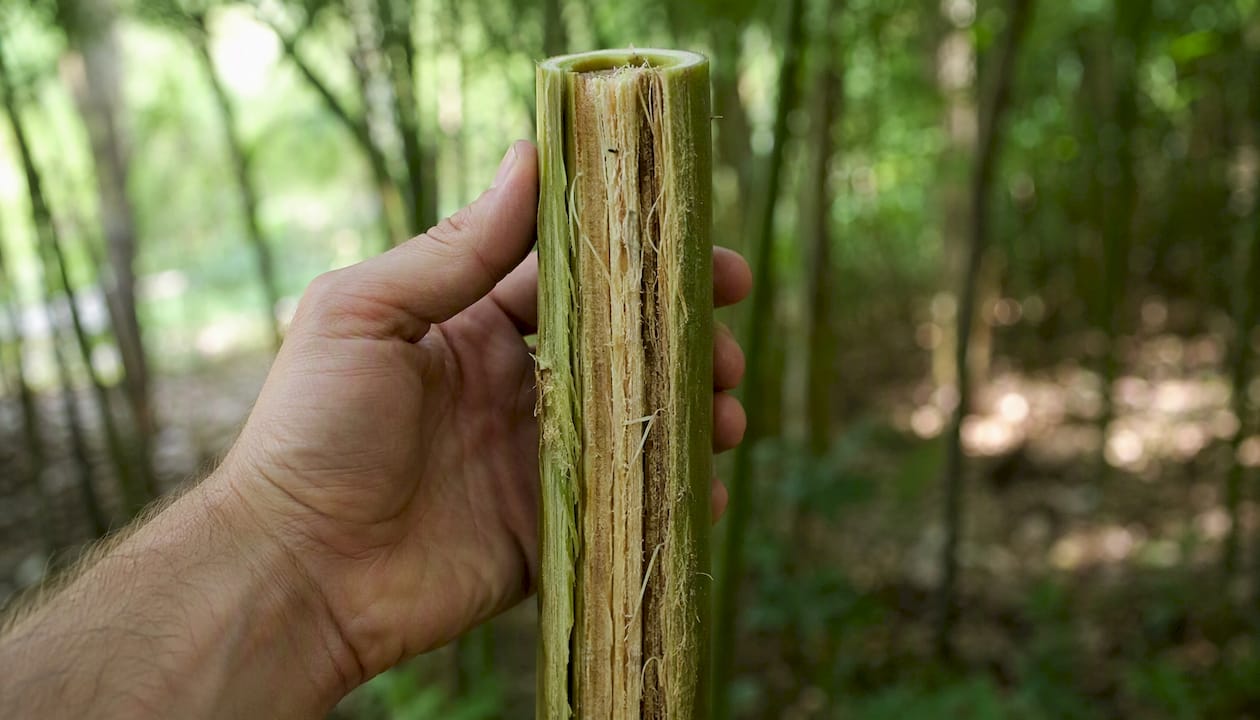
None of this tissue produces cannabinoids in any meaningful quantity, but stalk vocabulary shows up constantly in hemp supply chains, so it’s worth knowing what the numbers mean.
That composition comes from detailed chemical analysis of hemp hurds, and it explains why hurd is prized for bio-composites and animal bedding while bast fibre, which the same review puts at 70 to 75% cellulose, supplies textile and paper markets. Bast fibre content itself can range from roughly 14 to 48% of total plant mass depending on cultivar, with hurds typically making up a large majority of stalk weight. If you see “hemp stalk” or “hurd” mentioned on a wellness product, that’s a fibre or industrial byproduct claim, not a cannabinoid one.
Fan leaves versus sugar leaves: which one matters for CBD?
Fan leaves are the large, palmately compound leaves you’d recognise instantly, typically with five to nine leaflets radiating from a central point, according to Britannica’s description of hemp morphology. They grow along the stem and branches, and their job is almost entirely photosynthetic: they capture light and feed the plant’s growth. Trichome coverage on fan leaves is sparse, so their cannabinoid content is low.
Sugar leaves, by contrast, are the small leaves that grow inside and around the bud itself, often dusted so heavily in trichomes they look faintly frosted, which is exactly where the name comes from. They carry noticeably more resin than fan leaves, though still less than the bracts they surround.
This distinction matters when you’re reading a product description:
- If a listing mentions “trim,” it usually means sugar leaves (and sometimes small bracts) that were separated from the main bud during processing.
- Trim-based products can carry real cannabinoid content, but typically lower and less consistent than flower-only extracts.
- A product advertised as “whole flower” should contain minimal trim, meaning most of the material comes from the resin-dense bract and calyx structures.
Before trimming, a harvested cola looks shaggy, with sugar leaves poking out at odd angles. After trimming, the same bud looks dense and rounded, because processors have removed the leafy material to expose the resinous calyxes underneath. That’s the visual difference between “untrimmed” and “manicured” flower you’ll sometimes see referenced in premium product photography.
What does a hemp flower actually look like up close?
The words “cola,” “bud,” and “flower” all describe the same structure at different scales. A cola is a cluster of flowers growing tightly together at a branch tip; the main cola at the top of the plant is usually the largest and most resinous. Zoom in further and you find the bract, a small, tear-shaped leaf that wraps around the plant’s reproductive tissue. Inside each bract sits the calyx, the base structure that swells with resin production, and protruding from the calyx are hair-like pistils (also called stigma), which start white or pale and darken as the flower matures.
According to extension guidance from the University of Nevada, Reno, the female flower’s structure, cola, pistils, bracts, trichomes, sugar leaves, and the supporting stem and branches, forms the complete anatomical picture growers and extractors work with. What most people call a “bud” is simply a cluster of these bracts and calyxes packed densely together with sugar leaves woven throughout.
Here’s the detail that actually determines quality: the bract and calyx pair, not the leaves around them, is where trichome density and resin production peak. Industry insiders judge flower quality by trichome coverage on the bracts specifically, according to research on glandular trichome biology, rather than by overall bud size or how frosty a photo looks from a distance.
Pistil colour offers a rough, visible clue to maturity. Pale, white pistils generally signal an earlier growth stage, while curling, darkening pistils suggest the flower is progressing toward peak resin production. It’s a useful visual cue, though trichome colour, covered next, is the more reliable indicator.
Trichomes: the glands that actually make cannabinoids
Trichomes are the microscopic, mushroom-shaped glands where cannabinoid and terpene synthesis happens. Without them, hemp flower would have no CBD content at all. Research on glandular trichome biology describes three main glandular types: bulbous trichomes (the smallest, found across various plant surfaces), capitate-sessile trichomes (slightly larger, common on leaves), and capitate-stalked trichomes, the largest type, which dominate the bracts and calyxes and produce the bulk of a flower’s cannabinoid content.
Distribution matters as much as type. Trichome density is highest on the bracts, moderate on sugar leaves, and sparse on fan leaves and stems, which is precisely why bract and calyx tissue commands the most attention during cultivation and processing.
Trichome colour changes as the plant matures, and that shift is one of the most reliable harvest indicators growers use.
| Trichome stage | Appearance | What it signals |
|---|---|---|
| Clear | Translucent, glassy | Cannabinoid production still ramping up; harvesting now yields lower potency |
| Cloudy/milky | Opaque, white-ish | Peak cannabinoid concentration; terpene profile typically strongest here |
| Amber | Golden to brown | Cannabinoids beginning to degrade; terpenes fading, sedative qualities may increase |
Harvesting at the cloudy stage tends to preserve the broadest, most balanced cannabinoid and terpene profile, which matters for a broad-spectrum CBD product where the whole-plant character is part of the appeal. Wait too long and amber trichomes signal a shift toward degraded compounds and a duller aroma.
Pro Tip: If a product page includes a macro photograph of the flower, look for a frosted, slightly matte white coating rather than a glassy or yellowish sheen. That texture usually indicates the flower was harvested at or near the cloudy trichome stage, which is the sweet spot for cannabinoid content.
Why do female plants matter more than male plants for CBD?
Hemp is naturally dioecious, meaning individual plants are either male or female, though agronomic guidance from MU Extension notes that monoecious cultivars, where a single plant carries both male and female flowers, also exist and are sometimes preferred for grain and fibre production because they simplify mechanical harvesting.
For CBD, only the female plant matters. Female flowers are the primary site of cannabinoid accumulation, and growers cultivating for cannabinoids go to considerable lengths to prevent pollination. An unfertilised female flower, sometimes called sinsemilla (literally “without seed”), keeps investing energy into resin production rather than seed development. Once pollinated, the same flower redirects its resources toward seeds, and measured cannabinoid concentration drops.
This is why reputable cannabinoid growers rogue out male plants early and monitor fields closely for stray pollen. A single missed male plant in a flowering field can pollinate a wide radius and quietly reduce potency across an entire harvest, which is one reason genetics and growing conditions vary so much between suppliers.
Breeding choices reflect this priority split. Cultivars grown for CBD are selected for dense flower structure and high trichome coverage, while fibre and grain cultivars are selected for tall, minimally branched stalks and seed yield. It’s the same species wearing two very different outfits, depending on what the breeder wants from it. For a deeper look at how cannabinoid content diverges between hemp and high-THC cannabis despite this shared anatomy, see the comparison in CBD versus THC: key differences.
Seeds and roots: useful, but not for cannabinoids
Hemp seeds and roots earn their place in the plant’s economy, just not the cannabinoid economy. Seeds are valued for their oil and protein content, commonly pressed into hemp seed oil or used whole in food products, and their fatty acid profile leans heavily on omega-3 and omega-6 compounds. If you’ve seen “hemp oil” on a shelf and wondered why it doesn’t list a CBD percentage, this is usually why: seed-derived hemp oil and cannabinoid-rich CBD oil are made from entirely different parts of the plant.
- Seeds: valued for oil and protein; contain negligible cannabinoid content.
- Roots: structural and absorptive; can extend 45 to 90 centimetres deep according to the industrial hemp anatomy review, and the plant is sometimes used in phytoremediation projects to draw contaminants out of soil.
- Contamination risk: because roots absorb whatever is in the surrounding soil, including heavy metals, they’re rarely used in food or topical products without dedicated testing.
- Cannabinoid content in both: consistently very low, regardless of cultivar or growing conditions.
That phytoremediation ability is a genuine agricultural strength, but it cuts both ways for consumer products. If you’re comparing hemp oil against cannabinoid oil, it’s worth reading a plain explanation of hemp oil versus cannabinoid oil before assuming the two are interchangeable, because they very much aren’t.
From plant to product: decoding flower, trim, kief and extracts
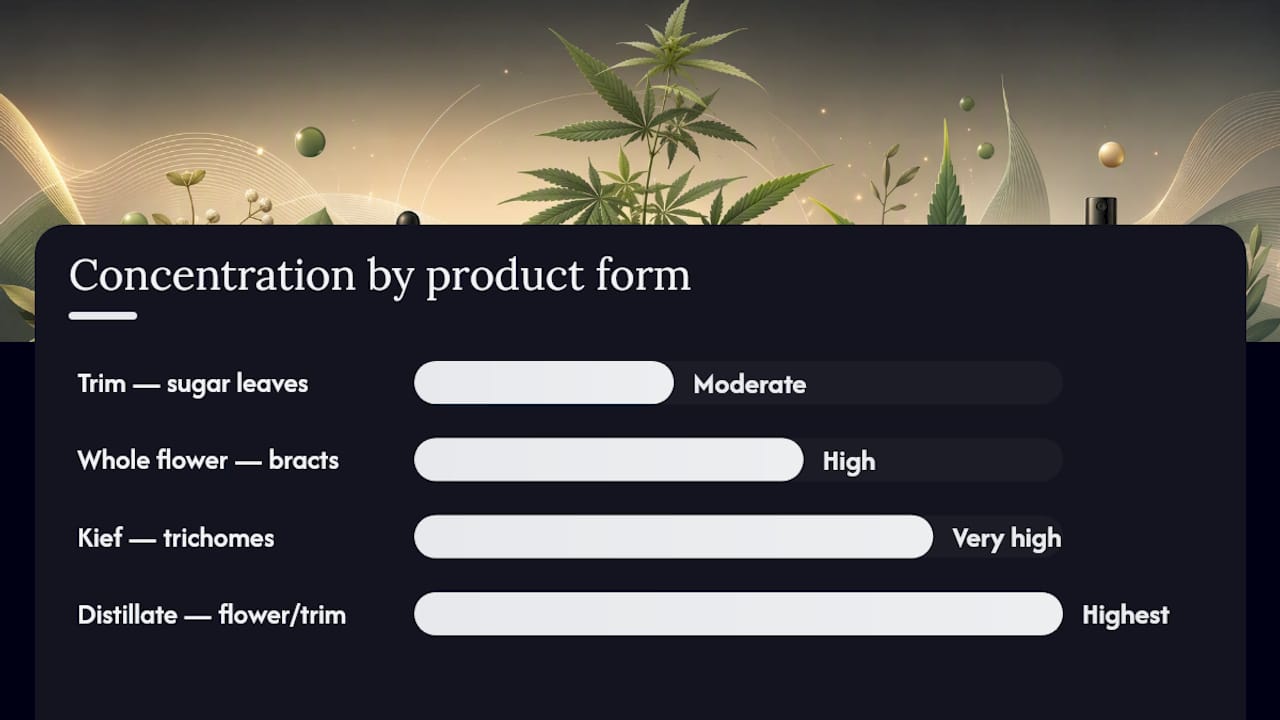
Once flower comes off the plant, processors turn it into a range of product forms, and each one concentrates cannabinoids differently. Trim is the leftover sugar leaves and small bract material separated from the main bud. Shake is the loose flower fragments that settle at the bottom of packaging. Kief is the collected trichome heads themselves, sieved off dried flower, often visually resembling a fine, pale green powder. Hash is pressed or extracted kief, and crude extract and distillate describe increasingly refined liquid concentrates pulled from flower using solvents or CO2.
| Product form | Plant part used | Typical cannabinoid concentration |
|---|---|---|
| Whole flower | Bracts, calyxes, some sugar leaf | High, most consistent |
| Trim | Sugar leaves, small bracts | Moderate, more variable |
| Kief | Trichome heads only | Very high, concentrated |
| Distillate/extract | Refined from flower or trim | Highest, engineered concentration |
Broad-spectrum products, the category Smokocbd works within, use extracts that retain multiple cannabinoids and terpenes from the original flower while removing detectable THC. That’s a processing choice, not an anatomical one, but it directly affects how a COA will read: you should see measurable levels of CBD alongside other cannabinoids, with Delta-9 THC reported at zero or non-detectable.
When you’re checking a lab report, four fields matter most: total CBD (the headline potency figure), CBDa (the acidic precursor form present before decarboxylation), total cannabinoids (a broader figure that should roughly track the advertised strength), and Delta-9 THC (which needs to sit at legal, verified levels). A trustworthy COA also includes pesticide and heavy-metal screening results. If a product page shows none of this and simply states “lab-tested” with no downloadable document, that’s a page worth walking away from. Post-harvest handling genuinely shifts these numbers too; research on cannabinoid preservation during processing confirms that drying, curing, and storage conditions all influence the final measured potency, which is one reason two batches from the same plant can test slightly differently.
How reputable suppliers verify flower and label it correctly
A supplier that takes its anatomy seriously tends to publish the same handful of details on every batch. Look for a batch number tying the product to a specific harvest, a harvest date, the cultivar name, and the extraction method used to turn flower into the finished product. Together, those details let you trace a bottle back to an actual crop rather than a vague marketing claim.
The COA itself deserves a closer look than most buyers give it. Total CBD and CBDa together should approximate the potency printed on the label; a wide mismatch is a red flag. Total cannabinoids gives a fuller picture of the broad-spectrum profile, useful for comparing products beyond CBD alone. Delta-9 THC needs to sit at legally compliant, tested levels, not an estimate. A terpene profile, where provided, tells you something about aroma and the entourage effect the product may offer. Finally, contaminant screening, covering pesticides, heavy metals, and microbials, confirms the flower wasn’t grown in compromised soil or handled poorly afterward.
If a product page offers nothing beyond the phrase “third-party lab tested,” treat that as an incomplete claim rather than a guarantee. A genuine certificate should be downloadable, dated, and traceable to the specific batch you’re buying, not a generic document reused across an entire product line.
Quick glossary of terms you’ll see on product pages
- Bract: a small, tear-shaped leaf enclosing the female flower’s reproductive tissue; the most resin-dense structure on the plant.
- Calyx: the base of the bract, where cannabinoid-rich resin accumulates most heavily.
- Cola: a cluster of flowers growing together at a branch tip, often called the “bud” as a whole.
- Trichome: a microscopic gland that produces and stores cannabinoids and terpenes; the three glandular types are bulbous, capitate-sessile, and capitate-stalked.
- Sugar leaf: a small, trichome-covered leaf growing within the bud structure.
- Fan leaf: a large photosynthetic leaf with minimal cannabinoid content.
- Kief: collected trichome heads, sieved from dried flower.
- Sinsemilla: unfertilised female flower, grown specifically to maximise resin production.
- COA: certificate of analysis, the lab document verifying cannabinoid content and contaminant screening for a specific batch.
For readers wanting more on how carrier oils and topicals fit alongside flower-derived extracts, coconut oil and hemp oil compared covers the formulation side of the equation, while what’s actually in hemp oil unpacks seed-oil composition in more depth.
Reputable, organically grown hemp starts this whole chain off correctly, and the case for organic cultivation explains why growing practices at the root level ripple all the way up to trichome quality at harvest. Terpene chemistry, meanwhile, is its own fascinating rabbit hole. Montrose Cannabis’s breakdown of myrcene is a solid primer if you want to understand why certain flower smells and feels the way it does, while a look at how strain categories differ shows how morphology varies even within cannabinoid-focused cultivars.
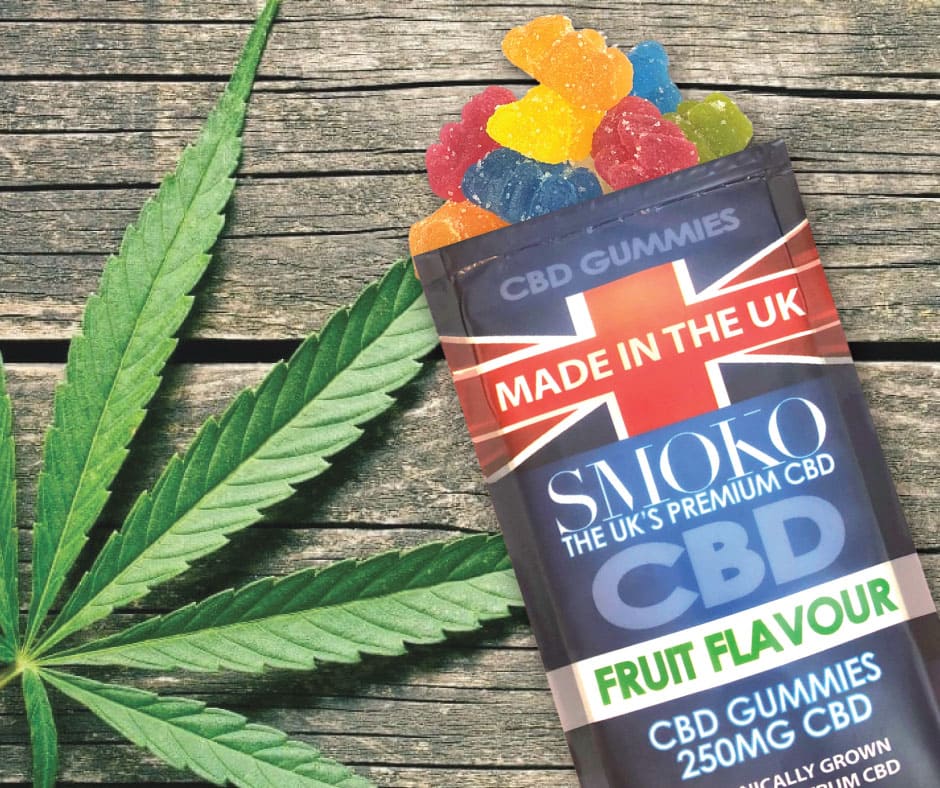
Ready to see this anatomy translated into an actual product? Smokocbd’s Mint 2000mg broad-spectrum CBD tincture is extracted from flower grown specifically for cannabinoid content, then verified through third-party lab testing before it ever reaches a bottle. Before adding it to your basket, pull up the batch’s COA and check the total CBD figure against the label, exactly the habit this guide has been building toward.
What the conventional CBD buying advice gets wrong
Most consumer guides to CBD talk endlessly about extraction methods, flavour, and dosage, and barely mention the plant itself. That’s backwards. Extraction method matters, but it can only concentrate what the plant already produced, and what the plant produced comes down almost entirely to whether the flower was female, unpollinated, harvested at the right trichome stage, and grown from a cultivar actually bred for cannabinoids rather than fibre or seed.
The overrated variable, in my view, is strain naming. Buyers spend a disproportionate amount of attention on strain names and flavour descriptors, details that matter for experience but tell you nothing about verified potency. The underrated variable is trichome maturity at harvest, a detail almost no product page discloses, even though it shapes the cannabinoid and terpene balance more than almost anything else in the process.
If you take one habit from this guide, make it this: before you read anything else on a product page, find the COA and check three numbers, total CBD, total cannabinoids, and Delta-9 THC. Everything else on the label, from the cultivar name to the extraction jargon, is context. Those three figures are the only part of the page that a lab, rather than a copywriter, actually wrote.
Sources
- Hemp basics: Anatomy of a female hemp plant | University of Nevada, Reno Extension
- Industrial hemp | MU Extension
- Glandular trichomes and their role in cannabinoid/terpene production (PMC article)
Always weigh a supplier’s marketing claims against a current, batch-specific COA rather than an older or generic certificate reused across a product range.