Over-the-counter CBD is not a proven, fast-acting muscle spasm reliever, and no major UK guideline treats it that way. The strongest evidence sits with Sativex, a licensed THC:CBD oromucosal spray recommended by NICE for specific cases of MS-related spasticity, prescribed and monitored by specialists. If you’re dealing with persistent or severe spasms, speak to a clinician rather than self-treating. For an ordinary cramp right now, stretch, massage and rehydrate first. If you still want to try an over-the-counter CBD product, a cautious two to four week trial with proper tracking is the sensible approach, not a one-off dose expecting instant results.
TL;DR:
- Over-the-counter CBD lacks strong evidence for immediate relief of muscle spasms, with most data supporting licensed Sativex for MS-related spasticity under specialist care.
- A 2016 review indicated patients report improvements with Sativex, but objective measures are inconsistent, and OTC CBD products show null or mixed results in controlled trials.
- Topical CBD generally provides only local comfort without significant central effects, while oral products vary widely in absorption and dosage accuracy.
- A four-week, carefully monitored trial of OTC CBD at low doses is recommended, with a detailed symptom log to determine whether it provides any benefit.
- CBD is generally safe but can interact with certain medications, especially those metabolized by CYP3A4 and CYP2C9, requiring medical consultation before use.
Table of Contents
- What does the clinical evidence say about CBD and spasticity?
- How might cannabinoids affect muscle spasms and pain?
- Which CBD product type actually suits muscle spasms?
- Is CBD safe to combine with your current medications?
- How do you safely try CBD for muscle spasms?
- When should you consider Sativex or see a clinician?
- What SMOKO CBD believes about muscle spasm relief
- Which SMOKO CBD products suit a cautious muscle spasm trial?
- Sources
- FAQ
What does the clinical evidence say about CBD and spasticity?
The evidence base for cannabinoids and muscle spasms splits cleanly into two camps, and mixing them up is where most confusion starts.
On one side sits Sativex, the licensed THC:CBD oromucosal spray. NICE guidance NG144 recommends offering a four-week trial of Sativex to adults with moderate to severe spasticity caused by multiple sclerosis, but only when other pharmacological treatments haven’t worked. That’s a narrow, specific recommendation, not a blanket endorsement of cannabinoids for muscle problems generally. A 2016 clinical evidence review found substantial patient-reported improvements in spasticity with the spray in MS patients, with a meaningful proportion of users reporting at least a 30% reduction in symptoms. Objective, clinician-measured outcomes told a less consistent story, which matters because it shows the benefit may be partly subjective, felt rather than measured.
On the other side sits everything you can buy without a prescription, and here the picture gets murkier.
NHS England’s guidance on cannabis-based products for medicinal use is blunt about the distinction: licensed medicines like Sativex have been through rigorous evaluation and standardisation, while unlicensed cannabis products, including most shop-bought CBD, simply haven’t. They are not interchangeable, and treating an OTC gummy or tincture as a pharmacological stand-in for a prescription spray is a mistake.
Recent trial data adds another layer of caution. A multicentre randomised controlled trial testing THC, CBD, THC combined with CBD, and placebo in people with MS or spinal cord injury found no significant difference between any of the active treatments and placebo for spasticity or pain. That’s a well-designed, randomised, double-blinded study, and it landed a genuinely neutral result for CBD alone.
Topical CBD fares no better in controlled settings. Trials looking at topical formulations for exercise-related muscle recovery have generally found no meaningful benefit on delayed-onset muscle soreness or muscle function, though a handful of small studies show minor effects on isolated measures. Bioavailability through skin is the recurring limitation.
Here’s the pattern worth remembering:
- Sativex has trial-backed evidence specifically for MS spasticity, under specialist supervision.
- General OTC CBD (oral or topical) has inconsistent, often null results in controlled trials for spasms, cramps or exercise recovery.
- Positive patient reports for OTC products often reflect improved sleep or reduced anxiety rather than a direct muscle-relaxing effect.
- No UK guideline recommends OTC CBD as standard treatment for muscle spasms of any cause.
One trial’s null result stands out: the Danish multicentre RCT comparing THC, CBD, THC&CBD and placebo found no statistically meaningful separation between CBD alone and placebo for either spasticity or pain, in a population where you might most expect cannabinoids to help.
The practical takeaway is straightforward. If you have MS-related spasticity that hasn’t responded to standard antispasticity drugs, ask your neurologist about Sativex. If you’re managing everyday cramps, tight calves after a long run, or general muscle tension, the science doesn’t currently support CBD as a dependable fix, though some people do report feeling more relaxed and sleeping better while using it.
How might cannabinoids affect muscle spasms and pain?
Muscle spasms happen when nerve signals misfire or overreact, causing muscle fibres to contract involuntarily. The endocannabinoid system, a network of receptors (CB1 and CB2) and signalling molecules found throughout the brain, spinal cord and peripheral nerves, plays a role in regulating that excitability. CBD doesn’t bind strongly to CB1 receptors the way THC does. Instead, it appears to work more indirectly, influencing how other cannabinoids and neurotransmitters behave, and possibly dialling down inflammatory signalling in surrounding tissue.
Think of it less like a light switch and more like a dimmer. THC tends to directly engage receptors that calm hyperactive nerve signals, which is part of why it’s paired with CBD in Sativex rather than used alone. CBD’s role in that combination is thought to soften some of THC’s side effects (anxiety, intoxication) while contributing its own anti-inflammatory action.
Several distinct mechanisms are worth separating out:
- Central modulation: cannabinoids may reduce excessive nerve signalling in the spinal cord and brain that drives spasticity in conditions like MS.
- Anti-inflammatory action: CBD may calm localised inflammation around irritated or overworked muscle tissue, though this is better demonstrated for general inflammation than spasm reduction specifically.
- Indirect relief: better sleep and reduced anxiety, both commonly reported by CBD users, can lower how intensely a spasm is perceived even if the muscle activity itself hasn’t changed.
- Dose and pharmacokinetics: central nervous system effects generally require doses and delivery methods that reliably reach systemic circulation, which explains why topical products, with their limited skin penetration, tend to underperform oral or oromucosal routes in trials.
That last point explains a lot of the confusion around CBD muscle relief. A systematic review of cannabinoids in spasticity and pain suggests many positive patient reports likely reflect these indirect benefits, better rest, calmer mood, rather than a direct, reproducible muscle-relaxing action of CBD by itself. That doesn’t make the reported relief fake. It means the mechanism is probably softer and less targeted than marketing language sometimes implies.
Pharmacology also explains why THC and CBD aren’t interchangeable despite constant conflation. THC engages CB1 receptors directly enough to produce measurable muscle relaxation and intoxication. CBD’s action is broader, weaker at those specific receptors, and slower to show central effects, which is one reason a CBD-only trial found no significant difference from placebo while THC-containing Sativex has clearer trial support.
Which CBD product type actually suits muscle spasms?
Not every CBD product works the same way, and picking the wrong format is one of the most common mistakes people make when trying CBD for muscle pain.
Oromucosal spray (Sativex) sits in its own category entirely. It’s a licensed medicine with a standardised THC:CBD ratio, prescribed and initiated by a specialist, with structured dose titration and follow-up monitoring built in. You cannot buy it over the counter, and it isn’t meant to be compared directly with shop-bought CBD oil.
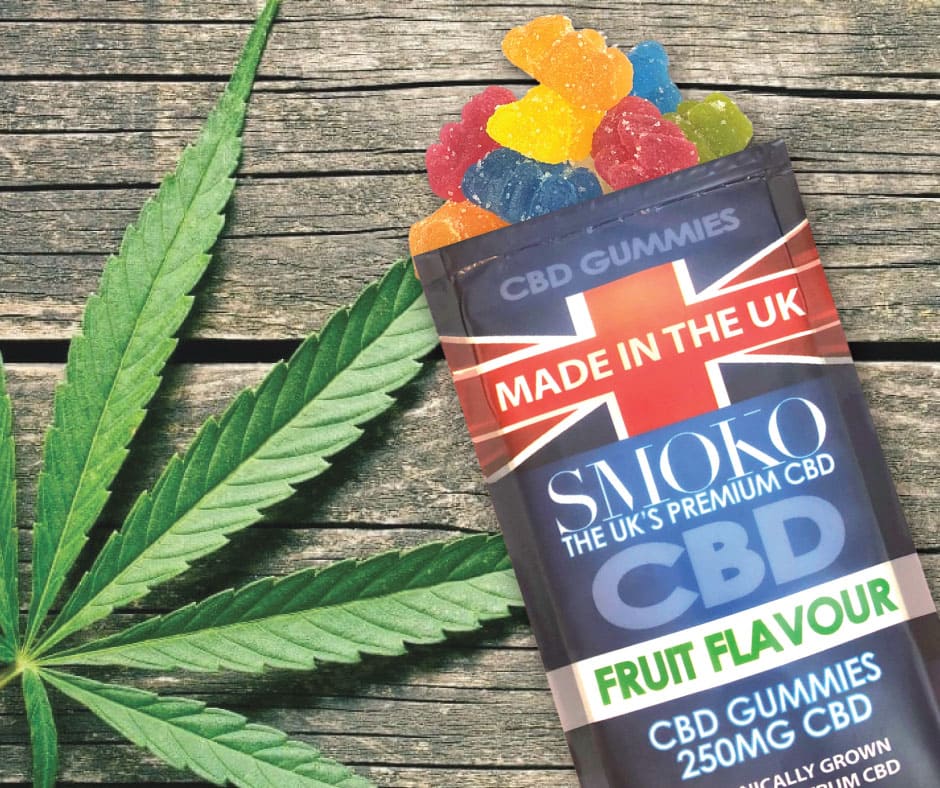
Oral products, tinctures, capsules and gummies, are the most common OTC route. Onset is slower than a spray because the CBD has to pass through digestion before reaching the bloodstream, typically taking 30 minutes to two hours depending on whether it’s taken with food. Dose variability between brands is a genuine issue; two products both labelled “25mg CBD” can behave differently depending on formulation and absorption. Smokocbd’s CBD Gummy Bears offer a pre-measured format that removes some of that guesswork, which matters if you’re trying to keep your dose consistent during a trial.
Topical products, balms, rubs and creams, work differently again. CBD applied to skin has limited systemic absorption, meaning it’s unlikely to reach the central nervous system in amounts that would directly relax a spasming muscle. What topicals can offer is localised comfort, warmth, cooling, or a soothing sensation that eases how tense muscle feels even if the underlying contraction pattern is unchanged. Reviewing a guide to CBD muscle rub is worth doing before assuming a topical will do the same job as an oral product.
When choosing any product, a few checks matter more than flavour or branding:
- Look for a certificate of analysis (COA) from independent third-party lab testing confirming CBD content and zero or negligible THC.
- Check the labelled milligram amount per serving, not just the total bottle strength.
- Favour simple formulations over products stacked with unproven “proprietary blends.”
- Avoid anything that doesn’t disclose sourcing or testing at all.
Pro Tip: Keep the product’s COA saved on your phone before you start a trial. If you ever need to discuss your CBD use with a GP or pharmacist, having the exact cannabinoid breakdown to hand makes that conversation far more useful.
Is CBD safe to combine with your current medications?
CBD is generally well tolerated, but “generally well tolerated” doesn’t mean risk-free, particularly if you’re already taking medication for muscle spasms or another condition.
The most commonly reported side effects are drowsiness, dizziness and mild digestive upset. On their own, these are usually manageable. Combined with sedatives, alcohol, or existing antispasticity medicines like baclofen or tizanidine, the sedative effect can stack, raising the risk of excessive drowsiness and falls, particularly in older adults. Shared care guidance for Sativex flags exactly this: be alert to additive muscle-relaxing effects when cannabinoids and antispasticity drugs are used together, and never reduce or stop a prescribed medicine without medical advice.
There’s also a pharmacological interaction worth understanding even in simple terms. CBD is broken down by liver enzymes, particularly CYP3A4 and CYP2C9, the same enzymes responsible for metabolising a long list of other medicines. When CBD competes with those enzymes, it can raise or lower the blood levels of other drugs. The Sativex shared-care protocol lists specific examples of medicines needing caution alongside cannabinoids, including certain antifungals (such as itraconazole), some antiepileptic drugs, rifampicin, and blood thinners like warfarin, where even small changes in blood level can matter.
Follow this sequence before starting anything:
- List every medicine and supplement you currently take, prescription and OTC, and check for known interactions with CBD.
- Ask a pharmacist or GP specifically about CYP3A4 or CYP2C9 interactions if you take antiepileptics, antifungals, rifampicin or warfarin.
- Never stop or reduce a prescribed antispasticity medicine on your own initiative because you’ve started CBD.
- Avoid combining CBD with alcohol or additional sedatives during the first weeks of a trial, when you don’t yet know how you’ll respond.
- Tell your GP if you’re pregnant, trying to conceive, or breastfeeding, since cannabinoids are generally advised against in these situations.
- Ask about liver function monitoring if you’re on long-term, higher-dose CBD alongside other liver-metabolised medicines.
None of this is designed to scare you off trying CBD. It’s designed to make sure that if you do, you’re doing it with your eyes open and your GP in the loop, particularly if you’re already managing spasms with prescribed medication.
How do you safely try CBD for muscle spasms?
If you’re dealing with a sudden cramp right now, CBD won’t help in the moment. Stop the activity that triggered it, gently stretch and massage the muscle, and rehydrate. This first-line approach for acute cramps has nothing to do with cannabinoids and everything to do with basic muscle physiology.
If your interest is in longer-term muscle relief or recovery support rather than instant fixes, a structured trial makes far more sense than sporadic use. Here’s a conservative protocol worth following:
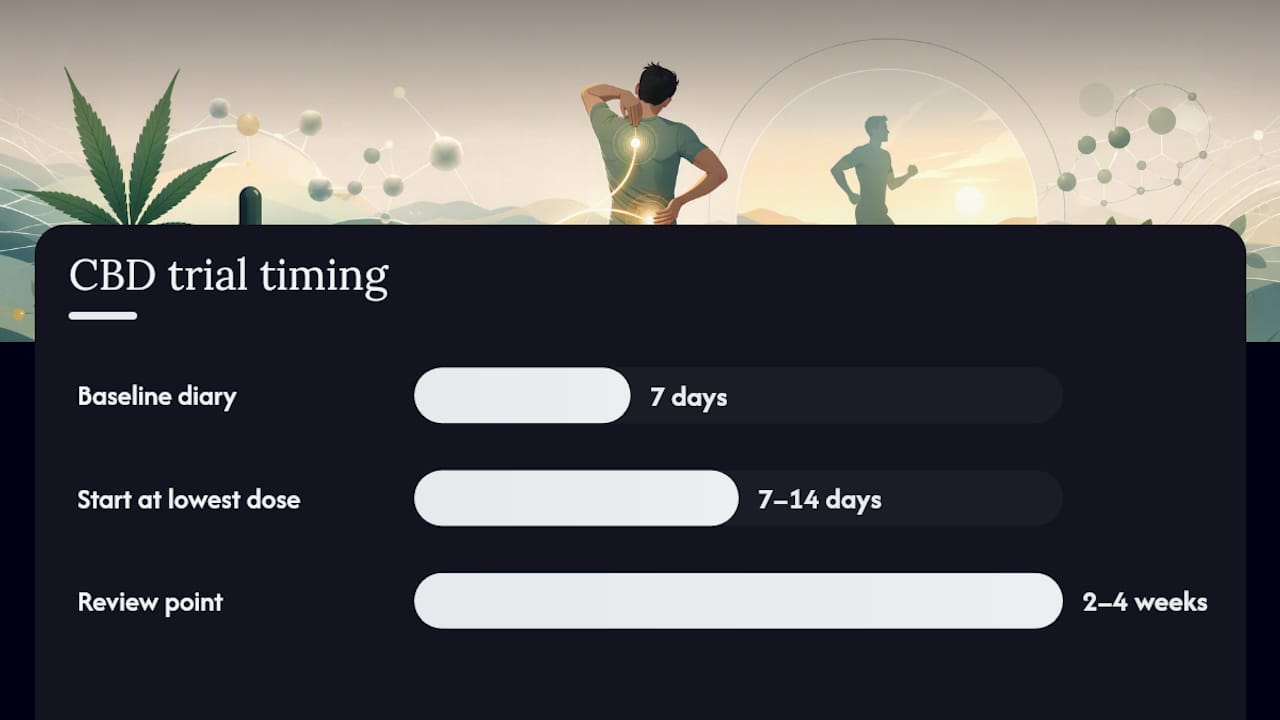
- Keep a 7-day baseline symptom diary before you start anything. Record spasm frequency, duration, pain intensity (0 to 10), sleep quality, and any triggers you notice. You need a “before” picture to judge whether CBD is actually doing anything.
- Choose one product and one format. Don’t trial a tincture and a topical simultaneously; you won’t be able to tell which is responsible for any change.
- Start at the lowest labelled dose for 7 to 14 days. For oral CBD, this often means starting around 5 to 10mg once daily. Smokocbd’s guidance on CBD dosage for pain walks through sensible titration steps if you want a more detailed structure.
- Increase gradually only if needed, giving each new dose at least a week before judging its effect.
- Keep logging throughout, not just spasm frequency but sleep, mood, and any medication changes, since these confound results if left untracked.
- Set a firm review point at 2 to 4 weeks. If you’ve seen no meaningful change by then, it’s reasonable to conclude this particular product or dose isn’t working for you.
- Stop and seek medical review if spasms worsen, new weakness appears, or side effects (excessive drowsiness, low mood, digestive problems) outweigh any benefit.
A useful symptom log records more than just “had a spasm.” Note the date and time, the triggering activity, which muscle group was affected, spasm count and duration, pain score, sleep quality, medication changes, and the exact CBD dose and form used that day. This level of detail is what actually lets you spot a pattern rather than guessing.
One detail worth remembering from the trial data: the multicentre RCT that found no significant difference between CBD and placebo for spasticity used a properly randomised, blinded design, meaning neither participants nor researchers knew who was getting the active drug. That’s the kind of rigour a personal trial can’t replicate, so treat your own results as a personal signal, not proof of anything broader.
If you notice zero change after a genuine 2 to 4 week trial at a sensible dose, that’s useful information. It tells you OTC CBD probably isn’t your answer, and a conversation with your GP about other options, including licensed cannabinoid medicines if you have a qualifying condition, is the next reasonable step.
When should you consider Sativex or see a clinician?
Sativex occupies a specific, well-defined space in UK cannabinoid treatment, and it’s worth understanding exactly where that space begins and ends.
NICE guideline NG144 recommends offering a four-week trial of Sativex to adults with moderate to severe MS-related spasticity who haven’t responded adequately to other pharmacological treatments.
Sativex isn’t something you can request casually. It requires specialist initiation, typically by a neurologist familiar with MS management, working within a shared-care protocol that involves ongoing monitoring between specialist and GP. This oversight exists precisely because it’s a THC-containing medicine with real sedative and psychoactive potential, and because NHS England is explicit that licensed medicines like this one aren’t interchangeable with unlicensed products bought online.
Certain situations should prompt a clinical conversation rather than a DIY approach with any CBD product:
- Spasms that are new, worsening, or accompanied by weakness, numbness, or loss of coordination.
- Spasticity linked to a diagnosed neurological condition such as MS or spinal cord injury.
- Spasms severe enough to disrupt sleep, mobility, or daily function consistently.
- Any plan to combine CBD with existing prescribed antispasticity medication.
- Pregnancy, breastfeeding, or plans to conceive.
If any of these apply, a GP referral or neurology review takes priority over a self-directed CBD trial.
What SMOKO CBD believes about muscle spasm relief
Cannabinoids get oversold constantly, and it does the whole category a disservice. The honest position, based on the trial data covered above, is that CBD alone has a genuinely mixed and often unremarkable track record for muscle spasms specifically, while THC-containing Sativex has a narrower but better-evidenced role for MS spasticity under specialist care.
Smokocbd sits firmly on the OTC side of that line, and it’s worth saying plainly: broad-spectrum tinctures, gummy bears and soft gels aren’t medicines, and they aren’t a substitute for Sativex or a GP consultation if you have diagnosed spasticity. Every batch is checked through third-party lab testing to confirm cannabinoid content and zero THC, because if you’re going to run a personal trial, you deserve to know precisely what you’re putting in your body.
What we’d push back on is the idea that because the evidence is mixed, CBD is worthless for everyone. Some people do report better sleep, calmer mood, and less perceived muscle tension, and those indirect effects are plausible even where direct spasm reduction isn’t proven. The honest approach is a careful, logged trial, not blind faith and not blanket dismissal. That’s the guidance we try to build into every product page and article we publish.
— Mike
Which SMOKO CBD products suit a cautious muscle spasm trial?
If you’ve read this far and decided a careful trial is worth attempting, the format you choose matters as much as the decision itself.
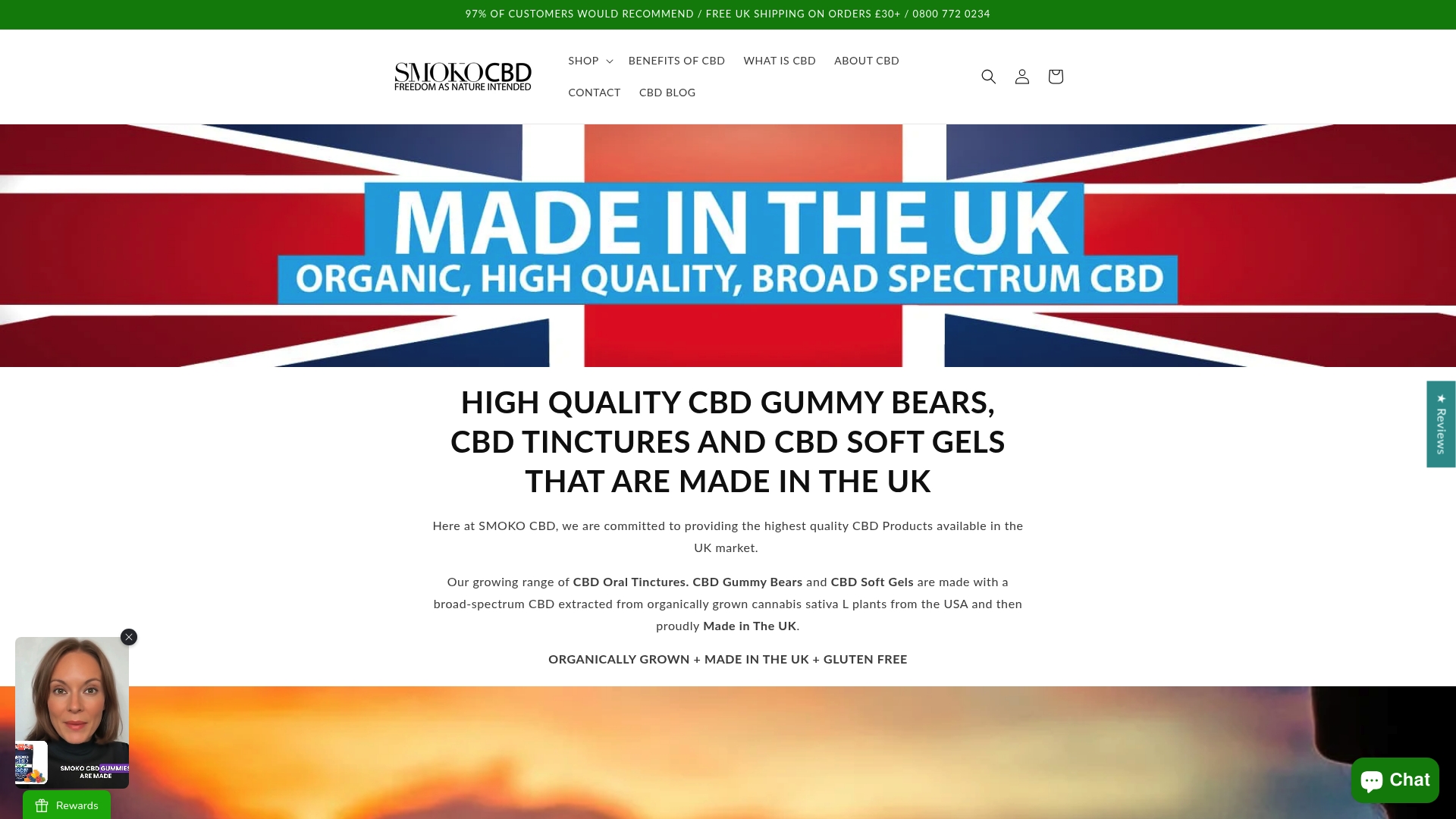
Smokocbd’s CBD Tinctures suit anyone who wants precise, drop-by-drop dose control, useful when you’re deliberately starting low and titrating slowly as outlined earlier. The CBD Gummy Bears work well if consistency matters more to you than flexibility. Each gummy carries a fixed, pre-measured amount, which removes the guesswork that comes with liquid dosing. The CBD Soft Gels are worth considering if you want something discreet and easy to fit into a daily routine without measuring anything at all.
Every product listed on our collection page is made in the UK from organically grown, USA-sourced hemp, with independent lab testing confirming zero THC before anything ships. That matters more than usual here: if you’re running a genuine trial for muscle spasms, you need to know your baseline dose is accurate and consistent week to week, not a guess. Browse the full range, check the certificate of analysis on the product you’re considering, and start with the lowest labelled amount as your first step.
Sources
For anyone wanting to go deeper than this article, or to bring evidence to a GP conversation, these are the primary sources worth reading directly:
- NICE guidance NG144: Cannabis‑based medicinal products
- NHS England: Cannabis‑based products for medicinal use (long read)
- Evidence for the efficacy and effectiveness of THC:CBD oromucosal spray in spasticity (PMC review)
- Cannabis‑based medicine for neuropathic pain and spasticity — multicentre RCT
This article is general information, not a substitute for advice from a qualified doctor. Consult a qualified healthcare professional about your own circumstances before acting on anything here.
FAQ
Will CBD oil help with muscle spasms?
For most everyday muscle spasms, the evidence doesn’t support CBD oil as a reliable or fast-acting fix. Trial data, including a multicentre randomised controlled trial, found no significant difference between CBD alone and placebo for spasticity. Some people report indirect benefits through better sleep or reduced tension, but that’s different from a proven direct effect.
What is the best CBD for muscle spasms?
There’s no single evidence-backed “best” OTC CBD product for muscle spasms, since research on shop-bought options remains inconsistent. If you’re choosing one to trial, look for a clear certificate of analysis, a transparent milligram dose, and a simple formulation, Smokocbd’s Gummy Bears and tinctures are both third-party tested with zero THC confirmed. For diagnosed MS spasticity, Sativex is the option with the strongest clinical backing, available only via specialist prescription.
What’s the best muscle relaxer for muscle spasms?
For general muscle spasms, first-line self-care (stretching, massage, rehydration) usually resolves the episode without medication. For spasticity linked to conditions like MS, NICE recommends a supervised trial of Sativex when other prescribed antispasticity drugs, such as baclofen or tizanidine, haven’t worked adequately.
How do I stop a muscle spasm asap?
Stop the activity causing the spasm immediately, gently stretch the affected muscle, and massage it while rehydrating. CBD isn’t an acute-relief option since oral and topical formats take time to act and haven’t shown reliable rapid spasm-stopping effects in trials. If spasms are frequent, severe, or linked to a neurological condition, see a GP rather than relying on self-care alone.