CBD is not proven to heal Crohn’s inflammation, but several controlled studies show it may ease symptoms and improve quality of life for some patients. Nothing in current research supports replacing prescribed Crohn’s treatment with it. Before trying any CBD product, tell your gastroenterology team, check the certificate of analysis on anything you buy, and stay alert to interactions with your existing medicines.
TL;DR:
- Low-dose CBD alone has not demonstrated a measurable effect on reducing Crohn’s disease activity in controlled clinical trials.
- Patients report symptom relief with THC-containing cannabis products, but objective inflammatory markers remain unchanged across studies.
- CBD is generally safe but can cause mild side effects and interacts with liver enzymes, especially in those on immunosuppressants or biologics.
- Only products verified with a batch-specific certificate of analysis and compliant with UK regulations should be considered, and they are intended for symptom support, not disease modification.
- Long-term effects of CBD in Crohn’s disease are unstudied, and continuous medical monitoring remains essential during any sustained use.
Table of Contents
- What CBD and medical cannabis actually do for Crohn’s symptoms
- What clinical trials on cbd for Crohn’s disease actually found
- Safety, side effects and drug interactions with CBD
- Choosing a CBD product and setting a sensible starting dose
- UK regulation: why CBD isn’t sold as a Crohn’s medicine
- Why author expertise and lab testing matter here
- Could CBD affect the gut microbiome in Crohn’s disease?
- Does CBD work differently depending on how severe your Crohn’s is?
- What happens with long-term CBD use in Crohn’s disease?
- Where the evidence actually leaves you
- Using SMOKO CBD products alongside your Crohn’s management plan
- Sources
- FAQ
What CBD and medical cannabis actually do for Crohn’s symptoms
CBD, or cannabidiol, is one of over a hundred compounds found in the cannabis plant. Unlike THC (tetrahydrocannabinol), it does not produce a “high.” That distinction matters more for Crohn’s patients than almost anything else in this conversation, because most clinical trials that showed genuine symptom benefit used products containing THC, not the broad-spectrum, zero-THC oils and capsules sold as everyday wellness supplements in the UK.
Both cannabinoids interact with your endocannabinoid system, a network of receptors involved in regulating pain, appetite, mood, sleep, and gut motility. Think of it as a dimmer switch rather than an on/off button: cannabinoids can help tone down an overactive pain or nausea response, or help ramp up appetite when a flare has killed yours. That’s plausible symptom modulation, and it’s backed by decent mechanistic reasoning.
What it is not backed by is any solid evidence that CBD reduces the intestinal inflammation driving Crohn’s disease itself. That gap between feeling better and being better, biologically, is the single most important thing to understand before you spend a penny on a CBD product for this condition.
Where CBD’s mechanism plausibly helps:
- Pain perception – cannabinoid receptors in the gut and nervous system may dampen the pain signal Crohn’s flares generate.
- Nausea and appetite – historically why cannabis-based medicines were first explored in oncology and now studied in IBD.
- Sleep disruption – poor sleep is common during flares, and several patients report improved rest.
- Anxiety around symptoms – living with unpredictable flares is stressful, and CBD is widely studied for anxiety in other contexts.
None of that list touches CRP levels, faecal calprotectin, or what an endoscope actually sees. That’s the clinical distinction worth holding onto through the rest of this article.
What clinical trials on cbd for Crohn’s disease actually found
The strongest reason to be cautiously optimistic, and equally cautious about overclaiming, comes from three separate pieces of research spanning nearly a decade.
A 2017 randomised controlled trial gave 20 adults with Crohn’s disease either low-dose CBD (10 mg twice daily) or a placebo capsule for eight weeks. The result was unambiguous in one sense: CBD was safe, well tolerated, and produced no meaningful side effects. It was equally unambiguous in the other direction. There was no statistically significant difference in disease activity scores between the CBD group and placebo. At that dose, in that small sample, CBD did nothing measurable for Crohn’s activity.
Four years later, a different picture emerged from a 2021 trial that used a CBD-rich cannabis oil, containing 160 mg/mL of CBD alongside 40 mg/mL of THC, in 56 adults with Crohn’s disease over eight weeks. Patients reported real improvements in clinical symptoms and quality of life compared with placebo. But when researchers looked at endoscopic scores, CRP, and faecal calprotectin, the objective markers of gut inflammation, there was no change. The investigators were explicit that this product should be used only within research settings, not recommended as an off-the-shelf treatment.
Statistic callout: In the 2021 trial, patients on CBD-rich cannabis oil reported significant symptom and quality-of-life improvement over eight weeks, yet endoscopic disease activity and inflammatory markers (CRP, faecal calprotectin) showed no change from placebo.
A 2024 meta-analysis pooling data from eight studies, four specifically in Crohn’s disease, reinforced that same pattern at a larger scale. Cannabinoids were linked to better patient-reported quality of life and lower self-reported disease activity, but again showed no improvement in endoscopic findings or inflammatory markers. The researchers flagged substantial heterogeneity between the studies included, meaning doses, formulations, and THC content varied enough that pooling the results comes with real caveats.
Three findings, one consistent thread:
- CBD alone, at low doses, has not shown measurable benefit for Crohn’s disease activity in controlled trials.
- THC-containing cannabis products have shown real, patient-reported symptom improvement.
- No trial to date, regardless of formulation, has shown objective evidence of reduced intestinal inflammation.
That last point deserves emphasis because it cuts against a lot of marketing language you’ll encounter elsewhere. Clinical commentary on IBD is explicit that symptom perception and inflammation control are separate things clinically, and patients can feel considerably better while their disease activity, measured objectively, stays exactly where it was. That’s not a reason to dismiss CBD as useless for quality of life. It is a reason never to treat feeling better as a signal to quietly stop a biologic, immunomodulator, or steroid course without your consultant’s involvement.
Safety, side effects and drug interactions with CBD
CBD has a generally favourable safety profile in the trials reviewed above, but “generally favourable” is not the same as “risk-free,” particularly for someone managing an inflammatory bowel condition alongside other medications.
Common, usually mild side effects include:
- Fatigue or drowsiness, especially at higher doses or when combined with other sedating medicines.
- Dry mouth, a minor but consistently reported effect across cannabinoid studies.
- Changes in appetite, which can run either way depending on the person.
- Diarrhoea, ironically relevant for anyone already managing Crohn’s-related bowel symptoms.
- Mild drops in blood pressure, occasionally causing light-headedness on standing.
More serious warning signs that warrant stopping the product and contacting your GP or gastroenterology team immediately include severe or persistent vomiting, unexplained mood changes, jaundice (yellowing of the skin or eyes), or unusual sedation that interferes with daily function.
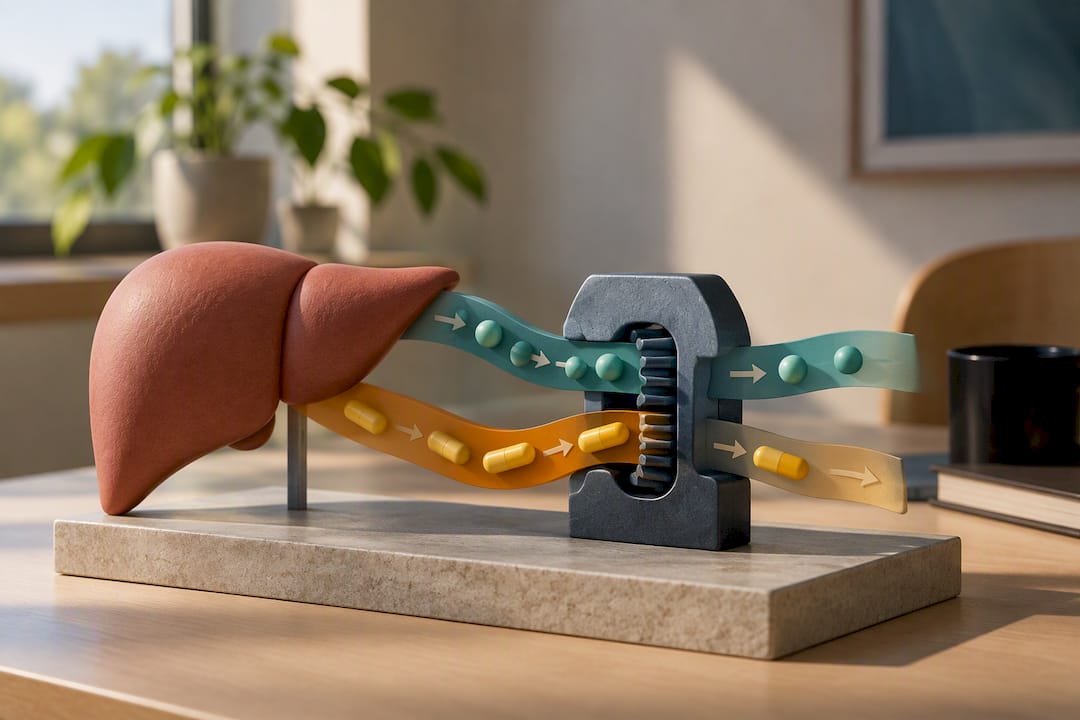
The interaction risk that gets the least attention in consumer-facing CBD marketing is involvement with liver enzymes. CBD is metabolised through the cytochrome P450 pathway, the same enzyme system responsible for breaking down a huge range of prescription medicines. UK prescribing guidance for medicinal cannabidiol specifically flags the need for liver-function monitoring in relevant patients, alongside a documented interaction with sodium valproate. If you’re on immunosuppressants, biologics, or any medication metabolised through the liver, this is not a detail to skip past.
Certain groups should avoid CBD entirely without explicit clinical approval: pregnant or breastfeeding people, children, and anyone who is significantly immunosuppressed. If your Crohn’s treatment already includes biologics or steroids that suppress immune activity, adding an unreviewed supplement into that mix without a conversation first is not a risk worth taking casually.
Pro Tip: Before your next gastroenterology appointment, write out your full current medicine list alongside the certificate of analysis (COA) for any CBD product you’re considering. Handing over both documents in one go makes the interaction conversation faster and far more useful than describing a product from memory.
Choosing a CBD product and setting a sensible starting dose
Not all CBD products are built the same way, and the differences matter more once you understand what the trials actually tested.
Oils and tinctures offer the most precise dosing. You measure drops or millilitres, which makes it far easier to track exactly how much you’ve taken and to adjust gradually. This is the format closest to what clinical trials use, and for that reason alone it’s usually the sensible starting point for anyone wanting to monitor an effect properly.
Soft gel capsules offer convenience and consistency; each capsule contains a fixed, known amount, which removes guesswork around measuring drops. The trade-off is less flexibility if you want to titrate your dose in small increments.
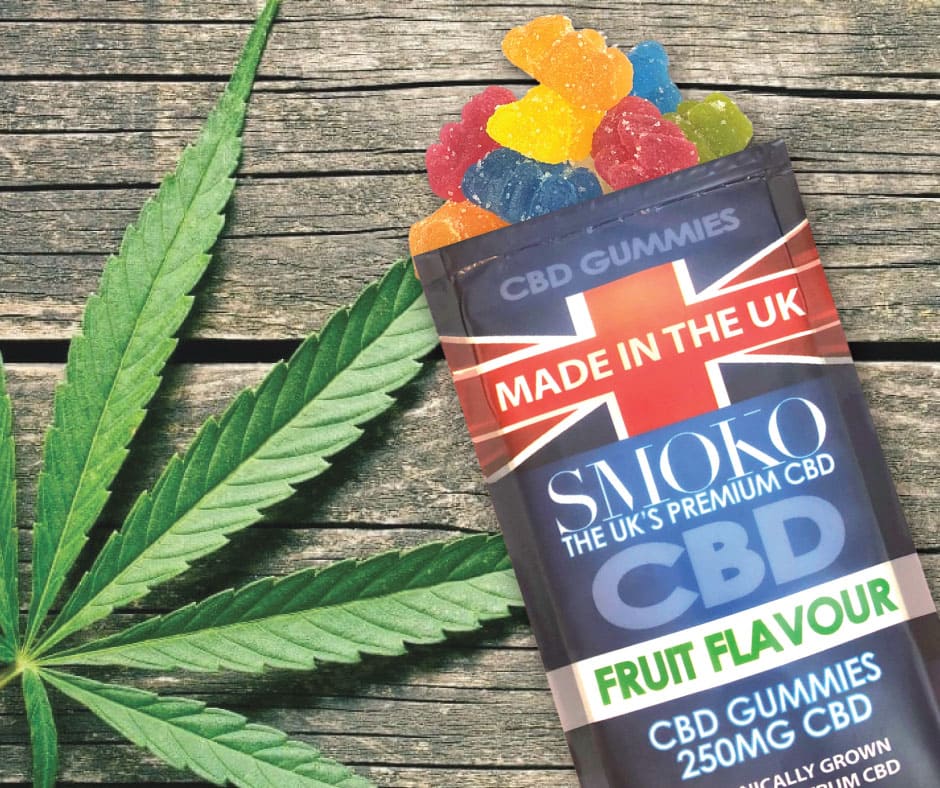
Gummies are easy to take and often more palatable, but they come with two caveats worth knowing. Sugar content can be a consideration if you’re managing diet carefully during a flare, and dosing precision is generally lower than oils, since you can’t split a gummy into a smaller fraction as cleanly as a dropper measurement.
Inhaled products carry the least relevance here. Beyond the added respiratory exposure, they make dosing far harder to record consistently, which matters if you and your clinician are trying to track whether a specific amount produces a specific effect. Guidance on cannabis administration routes generally favours oral oils or capsules specifically because they allow for accurate mg tracking and blood-level sampling if that ever becomes clinically relevant.
Whichever format you choose, check three things before buying anything: broad-spectrum versus isolate, THC content, and access to a batch-specific COA. “CBD-rich” trial products, like the one used in the 2021 study, contained meaningful THC and are legally and pharmacologically distinct from the zero-THC broad-spectrum products sold as UK food supplements. Confusing the two is one of the most common misunderstandings people bring into this topic.
On dosing, UK food safety regulators have proposed a provisional acceptable daily intake (ADI) of 10 mg per day for high-purity CBD isolate in a 70 kg adult, well below the doses used in some of the trials discussed above. That gap between regulatory guidance for general food supplements and the doses tested in Crohn’s-specific research is exactly why “start low, go slow” isn’t just cautious phrasing, it’s a genuinely sensible approach given how little consensus exists on an optimal Crohn’s-specific dose.
| Monitoring step | Why it matters | When to do it |
|---|---|---|
| Baseline blood test (including liver function) | Establishes your starting point before any interaction risk | Before beginning CBD |
| Symptom diary | Tracks subjective change day to day | Throughout the trial period |
| CRP and faecal calprotectin | Objective inflammation markers, unaffected by how you feel | At intervals agreed with your clinician |
| Review appointment | Confirms whether perceived benefit lines up with objective markers | 4 weeks in, or sooner if side effects appear |
| Stop and reassess | Immediate action if red-flag symptoms appear | Any time symptoms worsen unexpectedly |
Never let a diary full of “feeling better” entries substitute for a calprotectin result. They are measuring two different things, and only one of them tells you what’s actually happening inside your gut.
UK regulation: why CBD isn’t sold as a Crohn’s medicine
Two regulators shape what you can legally buy and what a UK seller can legally claim, and understanding the difference clears up a lot of confusion around product labelling.
The MHRA is responsible for medicines regulation. Its position is clear: any product marketed with a specific medical claim, such as “treats Crohn’s disease” or “reduces intestinal inflammation,” is legally being marketed as a medicine, and medicines require formal authorisation. That authorisation process is rigorous, lengthy, and no over-the-counter broad-spectrum CBD product currently holds it for Crohn’s disease. If you see a product openly claiming to treat your condition, that claim itself is a red flag about the seller’s regulatory understanding, not a mark of confidence.
The Food Standards Agency governs CBD as a novel food, meaning the products sold on most UK shelves sit in the same regulatory category as a new supplement ingredient, not a licensed drug. The FSA’s provisional ADI of 10 mg per day for high-purity isolates, along with recommended warning labels for pregnant or breastfeeding people and those on medication, reflects an evolving picture. The novel-food authorisation process is still ongoing for many products, which is part of why label transparency matters so much right now.
Before buying anything, run through this checklist:
- ADI and warning statements – does the label reference the provisional daily intake guidance and flag relevant risk groups?
- COA access – can you view a current, batch-specific certificate of analysis, not just a generic one from months ago?
- THC content stated clearly – is it verified at zero or trace levels, distinct from the THC-containing products used in some clinical trials?
- Batch numbers – does the packaging let you trace your specific product to its own lab test?
A regulatory overview of UK CBD rules covers these distinctions in more depth if you want the fuller picture before you buy.
Why author expertise and lab testing matter here
This article was written from an evidence-first position: report what the randomised trials and the 2024 meta-analysis actually show, not what marketing copy implies. That distinction matters more in a condition like Crohn’s disease, where the temptation to reach for anything that promises relief is entirely understandable, and where the cost of misplaced confidence in a supplement is a delayed or abandoned effective treatment.
Where a brand like Smokocbd fits into that picture is as a quality-checked option for symptom support, nothing more. Its broad-spectrum tinctures, soft gels, and gummies are produced with third-party lab testing verifying zero THC content, addressing one specific concern raised throughout this article: knowing exactly what’s in the product you’re taking and confirming it against a real certificate of analysis rather than trusting a label alone.
That quality assurance answers one question (is this specific bottle what it claims to be?) but it doesn’t answer the bigger clinical one (will this help my Crohn’s disease?). No broad-spectrum, zero-THC product has been tested in the trials discussed above; those used either low-dose isolated CBD or THC-containing formulations under close medical supervision. The honest editorial position is straightforward: CBD products, including Smokocbd’s range, are symptom-support options to discuss with your gastroenterology team, never a replacement for biologics, immunomodulators, or steroids prescribed for disease control.
Could CBD affect the gut microbiome in Crohn’s disease?
The gut microbiome, the trillions of bacteria living in your digestive tract, plays a recognised role in Crohn’s disease, and researchers have grown genuinely interested in whether cannabinoids influence that bacterial balance. The honest answer for now is that this remains an emerging area rather than a settled one.
Endocannabinoid receptors exist not just in your nervous system but throughout your gut lining, where they interact with local immune activity and, by extension, the bacterial environment around them. That’s a plausible pathway by which CBD could theoretically influence microbiome composition, but plausible mechanism and demonstrated clinical effect are two very different things, and the trials reviewed earlier in this article did not measure microbiome changes directly.
None of the major Crohn’s-specific trials discussed above, the 2017 low-dose study, the 2021 CBD-rich oil trial, or the 2024 meta-analysis, reported microbiome-specific outcomes as a primary measure. That’s a genuine gap in current research, not an oversight in this article. If you see a CBD product specifically marketed around “microbiome benefits” for Crohn’s disease, treat that claim with the same scrutiny you’d apply to any unproven inflammation claim, because the underlying trial evidence simply isn’t there yet to support it as fact.
Does CBD work differently depending on how severe your Crohn’s is?
Disease phenotype, whether your Crohn’s primarily affects the small bowel, colon, or both, and how active your disease currently is, plausibly shapes how much symptomatic relief you might notice from CBD. None of the trials reviewed in this article, however, were designed or powered to compare outcomes across different phenotypes or severity bands, so any statement about who benefits most would be speculation rather than evidence.
What can be said with more confidence is that patients in an active flare, dealing with acute pain, nausea, or appetite loss, have more symptomatic ground for CBD to plausibly affect. Someone in stable remission with well-controlled inflammation has fewer active symptoms for a cannabinoid to modulate in the first place, which naturally limits how much perceived benefit there is to notice.
This is exactly why an objective monitoring plan matters more than subjective impression alone. A patient with severe, fistulising disease reporting reduced pain on CBD isn’t evidence the underlying disease process has changed, and treating it as such risks masking a flare that needs escalated treatment. Severity should shape how closely you and your clinician watch for that gap between feeling better and being better, not whether you try CBD at all.
What happens with long-term CBD use in Crohn’s disease?
Long-term data specific to CBD use in Crohn’s disease is genuinely thin. The controlled trials discussed throughout this article ran for eight weeks, which tells you a reasonable amount about short-term safety and symptom response but very little about what happens after months or years of continued use.
Tolerance, where a substance requires increasing doses over time to produce the same effect, is a recognised phenomenon with some cannabinoid use, though the extent varies by compound and dose. Without long-term Crohn’s-specific trial data, it’s not possible to state with confidence whether typical broad-spectrum CBD doses lead to meaningful tolerance in this patient group specifically.
The more practically important long-term consideration is monitoring drift. It’s easy to start a CBD regimen with careful baseline blood tests and a symptom diary, then quietly let that monitoring lapse six months later once the product has become routine. Liver-function checks and inflammatory marker testing (CRP, faecal calprotectin) are just as relevant a year into consistent use as they were in week one, particularly if you’re also on other medicines that share the same liver metabolism pathway. Treat any long-term CBD use as an ongoing conversation with your gastroenterology team, not a one-off decision you made once and never revisit.
Where the evidence actually leaves you
The conventional advice on this topic tends to collapse into one of two unhelpful extremes: dismiss CBD entirely as false hope, or treat patient testimonials as proof it works. Neither position survives contact with the actual trial data. What the research supports is narrower and, frankly, more useful: CBD and cannabinoids can meaningfully improve how patients feel, without demonstrating any change to the disease process itself.
That’s not a disappointing conclusion if you reframe what you’re asking CBD to do. Expecting it to replace a biologic is setting yourself up for failure and risking a preventable flare. Expecting it to potentially ease pain, improve sleep, or take the edge off nausea during a rough patch is a fair, evidence-aligned ask. The reader’s real priority should be building a monitoring habit, blood tests, a symptom diary, calprotectin checks, before starting anything, not choosing a product first and thinking about tracking later.
— Mike
Using SMOKO CBD products alongside your Crohn’s management plan
If you’ve talked it through with your gastroenterology team and decided a supervised CBD trial makes sense for your symptoms, the practical question becomes which format fits your situation. Smokocbd’s range of broad-spectrum CBD tinctures, gummy bears, and soft gel capsules is built around the UK market specifically, with every batch backed by third-party lab testing confirming zero THC, addressing directly the product-verification concern raised throughout this guide.
For anyone wanting to titrate carefully and track a precise daily amount, a tincture makes that measurement straightforward. If consistency matters more than flexibility, soft gel capsules deliver a fixed dose every time with no dropper guesswork. For readers who find oils unpleasant or want an easier daily habit to stick to, 250 mg broad-spectrum gummy bears offer a more palatable route, though the sugar content and slightly less precise per-piece dosing are worth weighing against a flare-sensitive diet.
Whichever product you’re considering, request the current COA before buying, start at the lowest reasonable amount, and keep a written record of what you take and how you feel. That record is what makes your next gastroenterology appointment genuinely productive, rather than a guessing exercise.
Sources
The 2017 low-dose CBD trial is the clearest evidence that low-dose CBD alone is safe but shows no measurable effect on Crohn’s disease activity. The 2021 CBD-rich cannabis oil trial demonstrates symptomatic and quality-of-life improvement without endoscopic change, and explicitly involved THC. The 2024 meta-analysis pools the strongest current picture across multiple studies, confirming the symptom-versus-inflammation split at scale.
For safety and regulation, the MHRA’s statement on CBD products clarifies medicine classification rules, while the FSA’s novel-food safety assessment sets out the provisional daily intake guidance referenced throughout. The Crohn’s & Colitis Foundation’s guidance on medical cannabis offers a useful patient-facing summary of the same caution.
This article is general information, not a substitute for advice from a qualified doctor. Consult a qualified healthcare professional about your own circumstances before acting on anything here.
- Low-Dose Cannabidiol Is Safe but Not Effective in the Treatment for Crohn’s Disease, a Randomized Controlled Trial
- Oral CBD-rich Cannabis Induces Clinical but Not Endoscopic Response in Patients with Crohn’s Disease, a Randomised Controlled Trial
- Meta-analysis of the therapeutic impact of cannabinoids in inflammatory bowel disease
- Safety assessment on the safety of cannabidiol (CBD) isolate as a novel food
- MHRA statement on products containing cannabidiol (CBD)
FAQ
Can CBD reduce gut inflammation in Crohn’s disease?
No trial to date has shown that CBD reduces objective markers of gut inflammation, such as CRP, faecal calprotectin, or endoscopic scores. The 2021 RCT and the 2024 meta-analysis both found symptom and quality-of-life improvement without any change to inflammation itself.
What are the do’s and don’ts for people with Crohn’s disease considering CBD?
Do talk to your gastroenterology team before starting, check the product’s certificate of analysis, and keep a symptom diary alongside objective blood markers. Don’t stop biologics, immunomodulators, or steroids because you feel better, and don’t assume a broad-spectrum, zero-THC product will behave like the THC-containing formulations used in clinical trials.
What is the average life expectancy for people with Crohn’s disease?
Crohn’s disease itself is a chronic, manageable condition rather than one that is typically life-limiting, and most people live a normal lifespan with appropriate treatment and monitoring. Outcomes depend heavily on disease severity, how early it’s diagnosed, and how consistently treatment plans, including any biologics or surgery when needed, are followed.
Are there any grants available for people with Crohn’s disease?
Support tends to come through general disability and health-related benefits schemes rather than Crohn’s-specific grants, and eligibility depends on individual circumstances. Patient organisations such as the Crohn’s & Colitis Foundation are a sensible starting point for guidance on financial and practical support available in your situation.
How much does SMOKO CBD cost?
Pricing for Smokocbd’s tinctures, gummy bears, and soft gel capsules is available directly on the product collection page, where current offers and pack sizes are listed. Checking there gives you the most accurate, up-to-date figures for the specific product and strength you’re considering.