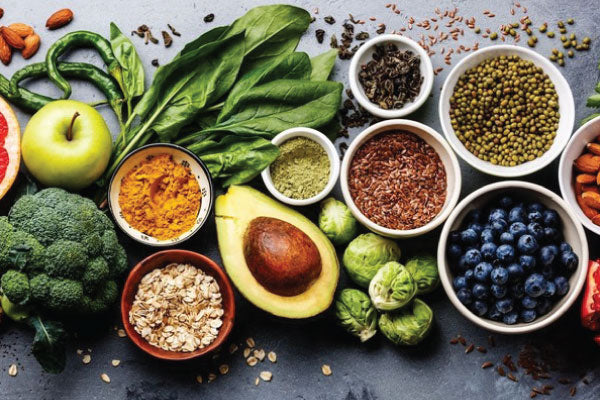
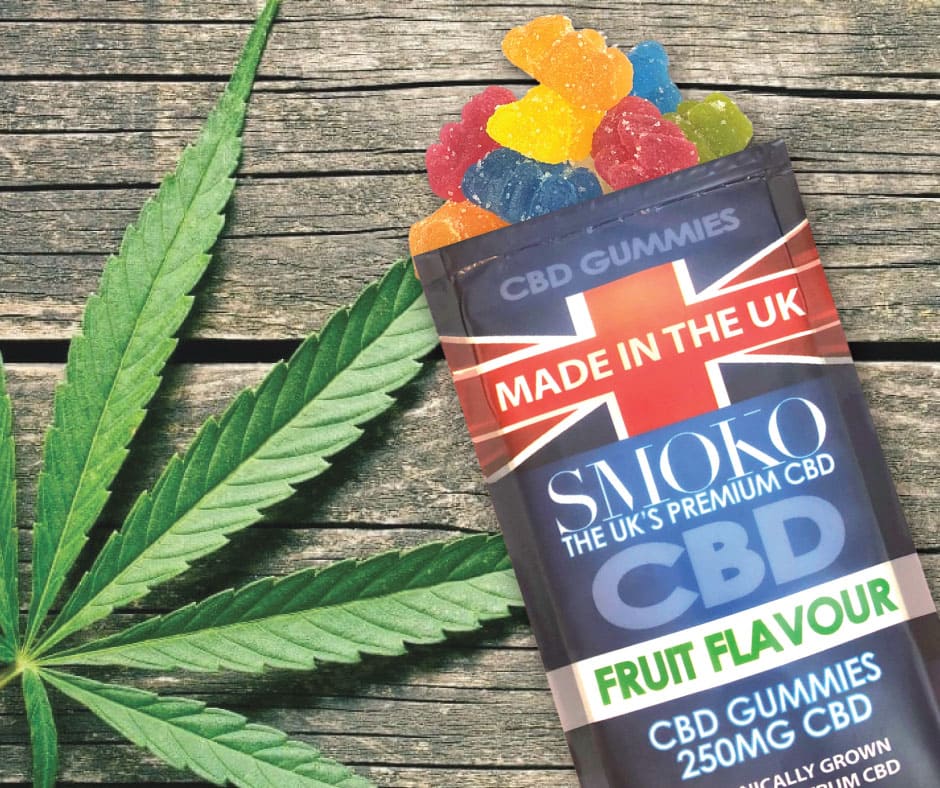
If you’re weighing up anti-inflammatory foods vs CBD, here’s the honest, evidence-based verdict: dietary change should be your first move, and CBD sits alongside it as a possible short-term or adjunct option, not a replacement. Diet has decades of cohort data and a growing pile of randomised trials behind it. CBD has strong laboratory evidence and a much thinner, more inconsistent stack of human clinical trials.
That doesn’t make CBD useless. It means the two work on different timelines and with different levels of certainty, and understanding that gap is the whole point of this article.
- Best for foods: anyone managing chronic, low-grade inflammation linked to diet, weight, or metabolic health, who has weeks to months to see results.
- Best for CBD: people looking for a short-term supplement to pain or discomfort alongside dietary change, ideally after checking with a clinician, particularly if they take other medication.
- Biggest caveats: CBD’s human trial base is small and inconsistent, product quality varies wildly, and neither approach replaces medical treatment for diagnosed inflammatory disease.
The rest of this article unpacks why that verdict holds up, section by section, mechanism by mechanism.
Key Takeaways
Anti-inflammatory diets have stronger, more consistent human trial evidence than CBD, which makes food the sensible first-line approach for most chronic inflammation.
| Point | Details |
|---|---|
| Food comes first | Mediterranean-style, DASH, or MIND dietary patterns have RCT and cohort support for lowering inflammatory markers over months. |
| CBD is an adjunct | Preclinical evidence for CBD’s anti-inflammatory mechanisms is strong, but human trials remain small and inconsistent. |
| Check interactions before starting CBD | CBD is metabolised via CYP450 and can interact with anticoagulants, antidepressants, and immunosuppressants. |
| Give diet time | Symptom changes appear within weeks, but inflammatory marker shifts typically need eight to twelve weeks or longer. |
| Choose lab-tested CBD | Smokocbd’s broad-spectrum tinctures, gummies, and capsules carry third-party batch testing and verified zero THC. |
Always speak to a clinician before starting CBD or making major dietary changes if you manage a diagnosed inflammatory condition or take regular medication.
Table of Contents
- Anti-inflammatory foods vs CBD: how the evidence compares
- How does CBD reduce inflammation at a cellular level?
- What do human clinical trials actually show about CBD?
- Which foods and diets are genuinely anti-inflammatory?
- Does the science actually back anti-inflammatory diets?
- CBD or anti-inflammatory foods: which wins on each measure?
- Is CBD safe to combine with medication?
- How should you combine diet and CBD in practice?
- How reliable is the research behind these claims?
- An editorial view on why the CBD hype gets ahead of the science
- Choosing a quality CBD product if you decide to try one
- Sources
Anti-inflammatory foods vs CBD: how the evidence compares
The core difference isn’t which one “works” and which doesn’t. It’s the strength and type of evidence behind each. Diet has been studied in large human cohorts and multiple randomised controlled trials over the last twenty years. CBD’s anti-inflammatory story mostly comes from cell and animal studies, with a much smaller number of human trials that vary in dose, formulation, and quality.
Both act on inflammation through genuinely interesting biology. But biological plausibility and proven clinical benefit are not the same thing, and conflating them is the single most common mistake in how CBD gets marketed. This article treats them as distinct questions throughout: does the mechanism make sense, and has it actually been shown to help people?
How does CBD reduce inflammation at a cellular level?
Cannabidiol doesn’t work through one single switch. It nudges several overlapping systems at once, which is part of why researchers find it so interesting and also why its effects are hard to pin down in a clean clinical trial.
At the cellular level, CBD appears to suppress the production of pro-inflammatory cytokines, the chemical messengers that ramp up an immune response, while also tempering the activity of certain immune cells that drive tissue inflammation. A 2025 review in the Antioxidative and Anti-Inflammatory Properties of Cannabidiol series describes CBD acting on multiple inflammatory pathways simultaneously, which is consistent with what a PMC mechanistic review also found when mapping CBD’s activity across PPAR receptors, CB2 modulation, and antioxidant defences.
Three mechanisms stand out:
- Receptor modulation. CBD interacts weakly with CB1 and CB2 receptors (part of the endocannabinoid system) and more directly with PPAR-gamma, a nuclear receptor involved in tempering the immune response.
- Antioxidant activity. It appears to reduce reactive oxygen species (ROS), the unstable molecules that damage cells and amplify inflammatory signalling.
- Serotonin receptor interaction. CBD engages 5-HT1A receptors, which may explain some of its reported effects on pain perception alongside inflammation itself.
Picture it as a dimmer switch rather than an off switch. CBD doesn’t shut down the immune system. It tones it down at several points along the signalling chain, from the receptor level through to the downstream cytokine release that causes swelling, redness, and pain.
The imbalance in the evidence base is stark. The volume of preclinical, cell-based, and animal research on CBD’s anti-inflammatory effects vastly outweighs the number of well-controlled human trials. That’s normal for any compound moving through the research pipeline, but it does mean most of what sounds impressive about CBD and inflammation is still, technically, laboratory evidence. If you want a deeper look at how these cellular pathways connect to whole-body inflammation, our piece on whether CBD can heal inflammation across the body goes further into the mechanics.
What do human clinical trials actually show about CBD?
This is where things get more cautious. Human trials on CBD and inflammation exist, but they’re fewer, smaller, and more varied than the mechanism research would suggest they’d be.
A handful of studies have measured pain scores, quality of life, and in some cases inflammatory markers in blood, in populations ranging from arthritis patients to people with chronic pain conditions. Results tend to show modest improvements in reported pain and function, occasionally alongside biochemical shifts, but rarely with the scale or consistency that would let a clinician confidently prescribe a specific dose for a specific outcome. The Frontiers mini-review on medical cannabis and inflammation notes that cannabinoid compounds show anti-inflammatory activity across preclinical models and some clinical settings, but stresses that the human evidence base is smaller and varies significantly by compound and formulation.
Using plain GRADE-style language, here’s how the evidence currently stacks up:
- Quantity: low to moderate. Dozens of preclinical studies exist for every one well-designed human trial.
- Sample sizes: frequently small, often fewer than 100 participants per trial.
- Risk of bias: moderate to high in many studies, due to short follow-up periods and inconsistent blinding.
- Replication: limited. Few findings have been independently repeated with the same dose and formulation.
The recurring problems are formulation heterogeneity (oil versus capsule versus vape, full-spectrum versus isolate), inconsistent dosing between studies, and follow-up periods too short to capture anything beyond acute symptom change.
Pro Tip: When reading a CBD study headline, check three things before trusting the claim: was it in humans or animals, how many participants took part, and did it use a placebo control group. A study with 12 rodents and no control group tells you almost nothing about what CBD will do for a person’s joint pain.
Which foods and diets are genuinely anti-inflammatory?
Anti-inflammatory eating isn’t about one miracle ingredient. It’s about a pattern of foods that, together, appear to lower the low-grade inflammation linked to things like heart disease, type 2 diabetes, and joint conditions. According to Harvard’s T.H. Chan School of Public Health, these diets emphasise fruit, vegetables, whole grains, legumes, nuts, olive oil, and oily fish, while limiting refined carbohydrates, processed meats, and excess alcohol.
The food groups with the strongest anti-inflammatory reputation include:
- Oily fish (salmon, mackerel, sardines) for omega-3 fatty acids.
- Leafy greens and colourful vegetables for polyphenols and fibre.
- Whole grains and legumes for fibre that supports a healthier gut microbiome.
- Nuts and olive oil for unsaturated fats and vitamin E.
- Turmeric and ginger for compounds like curcumin, widely studied for anti-inflammatory activity.
- Tea, coffee, and dark chocolate in moderation, for polyphenol content.
Pattern matters more than any single food here. Three dietary patterns dominate the research: the Mediterranean diet, the DASH diet (originally designed for blood pressure, now studied for inflammation too), and the MIND diet, a hybrid aimed at brain health. All three share the same backbone: plenty of plants, healthy fats, and minimal ultra-processed food.
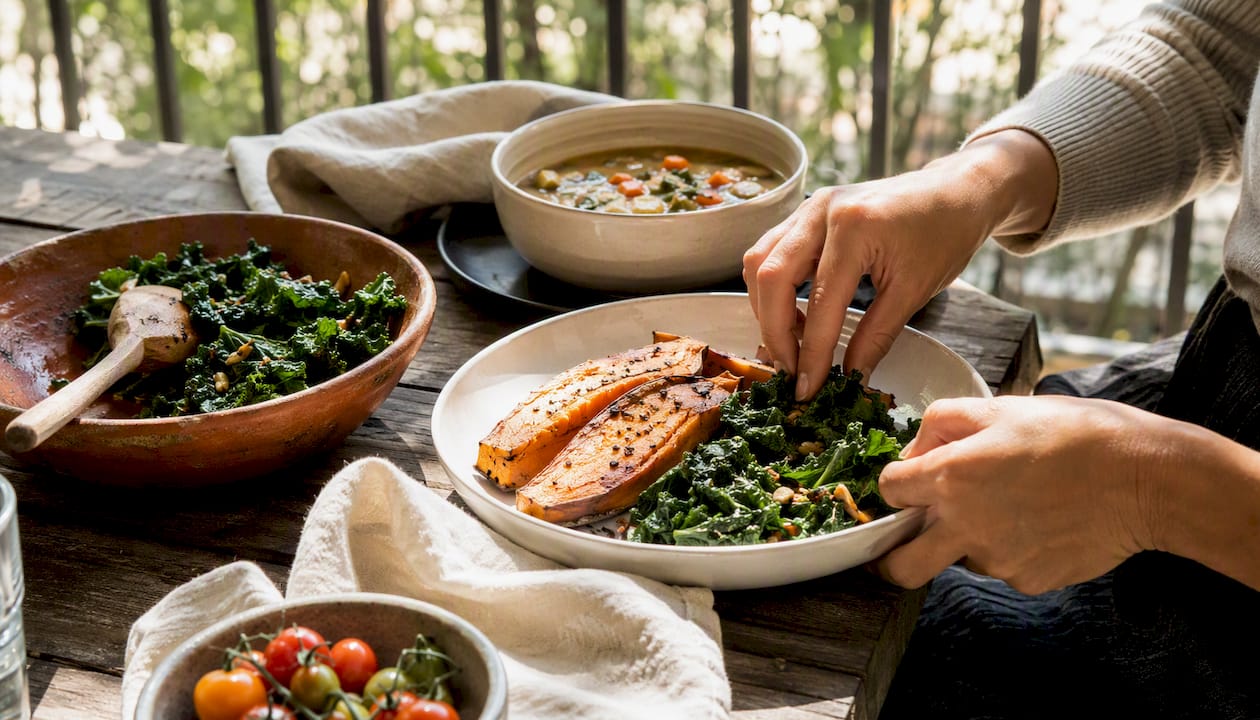
A realistic day might look like porridge with berries and walnuts for breakfast, a lentil and vegetable soup for lunch, and grilled salmon with roasted vegetables and olive oil for dinner, swapping the usual white bread and processed meat for wholegrain alternatives and oily fish. If you’re also trying to identify foods that quietly work against you, our guide to arthritis foods to avoid covers the other side of that coin.
Does the science actually back anti-inflammatory diets?
Yes, and with considerably more human trial weight than CBD currently carries. A 10-week randomised crossover trial in people with rheumatoid arthritis found that a diet enriched in anti-inflammatory foods reduced disease activity scores during the intervention period, a genuinely notable finding given how hard autoimmune conditions are to shift through diet alone, as reported by Harvard’s diet review.
Beyond individual trials, large cohort studies have linked dietary inflammatory scores, such as the Empirical Dietary Inflammatory Pattern (EDIP) and EDII, to blood markers including CRP and IL-6, according to a 2023 review on anti-inflammatory diets and chronic disease. People whose diets scored lowest on these inflammatory indices consistently showed lower biomarker levels and reduced long-term risk for chronic disease.
- The rheumatoid arthritis crossover trial is one of the clearer human RCT examples linking diet directly to disease activity, not just biomarkers.
- Cohort studies using EDIP/EDII scores show a dose-response relationship: the more anti-inflammatory the diet, the lower the biomarker readings tend to be.
- Harvard Health’s clinical guidance reinforces that pattern and long-term adherence matter more than chasing individual “superfoods”.
Pro Tip: Don’t expect overnight results. Symptom changes like better energy or less bloating can show up within a couple of weeks, but meaningful shifts in inflammatory markers like CRP usually take sustained adherence over several months, according to Cleveland Clinic guidance. Give a dietary change at least eight to twelve weeks before judging it.
CBD or anti-inflammatory foods: which wins on each measure?
Neither approach wins across the board, which is precisely why the comparison matters. Diet and CBD differ sharply on speed, certainty, and cost, and those differences should shape which one you reach for first.
| Comparison axis | Anti-inflammatory foods | CBD |
|---|---|---|
| Evidence strength | Multiple human RCTs and large cohort studies | Strong preclinical data, limited and inconsistent human trials |
| Onset speed | Weeks to months for measurable biomarker change | Hours for subjective symptom relief in some users |
| Magnitude/duration | Gradual, cumulative, often long-lasting with adherence | Variable, generally short-lived, dose-dependent |
| Safety and interactions | Very low risk; few interactions beyond specific medical diets | Moderate risk; interacts with CYP450-metabolised medications |
| Accessibility and cost | Widely accessible; cost varies with food choices | Moderate cost; product quality varies significantly by brand |
| Best suited for | Chronic, low-grade, diet-linked inflammation | Short-term adjunct support or acute symptom relief |
A few practical takeaways follow from that table:
- If you’re dealing with chronic low-grade inflammation linked to weight, metabolic health, or long-term joint wear, diet should be the priority. It’s cheaper, safer, and better supported.
- If you’re managing an acute flare or short-term discomfort and want extra support alongside dietary change, CBD may be worth discussing with a clinician as an adjunct.
- Anyone on regular medication, particularly blood thinners or antidepressants, should treat CBD as the higher-risk option of the two and check interactions first.
The one-line verdict: favour food for the long game, and treat CBD as a supporting player, never the whole strategy.
Is CBD safe to combine with medication?
Safety is where CBD demands far more scrutiny than food ever will. Diet rarely causes dangerous interactions outside specific medical contexts (grapefruit and certain statins being the classic exception). CBD is a different story, because it’s metabolised through the liver’s CYP450 enzyme system, the same pathway that processes a large share of prescription medicines.

That matters because CBD can raise or lower blood levels of some drugs, including anticoagulants, antidepressants, and immunosuppressants, sometimes pushing them outside their safe therapeutic range. Our detailed breakdown of CBD drug interactions covers the main categories worth checking before you start.
Product quality compounds the risk. Because CBD is largely unregulated as a supplement, mislabelling is common, and consumers should insist on third-party batch lab testing with a published certificate of analysis, according to Harvard Health’s cannabidiol overview. A genuine quality checklist looks like this:
- A certificate of analysis (COA) tied to the specific batch you’re buying, not a generic brand-wide document.
- Confirmed cannabinoid potency matching the label, within a reasonable margin.
- Verified zero or trace THC levels, particularly important where THC content affects legal status.
- Screening for contaminants: pesticides, heavy metals, and residual solvents.
Regulatory status varies by country and even by product type (oil, capsule, edible), so check your own market’s rules on novel foods and cannabinoid products before assuming any given item is compliant. This article offers general information, not medical or legal advice; always confirm current regulations and speak to a healthcare professional before making decisions about medication or supplements.
Stop and seek medical advice if you notice unusual drowsiness, digestive upset that doesn’t settle, or any sign that a regular medication isn’t working as expected after starting CBD. Anyone with liver conditions, who is pregnant or breastfeeding, or who takes multiple prescription medicines should speak to a clinician before starting CBD, not after.
How should you combine diet and CBD in practice?
A sensible plan treats diet as the foundation and CBD as an optional, carefully monitored addition. Here’s a stepwise approach worth following:
- Get a baseline. Note your current symptoms, diet, and any medication, ideally alongside a GP conversation if inflammation is a diagnosed condition rather than general discomfort.
- Prioritise the dietary pattern first. Shift toward a Mediterranean-style pattern for at least eight to twelve weeks before judging results, since that’s roughly the window where biomarker changes tend to show up.
- Track what actually changes. Energy, joint stiffness, digestion, and where possible, a blood marker like CRP if your clinician can arrange testing.
- Consider CBD as an adjunct, not a replacement, particularly if you want short-term support for pain or discomfort while dietary changes take hold.
- Trial CBD cautiously. Start with a low dose, increase gradually over one to two weeks, and only after checking interactions with any current medication.
- Monitor and adjust. Keep a simple log of dose, timing, and effect, and stop immediately if side effects appear.
Pro Tip: There’s no universally agreed CBD dose for inflammation, and evidence uncertainty here is real. Many people start around 10 to 20mg per day and titrate slowly upward while watching for effect and side effects, but this should always be discussed with a clinician first, particularly if you take other medication. Taking CBD alongside meals can also affect how much reaches your bloodstream, which is worth factoring into any titration plan.
Red flags that mean stop and seek care: worsening pain or swelling despite treatment, signs a regular medication has stopped working properly, unexpected bleeding or bruising, or any new and unexplained symptom after starting CBD.
How reliable is the research behind these claims?
Reading nutrition and cannabinoid research critically means understanding what each study type can and can’t tell you. A cell study showing CBD suppresses cytokine production in a petri dish is genuinely useful science, but it’s several steps removed from proving CBD reduces joint pain in a person taking 15mg a day.
The recurring limitations worth watching for:
- Preclinical models don’t always translate. What happens in a mouse or a cell culture doesn’t automatically happen the same way in a human body.
- Small sample sizes limit how confidently results generalise to a wider population.
- Lack of placebo control in some CBD studies makes it hard to separate real effect from expectation.
- Heterogeneity is a persistent problem: CBD products vary wildly in formulation, and dietary studies vary in how strictly participants stick to the prescribed pattern, introducing measurement error.
There’s a meaningful difference between a plausible mechanism and a proven clinical benefit, and it’s worth holding onto that distinction whenever a headline claims CBD “fights inflammation.” The mechanism might be real and still not translate into a noticeable effect at typical consumer doses. That gap is exactly why combining approaches, rather than betting everything on one, tends to be the more defensible strategy, a point echoed in Springer’s 2025 review, which notes that a multifaceted approach combining diet, stress management, exercise, and targeted supplementation tends to outperform relying on any single intervention.
An editorial view on why the CBD hype gets ahead of the science
The gap between how CBD gets marketed and what the clinical evidence actually supports is the most persistent problem in this entire space. Walk into most conversations about CBD and inflammation, and you’ll hear mechanism dressed up as outcome: “CBD reduces cytokines” quietly becomes “CBD cures inflammation,” with several missing steps glossed over.
That’s not an argument against CBD. It’s an argument for being honest about what kind of evidence supports it. The mechanistic case is genuinely strong, arguably one of the more coherent pharmacological stories in the supplement world, and it deserves to be taken seriously rather than dismissed as snake oil. But strong mechanism and strong outcome data are different claims, and conflating them does readers a disservice.
What gets underestimated, in my view, is how much dietary change is capable of doing on its own, quietly, without the marketing budget. A Mediterranean-style pattern sustained for three months has better human trial evidence behind it than most CBD products currently on the market, yet it rarely gets discussed with the same enthusiasm because there’s no bottle to sell. The smarter approach isn’t choosing a side. It’s using food as the engine and treating CBD as a genuinely useful, carefully checked adjunct for people who want extra support while that engine gets going. Use something like CBD for chronic condition management as a reference point rather than a shortcut.
Smokocbd sells CBD products, which is a fact worth stating plainly rather than burying in small print. That commercial interest doesn’t change the evidence, and it shouldn’t change how this article reads: dietary change first, CBD as a considered adjunct, and a clinician in the loop for anyone on medication or managing a diagnosed condition. Nothing here replaces personalised medical advice.
Choosing a quality CBD product if you decide to try one
If you’ve read this far and decided CBD is worth trying alongside your dietary changes, product quality is where most people go wrong. The market is full of inconsistent labelling, and the difference between a well-made product and a poorly tested one isn’t visible on the shelf.
Smokocbd’s tinctures, gummies, and soft gel capsules are made in the UK using broad-spectrum hemp extract, formulated to contain zero THC, with every batch backed by third-party lab testing so you can check potency and purity before you buy rather than after.
That verification matters more than flavour or branding. A broad-spectrum formulation means you get a range of naturally occurring compounds from the hemp plant, similar to the multi-pathway approach discussed in research on terpenes and phytochemical variability, without the THC content that raises legal and drug-testing concerns for many people.
If you’re considering a trial, start cautiously: a low dose, titrated slowly, alongside the dietary changes covered earlier in this article, and always with a conversation with your GP first if you take regular medication. The SMOKO CBD 2000mg Broad Spectrum Tincture is a reasonable starting point for anyone wanting a verified, lab-tested product rather than an unlabelled bottle from an unknown source. Check the certificate of analysis before you buy, confirm it against the batch number on your bottle, and treat the first few weeks as an observation period rather than an instant fix.
Sources
- Antioxidative and anti‑inflammatory properties of cannabidiol (PMC review)
- Medical Cannabis Activity Against Inflammation (Frontiers, 2022)
This article is general information, not a substitute for advice from a qualified doctor. Consult a qualified healthcare professional about your own circumstances before acting on anything here.