TL;DR:
- Hemp lotion rarely causes drug test failures because the skin barrier prevents THC absorption into the bloodstream. However, mislabelled products and transdermal formulations pose higher risks of detectable THC metabolites, especially with frequent use. Verifying third-party lab results and choosing verified broad-spectrum or isolate products reduce the risk for drug testers.
Hemp lotion can fail a drug test, but only under specific conditions. The standard industry term for the concern is “topical THC absorption,” and it matters far less than most people assume. Standard urine drug tests screen for THC-COOH, the metabolite produced when your body processes tetrahydrocannabinol (THC). Most hemp lotions contain only trace amounts of THC, and the skin barrier prevents most of it from reaching the bloodstream. The real risk comes from mislabelled products, transdermal formulations, or heavy, repeated use of full-spectrum products. Understanding where that risk actually sits gives you the clarity to make a confident choice.
Can hemp lotion fail a drug test? How testing actually works
Drug tests do not screen for CBD. They screen for THC-COOH, the metabolite your liver produces after processing THC. The standard urine test cutoff is 50 ng/mL THC-COOH, and a result only becomes positive when that threshold is crossed.
CBD itself passes through your body without triggering this screen. Hemp seed oil, which is pressed from hemp seeds and contains no cannabinoids, poses essentially no risk at all. The distinction matters because many products labelled “hemp lotion” use hemp seed oil as a base ingredient rather than a hemp extract containing cannabinoids.
Full-spectrum hemp extracts are different. They contain the full range of cannabinoids found in the plant, including trace levels of THC. Regular use of a full-spectrum product can, over time, allow THC metabolites to accumulate. Research shows up to 50% of full-spectrum users can test positive depending on use patterns and frequency.
THC metabolites also linger. Urine THC-COOH is detectable for up to 30 or more days with repeated exposure. That window is far longer than most people expect, and it means even occasional use of a product with trace THC can leave a footprint.
- Hemp seed oil: No cannabinoids. Negligible drug test risk.
- Broad-spectrum extract: Cannabinoids present, but THC removed. Low risk when third-party verified.
- Full-spectrum extract: Trace THC present. Risk increases with frequency of use.
- Isolate-based products: Pure CBD only. No THC. Minimal risk.
Pro Tip: Check the product label for the base ingredient. “Hemp seed oil” and “hemp extract” are not the same thing. Only hemp extract products carry any meaningful THC-related risk.
What are the risks of THC contamination in hemp lotions?
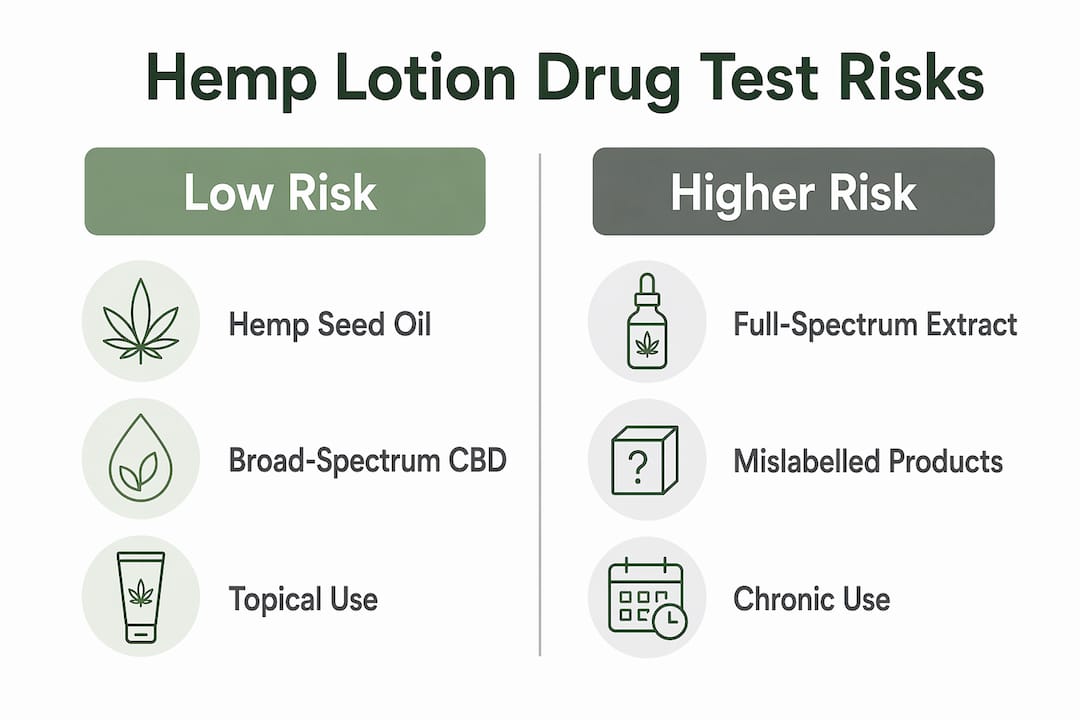
The most underappreciated risk in hemp lotion drug test concerns is not what is listed on the label. It is what is not listed. The hemp industry lacks consistent quality control, and even THC-free labels can be unreliable due to manufacturing variability.
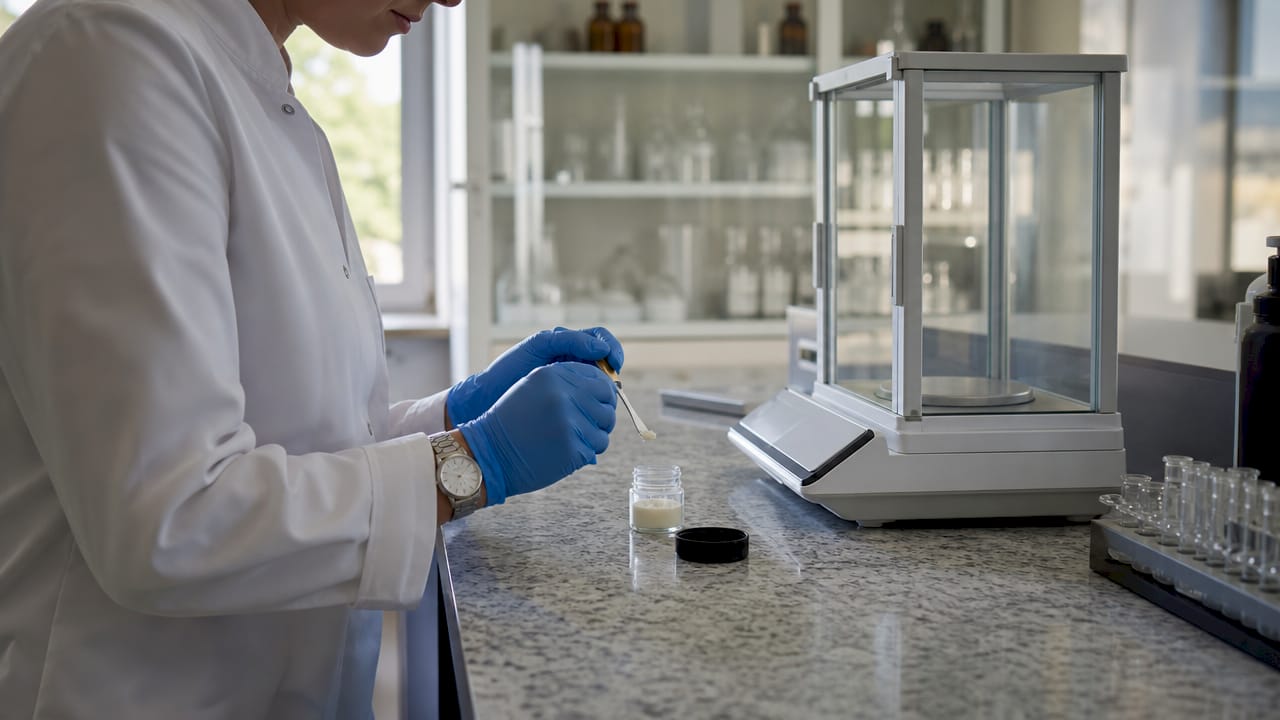
A systematic review of 21 hemp products found that approximately 24% of products labelled THC-free contained detectable THC levels between 0.015 and 0.656 mg/mL. That is a significant proportion of the market. It means roughly one in four “THC-free” products may contain enough THC to cause concern for people facing sensitive drug tests.
The consequences of a positive result are not trivial. In zero-tolerance workplaces, a single positive test can trigger disciplinary action, suspension, or dismissal. Military personnel face even stricter rules. U.S. Army directives prohibit all cannabinoid-containing products, including those labelled THC-free, because contamination risks are considered unpredictable. The consequences include loss of rank or employment.
Understanding the difference between product types helps you assess your own risk level.
| Product type | THC risk level | Key concern |
|---|---|---|
| Hemp seed oil lotion | Very low | No cannabinoids present |
| Broad-spectrum extract (verified) | Low | THC removed, but verify via lab report |
| Full-spectrum extract lotion | Moderate | Trace THC accumulates with regular use |
| Unverified “THC-free” lotion | Moderate to high | Mislabelling risk confirmed by research |
| Transdermal hemp patch | High | Systemic delivery bypasses skin barrier |
Positive results from topical hemp products are mostly linked to mislabelled products or chronic use. That finding points directly at the importance of sourcing. Knowing what a cannabis certificate of analysis actually tells you is a practical skill worth developing before you buy any hemp product.
Pro Tip: Always request or download the Certificate of Analysis (COA) for any hemp lotion you use. A reputable brand publishes batch-specific third-party lab results. If a brand does not provide them, treat the product as unverified.
How does skin absorption affect drug test risk?
The skin is a formidable barrier. Its outermost layer, the stratum corneum, is designed to keep substances out. Standard hemp lotions are formulated to moisturise and soothe the surface of the skin, not to deliver compounds into the bloodstream. Topical cannabis products rarely penetrate skin deeply enough to cause systemic effects or trigger a positive drug test.
This is the key reason why most people who use hemp lotion never have a problem with drug testing. The cannabinoids interact with receptors in the skin itself, particularly CB1 and CB2 receptors in the dermis, without reaching systemic circulation. No systemic circulation means no THC-COOH in your urine.
Transdermal products are engineered differently. They are intentionally designed for systemic delivery, using penetration enhancers to push cannabinoids through the skin barrier and into the bloodstream. A transdermal CBD patch, for example, functions more like a slow-release oral dose than a topical cream. If it contains any THC, that THC enters circulation and can produce detectable metabolites.
Knowing the difference between a lotion and a transdermal product is not always straightforward from packaging alone. Look for these signals:
- “Transdermal” on the label: This explicitly signals systemic delivery. Treat it with the same caution as an oral product.
- Penetration enhancers in the ingredients: Compounds such as ethanol, propylene glycol, or certain terpenes at high concentrations can increase skin permeability.
- Patch format: Patches are almost always transdermal by design. For more detail on how they work, the Smokocbd guide to transdermal CBD patches covers the key differences clearly.
- High cannabinoid concentration: Very high-potency topicals may carry a marginally greater absorption risk than standard moisturising lotions.
Standard hemp lotion, applied to intact skin, does not meaningfully raise your risk of a positive drug test. The formulation type is the deciding factor, not the presence of hemp as an ingredient.
What steps reduce the risk of a positive test when using hemp products?
The risk of failing a drug test from hemp lotion is low for most people, but it is not zero. Taking a few deliberate steps brings it close to zero.
-
Choose third-party tested products. Look for brands that publish batch-specific Certificates of Analysis from accredited laboratories. Third-party testing is the only reliable way to verify that a product’s THC content matches its label. The Smokocbd guide on why third-party testing matters explains what to look for in a COA.
-
Avoid full-spectrum products if you are tested regularly. Full-spectrum hemp extracts contain trace THC by definition. Broad-spectrum or isolate-based products remove THC while retaining other beneficial cannabinoids. The advantages of zero-THC CBD are worth understanding if you face workplace testing.
-
Never use transdermal hemp products before a test. Transdermal formulations deliver cannabinoids systemically. If a product contains any THC and uses a transdermal delivery system, it carries a genuine risk of producing detectable metabolites.
-
Factor in detection windows. THC-COOH can remain detectable for 30 or more days with repeated use. If you have a scheduled test, stopping hemp product use several weeks in advance is the safest approach. The Smokocbd UK drug test guide covers detection windows in practical detail.
-
Avoid all hemp products in zero-tolerance settings. Avoiding all hemp and CBD topicals is the only guaranteed method in environments with strict zero-tolerance policies. No product, however well-labelled, can offer a 100% guarantee due to manufacturing variability.
Understanding the difference between THCA and CBD also helps you read product labels more accurately and spot potential risks before they become problems.
Key takeaways
Hemp lotion rarely fails a drug test, but mislabelled products, transdermal formulations, and full-spectrum extracts create real, avoidable risks that third-party testing and informed product choice can eliminate.
| Point | Details |
|---|---|
| Standard lotions rarely cause positives | The skin barrier prevents most topical THC from reaching systemic circulation. |
| Mislabelling is a documented risk | Around 24% of THC-free labelled products contain detectable THC due to manufacturing variability. |
| Transdermal products are higher risk | These are designed for systemic delivery and should be treated like oral CBD for testing purposes. |
| THC-COOH detection window is long | Metabolites can remain detectable for 30 or more days with repeated use. |
| Third-party testing is the best safeguard | A batch-specific COA from an accredited lab is the only reliable way to verify THC content. |
My view on hemp lotion and drug testing
The conversation around hemp lotion and drug testing is muddled by two opposing camps. One group insists there is no risk at all. The other treats any hemp product as a career-ending liability. Neither position is accurate, and both cause harm.
What I have found, after years of following this space, is that the risk is almost entirely a product-quality problem. The science of skin absorption is well understood. Standard lotions do not meaningfully enter the bloodstream. The issue is that the hemp market still has too many products with inaccurate labels and no independent verification. That is where people get caught out.
The practical implication is straightforward. If you work in a field with drug testing, whether that is transport, healthcare, or the military, the label alone is not enough. You need a COA. You need to know whether the product is a standard topical or a transdermal formulation. And you need to understand that “THC-free” is a claim, not a guarantee, unless it is backed by third-party evidence.
The good news is that well-made, verified broad-spectrum products carry very little real-world risk for topical use. Informed choice, not blanket avoidance, is the right approach for most people.
— Mike
Smokocbd’s approach to THC-free hemp products
If you are concerned about drug testing, the product you choose matters as much as how you use it. Smokocbd formulates its products with exactly this concern in mind.
Smokocbd’s broad-spectrum CBD tincture is made from organically grown hemp, processed to remove THC entirely, and verified through independent third-party laboratory testing. Every batch comes with a Certificate of Analysis so you can check the THC level yourself before use. For anyone navigating workplace drug testing, that transparency is not a nice-to-have. It is the baseline standard. Smokocbd also publishes detailed educational resources on the potential benefits of CBD to help you make decisions grounded in evidence, not guesswork.
FAQ
Can hemp lotion show up on a drug test?
Standard hemp lotion rarely shows up on a drug test because the skin barrier prevents THC from entering the bloodstream in meaningful quantities. The risk increases significantly with mislabelled products or transdermal formulations.
Does hemp seed oil affect drug test results?
Hemp seed oil contains no cannabinoids and poses negligible drug test risk. The concern applies to hemp extract products, particularly full-spectrum extracts that contain trace THC.
Can CBD lotion fail a drug test?
CBD itself is not screened by standard drug tests. However, a CBD lotion containing trace THC from a mislabelled or full-spectrum product can, in theory, contribute to a positive result with frequent use.
How long does THC from hemp products stay in your system?
THC-COOH, the metabolite detected in urine tests, can remain detectable for up to 30 or more days with repeated use. Occasional topical use from a verified THC-free product is unlikely to produce detectable levels.
What is the safest hemp product for someone facing drug testing?
A broad-spectrum or isolate-based product with a verified Certificate of Analysis from an accredited third-party laboratory is the safest choice. Avoid full-spectrum and transdermal products if you are subject to regular testing.