TL;DR:
- CBD effects last between 1 and 8 hours depending on the delivery method and individual factors. Vaping provides quick relief but short duration, while oral formats offer longer-lasting support, especially when taken with fatty meals. Personal metabolism, body composition, and use frequency significantly influence how long CBD remains active in the system.
CBD effects last between 2 and 8 hours in most people, with the exact duration shaped by how you take it, how much you take, and how your body processes cannabinoids. This is the single most useful thing to know before you start. Whether you are using a sublingual tincture, a soft gel capsule, or an edible gummy, the delivery method determines both how quickly you feel anything and how long those effects stay with you. Understanding the CBD effects timeline means you can plan your doses around your day rather than guessing.
How long does CBD effects last by delivery method?
The delivery method is the most reliable predictor of CBD effect duration, and the differences between formats are significant enough to change how you plan your routine entirely.
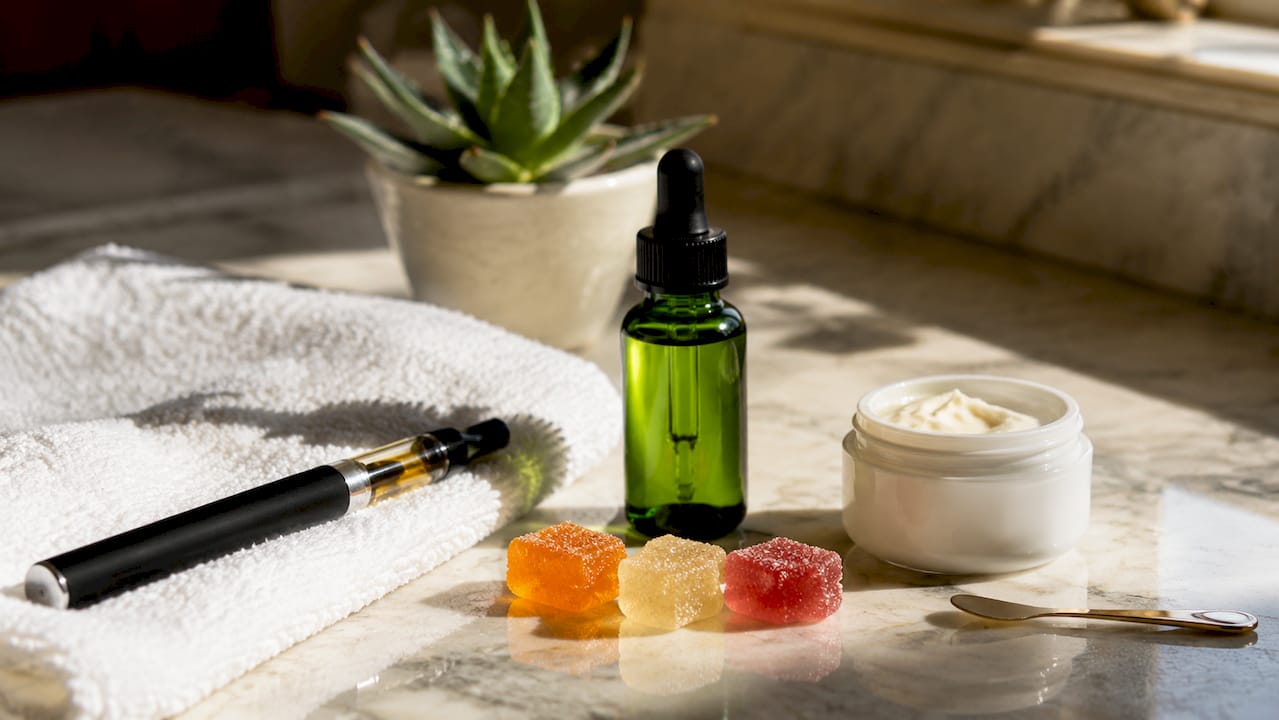
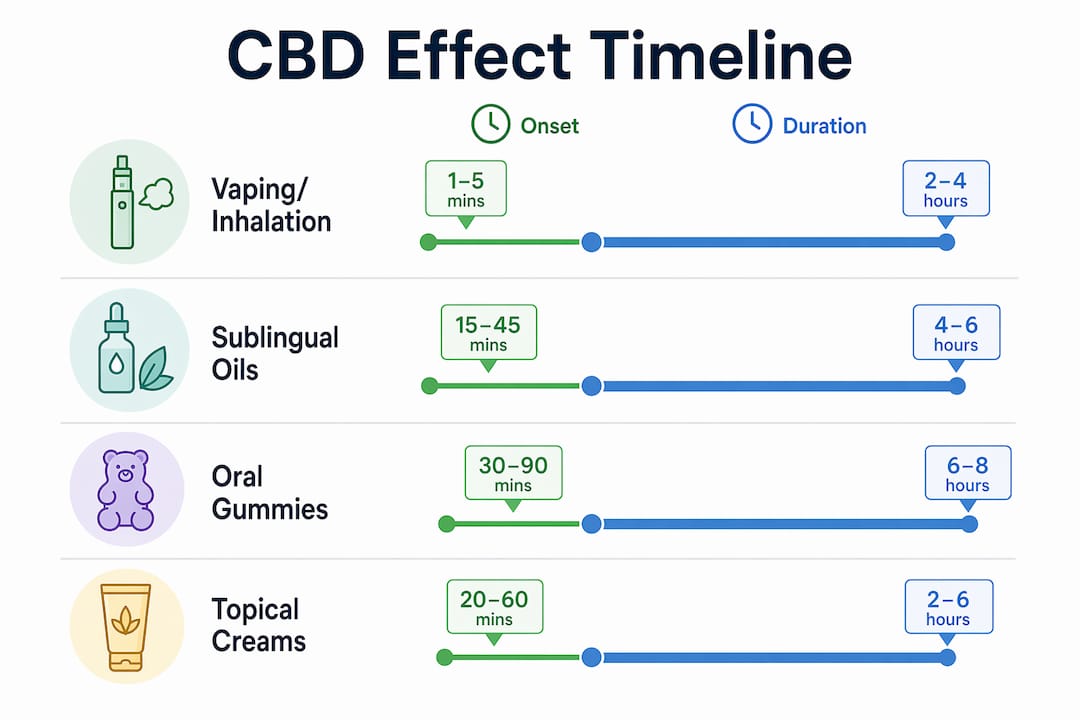
Inhalation (vaping) produces the fastest onset of any format. Inhaled CBD has a bioavailability of 30 to 56% and reaches the bloodstream within 2 to 10 minutes, which makes it the preferred choice when you need fast relief. The trade-off is duration. Effects from vaping typically last 1 to 3 hours, which is the shortest window of any consumption method. For more on what to expect from vaping, Smokocbd’s guide on CBD vape effects covers onset and sensation in detail.
Sublingual oils sit in the middle ground. A single sublingual dose starts working in 15 to 45 minutes, peaks at around 60 to 90 minutes, and effects last approximately 4 to 6 hours. Holding the oil under your tongue allows the cannabinoids to absorb directly through the mucous membrane and into the bloodstream, bypassing the digestive system entirely. This is why sublingual formats offer a better balance of onset speed and sustained effect than capsules or gummies.
Oral formats such as gummies and capsules take longer to work because they must pass through the digestive system first. Onset typically falls between 30 and 120 minutes. The reward for waiting is duration: oral CBD lasts 4 to 8 hours or more, making it the best choice for sustained support throughout the day or overnight. Oral bioavailability is lower at 4 to 20%, but the extended release compensates for this in many use cases.
Topicals work differently from all other formats. They provide localised effects at the site of application for roughly 2 to 4 hours, with minimal absorption into the bloodstream. They are not designed for systemic effects and should not be compared directly to ingestible formats.
| Method | Onset time | Effect duration | Bioavailability |
|---|---|---|---|
| Vaping / inhalation | 2 to 10 minutes | 1 to 3 hours | 30 to 56% |
| Sublingual oil | 15 to 45 minutes | 4 to 6 hours | 20 to 35% |
| Gummies / capsules | 30 to 120 minutes | 4 to 8+ hours | 4 to 20% |
| Topicals | 15 to 45 minutes | 2 to 4 hours | Minimal systemic |
Pro Tip: Hold your sublingual tincture under the tongue for at least 60 seconds before swallowing. This simple step maximises absorption through the mucous membrane and makes a measurable difference to both onset speed and how long the effects last.
What personal factors affect how long CBD stays active?
Even with the same product and the same dose, two people can have noticeably different experiences. CBD effects vary among individuals based on metabolism, dose size, and consumption frequency, and these differences are not minor.
Here are the key personal factors that influence CBD effect duration:
- Metabolism speed. A faster metabolism processes cannabinoids more quickly, which shortens the window of perceived effects. People with slower metabolisms may find effects linger longer, particularly with oral formats.
- Body composition. CBD is fat-soluble, which means it accumulates in fatty tissue. People with higher body fat percentages may retain CBD longer, which can extend both effects and detection times.
- Dose size. Larger doses generally produce longer-lasting effects. This is not a reason to take more than you need, but it does explain why a 50mg capsule lasts noticeably longer than a 10mg one.
- Frequency of use. Daily users accumulate CBD in the body over time. Steady-state plasma levels are reached after 3 to 7 days of daily use, which means consistent users often experience more stable and prolonged effects than occasional users.
- Endocannabinoid system status. Your endocannabinoid system (ECS) is the network of receptors that CBD interacts with. People under high stress or with depleted ECS tone may process CBD differently, which affects both intensity and duration.
It is also worth separating perceived effects from detectable presence. CBD’s half-life is roughly 18 to 32 hours, meaning a single dose clears the body in approximately 3 to 7 days, while daily users take longer to clear. You will not feel effects for that entire window. The compound remains in your system long after the wellness benefits have faded.
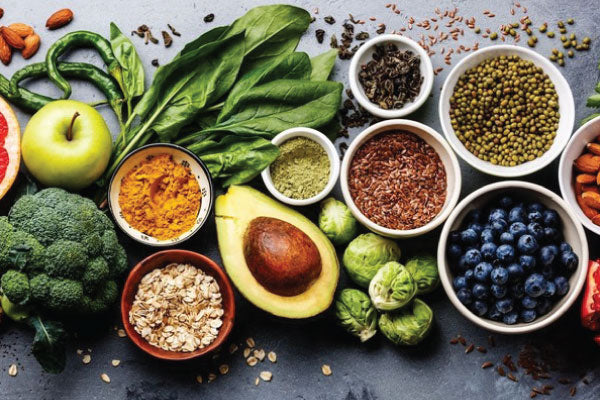
Pro Tip: Taking CBD with a fatty meal, such as avocado, eggs, or full-fat yoghurt, significantly improves absorption and effect duration. Fat-soluble compounds like CBD absorb far more efficiently when fat is present in the digestive tract.
How to time and dose CBD for the best results
Managing CBD effect duration is largely a question of matching your product choice and timing to your specific wellness goal. There is no universal schedule, but there are clear principles that make a real difference.
-
Define your goal before choosing a format. If you need fast relief from acute discomfort, vaping or a sublingual oil is the right tool. If you want sustained support for sleep or all-day calm, a gummy or capsule taken 60 to 90 minutes before you need it will serve you better.
-
Time your dose to your need. For sleep support, take an oral format 30 to 60 minutes before bed. For stress relief during a busy workday, a sublingual oil taken mid-morning can provide 4 to 6 hours of support. For pain management, consider a morning capsule topped up with a sublingual dose if needed later in the day.
-
Start low and adjust gradually. Begin with the lowest effective dose and observe how your body responds over several days before increasing. This approach protects you from taking more than necessary and helps you identify your personal sweet spot for duration and intensity.
-
Build consistency over time. Many users find that consistent use over days or weeks clarifies their personal CBD timing and duration far better than a single trial. Cumulative benefits often take 1 to 3 weeks to become apparent, particularly for sleep and anxiety-related goals.
-
Avoid chasing effects with extra doses. If effects seem to fade earlier than expected, resist the urge to double up immediately. Instead, note the timing and adjust your next scheduled dose rather than stacking doses unpredictably.
-
Match your routine to your lifestyle. Smokocbd’s guide on building a CBD routine offers practical examples for fitting different formats into daily life without disruption.
Common myths about how long CBD effects last
Several persistent misconceptions about CBD duration can lead to frustration or unrealistic expectations. Clearing these up makes for a much better experience.
- “CBD effects stop suddenly.” They do not. CBD effects taper off gradually rather than cutting out abruptly. Most people notice a gentle return to baseline rather than a sharp drop, which is one reason CBD is considered well-tolerated.
- “CBD gives you a high.” CBD does not cause a psychoactive high. Its effects are subtle and supportive, working with the endocannabinoid system to modulate rather than overwhelm. Broad-spectrum CBD products from Smokocbd contain zero THC, which is the compound responsible for psychoactive effects.
- “CBD will show up on a drug test.” UK drug tests target THC, not CBD. Broad-spectrum products with verified zero THC content, confirmed through third-party lab testing, carry no meaningful risk of a positive result.
- “More CBD means longer effects.” Dose does influence duration, but there is a ceiling. Beyond a certain point, increasing the dose produces diminishing returns rather than proportionally longer effects.
- “CBD works the same every day.” Your stress levels, sleep quality, food intake, and overall wellness all influence how CBD interacts with your ECS on any given day. Variability in experience is normal and expected.
CBD’s effects are shaped as much by your internal state as by the product itself. A consistent routine, combined with realistic expectations, produces far better outcomes than chasing a single perfect dose.
Key takeaways
CBD effect duration depends on delivery method, individual metabolism, and dose, with oral formats lasting longest and inhalation providing the fastest but briefest relief.
| Point | Details |
|---|---|
| Duration by method | Vaping lasts 1 to 3 hours; sublingual oils 4 to 6 hours; gummies and capsules 4 to 8+ hours. |
| Personal factors matter | Metabolism, body composition, and frequency of use all influence how long effects are felt. |
| Timing is everything | Match your product format to your wellness goal and time doses 30 to 90 minutes before you need them. |
| Consistency builds results | Cumulative benefits from daily use typically emerge after 1 to 3 weeks of consistent dosing. |
| Effects taper, not stop | CBD effects fade gradually rather than cutting out abruptly, making the experience gentle and manageable. |
What I have learned from tracking CBD duration over time
I have spoken with and read from hundreds of CBD users over the years, and the single most common mistake is treating CBD like a painkiller: take it, wait for something dramatic, and give up when nothing dramatic happens. CBD does not work that way, and expecting it to is the fastest route to disappointment.
The people who get the most from CBD are the ones who keep a simple log. Not an elaborate spreadsheet, just a note of what they took, when they took it, what they ate beforehand, and how they felt two, four, and six hours later. After two weeks of this, patterns emerge that no article can predict for you, because your endocannabinoid system is genuinely individual.
I have also noticed that tolerance is often misunderstood. Some users assume that needing a slightly higher dose after a few weeks means CBD is “stopping working.” In reality, your body is recalibrating. A short break of two to three days often restores sensitivity without any need to increase the dose permanently. Starting slow and building gradually is not just advice for beginners. It is the approach that keeps CBD working well over the long term.
The format question is also worth revisiting periodically. What works in summer when you are active and well-rested may not be the right choice in winter when stress is higher and sleep is shorter. Matching your product to your current circumstances, rather than sticking rigidly to one routine, is what separates users who find CBD genuinely useful from those who feel it has stopped working.
— Mike
Find the right CBD product for your needs
If you are ready to put this knowledge into practice, Smokocbd offers a range of broad-spectrum CBD products designed to suit different timing and duration needs.
For a balanced onset and moderate duration, the Smokocbd 1000mg mint CBD tincture is a popular choice among regular users who want sublingual precision without committing to a high-strength formula. If you prefer longer-lasting effects, the CBD soft gels and gummies bundle combines the convenience of capsules with the extended release of edibles, giving you both options in one pack. All Smokocbd products are third-party lab tested for zero THC and made from organically grown hemp, so you know exactly what you are taking and when to expect it to work.
FAQ
How long does CBD take to work after taking it?
Onset time depends on the format. Vaping produces effects within 2 to 10 minutes, sublingual oils within 15 to 45 minutes, and gummies or capsules within 30 to 120 minutes depending on your metabolism and whether you have eaten.
Do CBD effects wear off suddenly or gradually?
CBD effects taper off gradually rather than stopping abruptly. Most users notice a gentle return to their baseline state over the course of an hour or more, rather than a sharp cutoff.
How long does CBD stay detectable in the body?
CBD has a half-life of roughly 18 to 32 hours. A single dose clears the body in approximately 3 to 7 days, while daily users may retain detectable levels for longer due to accumulation in fatty tissue.
Will CBD show up on a UK drug test?
UK drug tests screen for THC, not CBD. Broad-spectrum CBD products with verified zero THC content, such as those from Smokocbd, carry no meaningful risk of triggering a positive result.
Does taking CBD with food make it last longer?
Yes. Taking CBD with a fatty meal improves bioavailability and can extend effect duration. Fat-soluble compounds absorb more efficiently when dietary fat is present in the digestive system at the time of consumption.